BlizzCon 2016 Is a Disappointment

I woke up today feeling like it was Christmas morning. BlizzCon is always exciting, and after some of the hints we’ve seen, I was expecting some really huge news.
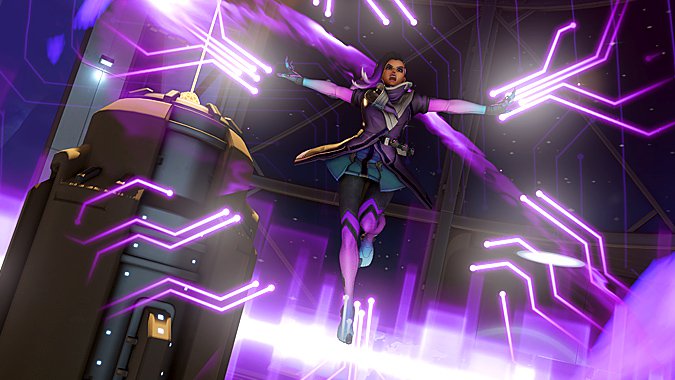
A promotional image of Overwatch's sombraInstead, it’s turned out to be perhaps the most disappointing BlizzCon to date. Certainly the most disappointing since I’ve started following it closely.

Overwatch: The worst kept secret in gaming

They began with the announcement we all knew was coming: The hacker Sombra will be the next playable character in Overwatch.

I’ll give them some credit for announcing her in a pretty dramatic way. They began with a retrospective video of Overwatch’s launch, only for Sombra to hack the feed — I genuinely thought the stream was crashing for a bit — and for that to dovetail into a new animated short introducing Sombra as she aids her Talon allies in attacking Volskaya Industries.

Sombra looks a lot more interesting than Overwatch’s other antagonists to date. She has an agenda of her own and seems to be playing both sides — her loyalty to Talon seems far from absolute.

That said, Blizzard’s continued reticence to do anything with the Overwatch IP is making it increasingly hard for me to get excited about anything to do with the game.
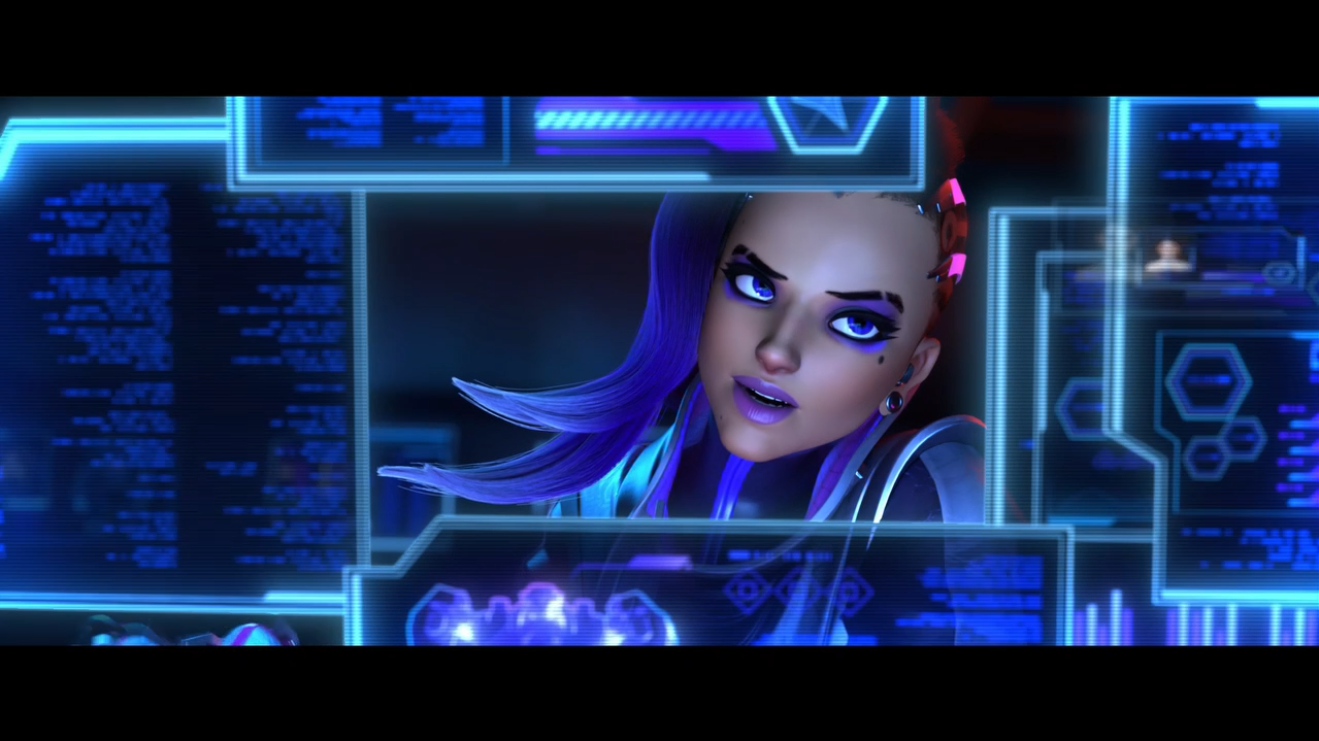
Overwatch's Sombra in her animated shortI do appreciate that they are maintaining their commitment to diversity in Overwatch, if nothing else. Both characters added post-launch have been women of colour, and the game’s cast is now close to perfect gender parity, as well. Now at ten females, twelve males, one non-gendered.

They also announced a new “arcade” mode that mostly seems to involve death match arenas, some new maps, and an ambitious new eSports league, but again, not really interesting me.

StarCraft: SkyNet, Nova, and Stukov

StarCraft II is the only game coming out of this BlizzCon’s opening ceremony to offer me anything approaching genuine excitement, which is a sad commentary on the whole convention.

Firstly, the final installment of the Nova DLC was confirmed to be launching on November 22 (appropriately enough), which is welcome news. More Nova is always good, and now that all three parts are out, I can finally play through it.

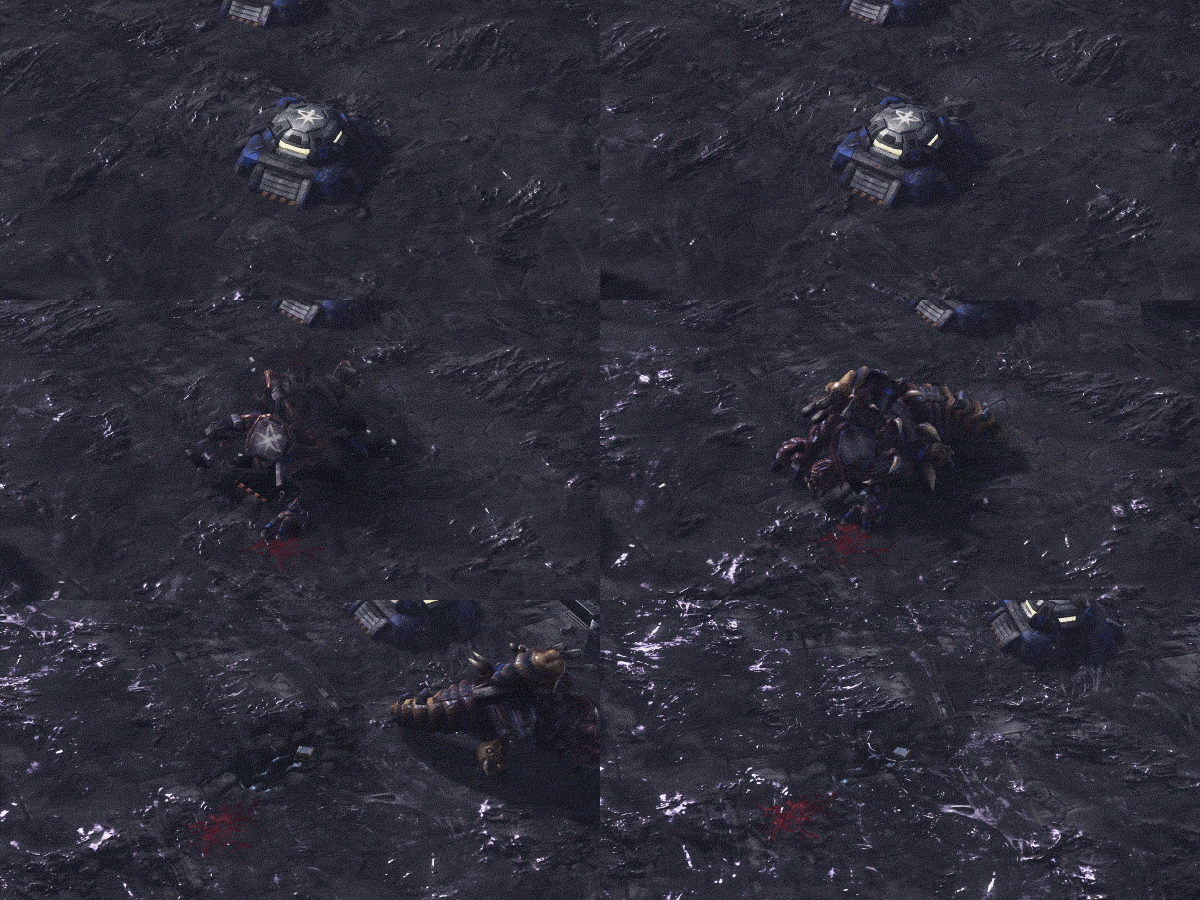
Second, fan favourite and eternal badass Alexei Stukov has been confirmed as the next playable commander in co-op. He would count as a Zerg commander, I suppose, but he seems to be very unique, based mainly on infested versions of Terran buildings and units.
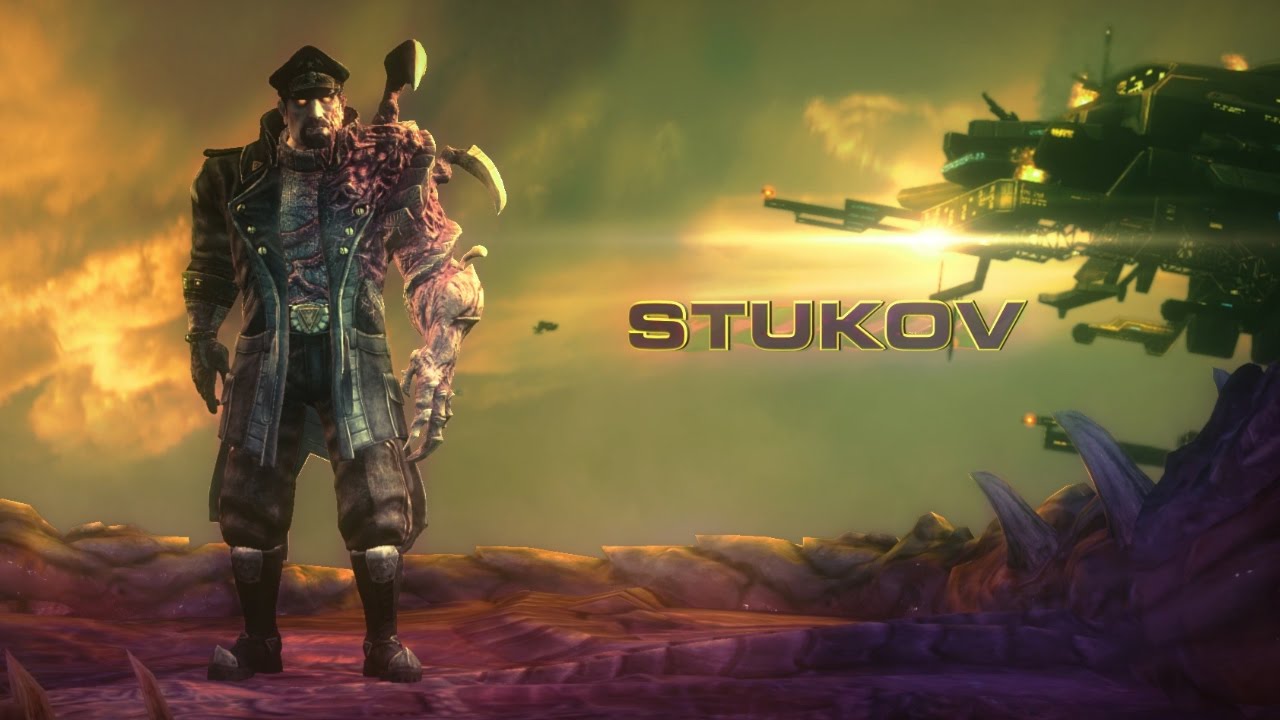
A promotional image of co-op commander Alexei Stukov in StarCraft IIWe’re short on details on exactly how Stukov is going to play at the moment, but it’s good to see more ambitious updates to co-op regardless. And those infested battlecruisers look pretty sweet.

Also, walking bunkers.

Yes.

They’ve also mentioned new co-op maps coming soon. Details on this are only now coming in as I’m writing, but it looks like we’re finally getting that co-op version of Outbreak we’ve all been wanting forever. Awesome!

On the downside, I’m also hearing Blizzard is going to add leaderboards to co-op —  a competitive aspect that I don’t think anyone wanted, and which may lead to co-op ending up on the same endless nerf/buff rollercoaster as 1v1.

Finally, perhaps the most interesting thing to come out of BlizzCon so far is that Blizzard has partnered with the DeepMind team to use StarCraft II for advanced artificial intelligence research. It’s at best unclear what if any benefits this will ultimately have for us as players, but the very fact that the game we love is now going to be at the forefront of AI research is really exciting.

Heroes and Hearthstone: Steady as she goes
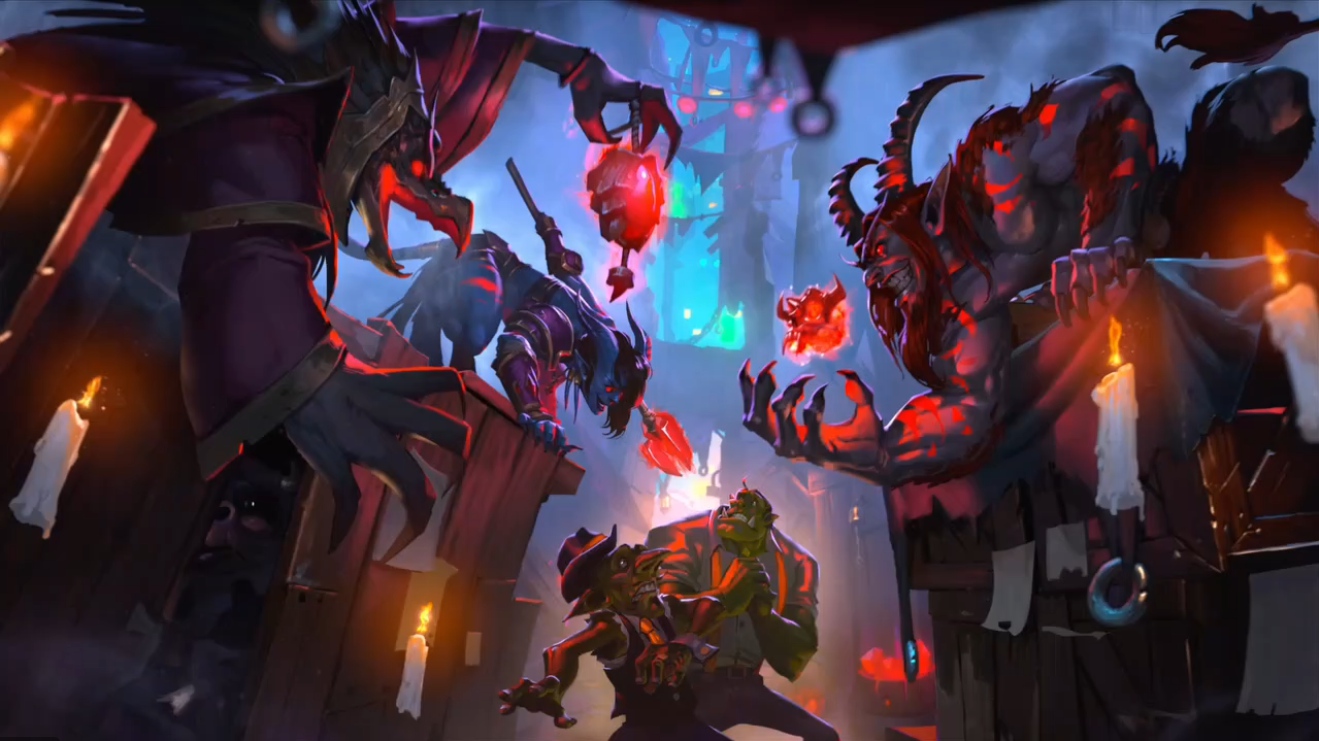
A shot from the announcement trailer for Hearthstone's Mean Streets of GadgetzanHeroes of the Storm and Hearthstone are pretty much just chugging along as you’d expect. Nothing to complain about, but nothing to get particularly excited for, either.

As many expected, Varian Wrynn will be joining Heroes as its next playable character. Although I was expecting a very standard warrior, he’s looking to be one of the most unique heroes to date. He’s actually a multi-role hero (I wonder how that will work with quests?) who can radically change his capabilities through several crucial talent choices.

The other new hero is Ragnaros the Firelord. I don’t have any particularly strong feelings about him at the moment.

They also spent a lot of time talking about next week’s brawl. I’m not sure why a weekly brawl is worth so much attention in the opening ceremonies. Were they just trying to fill time?

Meanwhile, Hearthstone is of course getting another expansion, Mean Streets of Gadgetzan. I don’t have a lot of interest in Hearthstone, and I don’t see this expansion changing that, but I will say they seem to have some neat ideas. Tri-class cards are pretty creative, and the Kabal and Jade Lotus factions seem genuinely interesting — would love to explore them in WoW.

Diablo: Remake, necromancer, and disappointment
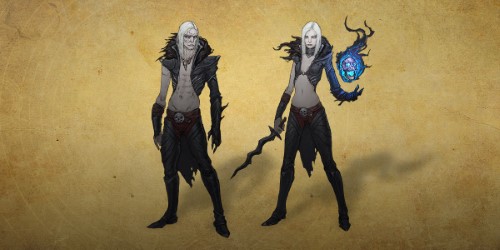
Concept art for Diablo III's new necromancer classBut by far the biggest disappointment came when they finally got around to Diablo announcements. After the necromancer leak, I was sure we were finally getting another expansion to wrap up Reaper of Souls’ cliff-hanger ending.

Nope.

We are getting the necromancer as a paid DLC, but no new story content. They did mention two new zones (as free updates), but they’re going to be adventure-mode exclusives like Greyhollow Island. Something to poke your head into for an hour and then forget about.

The other big news is that the first Diablo game is being recreated within Diablo III. We’ll be able to use our existing characters, so I guess the original classes aren’t coming back, but they will be bringing back at least some of the original mechanics (including intentionally making the graphics look worse, because apparently common sense and the Diablo franchise have severed all ties).

This is a confusing decision, and I’m not sure who the target audience is. I can understand trying to capitalize on some nostalgia, and broadly I like the idea of resurrecting old games, but it’s going to be too different from the original to satisfy the purists, and I’m not sure how much modern gamers are going to enjoy something that has been deliberately designed to be more clunky and visually unappealing than current content.

Diablo III badly needed a new expansion. There are so many story threads left unfinished, so many lands left to explore. The game can’t survive on adventure mode and seasons forever. I want to play more, but there’s just nothing left in the game for me to do. The base game and its expansion were wildly successful, and there can be no doubt a new expansion would do well. I just don’t get it.
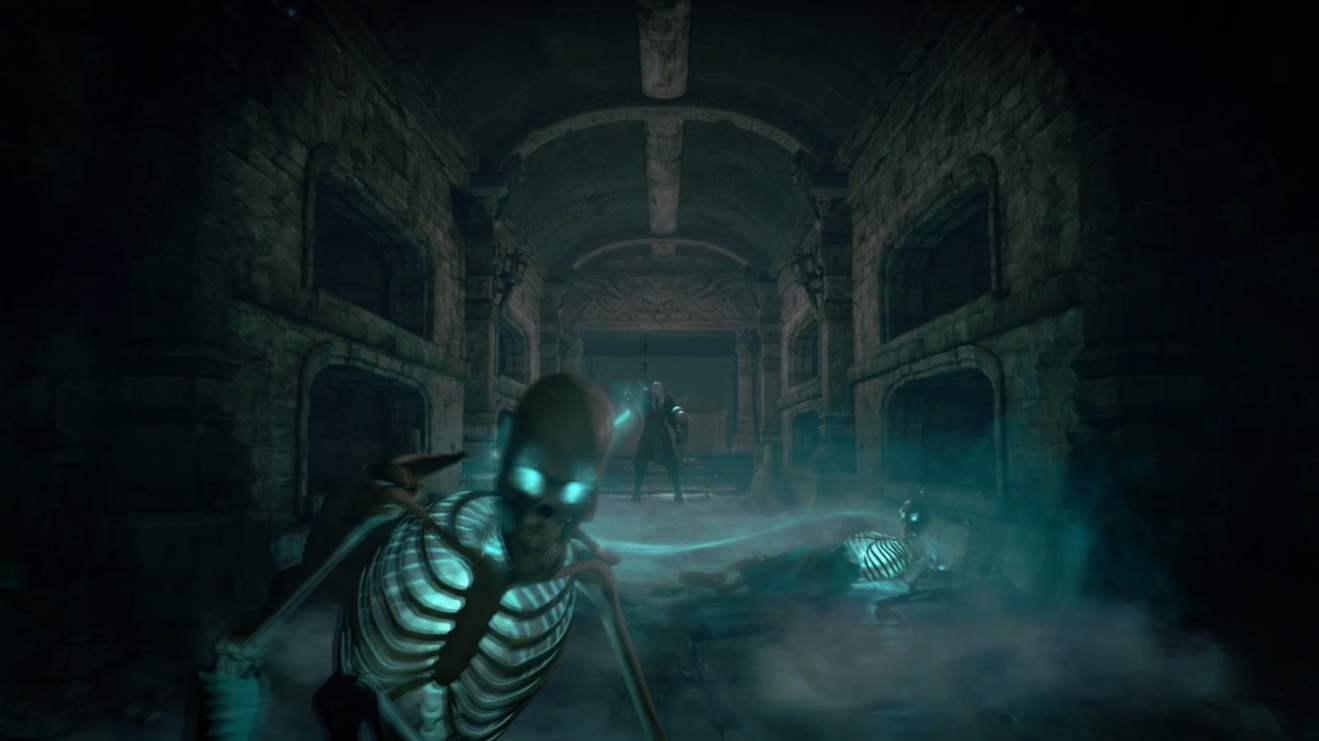
A shot from the announcement video for Diablo III's new necromancer classThe necromancer does look cool — I love necromancers in general, and Diablo’s take on the archetype especially — but is it worth forking over cash just to play through exactly the same content as a new character?

I hate how gamers are always pronouncing premature death on games, but at the risk of hypocrisy, I think we may now declare Diablo III dead in the water. Yes, it’s getting some more updates, but there doesn’t seem to be any kind of true forward momentum here. The story has been abandoned unfinished, and the game is just chasing its tail.

Between this, StarCraft’s apparent abandonment of mission packs, and Overwatch’s inexplicable aversion to exploring its own lore, I’m beginning to wonder if Blizzard is simply moving away from narrative in its games altogether.

That’s pretty much the only thing that could finally break my lifelong Blizzard fandom.

* * *

And that’s it. Nothing at all announced for World of Warcraft. No mention of a Warcraft movie sequel. Undoubtedly more news is to come as the convention unfolds, but it’s not likely to be anything huge.

What a massive disappointment.

My Top Five Games: Old School

I’ve long been tempted to do a post about my all-time favourite video games on this blog. Given how much I talk about gaming, it seems strange I haven’t.

A pyramid of skulls built by the Myrkridia in the Myth gamesOne of the main stumbling blocks has been decided how to rate older games against newer ones. Many recent games are objectively better than their older equivalents in many key ways, but a lot of that is due to the march of technology. Is it right to hold that against older games?

I’ve decided to side-step the issue by simply not comparing apples to oranges. I’m going to do two separate lists ranking my favourite older and new games, with the period in my teens where I temporarily quit gaming serving as the divider between the two eras.

We start at the beginning, with the old school greats.

5: Dungeon Siege

There are a couple games I could mention here — Age of Kings is also a strong contender — but I chose Dungeon Siege because it marks an important turning point where my view of the RPG genre began to change.

By modern standards — and to some extent even by the standards of the time — Dungeon Siege was an excessively simplistic game, but I was just so refreshed by the idea of an RPG that got out of its own way and tried to simply be a fun adventure, rather than the clunky grindfests most of its competitors were at the time.

A party of adventurers approaches Wesrin Cross in Dungeon SiegeIts focus was on the action, not the character sheet, and the developers worked hard to make the gameplay as smooth and free of annoyances as possible. Auto-loot alone felt like a revolution at the time.

It also offered gorgeous graphics (for the time, and even today the environments hold up well), an excellent soundtrack, and some very interesting backstory and world-building.

Also, pack mules.

4: Myth II: Soulblighter

There are people out there who are very cynical about the current state of the gaming industry. They’ll swear up and down that today’s games can’t hold a candle to those of yesteryear.

I vehemently disagree with this perspective, but there are still a handful of older games that haven’t been equaled, even today. The Myth franchise is one example of this.

Myth was something very unique. It was an RTS, but there was no economic management. You were given a set number of units and an objective and simply set loose in the wilderness to survive as best you could — usually against almost impossible odds.

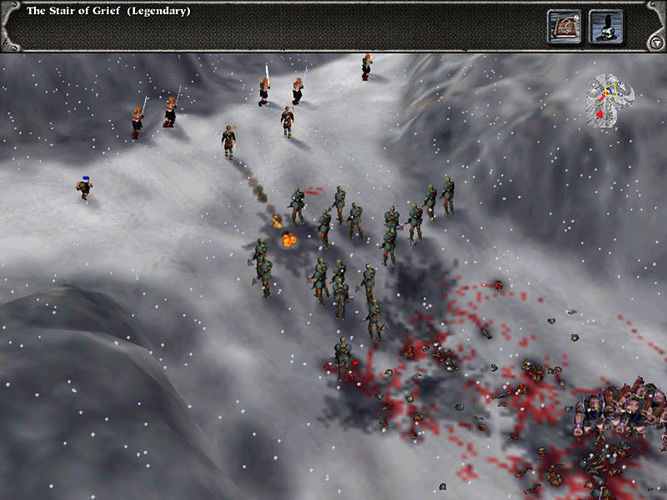
A screenshot from the mission Stair of Grief in Myth II: SoulblighterIt also featured a hyper-realistic combat engine unlike anything I’ve ever seen in gaming. The wind blew arrows off course, rain caused grenade fuses to fizzle, body parts rolled downhill. This ruthless commitment to realism was one of the main contributors to Myth’s intense, frankly excessive difficulty, but often failure was so spectacular it became part of the games’ charm.

The story and lore were also wildly unique, with an incredibly inventive take on high fantasy. Traditional elements like Dwarves and sorcerers co-existed with entirely new creations like the horrific Myrkridia, the immortal Trow, and the alien Fetch. Inspiration was drawn from unusual sources, like Gaelic and Mesoamerican cultures. The Mayan-samurai Heron Guard remain my all-time favourite interpretation of the paladin archetype.

And there was such depth. One common sin of video game story-telling is that developers only create enough lore for whatever story they want to tell, but Myth created a vast and detailed world whose history and geography we saw only a fraction of during the games.

The Fallen Lords was excellent, but its sequel, Soulblighter, was even better. Deeper gameplay, an even more intense story, and a grander adventure all around.

I’ve said it before, and I’ll say it again: You just have to respect a man who ripped out his own heart and cut off his own face “in a ritual too dark to name.”

3: StarCraft

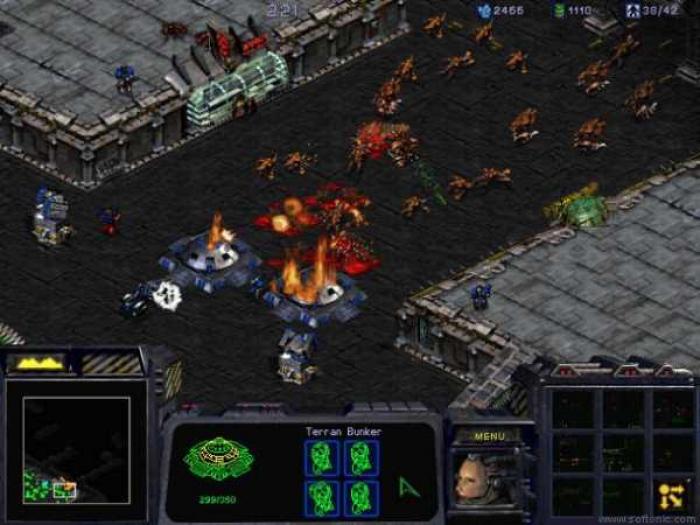
A screenshot from the original StarCraft's Terran campaignThe 90s and early 2000s were the golden age of the RTS genre, and Blizzard was its master. StarCraft, in particular, was a revolution in strategy gaming.

There had been RTS games with differing factions before, of course. Dune II beat StarCraft to the punch on the idea of three playable factions. But its factions were nearly identical, with only a handful of unique units.

In StarCraft, each race is entirely unique from the ground up. Different units, mechanics, and strategies, and yet Blizzard was able to deliver a balanced game where each race could compete despite their wild differences.

StarCraft’s influence on gaming is undeniable. It was a major force in the rise of eSports, and it has forever changed the gaming lexicon. Even outside of Blizzard games, everyone understands the concept of a Zerg rush (kekeke).

But for me my memories are still of rushing home from school to play the campaign, giggling with my friends over the dragoon’s spam click quotes. It was a pillar of my childhood.

The opening cinematic for StarCraft: Brood WarI don’t hold up the original StarCraft’s campaign as the masterpiece of sci-fi intrigue some like to paint it as, but it was on the whole a good story, and StarCraft has cemented itself as one of my all time favourite sci-fi franchises.

StarCraft is also notable for being the first game where I can remember really enjoying the soundtrack. The music may have been a little cheesy, but that didn’t make it any less fun.

Duh-na-na-na, duh-da-da-na, duh-na-na-na na-na-na…

2: No One Lives Forever: The Operative

Like the Myth games, No One Lives Forever was one of those rare games that even today hasn’t quite been surpassed. I’ve heard it said that NOLF was so ambitious and creative it simply never would have been made today, and I think there might be some truth to that. That or it would be some sprawling open world grindfest, a mile wide and an inch deep, rather than the vast but lovingly intricate game it was.

A delightfully campy homage to the spy craze of the 1960s, NOLF put players in the role of feminist super spy Cate Archer as she battled the twin threats of gender inequality and the terrorists of H.A.R.M. with a wide arsenal of guns, gadgets, and acerbic wit.

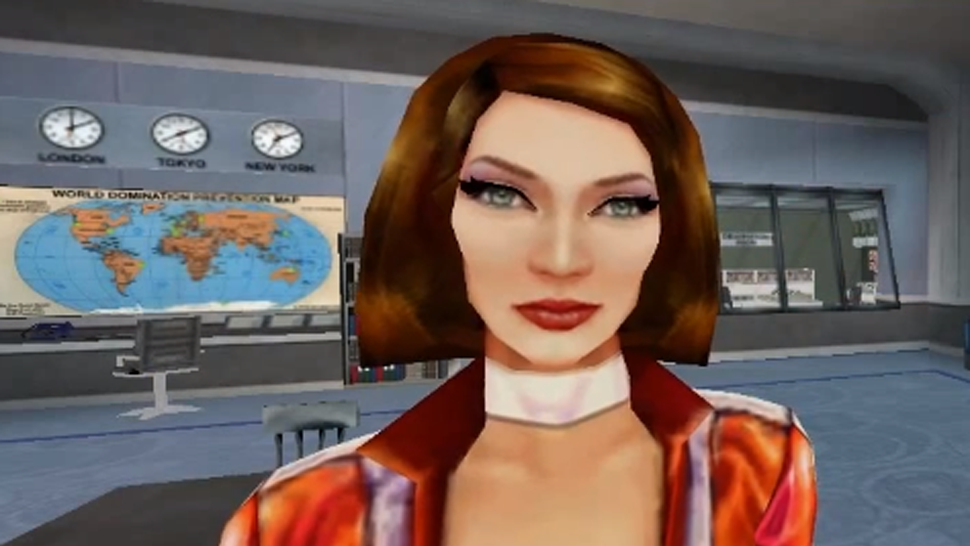
Cate Archer in No One Lives ForeverIt featured some of the most wildly creative level design in gaming history. The most oft-cited example is the mission where you fall out of an exploding plane without a parachute, engage in a mid-air gun fight with H.A.R.M. paratroopers, and have to wrestle a parachute off one of the enemy goons before you leave a small crater.

But NOLF’s massive campaign also took players to Switzerland, Morocco, east Berlin, the bottom of the North Sea, and outer space, among others.

NOLF was ahead of its time in a lot of ways. It was the first game I played with dialogue choices, as well as the first I played with something resembling a new game plus mode, which gave it huge replay value.

The stealth missions were irritating, but even so it stands as one of the finest games ever made.

1: Warcraft III: Reign of Chaos

The word “epic” has been abused a fair bit by the gaming community, but if you want a game that truly personifies what “epic” truly means, Warcraft III is that game.

A mission from the Night Elf campaign in Warcraft III: Reign of ChaosHow good was the story in Reign of Chaos? Well, let’s put it this way. After seeing one cinematic, my mother — who has no interest in gaming or much of anything outside her own narrow field — insisted that I keep her posted on further developments, to the point of calling her down to watch the cinematics if she wasn’t busy.

Prior to Warcraft III, the Warcraft universe had been tremendously simple. Fun, but simple. Reign of Chaos blew up everything we thought we’d known about Warcraft and created a vastly deeper, more complex world. It turned the Orcs into real people with a rich culture and intense inner conflict. It showed the once perfect Alliance crumbling from the rot within. It defied our expectations, it shocked, it inspired, and it ended with a powerful message of hope that would have been at home in the finest Star Trek episode.

And it was so damn epic. It truly felt like the war to end all wars, with the fate of everything on the line. The villains were terrifying. The heroes awe-inspiring.

Nor was the story its only virtue. As a video game, it also excelled. It all but created its own genre by hybridizing the very best aspects of both real time stategy and role-playing games. It was exciting, but not stressful. Challenging, but not unforgiving.

It took the focus away from tedious economic management and put it squarely on the action. Nothing in gaming can beat the satisfaction of casting exactly the right spell at exactly the right moment in Warcraft III.

The Thrall's Vision cinematic in Warcraft III: Reign of ChaosIt was about as close to perfect as any game will ever be.

Honourable mentions:

There weren’t as many excellent games back in the day as there are now, but there are still a few others worthy of recognition. As mentioned above, the Age of ___ games were fantastic, another pillar of the golden age of the RTS genre, and Age of Kings, in particular, stole a lot of my childhood.

Later Age of Mythology sparked a lifelong interest in ancient mythology so intense I now have idols of deities from three separate pantheons watching over me from my headboard as I sleep.

Also on the subject of old RTS greats, the first two Warcraft games were also quite strong, even if Reign of Chaos ultimately eclipsed them. In a roundabout way they’re responsible for my becoming a writer, actually. The Elven archers ignited my love of Elves, which led them to be the focus of the make believe games I played with my friends, which evolved into an entire universe and mythology of my own creation, which led me to learn how to write so I could share these stories.

Also, while I think the franchise has long since lost its way, I do think the original Call of Duty was something of a masterpiece. It certainly gave me a deeper appreciation for the sacrifices of veterans than I’d ever had before.