
My journey to complete every class story in World of Warcraft has finally ended. Along the way, I also completed all thirty-four of the game’s artifact quests, and now I bring you my thoughts on them all, ranked from worst to best.
 Fists of the Windlord (windwalker monk):
Wastes far too much time on the insufferable Li Li Stormstout and features a generic no name villain whose plans and motivations are never explained in the slightest. A sloppy, underwhelming quest all around.
Light’s Wrath (discipline priest):
This is a mage quest.
No, really. It’s an almost exact copy of the Aluneth quest, and it doesn’t make sense for a priest artifact at all.
The Kingslayers (assassination rogue):
Deserves credit for being one of the more elaborate artifact quests and requiring you to make smart use of pretty much the entire rogue toolkit, but I found the stealth mechanics irritating, and the story only makes sense if your rogue isn’t Alliance and hasn’t finished the rogue story yet.
Twinblades of the Deceiver (havoc demon hunter):
Kind of a sloppy quest. I got excited when I saw Illysanna Ravencrest was involved because I thought it’d help explain how she came to be a boss in Black Rook Hold, and I guess it does, but if you blink, you’ll miss it. Wasted potential there.
Plus the ending just doesn’t make any sense.
The Dreadblades (outlaw rogue):
Not a bad quest, but an unremarkable one. I’ve never understood the appeal of pirates in fiction, and the story has basically zero relevance to the greater Warcraft lore.
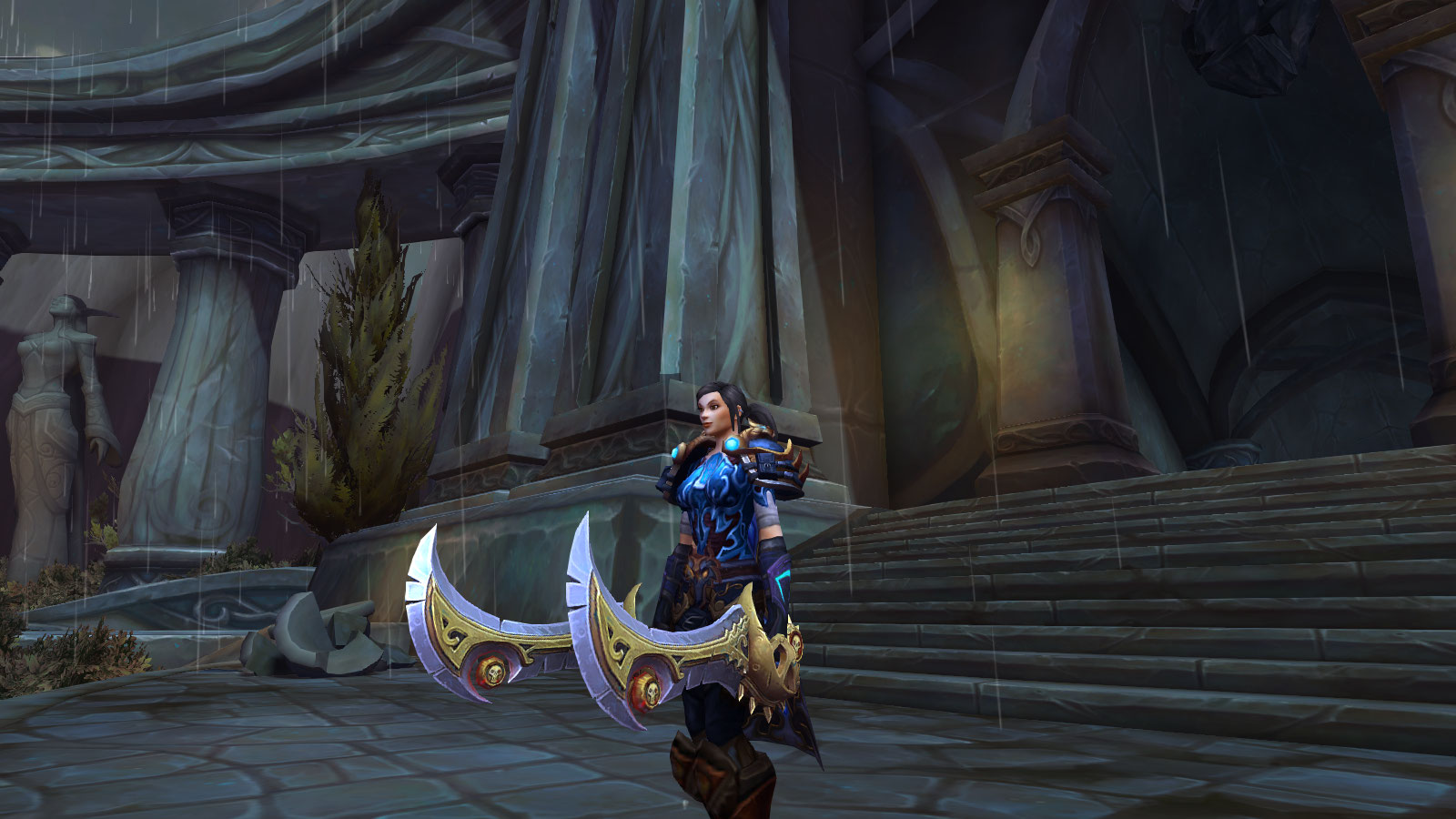 Warswords of the Valarjar (fury warrior):
Very basic. Feels like any other random side quest.
Fangs of Ashamane (feral druid):
Meh.
Aldrachi Warblades (vengeance demon hunter):
Short and forgettable. Nothing particularly bad about it, but nothing that stands out, either. Tells you nothing about the artifact or its history.
Maw of the Damned (blood death knight):
Nothing wrong with this quest, but nothing to praise, either. It’s very adequate.
Ebonchill, Greatstaff of Alodi (frost mage):
SUPERB CASTING. GET BACK TO THE FOCUS. I’LL KEEP AN EYE OUT.
SUPERB CASTING. GET BACK TO THE FOCUS. I’LL KEEP AN EYE OUT.
SUPERB CASTING. GET BACK TO THE FOCUS. I’LL KEEP AN EYE OUT.
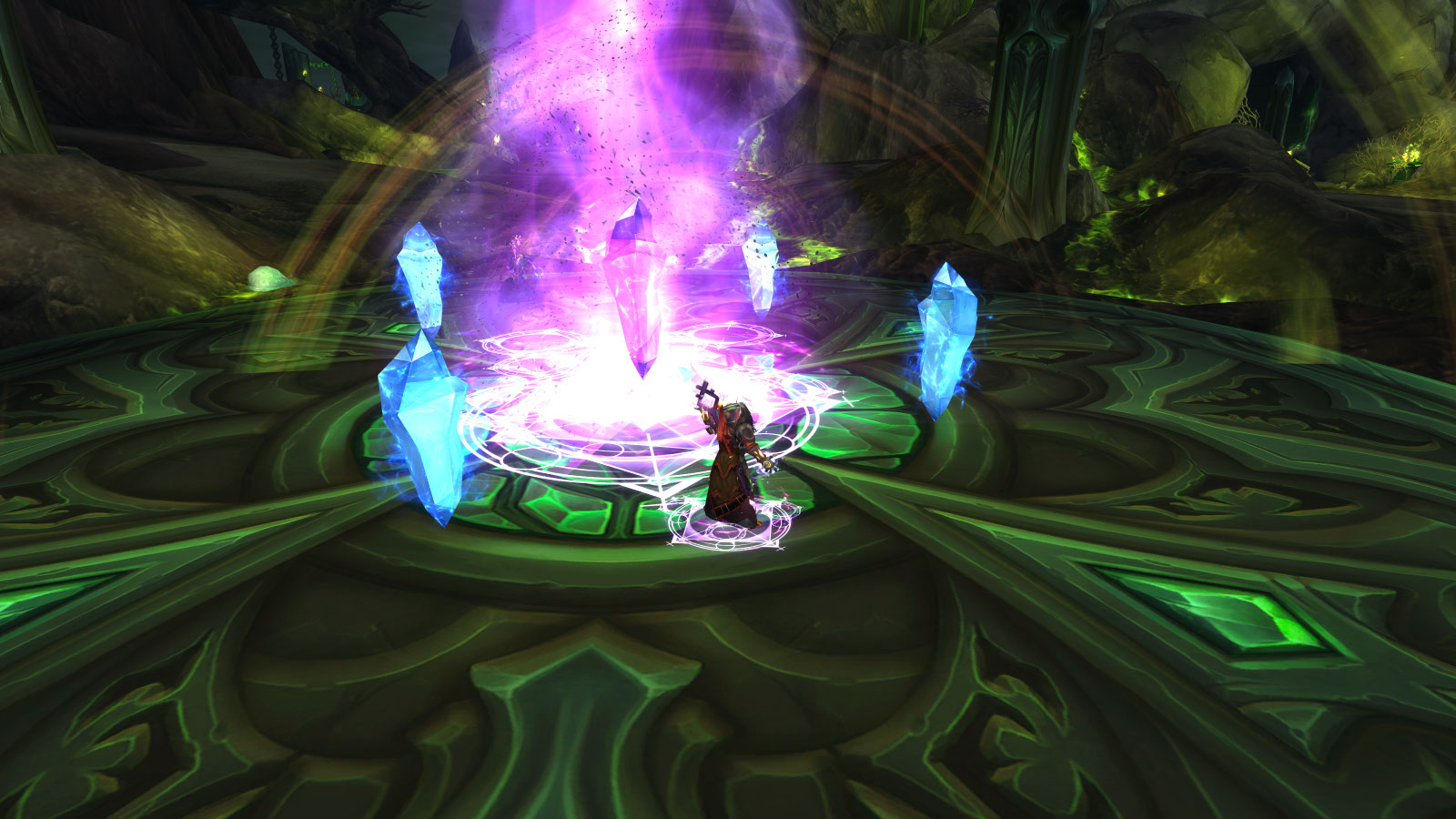 Make… it… stop…
Also the boss fight was too easy.
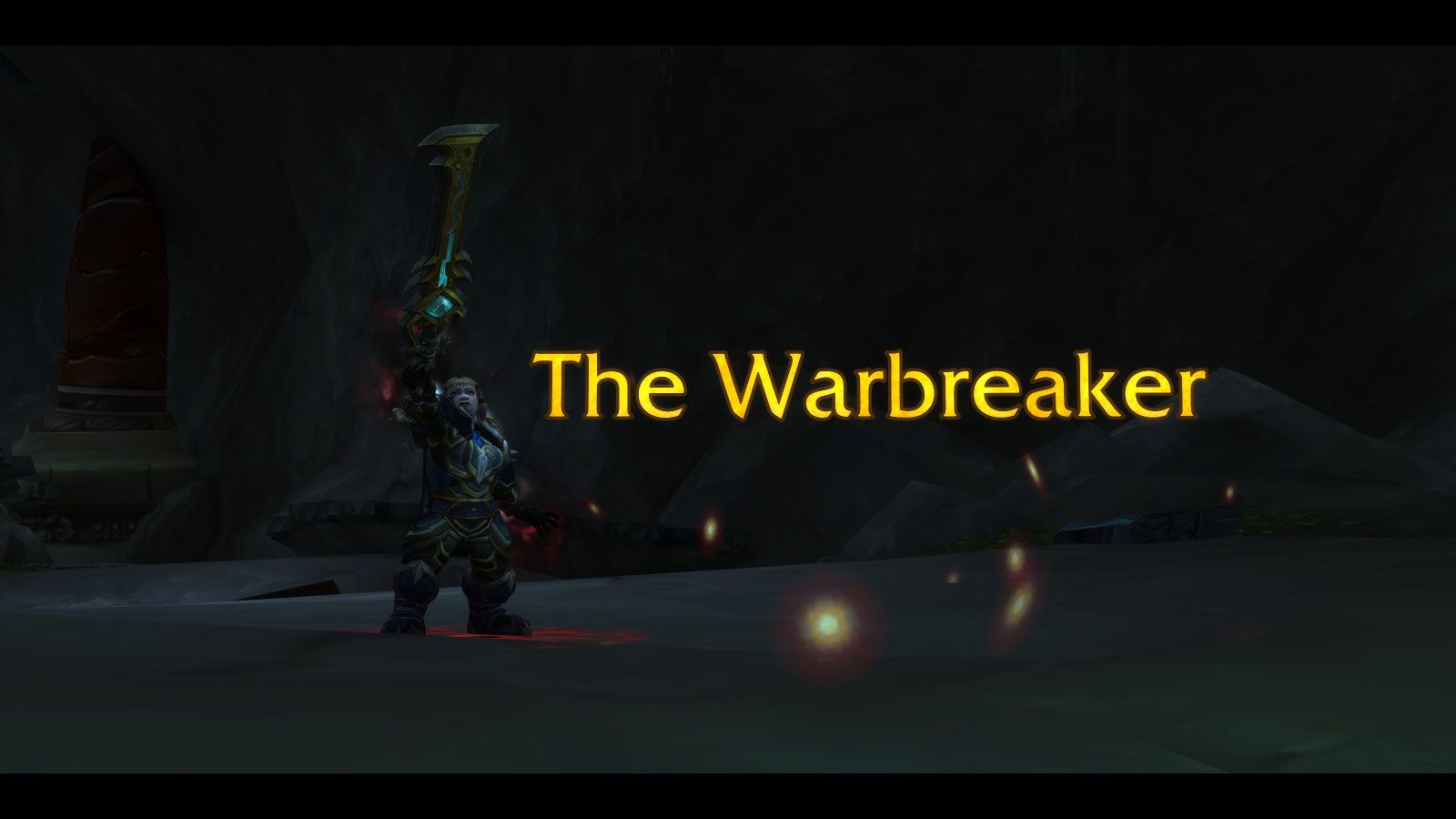
Strom’kar, the Warbreaker (arms warrior):
Maybe it’s because I did it last, but I found this the least interesting of the quests at the Tomb of Tyr. Seemed very easy, too.
Arms is a lot more fun to play than I expected, though.
Thas’dorah, Legacy of the Windrunners (markmanship hunter):
It started out well, but was too inconclusive. Ultimately little more than a tease for longtime lore fans, bringing us tantalizing close to the answer to a very long-held question but never actually giving it. That wouldn’t come until Argus.
Titanstrike (beast mastery hunter):
Seemed meatier than most artifact quests, which I appreciate. Needs less Mimiron, though.
Skull of the Man’ari (demonology warlock):
Hard to separate how much I dislike the new demonology from the quest, but Mephistroph is a good villain. Seemed unusually challenging, but maybe it’s just because I’m not used to the spec.
Ulthalesh, the Deadwind Harvester (affliction warlock):
 Had a nice spooky feel, but was a bit confusing. Didn’t explain the history of the artifact very well.
Talonclaw, Spear of the Wild Gods (survival hunter):
One of the more fun artifact quests in terms of gameplay, but kind of a giant heap of nothing story-wise, especially considering the history of the artifact. There’s a lot more they could have done.
Aluneth, Greatstaff of the Magna (arcane mage):
Interesting revisiting the Ethereum and the Nexus War. Not sure I like the idea of a weapon that talks back so much, though.
Scale of the Earth-Warder (protection warrior):
Not a huge fan of artifact quests that have so little to do with the actual artifact, but the story of the son trying to save his father’s soul was an interesting angle.
Scythe of Elune (balance druid):
This is pretty much the quest for Ulthalesh with slight tweaks. It’s a good quest, but a weapon with such legendary history deserves better.
Apocalypse (unholy death knight):
Another Ulthalesh clone, but better executed. You still don’t learn much about Apocalypse itself, but the story surrounding its acquisition is complete and satisfying.
The Doomhammer (enhancement shaman):
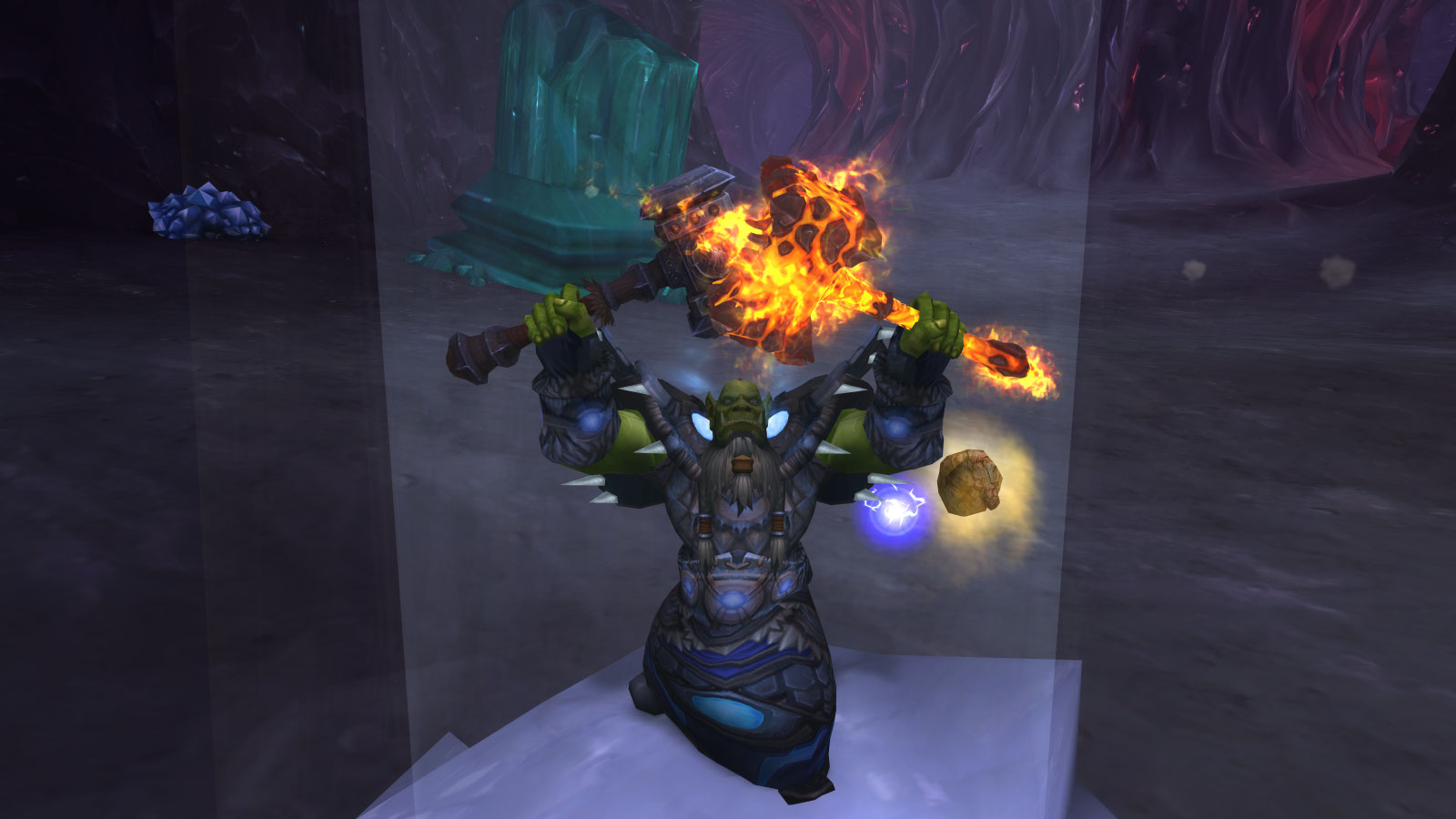 I’d probably rate this quest higher, but I expected more for such an iconic part of Warcraft lore than just bashing Troggs and fighting one demon.
Honestly the best part was probably Stormcaller Mylra, who has always been and will always be awesome. Sassy Dwarf lady FTW.
Sharas’dal, Scepter of the Tides (restoration shaman):
I don’t understand why this is a shaman artifact. I mean, I get the water connection, but it still feels weird for an item associated with one of Azeroth’s most infamous and evil mages to be wielded by a shaman healer.
That said, this quest is pretty good. I always liked Vashj’ir, and the end boss’s fate is… memorable.
Xal’atath, Blade of the Black Empire (shadow priest):
A somewhat short but entirely satisfying quest. Interesting story, nothing to complain about.
T’uure, Beacon of the Naaru (holy priest):
Interesting thing about this one is it features cameos by a couple of characters from other class stories: Vindicator Boros and Jace Darkweaver. Nice bit of continuity there.
And it’s a pretty fun quest all around.
Sheilun, Staff of the Mists (Mistweaver Monk):
 Not very story-heavy, but the familiar characters and location still gave it a great jolt of Pandaria nostalgia. Challenging enough to be interesting, but not frustrating.
Felo’melorn (fire mage):
Less Blood Elf lore than I expected/wanted, but was interesting to revisit Icecrown.
Fangs of the Devourer (subtlety rogue):
This quest did a great job of capturing the rogue feel and making use of the class’s mechanics — from stealth to pick-pocketing — and had a surprisingly epic story to boot, sending you face to face with one of the greatest villains in Warcraft lore.
The Silver Hand (holy paladin):
Paladins have excellent luck with artifact quests. This one is very intense, and I hope we see the final boss again. That the best the Silver Hand has to offer were merely able to hold it off, and then only barely…
Blades of the Fallen Prince (frost death knight):
This is clearly meant to be the first artifact quest you do as a DK, and if you don’t, the timeline gets a bit wonky, but otherwise, this is an excellent quest. There’s a surprisingly clever little puzzle, and the final boss fight is a lot of fun.
Truthguard (protection paladin):
Excellent quest. Lore-rich, good use of Wrath of the Lich King nostalgia, and engaging gameplay that forces you to use your full toolkit as a paladin tank. There’s even a little humour, though not enough to detract from the epic feel of the quest. I loved how your allies bubble-hearth at the end.
G’Hanir, the Mother Tree (restoration druid):
 Best of the healer quests. The mechanics make inventive use of the healer toolkit, and the story is exciting and intense.
The Scepter of Sargeras (destruction warlock):
Larger in scale than many other artifact quests — visiting many locations across the face of Azeroth — and captured the feel of the class incredibly well. Betrayal, murder, the quest for ultimate power — everything you could want from a warlock story.
Claws of Ursoc (guardian druid):
Has more effort put into it in terms of unique art and maps than probably any other artifact quest. Also serves to set-up the Emerald Nightmare raid, and revisiting Grizzlemaw for the first time in nearly a decade was warmly nostalgic. Generally pretty awesome.
Not sure this was the time for a random Mylune cameo, though.
The Fist of Ra-den (elemental shaman):
Any opportunity to revisit Pandaria is welcome, and I’m glad they let you do it on at least one non-monk class.
It’s also a very well-rounded quest. Lots of backstory on the artifact, reunions with familiar faces, some of the most inventive boss fights I’ve seen in an artifact quest, a little humour, and a very intense ending.
Plus I finally got to smack Li Li Stormstout. What’s not to love?
Fu Zan, the Wanderer’s Companion (brewmaster monk):
 If you were to distill Mists of Pandaria into a single one-hour story arc, it would be Fu Zan’s quest. It was charming and whimsical in places, yet deadly serious when it needed to be. It did an excellent job of showing how widespread the Legion invasion is and how vicious it can be.
It had some subtlety, too. Though the Monkey King’s task seem simple at first, afterward it occurred to me his request for a special brew was really an attempt to save Pandaria’s food supply. Every place I went to for ingredients was some crucial location the Legion was on the brink of destroying.
A very clever, fun quest.
Ashbringer (retribution paladin):
The Ashbringer quest is an absolute tour de force from beginning to end. It features iconic characters from throughout Warcraft lore and actually represents a pretty major moment in the game’s overall story.
Balnazzar puts on one of the best villain monologues I’ve ever heard, echoing Sovereign’s equally chilling speech in the original Mass Effect, only for the player to turn the tables on him in epic fashion.
Unlike many artifact quests, you claim the Ashbringer before the final boss fight, and the fight mechanics are tailored around the sword’s ability, which makes for a very satisfying experience.
 As much as I’ve enjoyed artifact quests, I generally wouldn’t say they’re worth making new alts just to experience them, but this is the exception. It’s worth making a paladin just to do the Ashbringer quest. It’s moving, it’s exciting, it plays to nostalgia without leaning on it as a crutch, and it’s just plain fun.



 Superior Realities