My Top Five Games: New School

Instead of doing a top ten list of all my favourite video games, I’ve decided it’s more fair to rank my favourite older and newer games separately, five each. I’ve already covered the old school greats, so now it’s time to run down my top five games from the modern era.

5: Dungeon Siege III

Fighting as Anjali in Dungeon Siege 3Entry #24601 in the “things Tyler loves that everyone else hates” category is Dungeon Siege III.

It is a very big departure from the previous games in terms of game mechanics. Part of me misses the old model. But looked at on its own merits, it’s still quite a strong RPG.

Choosing a class (or character in this case) is more generic than just playing and evolving naturally, but the “class” designs are among the best I’ve seen. Lucas is just your standard warrior dude, but the others are more unique:  Reinhardt is a steampunk techno mage; Katarina is a gun-toting, curse-flinging gypsy witch; and Anjali is a divine warrior-priestess who can shapeshift into a fire elemental.

Anjali in particular is one of my all-time favourite characters/classes in any RPG. Just so much fun.

And while it was a departure in terms of gameplay, it’s a true sequel to the original Dungeon Siege in terms of story, something DS2 definitely wasn’t. In fact it improves upon the already strong lore of the original, deepening and expanding it, and it evolves into a complex, powerful story with an incredible ending.

Add some gorgeous graphics and a lovely soundtrack and you have one of the most underrated games ever.

4: Portal 2

A screenshot from Portal 2Much has already been said about the Portal games by myself and others, so I don’t see a lot of need to repeat it. If you’ve played them, you know how special they are. If you haven’t, go do that right now. I’ll wait.

Both games were good, but I think Portal 2 is the more memorable one. The first Portal was entirely too short. Portal 2 had all the same wit and creativity, and while it’s still a relatively short game, it’s not quite the “blink and you’ll miss it” affair the first was.

3: Mass Effect 3

And again another of my unpopular opinions.

While I seem to be the only one that feels this way, I found Mass Effect 3 to be the strongest entry in the trilogy by a significant margin. I’ve always been a fan of epic, apocalyptic stories, and ME3 certainly delivers on that front. In the previous games, the Reapers were a distant threat, but in ME3 their full fury is unleashed, and as the game unfolds, you get to see them tear the galaxy apart in excruciating detail.

It’s a dark, intense story, and I admire that it pulls no punches. The heroes fail many times throughout the story, and the losses are deeply felt. Not many games have the guts for that.

Keelah se'lai, Tali'ZorahLike ME2, it’s also a very big game with lots of side missions and secondary content, but unlike ME2, none of it feels irrelevant or chore-like. Everything connects to the main story. Everything feels important, and exciting.

Even the most minor side-quests can be memorable. For me one of the most gut-wrenching moments of the game is a brief side mission where you assist in the evacuation of the Elcor homeworld. It’s just the most basic kind of collection quest, but the ambassador’s reaction at the end is so powerful.

And then there’s the excellence that is the Rannoch arc, and the sheer joy of drunk Tali, and all the little conversations between the crew members between missions, and Traynor… It’s just an excellent experience all around.

2: StarCraft II

StarCraft II’s sheer scale can make it a difficult game to rate. It has had two expansions the size of standalone games plus a fair bit of DLC. Looked at as a total package, StarCraft II is now massive in scale.

And it has had its stumbles along the way. Wings of Liberty was mostly a good game but did suffer from Blizzard’s failed experiment with non-linear storytelling, and I think we can all agree Heart of the Swarm was something of a disappointment.

Hierarch Artanis and Executor Selendis rally the Golden Armada in StarCraft II: Legacy of the VoidBut when you look at the big picture, it’s clear StarCraft II’s successes easily outweigh its failures. Despite its hiccups, Wings of the Liberty still wound up being a pretty strong story, and Legacy of the Void was one of the greatest sci-fi epics I’ve seen in gaming. Hell, even Heart of the Swarm gave us Abathur and the Primal Zerg, so it was hardly a total loss.

Similarly, I’m not without complaints about its gameplay, but overall SC2 still deserves to go down as one of the great RTS games of all time. The campaigns have featured some of the most creative level design in gaming history, the co-op mode added in Legacy of the Void is infinitely replayable and incredibly fun, and its competitive play remains one of the greatest tests of skill in the gaming world.

1: The Secret World

I’ve already spent no shortage of time raving about how amazing TSW is, so I shouldn’t repeat myself too much.

A lot of my love for this game boils down to the fact that story will always be the most important part of gaming for me, and TSW has some of the best writing in video game history. Its dialogue is second to none, its characters are unforgettable, its world-building is spectacularly deep and incredibly original, and its ambiance is like nothing else.

But it’s no slouch in the gameplay department, either. I love how you can build your own “class.” I love that it’s challenging, but not cheap. I love how the enemies are powerful and intelligent rather than just HP sponges to be mowed down. I love that its progression is fair to all playstyles and offers incredible freedom to the player. I love how many awesome cosmetics there are to collect.
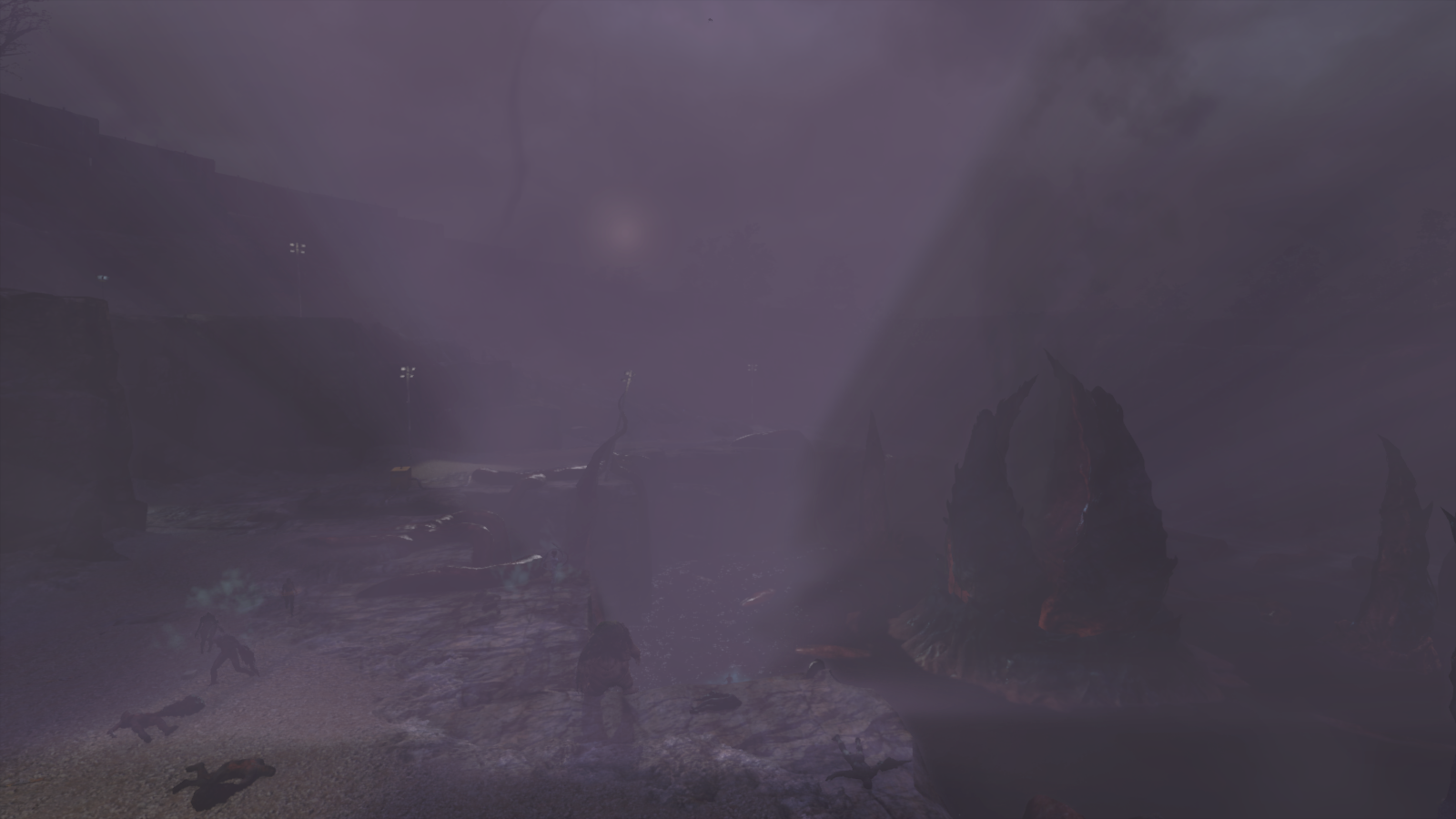
The Blue Mountain quarry in The Secret WorldAs with the first list’s winner, Warcraft III, The Secret World is probably as close to a perfect video game as we’re ever going to see.

Honourable mentions:

Despite some initial stumbles (and a few lingering problems), Diablo III has evolved into a really excellent game, as the hundreds of hours I’ve sunk into it can attest. It was sort of a dead heat between Diablo and Dungeon Siege for the fifth spot in this list.

Something that has been interesting about recent years in the gaming industry has been the growing push for video games as art, and it’s produced a number of titles that are truly amazing experiences despite being light on gameplay. The Park, Oxenfree, and Remember Me all come to mind as examples of this.

Obviously World of Warcraft is conspicuous in its absence from the list, but despite the countless hours I’ve spent with it, it has far too many flaws to be considered a truly great game. SW:TOR is another title that has given me some great times but has too much wrong with it to earn a spot among my all-time favourites.

It does seem a bit strange that I’ve spent the majority of my gaming time over the past ten years playing MMOs, and yet only one of them made my top five (albeit with top honours). I’m not sure what, if anything, should be read from that.

My Top Five Games: Old School

I’ve long been tempted to do a post about my all-time favourite video games on this blog. Given how much I talk about gaming, it seems strange I haven’t.

A pyramid of skulls built by the Myrkridia in the Myth gamesOne of the main stumbling blocks has been decided how to rate older games against newer ones. Many recent games are objectively better than their older equivalents in many key ways, but a lot of that is due to the march of technology. Is it right to hold that against older games?

I’ve decided to side-step the issue by simply not comparing apples to oranges. I’m going to do two separate lists ranking my favourite older and new games, with the period in my teens where I temporarily quit gaming serving as the divider between the two eras.

We start at the beginning, with the old school greats.

5: Dungeon Siege

There are a couple games I could mention here — Age of Kings is also a strong contender — but I chose Dungeon Siege because it marks an important turning point where my view of the RPG genre began to change.

By modern standards — and to some extent even by the standards of the time — Dungeon Siege was an excessively simplistic game, but I was just so refreshed by the idea of an RPG that got out of its own way and tried to simply be a fun adventure, rather than the clunky grindfests most of its competitors were at the time.

A party of adventurers approaches Wesrin Cross in Dungeon SiegeIts focus was on the action, not the character sheet, and the developers worked hard to make the gameplay as smooth and free of annoyances as possible. Auto-loot alone felt like a revolution at the time.

It also offered gorgeous graphics (for the time, and even today the environments hold up well), an excellent soundtrack, and some very interesting backstory and world-building.

Also, pack mules.

4: Myth II: Soulblighter

There are people out there who are very cynical about the current state of the gaming industry. They’ll swear up and down that today’s games can’t hold a candle to those of yesteryear.

I vehemently disagree with this perspective, but there are still a handful of older games that haven’t been equaled, even today. The Myth franchise is one example of this.

Myth was something very unique. It was an RTS, but there was no economic management. You were given a set number of units and an objective and simply set loose in the wilderness to survive as best you could — usually against almost impossible odds.

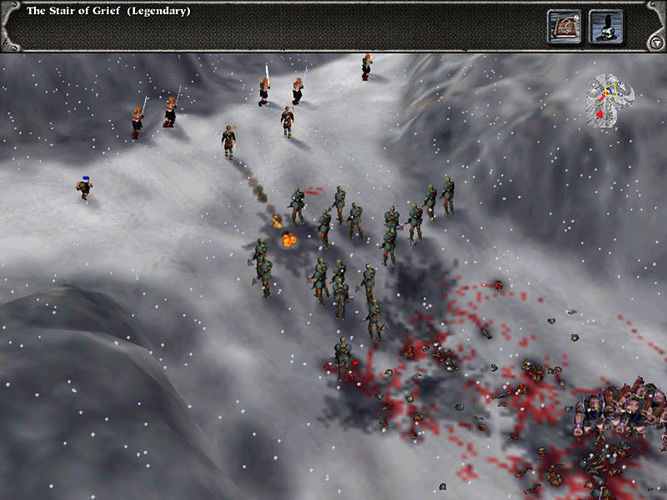
A screenshot from the mission Stair of Grief in Myth II: SoulblighterIt also featured a hyper-realistic combat engine unlike anything I’ve ever seen in gaming. The wind blew arrows off course, rain caused grenade fuses to fizzle, body parts rolled downhill. This ruthless commitment to realism was one of the main contributors to Myth’s intense, frankly excessive difficulty, but often failure was so spectacular it became part of the games’ charm.

The story and lore were also wildly unique, with an incredibly inventive take on high fantasy. Traditional elements like Dwarves and sorcerers co-existed with entirely new creations like the horrific Myrkridia, the immortal Trow, and the alien Fetch. Inspiration was drawn from unusual sources, like Gaelic and Mesoamerican cultures. The Mayan-samurai Heron Guard remain my all-time favourite interpretation of the paladin archetype.

And there was such depth. One common sin of video game story-telling is that developers only create enough lore for whatever story they want to tell, but Myth created a vast and detailed world whose history and geography we saw only a fraction of during the games.

The Fallen Lords was excellent, but its sequel, Soulblighter, was even better. Deeper gameplay, an even more intense story, and a grander adventure all around.

I’ve said it before, and I’ll say it again: You just have to respect a man who ripped out his own heart and cut off his own face “in a ritual too dark to name.”

3: StarCraft

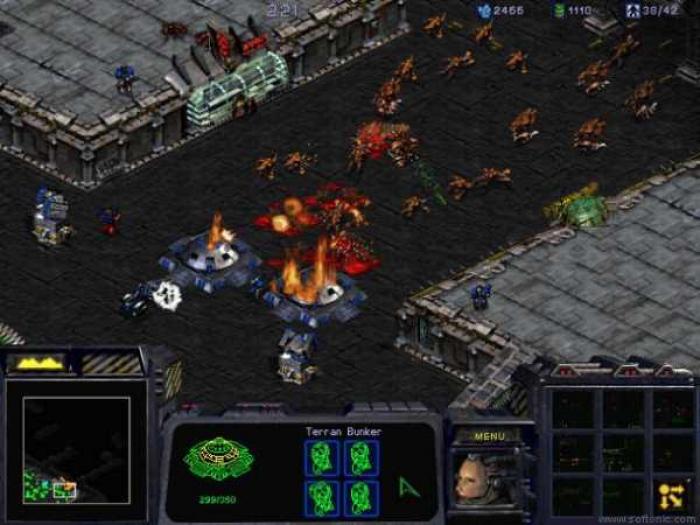
A screenshot from the original StarCraft's Terran campaignThe 90s and early 2000s were the golden age of the RTS genre, and Blizzard was its master. StarCraft, in particular, was a revolution in strategy gaming.

There had been RTS games with differing factions before, of course. Dune II beat StarCraft to the punch on the idea of three playable factions. But its factions were nearly identical, with only a handful of unique units.

In StarCraft, each race is entirely unique from the ground up. Different units, mechanics, and strategies, and yet Blizzard was able to deliver a balanced game where each race could compete despite their wild differences.

StarCraft’s influence on gaming is undeniable. It was a major force in the rise of eSports, and it has forever changed the gaming lexicon. Even outside of Blizzard games, everyone understands the concept of a Zerg rush (kekeke).

But for me my memories are still of rushing home from school to play the campaign, giggling with my friends over the dragoon’s spam click quotes. It was a pillar of my childhood.

The opening cinematic for StarCraft: Brood WarI don’t hold up the original StarCraft’s campaign as the masterpiece of sci-fi intrigue some like to paint it as, but it was on the whole a good story, and StarCraft has cemented itself as one of my all time favourite sci-fi franchises.

StarCraft is also notable for being the first game where I can remember really enjoying the soundtrack. The music may have been a little cheesy, but that didn’t make it any less fun.

Duh-na-na-na, duh-da-da-na, duh-na-na-na na-na-na…

2: No One Lives Forever: The Operative

Like the Myth games, No One Lives Forever was one of those rare games that even today hasn’t quite been surpassed. I’ve heard it said that NOLF was so ambitious and creative it simply never would have been made today, and I think there might be some truth to that. That or it would be some sprawling open world grindfest, a mile wide and an inch deep, rather than the vast but lovingly intricate game it was.

A delightfully campy homage to the spy craze of the 1960s, NOLF put players in the role of feminist super spy Cate Archer as she battled the twin threats of gender inequality and the terrorists of H.A.R.M. with a wide arsenal of guns, gadgets, and acerbic wit.

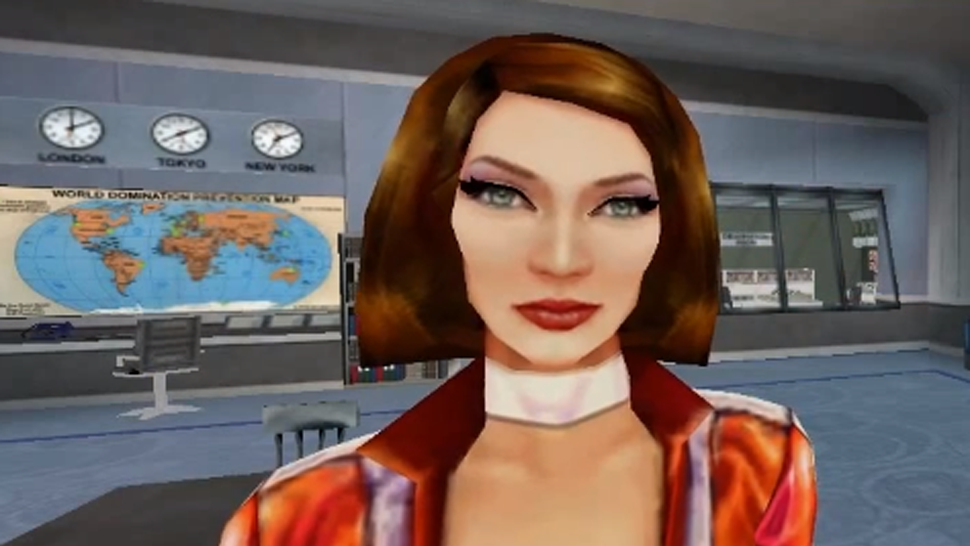
Cate Archer in No One Lives ForeverIt featured some of the most wildly creative level design in gaming history. The most oft-cited example is the mission where you fall out of an exploding plane without a parachute, engage in a mid-air gun fight with H.A.R.M. paratroopers, and have to wrestle a parachute off one of the enemy goons before you leave a small crater.

But NOLF’s massive campaign also took players to Switzerland, Morocco, east Berlin, the bottom of the North Sea, and outer space, among others.

NOLF was ahead of its time in a lot of ways. It was the first game I played with dialogue choices, as well as the first I played with something resembling a new game plus mode, which gave it huge replay value.

The stealth missions were irritating, but even so it stands as one of the finest games ever made.

1: Warcraft III: Reign of Chaos

The word “epic” has been abused a fair bit by the gaming community, but if you want a game that truly personifies what “epic” truly means, Warcraft III is that game.

A mission from the Night Elf campaign in Warcraft III: Reign of ChaosHow good was the story in Reign of Chaos? Well, let’s put it this way. After seeing one cinematic, my mother — who has no interest in gaming or much of anything outside her own narrow field — insisted that I keep her posted on further developments, to the point of calling her down to watch the cinematics if she wasn’t busy.

Prior to Warcraft III, the Warcraft universe had been tremendously simple. Fun, but simple. Reign of Chaos blew up everything we thought we’d known about Warcraft and created a vastly deeper, more complex world. It turned the Orcs into real people with a rich culture and intense inner conflict. It showed the once perfect Alliance crumbling from the rot within. It defied our expectations, it shocked, it inspired, and it ended with a powerful message of hope that would have been at home in the finest Star Trek episode.

And it was so damn epic. It truly felt like the war to end all wars, with the fate of everything on the line. The villains were terrifying. The heroes awe-inspiring.

Nor was the story its only virtue. As a video game, it also excelled. It all but created its own genre by hybridizing the very best aspects of both real time stategy and role-playing games. It was exciting, but not stressful. Challenging, but not unforgiving.

It took the focus away from tedious economic management and put it squarely on the action. Nothing in gaming can beat the satisfaction of casting exactly the right spell at exactly the right moment in Warcraft III.

The Thrall's Vision cinematic in Warcraft III: Reign of ChaosIt was about as close to perfect as any game will ever be.

Honourable mentions:

There weren’t as many excellent games back in the day as there are now, but there are still a few others worthy of recognition. As mentioned above, the Age of ___ games were fantastic, another pillar of the golden age of the RTS genre, and Age of Kings, in particular, stole a lot of my childhood.

Later Age of Mythology sparked a lifelong interest in ancient mythology so intense I now have idols of deities from three separate pantheons watching over me from my headboard as I sleep.

Also on the subject of old RTS greats, the first two Warcraft games were also quite strong, even if Reign of Chaos ultimately eclipsed them. In a roundabout way they’re responsible for my becoming a writer, actually. The Elven archers ignited my love of Elves, which led them to be the focus of the make believe games I played with my friends, which evolved into an entire universe and mythology of my own creation, which led me to learn how to write so I could share these stories.

Also, while I think the franchise has long since lost its way, I do think the original Call of Duty was something of a masterpiece. It certainly gave me a deeper appreciation for the sacrifices of veterans than I’d ever had before.