
Now that Wyrd Street is out the door, I hope to find the time to return to some more traditional blogging, though my work with Massively will remain my focus. I know I’m very behind the times on this, but there’s an issue that’s been sticking in my craw for months, and now that I have a free moment, I’d like to finally address it.
 Last year, a developer for Elden Ring spoke on the lack of discrete difficulty settings in it and the company’s other acclaimed titles, saying that the extreme difficulty of these games gives “meaning” to the experience as justification for not including any kind of easy mode.
I never had much interest in Elden Ring or other From Software games, but as a fan of the art form and occasional dabbler in game design, I find this point of view deeply illogical, and I’d like to take a moment to break down just why I find it so toxic.
I have to ask, what harm would have any easier option actually do? If you’d still play on the current, hard difficulty, what is an easy option taking away from you? If you feel your experience of the game is cheapened by someone else getting to see the whole game with less effort… grow up.
A less elitist argument I have also heard in defence of these games is that people don’t want the easier difficulty because it would tempt them too much. If they had the option to easy mode through the game, they wouldn’t be motivated to overcome its extreme challenges as they do now.
But if that’s the case, is it really the challenge you enjoy? Or is more that you just want the bragging rights to say that you overcame it? Whether ego is the motivation or not, if the difficulty is really what brings you joy, an easy mode won’t tempt you away from it.
 I am not much of an adrenaline junkie in games — I play most things at around medium difficulty — but there have been a few occasions where I’ve sought a greater challenge. In particular, my great love for StarCraft II and the fair and balanced challenge it provides sent me through all three of its main campaigns on brutal, the highest difficulty. I’ve also completed hundreds of co-op missions and dozens of co-op mutations on brutal, even completing one or two brutations solo after my partner disconnected on the load screen.
StarCraft II is quite generous with its difficulty settings, though. Brutal lives up to its name, but there are three levels below that, going all the way down to “casual,” a mode so easy I’m not sure it’s even possible to lose.
And never once has the presence of casual mode made me feel as if my struggles in brutal were cheapened. It did not make me crave the challenge any less, and I do not resent anyone who made it through the campaign without ever reaching so high as normal mode. Why would it? What someone else does with their game has no effect on me.
But let’s go back to the original comment, that the difficulty is what gives “meaning” to the experience. It’s a fundamentally flawed concept.
These are video games. There’s little to no meaning to playing them. They’re entertainment. You’re not accomplishing something great by beating up a pre-scripted artificial intelligence, no matter how challenging it may be.
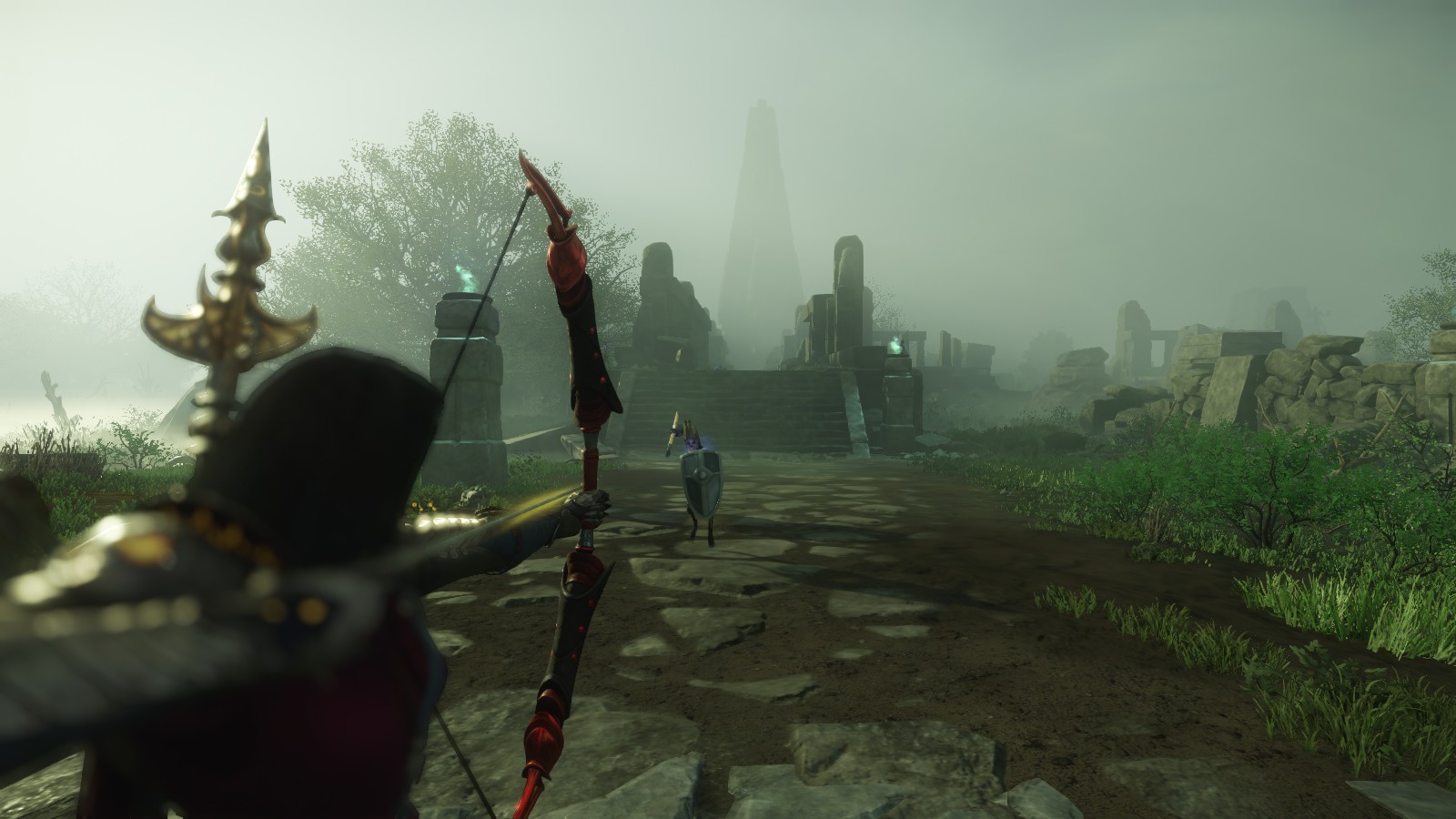 What meaning can be found in games is found in the ways they affect us, the relationships we form through them, the stories they tell, the stories we create while playing them. Difficulty contributes only slightly to that, and in many ways it detracts from it. Perhaps Elden Ring’s story is powerful and moving, but no one who can’t handle its difficulty will ever know (unless they watch it on YouTube or something). Where’s the meaning in that?
And what about disabled players who simply can’t play better? Yes, some people do manage to play hard games despite their disability, but that isn’t possible for everyone. How can you justify locking them out of a hobby just to stroke the egos of your able-bodied customers?
I’m used to this kind of tiresome, exclusionary thinking in the gaming community. MMORPGs have always been rife with it (despite being some of the easiest games around). What continues to baffle me is how people got these ideas in their heads in the first place.
No other medium of story-telling has this kind of elitist thinking. No one’s expecting tests of skill to let you experience any other kind of story, and when you start picturing what that would look like, you start realizing how absurd this whole thing is. Imagine if you weren’t allowed to see Avengers: Endgame unless you were able to actually beat up Josh Brolin.
Now I do want to offer one significant caveat to all this. While I firmly believe there is no valid argument why games shouldn’t have difficulty settings, there can be sometimes be valid reasons for why they can’t have difficulty settings.
 Developers don’t have unlimited resources, especially the small ones, and implementing a variety of difficulty settings does take at least some effort. There are also some games whose nature makes implementing separate difficulties challenging or downright impossible.
MMORPGs are a good example of this. With a shared world occupied by many different players, there isn’t a clear way to allow each person to adjust the difficulty to their desired level.
In those cases, I do lean towards using difficulty levels that best align with the vision of the creators and the fantasy of the game, even if it means some people must be excluded. But even then an argument can be made that aiming for the lowest common denominator is better, and indeed that is what most MMOs seem to do. The two main exceptions I’ve played — The Secret World and New World — both wound up as fairly niche games, and I think their difficulty contributes to that.
So there are some cases where catering to every type of player may not be feasible, but all reasonable efforts should be made to be as accessible as possible. If you’re excluding people by choice, you’ve lost my respect as a developer.



 Superior Realities