
From the inception, I’ve had some pretty clear rules about this blog. One is that the blog is by me, but not truly about me. For the most part I avoid talking about myself or my life save as it affects the core topics of the blog (gaming, writing, speculative fiction).
Today, I’m going to break that rule.
The following post is going to deal with some fairly serious Real Life stuff. Nothing that quite justifies a trigger warning (I hope), but definitely heavier than you’d expect from the average MMO blog. Feel free to move on, and I’ll be back to gushing about Elves and ranting how subscription games suck soon enough, I’m sure.
If you’ve been paying attention, you may have noticed me dropping hints that there’s a lot of change going on in my life the past year or so. My posting less is the most obvious affect. I’m not going to go into detail on all that’s happened, but the simple answer is I have been, for perhaps the first time in my life, truly trying to get better.
See, I’m not a well man. Officially my diagnosis reads “autism spectrum disorder” and “major depressive disorder.” These are also known as Asperger’s syndrome (although that term is no longer used by the medical community, and I never liked it anyway) and clinical depression. While it didn’t get listed on my diagnosis for some reason, I also deal with severe chronic anxiety.
It’s true that I work as a freelance writer, but it’s a part time job. I’ve been placed on permanent disability support; it’s a matter of official government record that I am not expected to ever fully recover.
I could write an entire book trying to explain all the different ways these things affect me, but even that still probably wouldn’t be adequate. If you haven’t lived it, you’re never going to fully understand it. Even I often struggle to fully comprehend what’s going on in my own head.
Nonetheless, I will try to provide a brief glimpse.
Being on the spectrum is the biggest problem, and my other issues tend to spring from the challenges autism has given me. I’m terrified by the unfamiliar — going new places, doing new things, or meeting new people is always a test of endurance.
I have sensory issues. Mine are relatively mild compared to what some autistic people deal with, but even so, spending a few hours in a noisy room surrounded by multiple conversations stresses me out to the point where I will feel miserably, physically ill for days afterward.
I have trouble reading people, and it’s extremely difficult for me to make new friends or form relationships. It’s almost as hard to maintain those relationships long term. I’ve gotten better at interacting with people on a casual level, but my attempts to make deeper, more meaningful connections still usually fail. Even if they accept me — which not all do — there’s still the divide that comes from thinking and feeling in a different way.
I’m also prone to very vivid, intense thoughts and feelings. Something I hear a lot is that autistic people are quiet on the outside but experience a “rich inner life.” Well, yeah, but when you put it like that it sounds like we have fairytale kingdoms hidden inside us. Imagine instead standing in a raging hurricane with ten thousand banshees screaming in your ears.
That’s my “rich inner life.”
Moving on to depression, it feels like there’s an entire cottage industry of people online trying to explain what depression is like, and they still never seem to get it right, especially as it is different for everyone.
I’d say it’s best described as a permanent tilting of your emotional perspective. I’m not always sad, but I am sad a lot of the time, and sometimes I’m very sad. What’s perhaps worse, though, is that it is very difficult for me to feel happy. When I do, it’s usually a dull and fleeting sensation. Often (not always, but often) when I say I enjoy something, what I really mean is that it distracted me enough that I didn’t feel bad for a while. True joy is something I experience only rarely.
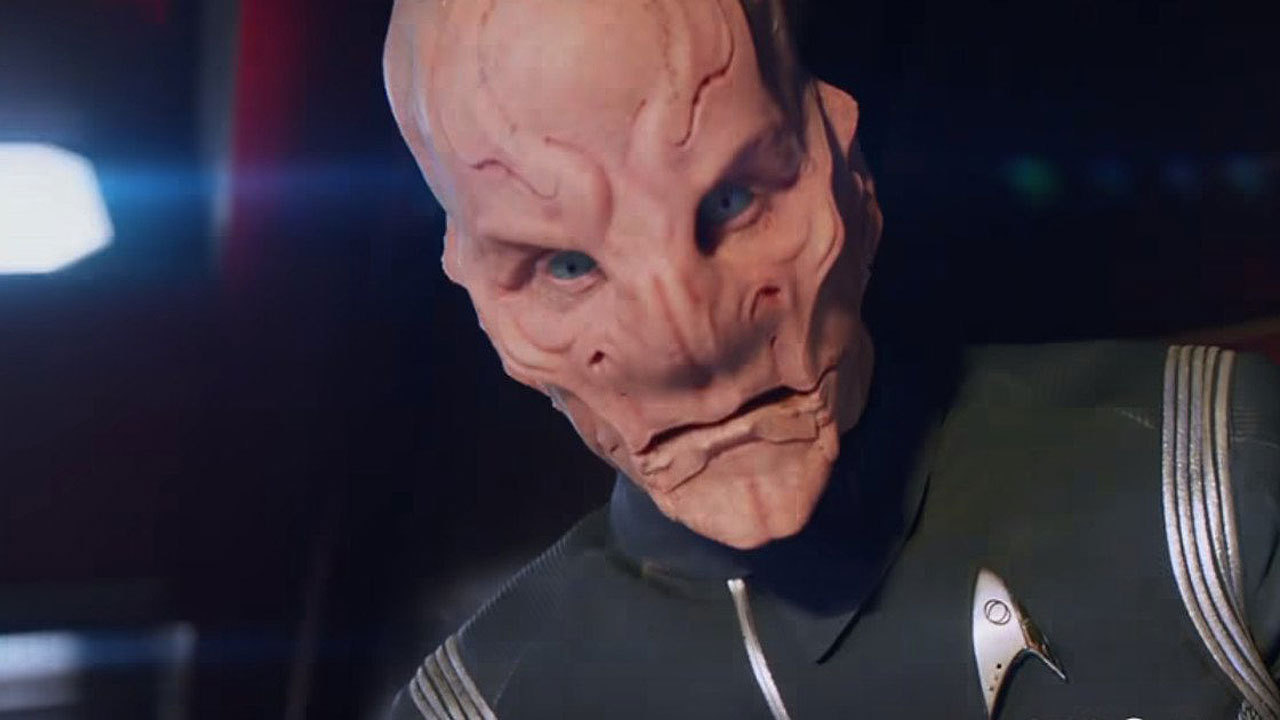
That brings us to the anxiety. Star Trek: Discovery is not, in my view, a good show, but it has done one or two things very well. One of them is the character of Saru. While it’s explained as a feature of his species, he is effectively an anxiety sufferer.
There’s a speech he gave in one episode that really struck a cord for me. He said he was “born afraid,” that he had never lived a moment free of fear, and that the greatest ecstasy he could imagine was to simply not be afraid, even for a moment.
That’s my life. I was born afraid.
I do not bring any of this up to elicit pity. In truth I have less investment than you might think in what any of my readers might have to say about all this — though of course comments are as always welcome.
No, this is about me.
On the interminable road to getting better (which for me means better than I am now, but likely never “better” in the sense of having a normal life) lately I’ve been focused on the concept of self-acceptance.
This is not an idea I’ve ever had much comfort with. My own boundless self-loathing notwithstanding, I have long felt self-love or self-acceptance is a dangerous thing, little more than a synonym for selfishness.
I have encountered more than a few people in my life who use self-acceptance as a get out of jail free card or a way to dodge responsibility for their own actions. I’m terrified that if I’m not so hard on myself, I’ll hurt the people I care about.
But I’m trying to find a way to let go of at least some of that self-loathing. If you hate yourself enough for long enough, eventually you start to hate the rest of the world for allowing you to exist. It poisons everything.
I don’t want to be that person anymore.
As much as I wish it wasn’t true, the reality is I am a fairly sensitive person, and I need to embrace that part of myself.
My current counselor — the latest in a long string of professionals I’ve seen for my issues — said something really interesting to me a few weeks ago. He said that he feels guilt and regret are valuable because they’re reminders of when we have failed to live up to our own goals and values. But he feels shame is a negative, because it’s based on how others see us.
For so long, my mental health problems have been my darkest and most shameful secret. I felt like I was less than everyone else. I felt like I was a bad person because of these issues. I still feel that way, to be honest.
And I’ve been so scared of how others will see me. Especially given that there’s so much stereotyping around autism, even by the people who are trying to be kind. Everyone either thinks people on the spectrum are drooling idiots, or they think we’re Rain Man. Most of us are neither.
For the record, autism is not a blessing in disguise. It does not give me “autistic super powers” (my gods how I hate that term) or make me a misunderstood genius. In reality only about ten percent of autistic people manifest savant capabilities. For the rest of us it’s only a disability.
There is also the general stigma around mental illness. I was afraid being honest about who I am would cost me friends, or cost me work. I was afraid it would invalidate all my opinions in the eyes others.
Actually I’m still afraid of all of those things.
And to be clear, I still don’t think being autistic is a good thing. I’ve yet to find an upside to it, for myself or for anyone else.
But I’m coming to realize it doesn’t need to be the whole definition of who I am. I’m autistic, but I’m not only autistic.
I’m trying to find things that I do like about myself. It’s remarkably hard, but I’m slowly coming up with a few.
I’ll tell you one thing I like about myself: I can find beauty in almost anything. There’s a reason I go for a walk every day. Even in the heart of the city, even walking the same neighbourhoods I’ve seen a hundred times before (because it’s not like I can explore new places without it making me anxious), I almost always find something beautiful that touches me, even if it’s just a particularly vibrant flower, or the way the sun hits the leaves in summer, or the way the snow dances through the air in winter.
There’s beauty beyond the physical, too. The ache in my heart when I read a story that inspires me. The kindness my friends have shown me. The flutter in your stomach when you fall in love.
This is why I’m an environmentalist, a social justice activist, and why I refuse to ever fully give into cynicism over the future of the world. Our world is full of so much beauty. How can anyone not want to fight for that with everything that they have?
And I’m trying to let go of the shame. I want to be better, and I don’t want to hide from who I am anymore. It’s too exhausting to live with that secret, that fear.
Posting this here is a good way of crossing the Rubicon. This blog is my most public outlet. If I’m no longer in hiding here, there’s no point in hiding anywhere. There’s no turning back now.
I don’t know if I’ll talk much more about this in future. I’m not eager to turn this into a mental health blog or otherwise use my illness as a way to gain attention. There are one or two topics I’d like to discuss that are related to this, though, so we’ll see.


 Superior Realities