Review: Dark Matter, “Nowhere to Go” (Series Finale)

A very inconsistent season of Dark Matter ends with a season finale that is also somewhat inconsistent. (And I finally get to see it; thanks for taking your sweet time, Microsoft.)
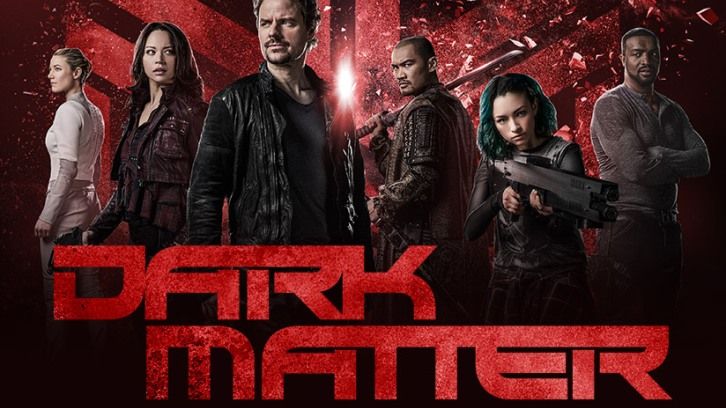
A promotional image for Dark Matter season threeRyo receives a stay of execution as Teku arrives at the helm of a fleet of Zairon warships, extending an olive branch. Through little more than dumb luck, Teku has stumbled across a crucial piece of intelligence: the location of Ferrous Corps’ secret war fleet.

The time is now right to deal a decisive blow to Ferrous and end the corporate war for good. But as is so often the case on Dark Matter, not all is quite as it seems.

In many ways “Nowhere to Go” is Dark Matter at its best. It’s got all kinds of twists, reversals, and betrayals. It’s got action and excitement. It’s got yet another performance from Jodelle Ferland that makes me want to reach through the screen and hug her. And it builds to a heart-stoppingly intense climax and the most dramatic cliff-hanger yet.

Still, there are some things that don’t sit right with me.

I think their reason for not killing Ryo immediately is a good one, but I’m not ready to forgive him, and I’m not sure I want to see him back as a member of the crew. I’m torn because Alex Mallari Jr. is a great actor and I’ve been a fan of his character from the beginning, but after all that’s happened, it just doesn’t feel right for Ryo to be accepted back into the fold. And frankly he just worked better as a villain.

It also seems like we may have lost a cast member again, and I’m not sure what upsets me more: the possibility this could be another fakeout, or that it could be another real death. We’ve had too many of both, and it’s getting tiresome.

The cast of Dark MatterThere’s also the lingering legacy of the missteps that have dogged season three. This should have been the season of the corporate war, but it’s ended up as something of an afterthought, and even now at what is supposedly its climax, it’s not really the focus. We didn’t even get to see Nieman.

This is as much a complaint about the season as a whole as the finale, but I am also disappointed by how the blink drive was introduced as this amazingly powerful thing, and then it’s ended up being used for pretty much nothing. Feels like the writers didn’t know what to do with it and just wanted to put that arc behind them.

Overall rating: 7.5/10

EDIT: Shortly after posting this, it has come to my attention that Dark Matter has now been cancelled, which makes this the series finale rather than the season finale.

Well shit.

Obviously I’m upset at this news. I may not have been entirely thrilled with the quality of this season, but it’s still a show with a lot going for it, and certainly the first two seasons were all but flawless. Dark Matter really deserved a chance to redeem itself.

I have recently learned that the show’s creator, Joseph Mallozzi, had the series’ entire plot arc mapped out from day one, with the plan for it to play out over five seasons. I very much admire that kind of forethought, and it made me eager to see how the rest of the arc was going to play out. I suppose now we’ll never get the chance to see it. That seems like a terrible waste.

I just hope the new Star Trek show is good, because otherwise we’re entering into another very bleak period for sci-fi TV.
Review: The Gates of Good and Evil, book two: The Fatal Gate

Was hoping this would be a review of the Dark Matter season finale, but the app store is being uncooperative, so here’s a book review instead.

Following on the heels of The Summonstone, the second installment of Ian Irvine’s The Gates of Good and Evil series, itself the continuation of the massive Three Worlds Cycle, has at last been delivered into our grubby mitts.

This is a sometimes inconsistent book, which makes it a little hard to rate.

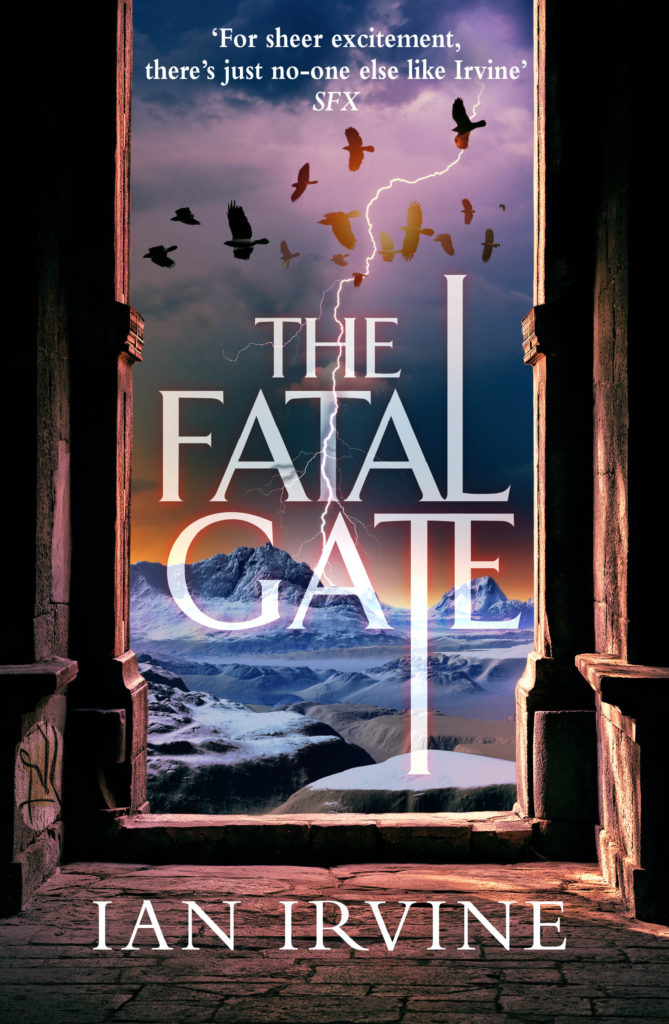
Cover art for The Gates of Good and Evil, book two: The Fatal GateOne thing I have found in my long career of reading fantasy novels is that every author whose series goes on for a very long time eventually falls into a formula that will feel increasingly tired. Stories become predictable, and every book starts to feel the same.

Being a writer of uncommon skill, Ian Irvine has done a better job than most of avoiding this pitfall, but I am starting to see elements of formula creep in. For example, much as I have long admired the intensity of his stories, I have found that more often than not I am now able to predict the outcome of any given situation by asking myself, “What’s the worst possible thing that could happen here?”

And it wouldn’t be an Ian Irvine book without a long, grinding escape through the wilderness in brutal conditions.

I find the cast a little hit and miss, too. As I’ve said before, I find Karan’s sensitive nature becomes rather exhausting after a while. Llian, on the other hand, has grown a lot as a character, and I actually quite liked him in this book. Peasant turned hero Wilm remains a gem, and the tormented double agent Ifoli grew on me a lot, but neither got enough attention.

And the story does take some odd turns at times. The whole “ghost vampire” thing sure came out of left field.

My biggest complaint, though, remains the villains, the Merdrun. They’re too inhuman to have any nuance, but still human enough to feel ordinary. They’re not as scary as the beasts of the Void, as grand and tragic as the Charon, or as viscerally vile as the God-Emperor. They’re just boring.

I have to say again that my expectation and hope had been that The Gates of Good and Evil would focus on the conflict between Karan’s family and Maigraith. Maigraith, to me, deserves the title of the greatest and ultimate villain of the Three Worlds saga, and hers is the story I want to read.

There is some attention in The Fatal Gate given to the threat she represents, and it’s by far the best part of the book, but it’s not enough.

The whole situation kind of reminds me of my continued desire for an Azshara expansion in World of Warcraft. Both incredible villains, both situations where I’ve spent years longing for the final confrontation, and both situations where I seem increasingly destined for disappointment.

That said, there’s also quite a lot about The Fatal Gate I do like.

While it’s still not quite as much of the story as I’d hoped, there is a lot more that bridges the gap between The View from the Mirror and later books in The Fatal Gate than The Summonstone, and some of them can be real “chills” moments. In a way it’s sort of heartbreaking to see the seeds of so much misery and destruction being sewn, but it’s a part of the story that needed to be told.

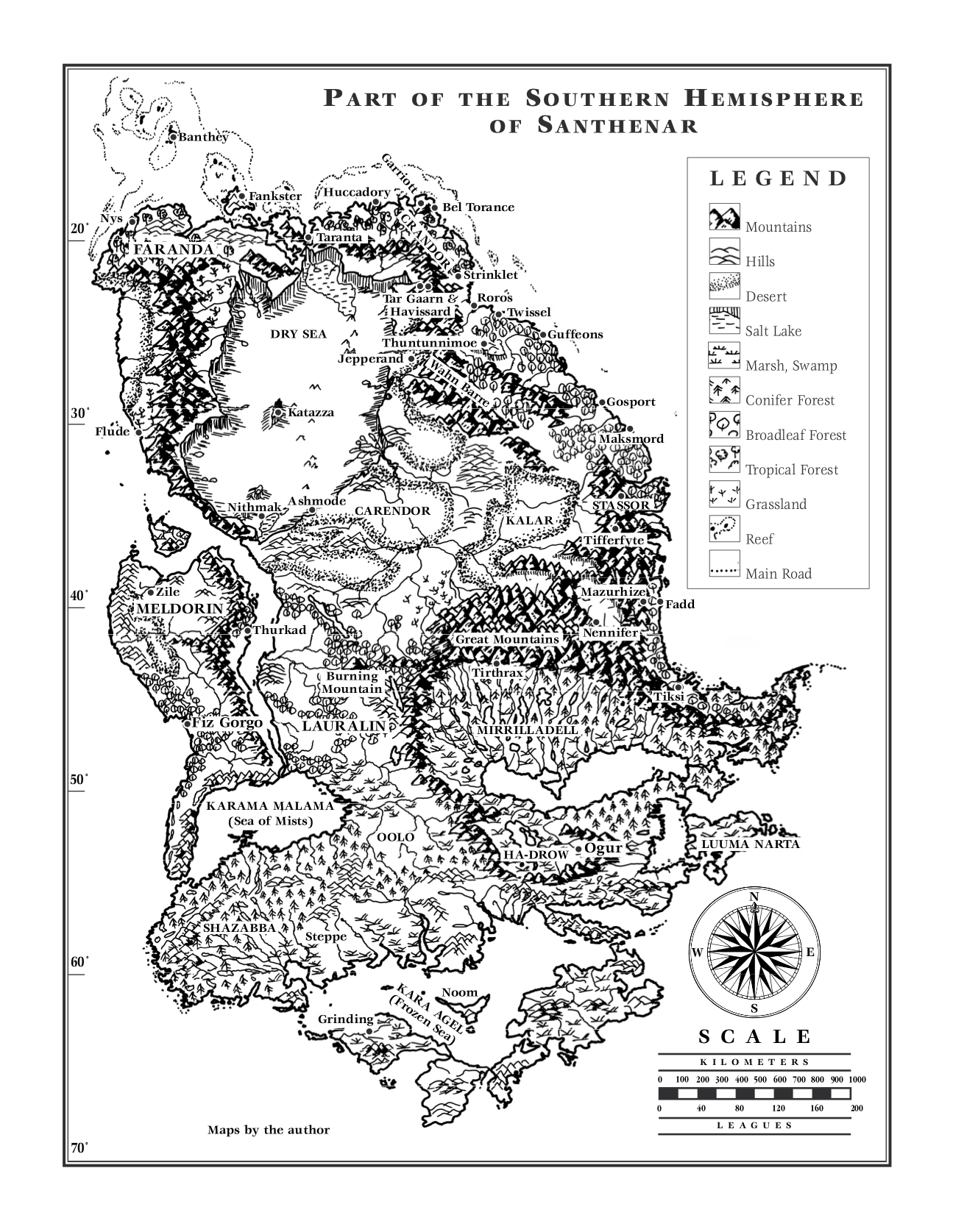
A map of the continent of Lauralin on the world of Santhenar, setting of Ian Irvine's Three Worlds novelsFormulaic elements notwithstanding, Irvine is still an absolute master at producing page-turners, too. You would think a 500+ page book might be a bit slow in places, but you’d be wrong.

The best part of The Fatal Gate, though, is its final few chapters, which unfortunately I can’t talk about in detail without all kinds of spoilers. Even there, there are a few things I’m not sold on, but the overall result was a fiercely exciting and often powerful ending that has me incredibly eager to read the next book.

As an aside, that there will be a next book cannot be doubted, but whether it will be a continuation of The Gates of Good and Evil or part of a new series is less clear. The back cover of The Fatal Gate declares it to be “the epic conclusion to The Gates of Good and Evil duology,” but the last page says that the series will continue, and the current direction of the story seems more suited to a continuation of the series rather than starting a new one.

It’s all a bit confusing.

Overall rating: 8.7/10