
We now continue with my series of self-indulgent nostalgia posts discussing the sci-fi and fantasy I loved as a child, which turned me into the proud nerd I am today.
 This time, I’ll be discussing video games. Note that I am limiting this to sci-fi or fantasy games that had a significant impact on my views of those genres, so there are some games that I truly loved that will not be discussed in this post. The Age of Empires franchise, for instance.
Some of these are also games that I’ve discussed before, so my thoughts on them may be a little truncated to avoid repeating myself too much.
Warcraft:
Of course, Warcraft is always the first game franchise that comes to mind on this topic. Warcraft: Orcs and Humans wasn’t the first game I ever played, but I did start on it very early in my life, and it’s probably the first one to have had a major impact on my tastes going forward. I would go on to spend an enormous amount of time playing it and its sequel, Warcraft II: Tides of Darkness.
In retrospect, the early Warcraft games weren’t particularly special by modern standards. They were fantastic given the limitations of the era, but looked at through modern eyes, they were fairly thin experiences that shamelessly ripped off Warhammer and Lord of the Rings.
Still, I loved them at the time, and Warcraft II is noteworthy for kickstarting my lifelong love affair with Elves. With their coolly confident voices, lethal ranged attacks, badass capes, and epic hair, my seven year-old self thought the Elven archer units were just the most amazing thing ever.
 Warcraft III, however, was something special. It vastly expanded the universe and added an incredibly amount of depth and complexity to what was previously a very simple story.
Timing also played a role in my love for Warcraft III. It came around just as I was getting old enough to understand that the world isn’t entirely black and white. I think it had a profound impact on my sensibilities as a writer, and as a person. It helped to waken me to the idea that there is more than one perspective on everything, that one person’s villain is another’s hero.
The expansion, The Frozen Throne, was less impressive, but it did take my Elf obsession to new heights by reinventing the Elves as the Blood Elves, who remain my favourite interpretation of the archetype from any source.
Again, timing plays a role. To my teenage brain, the edgy, sexy, misunderstood Blood Elves seemed irresistibly cool.
StarCraft:
Blizzard’s other great RTS franchise also deserves a mention, but truthfully, I’m not sure it really had that big an impact on me.
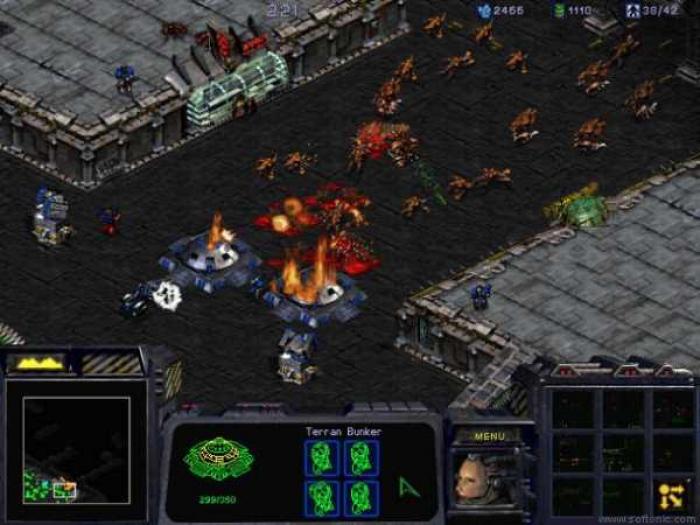 Now, don’t get me wrong. I loved StarCraft, and still do. It was a great game with a strong if somewhat imperfect story, and from a gameplay perspective, it was a quantum leap forward for the genre.
I’m just having trouble drawing any direct lines between my love of StarCraft and my current sensibilities. I had already developed a certain degree of interest in sci-fi thanks to things like Star Trek and Beast Wars.
Mostly all I can say is that Jim Raynor was and remains my all-time favourite video game character, a rare example of a character who is presented as an everyman forced into the role of hero and actually feels authentic as both.
One nice thing is that StarCraft 1 is the only entry on this list that can be readily played today, without dealing with technical issues or outdated graphics and game mechanics.
Drakan: Order of the Flame
Here’s a game that’s definitely not remembered as one of the great classics. Still, it was special in its way, and I remember enjoying it a lot — despite some glaring problems.
 Drakan was a fairly generic fantasy story — Evil McBadPerson is coming back from the dead to destroy the world, unlikely hero must stop him — centered on a young woman named Rynn, who bore a remarkable resemblance to Lara Croft. Rynn stumbles across a dragon named Arokh and winds up soul-bound with him.
So the gameplay split between content played as Rynn and aerial sequences atop Arokh.
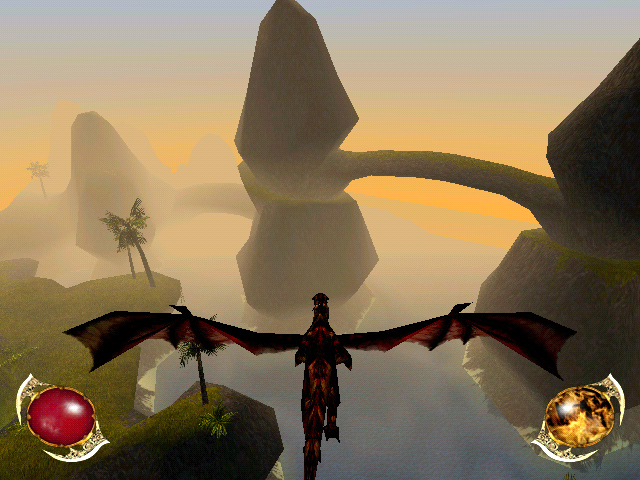
Arokh is what made the game worth playing. His wry humour and cynicism gave him infinitely more personality than Rynn, but the gameplay of playing as a dragon-rider is what made Drakan really special.
Few things in my gaming career have equaled the sheer thrill of soaring through the air atop a fire-breathing dragon, and Drakan made it every bit as amazing as you would expect. The controls were simple and intuitive, the maps were expansive and full of potential for exploration, and Arokh’s power was awesome in the truest sense of the term. Enemies that would be challenging or nearly unbeatable as Rynn could be effortlessly incinerated by Arokh.
Despite its generic story, Drakan impressed upon me the sense of awe and wonder that the fantasy genre is capable of, and I still have many fond memories of soaring across the Eastern Archipelago, raining fire on my enemies.
 Drakan is also noteworthy for beginning my lifelong hatred of jumping puzzles and platforming mechanics. I truly believe the gaming industry has evolved beyond the need for such things; I wish they’d just go away altogether.
Myth:
I am not given to looking back with rose-coloured glasses. I am not someone who grumpily declares that games were so much better back in the day and the current crop of games just can’t compare.
But the Myth franchise was something so unique and special that even today I’ve never quite seen a game equal it.
For whatever reason, Myth: The Fallen Lords and Myth II: Soulblighter* did not become elevated to the pantheon of all-time great RTS games like Age of Empires and StarCraft, but they deserved to be. They ought not to languish in forgotten obscurity as they do.
*(We don’t talk about Myth III. It didn’t happen.)
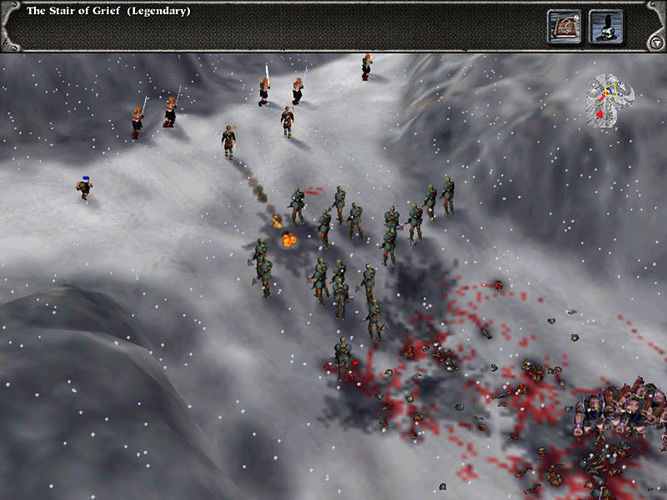
 Myth wasn’t like other strategy games. There was no base-building, no economy. Only very rarely would you ever receive reinforcements during a mission, and you virtually never had any control over when you got them. It was just you and a small group of soldiers fighting against impossible odds.
And things did often feel all but impossible. These were brutally difficult games, which is my one complaint about them. You were invariably outnumbered, often outgunned, and there were a million little things that could go wrong.
Which brings me to another unique thing about Myth, which was how incredibly realistic the combat was. It’s hard to imagine, but these janky old games from the 90s managed a level of realism that is unheard of even today. Wind could blow your archers’ arrows off course. Rain could cause your Dwarves’ grenades to fizzle out. Body parts rolled downhill. Explosions sent deadly chunks of shrapnel wheeling across the battlefield, cutting apart friend and foe alike.
This immense realism and the complexity it created were a big contributor to Myth’s difficulty. One wrong move could send a grenade flying into your own Dwarves, causing a chain reaction as the grenade set off their satchel charges. This would turn your army into a conflagration of flame and severed limbs, at which point the supremely deadpan narrator would calmly declare, “Casualties.”
And then I’d laugh my ass off even as ghols tore apart what was left of my army.
But the genius of Myth was not confined to its gameplay. It also had a brilliantly different story.
 Myth was a bizarre mashup of some of the best elements of Warcraft, Lord of the Rings, and The Black Company. It was high fantasy in the truest sense of the term, full of magic and fantastical beasts, but yet it also felt incredibly gritty and real.
The interesting thing is that they didn’t give you a birds’ eye view of events as most such stories would. Everything was told from the perspective of ordinary soldiers on the frontlines, who often didn’t fully understand the plans of their superiors. Normally I’m not a fan of ambiguity in story-telling, but in this case, having only incomplete glimpses of the world and its history made it feel so much more real.
Much like the how the gameplay could be unrelentingly difficult, the story of Myth was often ruthlessly bleak, depicting a world bereft of hope in the face of all-consuming darkness, but that only made the characters feel more heroic, the struggle more meaningful.
I’ll also say that despite that almost complete lack of any character development or personality, I still think Soulblighter is one of the all-time greatest video game villains. You’ve just got to respect a guy who cut off his own face and tore out his own heart “in a ritual too dark to name.”
And I haven’t yet touched on my great love for the Heron Guard (Best. Paladins. Ever.), or how hilarious the Dwarves were, or the utter badassery of the Trow, or the sheer terror of the Myrkridia…
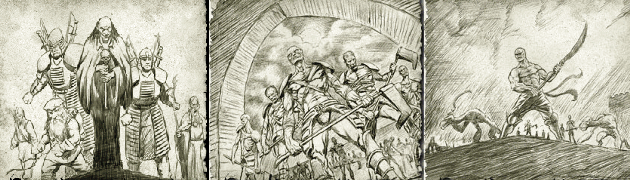 Or I could talk about they seamlessly blended traditional high fantasy elements with more obscure concepts out of Irish and Mayan culture and their own unique fiction…
Damn, I miss Myth.



 Superior Realities