
To be blunt, the Star Trek franchise is, at best, a pale shadow of its former self right now. The new films are keeping the name alive, but not the spirit. There’s finally a new TV series in the works, but while I’ve heard some promising things about it, my expectations remain terribly low, and I’m not entirely sure I’m even going to watch it.
 I have ranted before about my complex relationship with Star Trek and my disillusionment with the franchise, but I must confess part of me does miss it. Or what it stood for, at least. As bitter and dysfunctional as my relationship with Trek is, I at least always admired its potential and its ideals, and the world does feel a bit lesser without them.
But there is some good news. Traditional Star Trek may be gone, but its spirit is being kept alive in other forms. I thought it’d be worth taking a look at Star Trek’s spiritual successors.
Mass Effect:
I think Mass Effect, more than anything else, is the franchise that’s kept the soul of Star Trek alive. This feeling has only gotten stronger since Bioware put out a promo for Mass Effect: Andromeda that is basically the opening credits for Enterprise except they replaced the crappy music with Jennifer Hale narration.
The similarities are immediately obvious. Both feature a future where most, though not necessarily all, of our current problems have been solved by technology and enlightened society, and humanity has joined a galactic community of many myriad species.
Cerberus is pretty much a hybrid of Section 31 and Terra Prime. The Reapers have Borg overtones. Krogan are Klingons, and Asari are Betazoids (to the point where Michael Dorn and Marina Sirtis have voiced roles for them). We’ve got Brent Spiner voicing a sentient machine who wants to be more human.
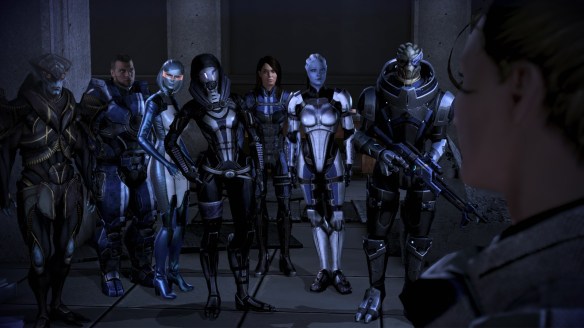 Mass Effect could have done better when it comes to the ideal of infinite diversity in infinite combinations (IDIC), but they at least made an admirable effort toward it, featuring a core cast composed of both humans and aliens, a decent balance of genders, and at least some non-white humans.
They also offer good representation to LGBT characters, which is an area where Star Trek dropped the ball. My version of the story prominently features a mixed race same-sex couple, and it doesn’t get much more IDIC than that.
And of course Mass Effect is filled with moral quandaries the likes of which would do any Trek episode proud.
Heck, Mass Effect even inherits some of Star Trek’s bad habits, like a somewhat bland and safe setting, an excess of filler, and alien races that are usually just weird-looking humans when you get down to it.
Overwatch:
Overwatch may not be about space travel or exploring the universe, but it’s probably the best exemplar out there of the IDIC philosophy, with one of the most diverse casts in gaming (or any media, really).
 There’s that same sense of optimism Trek embodied, too. The idea of trying to inspire us to our fullest potential. What was that quote from Winston’s short? Something like, “Don’t see the world as it is. Dare to the see the world as it could be.”
Something like that anyway. That’s pretty much the soul of Trek right there.
Of course this does again bring up the bizarre divide between Overwatch the world and Overwatch the game. The world is this beautiful vision of a better future and the heroes fighting to build and maintain it, but the game is just a pointless murder box. All the story takes place outside the game.
Of course this does have the advantage of letting Trek fans get an IDIC fix even if they’re not gamers. I feel bad for all my non-gamer Trekkie friends who missed out on Mass Effect.
Stargate: Universe:
I considered leaving this out because SG:U has been off the air nearly as long as Star Trek, but I think it deserves a mention.
If you’re craving a story of space exploration, it doesn’t get any better than Stargate: Universe. No other series has captured the wonder and terror of deep space as well. Actually SG:U did a fair bit better on this front than Trek ever did.
Ancient Space:
 And we’re back to video games.
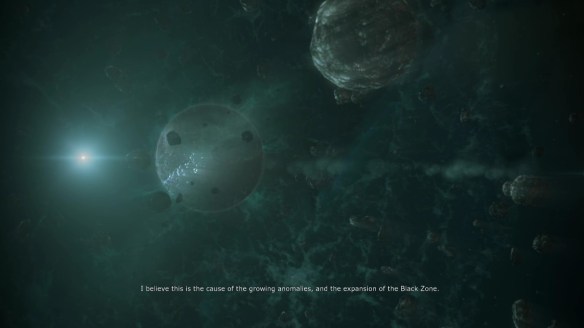
Ancient Space is another title that really embodies the mysteries of deep space exploration, depicting a surreal and alien area of deep space and its strange inhabitants.
Actually, the entire game was quite clearly an homage to Enterprise’s Xindi arc and the Delphic Expanse, an idea I whole-heartedly approve of. They even hired John Billingsley to play one of the major roles and had him reference one of Phlox’s more famous lines.
And Ancient Space did make at least some small effort toward a cast with diversity. The main hero is a female scientist, Dr. Willow Burke, and that’s both fairly unusual for a video game and quite a Star Trek-y thing to do.
* * *
I do think it’s interesting how most of what I come up with for spiritual successors to Star Trek are video games. Part of this is undoubtedly due to the fact I spend more time playing video games than watching TV these days, but I think it also says something to how video games are really on the bleeding edge of entertainment these days, how they’re often one of the best places to find daring and cutting edge story-telling.
 As I’ve grown older and more experienced, I’ve come to the conclusion that romance and horror are both genres that I actually enjoy quite a lot. It’s just that my idea of what makes for a good romance or a good horror story are very different from mainstream society.
 And the Raven, never flitting, still is sitting, still is sitting
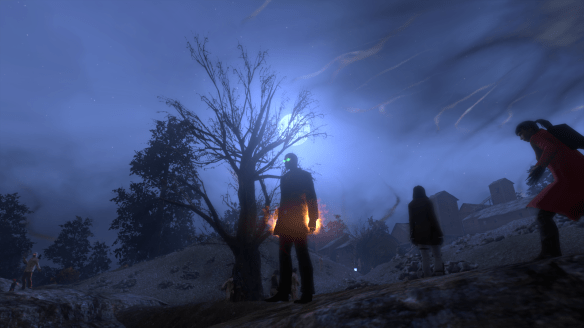 The horror that I enjoy isn’t about making you jump in your seat or squeal in terror. It’s about mystery and ambiance. It’s about reflecting on how much of the universe we still don’t understand, about hearkening back to when I was a child and I looked into the darkness and wondered what was out there, not entirely sure I wanted the answer.
 I’ve talked before about how King and Lionheart by Of Monsters and Men is one of my favourite songs. To me, it’s an exemplar for a better, more dramatic style of romance.
 Another major complaint, which I’ve mentioned before, is how romances tend to focus almost exclusively on the beginning of relationships. There are some compelling reasons for this, but it’s still incredibly myopic, and it’s one of the main reasons that romance tends to be arguably the most formulaic style of fiction in existence. There’s only so much variation you can put on infatuation and the honeymoon phase.
 Ahem, sorry, bit of a tangent, there. My point is that romance lacks variety.
 Superior Realities