Review: Shadows of the Apt: The Air War + New Banner

Behold the shiny new banner for Superior Realities! Handcrafted by yours truly by the finest fan and concept art Google can provide. Bask in its bannery bannerness!

Review: The Air War:
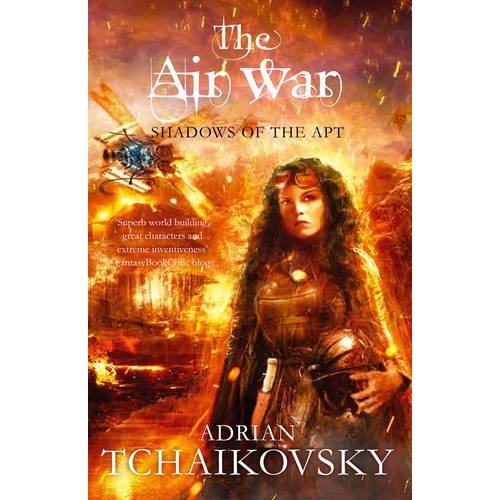
Cover art for "Shadows of the Apt, book eight: The Air War" by Adrian Tchaikovsky“The Air War” — a book that will in my mind always be called “The Wasp Empire Strikes Back” — is the eighth installment of “Shadows of the Apt,” the steampunk/fantasy epic by Adrian Tchaikovsky. For background on the series, see my reviews of the last two books.

In many ways, “The Air War” is exactly what I wanted. After three books of the calm before the storm, we’ve finally reached the storm. The Wasp Empire has recovered from its prior defeats. Empress Seda has consolidated her power, both political and magical, and now stands poised to unleash both the nightmarish magic of the Inapt and the industrial brutality of the Apt upon her foes.

And yet, I found “The Air War” just a bit underwhelming compared to how stellar the last book, “Heirs of the Blade,” was. I think there are two reasons for this.

The first is that Tchaikovsky has started to fall into the trap many authors of long stories do: the cast is simply getting too big. “Shadows of the Apt” was already an incredibly vast story with numerous major characters, each with their own arcs, but “The Air War” heaps even more new characters and subplots onto the proverbial plate.

The story is now so crowded that it’s becoming difficult to get invested in any particular character or plot, because the moment you do, you’re yanked to the other end of the world for another subplot, and it could be multiple chapters before you get back to the first character.

And despite the overcrowding, some characters are still managing to get neglected. After an entire book devoted to the adventures of Che Maker, it’s jarring that she is mentioned only once in all the six hundred pages of “The Air War.” And things just aren’t the same without Tynisa or Thalric.

To be fair, Tchaikovsky is still doing a better job of handling his characters than many other authors in similar situations. He has not yet reached the point Raymond Feist is at, where he’s just churning out an endless stream of generic and unimportant characters for no apparent reason. Even if I wish he’d focus on old characters instead of new ones, I must admit the new ones are pretty well-crafted.

The other issue is that it becomes clear very early on in the book that this is hour of the Wasp Empire’s ascendance, and that nothing is going to stop them. At the risk of giving too much away, “The Air War” is essentially just an endless litany of Wasp victories.

Keep calm and defend CollegiumOn the one hand, this does add a nice intimidation factor to the Wasps, which I feel they’ve generally lacked, but on the other hand, it gets repetitive.

I like books where the protagonists are frequently on the losing end of things. I’ve even written a few myself. But there needs to be some balance. The good guys need to win a few times, or at least come close, to throw their losses into even starker relief. There’s none of that here. I apologize for the gamer lingo, but this book consists almost entirely of the Wasps facerolling the rest of the world.

Still, “The Air War” has a lot going for it. It’s pretty much non-stop action from start to finish, and Tchaikovsky’s action sequences are not something anyone in their right mind is going to complain about.

There were also some characters that really stole the show.

The first, unsurprisingly, is Seda. She is well on her way to becoming one of my all-time favourite fantasy villains. Her depraved passions and utter ruthlessness are absolutely chilling, and the way we’ve seen her progress from someone utterly helpless to the most dangerous woman in the world is just masterful.

The second was surprising. Jodry Drillen, speaker for the Collegium Assembly, was never a character I took much note of. While not a bad man by any means, he was always portrayed as a politician to the core — a morbidly obese Beetle who loved power and its privileges. He never struck me as heroic, or even particularly likable.

But as the war wears on, a very interesting change comes over old Jodry. His veneer of political calm is slowly stripped away, and we’re left with our first real glimpse of the man beneath the calculated public image, and there’s more steel and more compassion there than one might have expected.

Also, while not a specific character per se, I quite enjoyed the portrayal of the citizens of the city-state of Myna. I don’t want to give too much away, but… let’s just say Mynans are badasses.

In the end, “The Air War” is a pretty solid book, but I’d hoped for more.

Overall rating: 7.4/10 Neither the best nor the worst installment of the series.

New articles:

What MMO has posted a couple more of my articles: Top 6 Hidden Talents of MMOs and 7 Habits of Highly Ineffective Players. Enjoy.

F2P Versus P2P: The Fun Factor

I’ve talked before about MMO business models, and I’ve not been shy about my opinion that free to play is probably the way of the future, as well as my personal preference.

My Sylvari elementalist in Guild Wars 2But one thing I haven’t really addressed — and that I haven’t seen many people address — is how these two models affect the actual gameplay. As much as their proponents would like to ignore it, both models will affect the design of a game. Developers are businesses, and they’ll try to get you to spend as much money on their game as you can — whether by encouraging micro-transactions or trying to get you to subscribe for as long as possible.

This post isn’t about which model will cost you less money. It’s about what’s more fun.

But first…

A few caveats to get to first. Firstly, while I may talk broadly about the business models, I’ll admit that I’m mainly talking about World of Warcraft and Guild Wars 2. Those are the games I’m most familiar with. It is possible — though unlikely, I think — that one or both of these games are outliers and not representative of other games with their business models.

My Night Elf monk at the Peak of Serenity in World of Warcraft: Mists of PandariaIf anyone has found their experiences with other free to play and pay to play games to be different, please comment so I can expand my understanding.

And of course, this is all just my personal opinion, etcetera, etcetera.

On with the show!

You don’t have to use the cash shop… but we’d like it if you did:

Part of what inspired this post is a minor uproar among certain Guild Wars 2 fans regarding the in-game Halloween event, Shadow of the Mad King.

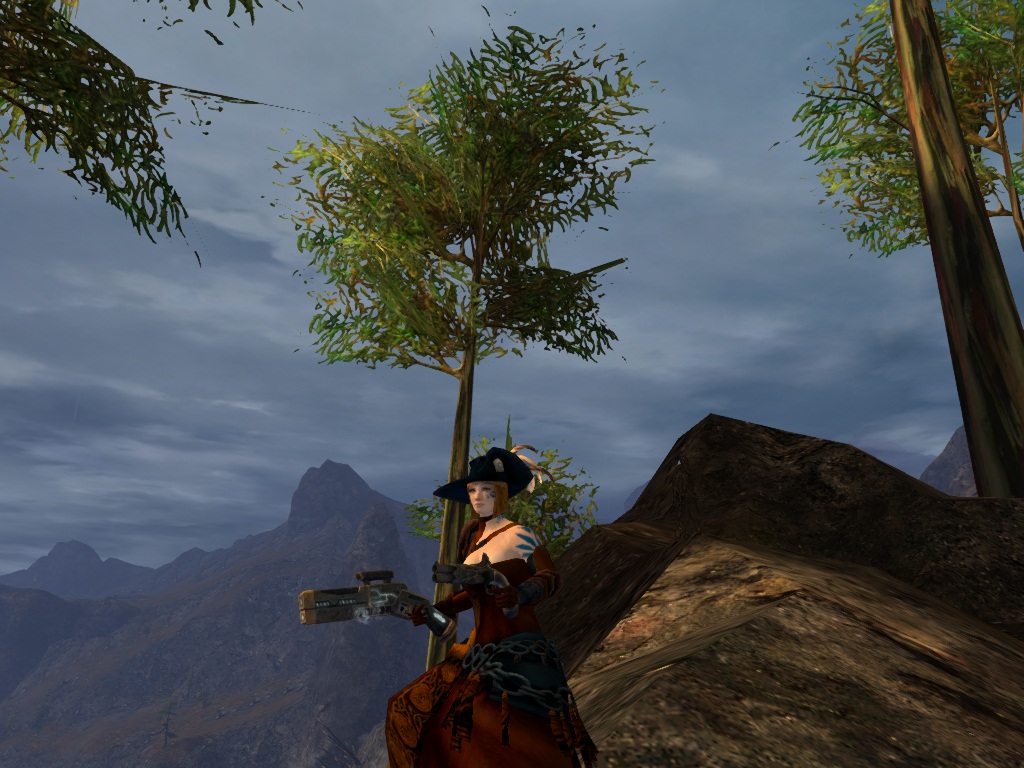
My thief showing off her stylish pimp hat in Guild Wars 2To make a long story short, many of the rewards for this holiday take the form of cosmetic weapon skins, and these can only be obtained as a random drop from Black Lion Chests. The Chests drop freely in the game, but the keys to open them are largely only available from the real money gem store.

You can still get the skins with gold by either converting gold to gems and buying keys or buying the skins directly from those lucky enough to get them to drop, but this is pricy in a game where gold is still relatively hard to come by.

People are upset by this, but I can’t see they’re surprised. ArenaNet always said the cash shop would provide cosmetic rewards.

It does raise the issue of whether or not the gem store is something onerous, though. I’m not at all bothered by the issue with the holiday skins, but I’ll admit there are times I feel the pressure of the cash shop.

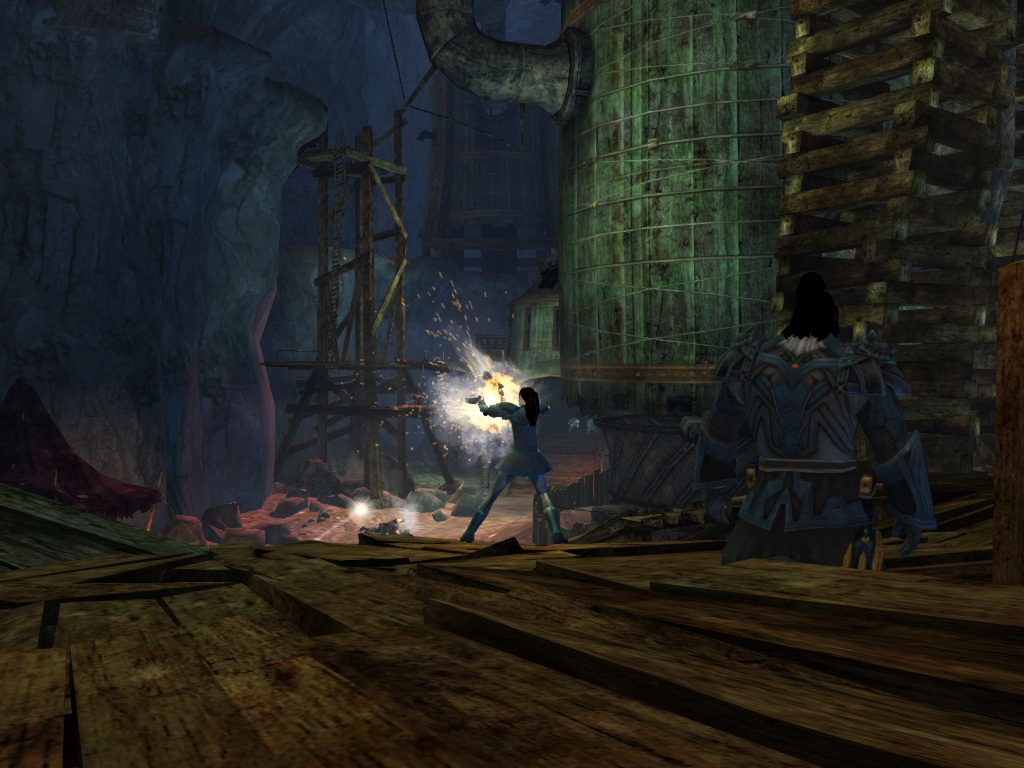
My thief blasting with her pistols in Guild Wars 2For me, it’s transmutation stones. I’ve been spoiled by WoW. In WoW, I can, at any time, customize my gear’s appearance by going to a transmogrifier and swapping out skins. It costs little and is convenient.

To do the same in Guild Wars, I need to either pay real money or grind map completion achievements and/or gold to get transmutation stones, each of which is good for only one skin change to one piece of gear.

I still have enough stones to maintain a decent level of style most of the time, but the unreliability is somewhat frustrating.

Then again, I don’t need these stones. I can still access 100% of the game’s content without spending a dime. If I occasionally do so without a perfect outfit, well, I’m usually too busy enjoying the epic combat to even notice.

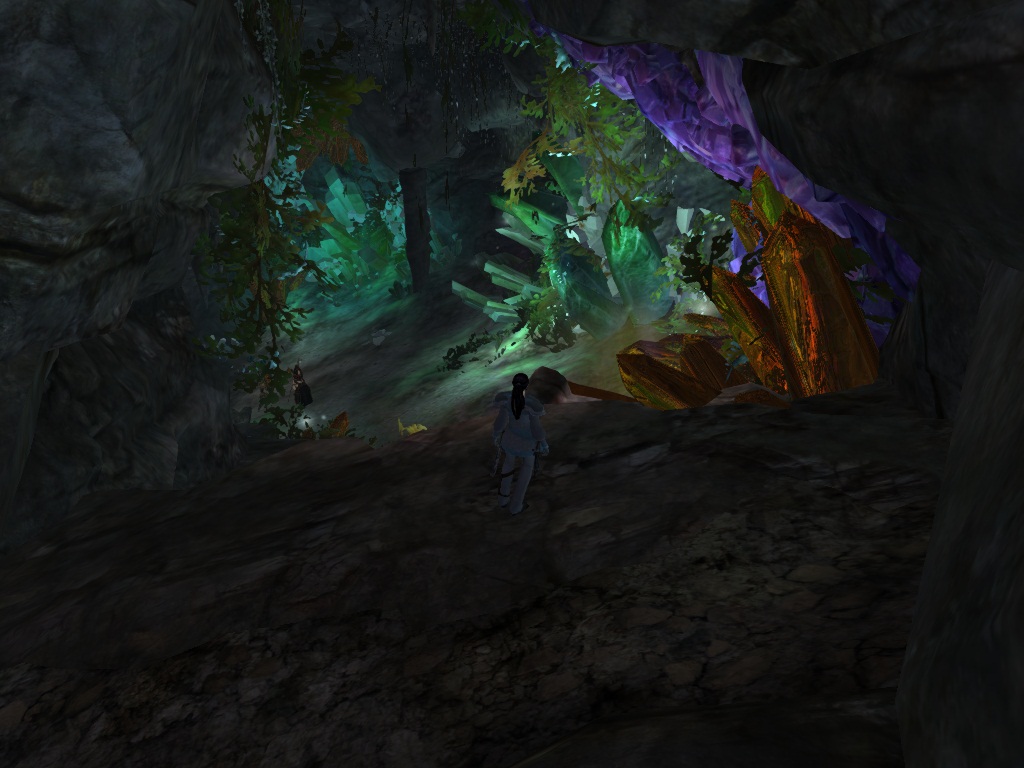
A hidden cave in Guild Wars 2Guild Wars encourages you to use the cash shop, but I’ve yet to see any situation where you’re forced to spend money.

You wanna stay? You stay here forever!

One expects a free to play game to steer people toward the cash shop. The general perception of the business model is that these games will nickel-and-dime you to death with their micro-transactions.

But pay to play games free you from such miserly game design, right? For the price of constant payments, you’re free to play the game as you desire.

Maybe not.

Lorewalker Cho telling me the tale of Emperor Shaohao in World of Warcraft: Mists of PandariaMists of Pandaria has a controversial endgame. Whereas once valor and justice points were an excellent way to get geared, they’re now harder to get, purchase less valuable gear relatively speaking, and require reputation to even spend.

On top of that, reputation is now much harder to get than it has been in years — perhaps even in the history of the game. Tabards are gone, leaving daily quests essentially the only option to earn reputation, and those daily quests award less than half the reputation dailies traditionally have.

The end result is a fairly massive grind just to reach the point you would be at simply by hitting max level in a previous expansion.

Many people say this grind is optional, and they are in the sense everything in the game is, but even Greg “Ghostcrawler” Street himself has said he doesn’t want them to be “too optional.” Blizzard wants you to do these dailies, and they’ve done everything they can to goad you into them.

The Clutches of Shek'zeer in the Dread Wastes in World of Warcraft: Mists of PandariaBlizzard says they want more people in the world, but I find it impossible to see this as anything but an attempt to stretch out content so people will, theoretically, stay subscribed longer. Slower progression means longer subs and more money.

Naturally, many people aren’t too happy about this. I count myself one of them, though I’ll admit gearing up is not quite the nightmare I expected. I’ve been able to do Mogu’shan Vaults via the Raid Finder despite skipping many of the dailies because they’re horrible.

Still, it’s an annoyance, much like the transmutation stones in Guild Wars 2. The main difference is Guild Wars 2’s annoyances are cosmetic, whereas WoW’s annoyances have the potential to leave me out of content by hobbling my progression.

Not to mention the issue of falling behind the gear curve if you stop playing for a while — though to be fair, Blizzard does work fairly hard to make this less damaging than it could be.

A herd of macaroni dragonsAnd then there’s the fact that many WoW players pay for more than their subs. There are the sparkle ponies, disco lions, and macaroni dragons. There are the pets.

These are cosmetic, true, but then there are server and faction transfers. Those can have major impacts on your gameplay — my enjoyment of my Horde characters increased immensely after moving to Wyrmrest Accord. And these transfers are not cheap, especially layered on top of subscription fees.

Getting down to it:

What it comes down to is this: both free to play and pay to play affect gameplay negatively. In both cases, the need to wring more money from players will compromise fun sooner or later. In neither case is it game-breaking, but nor is it as painless as developers would like you to believe.

For me personally, though, I feel more like I’m being nickle-and-dimed when I’m playing a subscription game. GW2 only asks for my money, whereas WoW asks for both my time and my money. To Blizzard, they’re one and the same. “Time is money, friend.”

My warlock battling the Sha in the Jade ForestWhereas GW2 gives me a choice about how much to spend, WoW sets a minimum and only goes up from there. Whereas GW2 only penalizes convenience and appearance if I don’t play their way, WoW penalizes my character’s performance and ability to access content.

I’m not saying it’s enough to completely turn me off WoW or subscription games, but it certainly runs contrary to the public perception of MMO business models.