
Like any creative work, a novel inevitably ends up with some things on the cutting room floor. There are certain elements of the World Spectrum universe that I wanted to describe but simply never found the time to without diverting from the main plot.
 Industrial Automatons:
As you read the World Spectrum novels, you might get the impression that all Automatons — or at least the vast majority of them — are war Automatons, but this is not the case. Industrial Automatons, used for more peaceful purposes, are fairly common.
Such Automatons are used for things like mining, forestry, demolition, and construction. Pretty much the things you’d expect heavy machinery to be used for in the real world. They tend to be more more highly specialized than their military counterparts, and they are usually not humanoid. They more closely resemble things like backhoes and other real world industrial machinery.
They didn’t come up much because the story largely focused on war and conflict. And once things started to get really crazy, I imagine most of the civilian machines were broken down, their parts re-purposed to create more war Automatons.
Civil wizards:
Similarly, the reader’s view of magic in the spectrum of worlds is almost entirely limited to battle wizards. But not all wizards choose a militaristic life. Indeed, the majority are what is known as civil wizards.
As you might expect, magical powers have a lot of very useful applications. For example, civil wizards are very useful in the worlds of construction and landscaping. They can fuse stone, bind structures with magic, and alter the shape of the land, and they can do all these things with more subtlety and care than Automatons or conventional labourers.
 Other wizards’ abilities lean more toward the artistic. Wizard-artisans can create statues and carvings of exquisite detail and breath-taking beauty, and their works are sought by wealthy art-lovers the world over.
The rarest of wizards were the Healers, who could use magic to cure disease and restore injury. This requires a supreme mastery of sorcery, for magic is a chaotic and dangerous force that can easily do more harm than good.
The life of a civil wizard varies greatly based on the choices of the individual and the nation they live in. Most seek out the employ of a wealthy benefactor — usually the government or a major private company or guild — who would pay for their services. However, especially skilled or specialized wizards may live as freelancers, selling out their services to the highest bidders.
Of all the human nations, Uranna has the greatest tradition of civil wizardry. They see the great potential inherent in a strong pool of magical talent, and their government sponsors all civil wizards, even those whose talents are more in the area of the artistic than the practical. As a result, Uranna is a land filled with magically wrought beauty.
Leha and Drogin’s resemblance:
This is a really minor detail, but I never found a place to mention it, and it always bugged me.
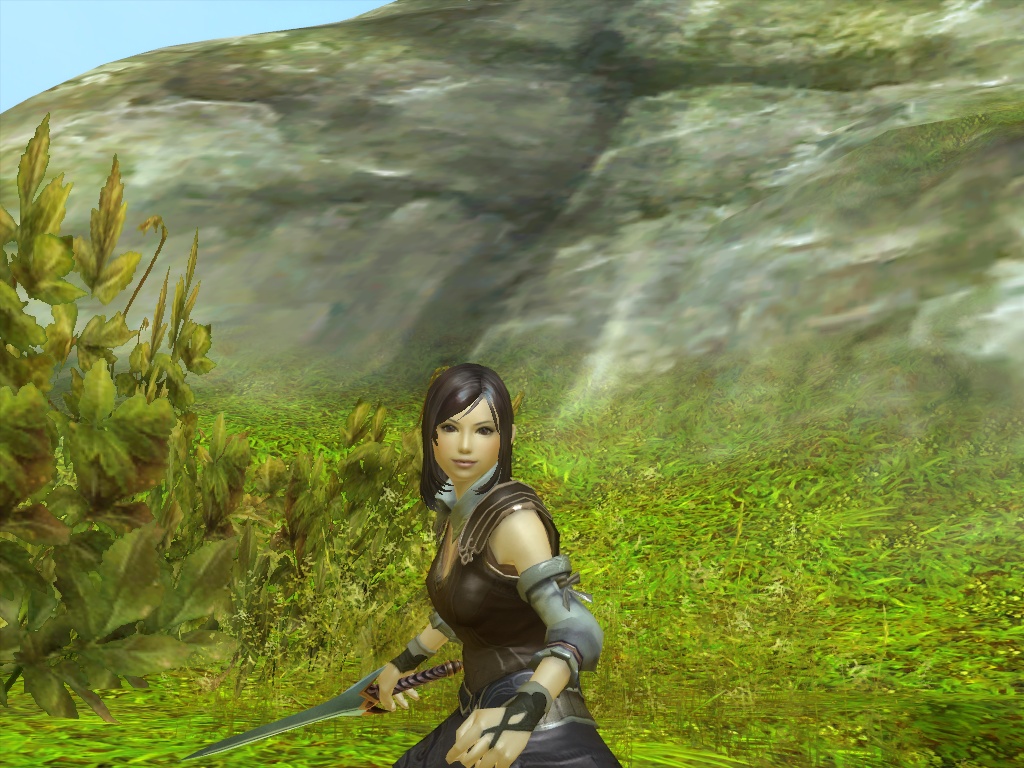 Leha and Drogin don’t share a lot of physical similarities, despite being brother and sister. For the most part, they look no more similar than any other two random Eastenholder individuals.
But there is one feature they share: They both have the same nose. It’s very straight, like a perfect right triangle, and they inherited it from their father.
Tyzu’s oceans:
Tyzu is a world I wish I could have explored more. It’s such a surreal and alien place, and it’s ever-changing. The potential for new and strange locations, beasts, and phenomena is virtually limitless.
Something in particular that interested me was the thought of what Tyzu’s oceans must be like.
My thinking was that Tyzu’s oceans would be almost unrecognizable as such. They’d be as overwhelmed with plant-life as the rest of the world, and the end result would be a soupy expanse of dense seaweed, algae, and floating plants. Maybe even have a few species of plant adapted to growing on top of the dense of mat of aquatic vegetation, treating it like soil.
I don’t see there being much animal life in a Tyzuan ocean. Simply wouldn’t be enough room. They’d also be home to storms even more vicious and violent than those on the rest of Tyzu, as there would be no great trees to protect one from the lashing rain and hurricane-force winds.

 Superior Realities