
Over the last few months, I’ve been rewatching my two favourite Star Trek series — The Next Generation and Enterprise — through a couple of streaming services. While I was once a rabid Trek fan, I have been rather vocal about leaving the fandom behind, and it’s been many years since I last watched any Trek.
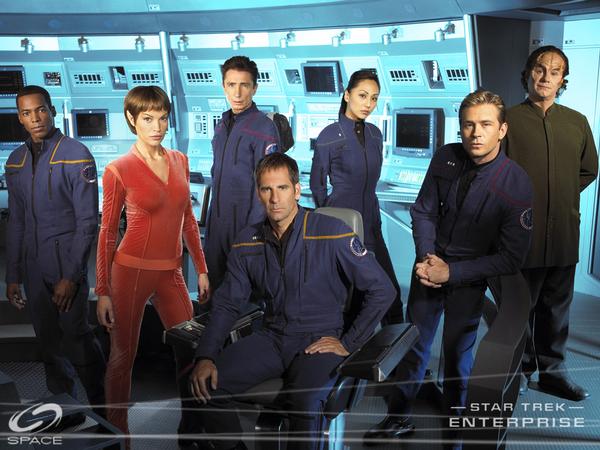 Nonetheless, my disillusionment with the franchise hasn’t fully extinguished the flames of my nostalgia. It’s been interesting to revisit both shows and look at them with new, more mature eyes.
The Next Generation:
What struck more me than anything while rewatching TNG was that there is a shockingly high number of episodes ranging from mediocre to unwatchably bad, but that the good episodes are often astonishingly good. “The Drumhead” in particular stands out as an episode that is depressingly timeless.
I also began to realize just how much the series is carried by how amazing Patrick Stewart is. Nearly every episode that’s truly memorable features Picard prominently. The handful that remain are mainly Data episodes.
That’s not to say the rest of the crew is entirely dead weight. Worf definitely had his moments. I quite like Geordi, though for whatever reason most of the episodes that focus on him seem to be pretty lame. Even Troi got one or two good episodes, and Marina Sirtis deserves a fair bit of praise for her excellent performance in “Face of the Enemy.”
Still, the truth is that without Patrick Stewart and Brent Spiner TNG would have been a very forgettable series.
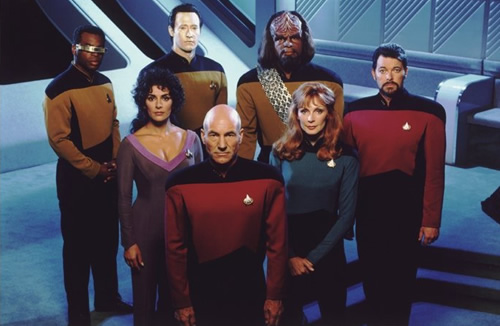 Also, Riker is a jerk. I never realized it before, but all he does for the entire series is scowl and yell at people.
On the whole, my return to TNG showed me that all the episodes I remembered being good still were, but conversely it also reinforced my belief that Star Trek is a franchise that has mostly squandered its own potential.
Enterprise:
Ah, Enterprise. A series for which my passion once reached irrational heights. Revisiting it has definitely been an interesting experience.
Unfortunately the first two seasons of Enterprise have not stood the test of time as well as they might have. Partly it’s that the special effects — impressive in their day — are now showing their age, but the stories, too, are often not as good as I remember them being.
Mind you, Enterprise’s first two seasons still have a lot less truly bad episodes than TNG — “Acquisition” and “Precious Cargo” are the only ones I’ve outright skipped in my rewatch — but there’s a lot of mediocrity and a lot of forgettable episodes. “Cold Front” is notable for being the episode toward which my feelings have changed the most. I used to love it, but now I just think it’s a rambly, confusing mess.
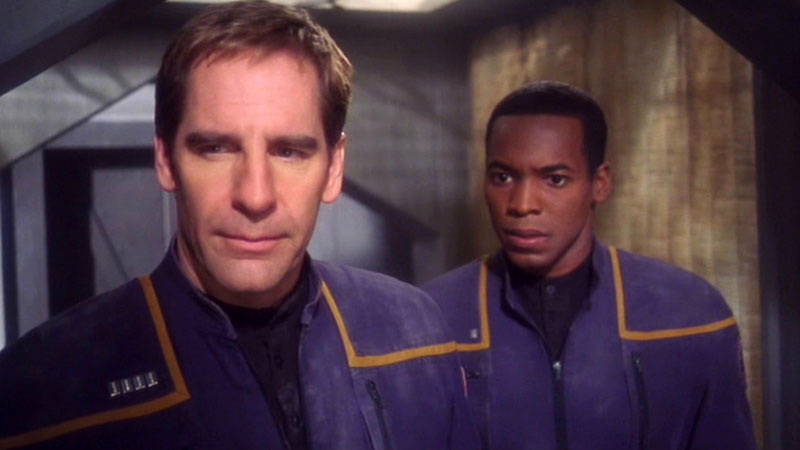 To be fair, there are definitely some good episodes in the first two seasons. “Broken Bow” isn’t as good as I remember it being, but it’s still a pretty respectable pilot. “Dear Doctor” and “The Breach” are still pretty good. “Detained” and “Stigma” are actually a lot better than I gave them credit for at the time — “Detained,” especially, is another depressingly timeless episode.
But on the whole my rewatch of seasons one and two left me underwhelmed.
As of right now, though, I’m nearing the end of season three, and it’s a different story.
I wasn’t sure the Xindi arc would hold up so well over time, but in fact I’m finding it remains incredibly impressive even after so many years and so many viewings. From “The Expanse” straight on through it’s a nearly flawless story full of tension, excitement, mystery, and emotion.
I think the trilogy of “Azati Prime,” “Damage,” and “The Forgotten” may well be the high water mark for the entire Star Trek franchise — at least in terms of raw emotion, anyway. Perhaps other parts of the franchise may be more intellectually stimulating, but nothing else is as powerful.
There’s so much that’s excellent within the Xindi arc — and in those three episodes especially — that I’m not even sure how to organize my thoughts. Do I talk about how shocking it was to see the heroes of the story so utterly helpless, so utterly defeated in “Azati Prime”? Do I expound upon the gut-wrenching power of Trip finally breaking down over the death of his sister in “The Forgotten”?
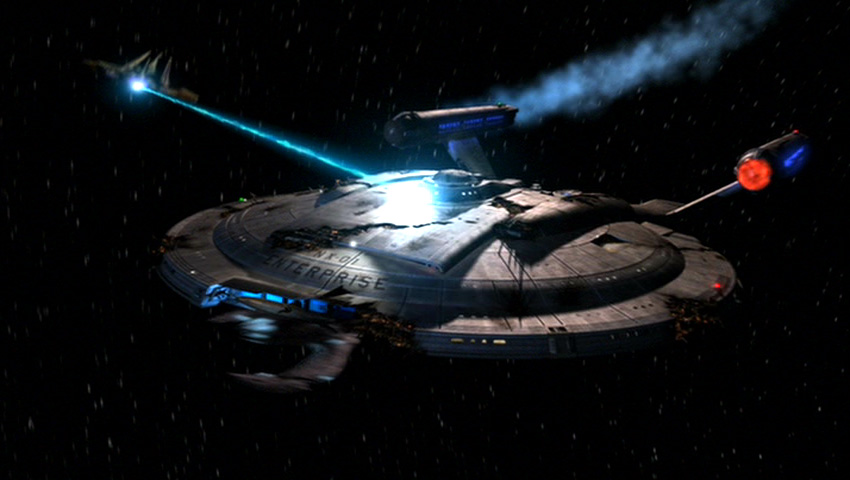 Rewatching these episodes, I’m realizing just how massive an influence they’ve been on my own writing, how much I’m trying to recapture some of the feelings Enterprise has instilled in me. You can see “Azati Prime” in the crushing losses I’ve handed my characters, and “The Forgotten” has left its fingerprints all over my story In Her Sister’s Pose.
Season three even helps the first two seasons make more sense. Unlike the other Trek shows — except arguably DS9 — Enterprise has a clear theme and arc throughout. It’s about the innocence of humanity’s first steps into the stars, an infant race struggling to understand its place in the universe. In the first two seasons, the crew is full of a childlike wonder and joy, and in the Xindi arc, their innocence is ripped away, and they’re forced to mature — as we all are sooner or later.
It’s masterful.
The one other thing that has really struck me while rewatching Enterprise is just how amazing Jolene Blalock is. Phlox and Hoshi remain my favourite characters based on personal taste, but if I’m going to be objective, I think T’Pol is probably the best part of Enterprise.
Jolene Blalock is able to convey an incredible amount with very subtle shifts of body language and facial expressions. Despite her seemingly cold Vulcan demeanor, you can always tell exactly how T’Pol is feeling at any given moment, and when her veneer cracks, Ms. Blalock is able to portray the feelings beneath with an elemental fury that’s simply remarkable.
The end result is that T’Pol embodies the harsh reality of Vulcans: That they are not unemotional, but in fact hyper-emotional and fighting a constant internal war simply to be able to function.
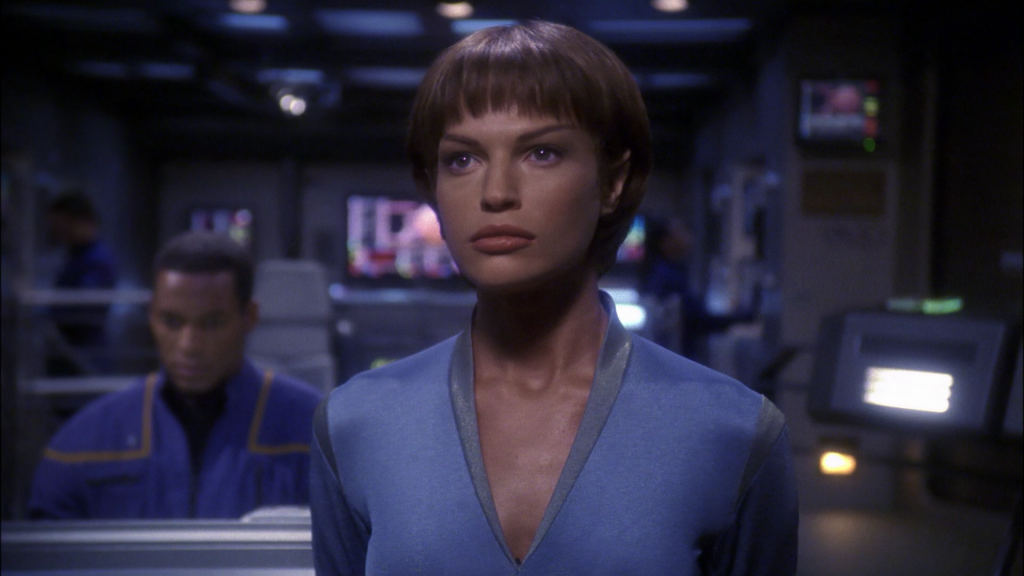 T’Pol was often ill-served by the writers. She was forced into far too many cheesy fan service scenes, and I have to say my rewatch has left me with a very poor view of the awkward and forced relationship between T’Pol and Trip — especially given the much better chemistry she had with Archer.
Nonetheless, even with those issues, I’d say Jolene Blalock’s brilliant performance assures T’Pol’s place as one of the brightest jewels in Enterprise’s crown.
On the whole, Enterprise is definitely flawed — more so than I remembered it being — but I think it remains the best incarnation of Star Trek to date.


 Superior Realities