
I had an epiphany of sorts a few months back while watching the abysmal Disney+ Obi-Wan series. The reason so much of the modern incarnations of big franchises like this are so bad is because they don’t need to be good. We all just keep tuning in based on the brand name and nothing else.
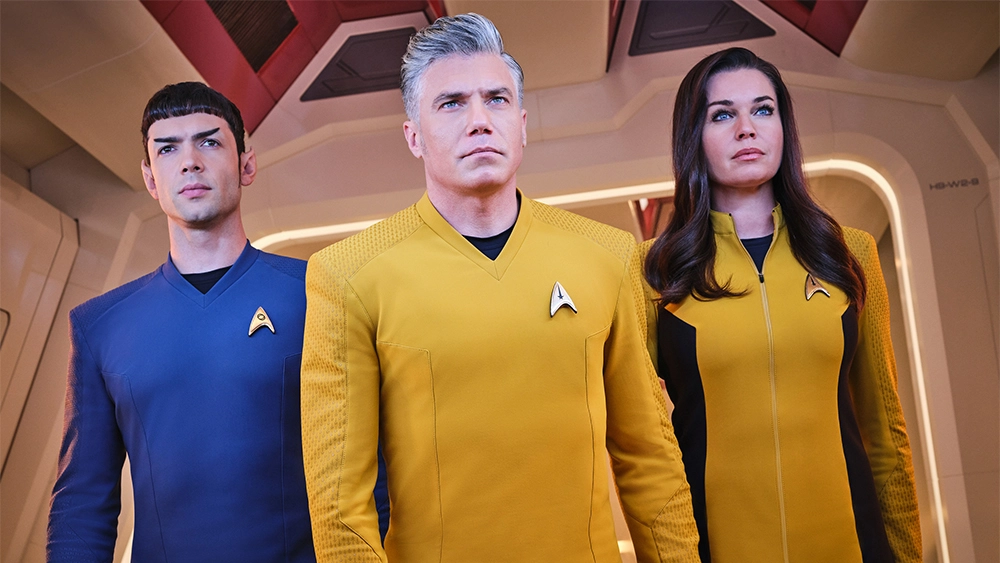 Since then I’ve decided I want to be less of an easy mark for such things, and I think the end result has been that I am throwing in the towel on modern Star Trek.
I skipped season three of Picard. Its second season was the single worst piece of media I’ve ever consumed, the only thing I would rate a 0/10, and based on the spoilers I’ve read, the third season was no better.
I had been assuming I’d show up for the second season of Strange New Worlds, but when it finally started, I found the idea of sitting down to watch it felt more like a chore, and I realized maybe I’m ready to stop showing up to anything just because it has the Star Trek brand name.
Let’s be real: There hasn’t been a single good season of modern, live action Star Trek. There have been some okay seasons, but nothing truly good.
Season three of Discovery started very strong, but it kind of fell apart at the end, the rebuilding of the Federation done offscreen and seemingly overnight like Voyager’s endless miraculous resets. Season one of Picard had some excellent moments, but also some incredible blunders, and it mostly felt like set-up for future stories that the later seasons never delivered.
 There’s been other bright notes here and there, and to be clear, all of these shows have consistently had excellent acting and production values, but none of that really wallpapers over how bad the scripts have been throughout.
Strange New Worlds was pitched as a return to form, and it seems to have won over a lot of classic fans, but at best it’s only achieved basic competence. It’s telling that I’ve already forgotten nearly everything that happened in the first season. I remember Jess Bush being amazing as Nurse Chapel, but I couldn’t describe any of her scenes to you.
Mostly all I remember from SNW season one are the parts that pissed me off.
There are bunch of moments here and there in SNW that made me think that the writers just don’t get Star Trek, but one in particular stands out as emblematic, and since this is already shaping up to be a long post, I’ll focus on it.
For most of the episode, “Lift Us Where Suffering Cannot Reach” is an excellent throwback to classic Trek. The Enterprise encounters a planet where technology has seemingly created a paradise, only to learn that (for unexplained space magic reasons) the technology must be fueled by the sacrifice of innocent children.
A leader of the planet defends her people’s practices to Pike, asking if he can say that no one suffers to keep the Federation’s utopia running.
 “This is it,” I thought. “This is the classic Trek moment where the captain gives an epic speech about how we can be better, and it doesn’t need to be this way. This is the moment where Star Trek’s vision of a utopian future shines brightest.”
Because that’s the whole point of Star Trek, isn’t it? That we evolve beyond exploitation and injustice. No one needs to suffer in the Federation. There is no underclass. There is no poverty, no persecution. Just equality and plenty for all.
But that’s not what happened. Pike just looks sad and walks off, and the episode ends. The message seems to be that the Federation is in fact no better, that somewhere people are suffering and being exploited to allow Pike and his people to have the blissful lives they do.
This is echoed in another episode where, in discussing the prohibition on the genetically engineered, Dr. M’Benga talks about how going to the stars led humanity to simply exchange old bigotries for new ones.
I think this is the fundamental premise the new writers are working from, and why modern Star Trek never really feels like Trek: That things didn’t really get better in the future. That we just exchanged our current injustices for new ones. And that defeats the whole purpose of Star Trek.
 That brings me to what was probably the final nail in the coffin for me. Lately there’s been a lot of praise for the episode “Ad Astra Per Aspera,” in which Number One is put on trial for lying about her genetically engineered nature to enter Starfleet. This is being hailed as a classic example of Trek’s morality plays, with Una serving as a stand-in for real world minorities, but I don’t think that works for a variety of reasons.
I don’t want to turn this into a debate about real world politics, but I do want to state for context that I strongly oppose genetic modification in the real world for ethical reasons. I acknowledge that it is a very nuanced issue with some compelling arguments to be made in its favour, and I don’t buy into the misinformation and pseudo-science that often surrounds it, but by and large I still feel it’s a Pandora’s Box we shouldn’t open. I always felt like Star Trek’s opposition to the issue was very smart and forward-thinking.
But even if you don’t think genetic engineering is inherently a bad idea, there’s still a very good reason not to let the augmented serve in Starfleet: Application to Starfleet is a very competitive process, and if you let the genetically engineered serve, you’ll quickly reach a point where those without augmentations can’t compete. It creates an arms race situation where people will have to keep going to more and more extremes to be considered viable candidates.
It’s the same logic behind not allowing performance enhancing drugs in the Olympics. It’s not about some moral objection to enhancements, or even really about fairness. It’s about protecting athletes. When there’s no limits on what can be used to gain an advantage, people will destroy their bodies using ever more extreme performance enhancers.
(This is also, incidentally, one of the main reasons why genetic engineering has the potential to be terribly destructive in the real world.)
 So, using Una’s genetic modifications has a stand-in for real world persecution of minorities just doesn’t really work. There’s no harm in accepting visible and sexual minorities. There are real, tangible downsides to letting genetically enhanced people openly serve in a competitive field.
I’ve heard a lot of people compare this story to the plight of transgender people in particular, but if that was their intention, there was a much more effective way to do that: Just make Una actually trans. Say she used Illyrian genetic technology to transition. Then the story has an actual leg to stand on; she broke the letter of the law, but not the spirit.
There’s other, more banal issues with this story, too. For Una to have gone undetected for so long, we’re expected to believe that she has made it all the way to first officer of the flagship without ever getting a single medical scan — and remember, the transporter needs to read your DNA in order to reassemble you properly.
Also — and I grant maybe this makes more sense if you watch the actual episode, whereas I’m just going from reading spoilers — my understanding is that the ultimate solution is for Una to apply for asylum in the Federation to escape the persecution she’s experienced… in the Federation. Which makes no sense on any level.
All that is a very long-winded way of saying that this episode is another example of the kind of sloppy writing that has defined modern Trek. And it just proves to me that things really, truly aren’t going to get better any time soon. I’ve spent years waiting for the new shows to hit their stride — they all do just enough right to make you feel like they’re on the cusp of brilliance — but it just never comes to pass.
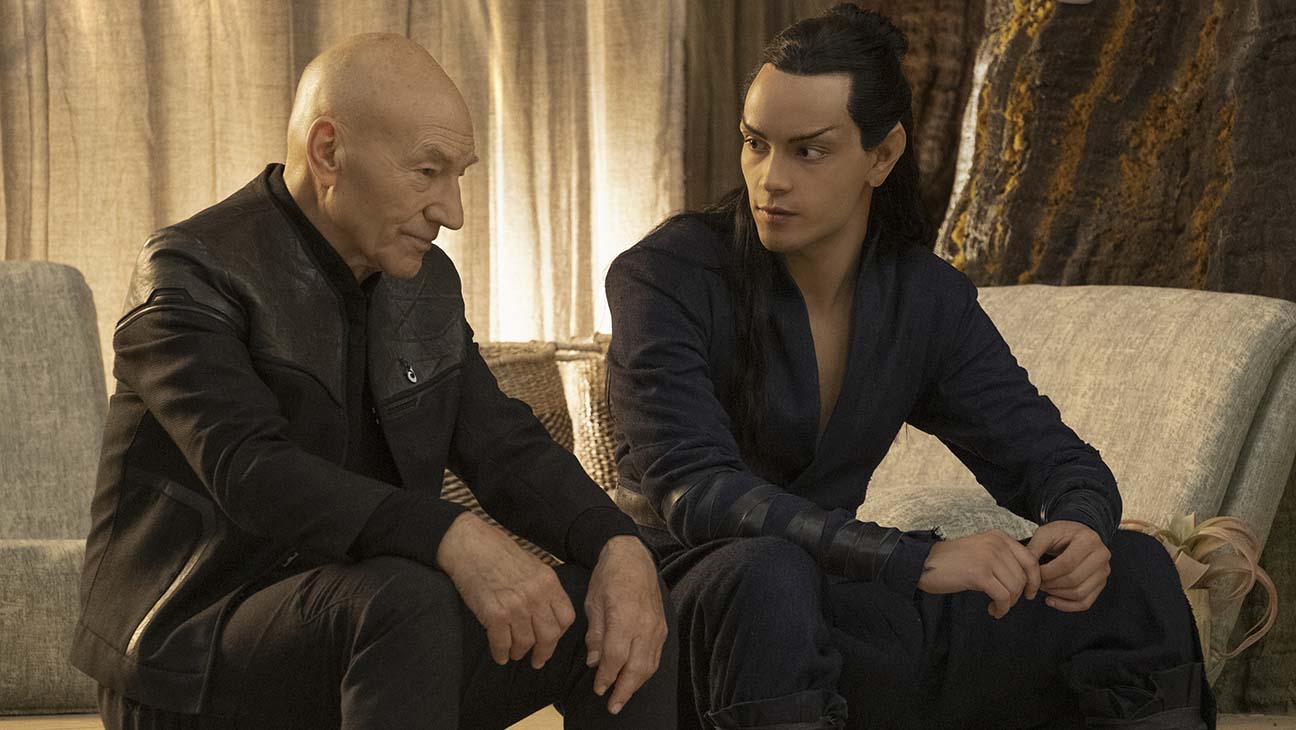 So I think it’s time to just stop trying. Maybe I’ll change my mind in future, but for now I’m tired of being strung along. Once again I find myself feeling alienated in Trek fandom, and I am reminded of the fact that there has always been more Star Trek I don’t enjoy than Star Trek I do enjoy, and the parts of the franchise I consider to be high watermarks are mostly despised by the larger fandom.
When I was first writing this post, I was going to conclude by saying that Prodigy was the exception to this. It has its rough edges, but so far it’s achieved a level of quality the other recent shows never have.
And more importantly, it feels like Star Trek. It’s hard to define what’s so different, but it just has that intangible Star Trek feel that the others lack. There’s an earnest, genuine optimism to it that stands in stark contrast to the thinly veiled cynicism of Strange New Worlds and its ilk.
But then the news came down that Prodigy had been cancelled. With most of the second season apparently already done, it feels like there’s a better than average chance of it returning, but until it does, I guess I really am well and truly done with modern Star Trek.


 Superior Realities