My Top Five Games: New School

Instead of doing a top ten list of all my favourite video games, I’ve decided it’s more fair to rank my favourite older and newer games separately, five each. I’ve already covered the old school greats, so now it’s time to run down my top five games from the modern era.

5: Dungeon Siege III

Fighting as Anjali in Dungeon Siege 3Entry #24601 in the “things Tyler loves that everyone else hates” category is Dungeon Siege III.

It is a very big departure from the previous games in terms of game mechanics. Part of me misses the old model. But looked at on its own merits, it’s still quite a strong RPG.

Choosing a class (or character in this case) is more generic than just playing and evolving naturally, but the “class” designs are among the best I’ve seen. Lucas is just your standard warrior dude, but the others are more unique:  Reinhardt is a steampunk techno mage; Katarina is a gun-toting, curse-flinging gypsy witch; and Anjali is a divine warrior-priestess who can shapeshift into a fire elemental.

Anjali in particular is one of my all-time favourite characters/classes in any RPG. Just so much fun.

And while it was a departure in terms of gameplay, it’s a true sequel to the original Dungeon Siege in terms of story, something DS2 definitely wasn’t. In fact it improves upon the already strong lore of the original, deepening and expanding it, and it evolves into a complex, powerful story with an incredible ending.

Add some gorgeous graphics and a lovely soundtrack and you have one of the most underrated games ever.

4: Portal 2

A screenshot from Portal 2Much has already been said about the Portal games by myself and others, so I don’t see a lot of need to repeat it. If you’ve played them, you know how special they are. If you haven’t, go do that right now. I’ll wait.

Both games were good, but I think Portal 2 is the more memorable one. The first Portal was entirely too short. Portal 2 had all the same wit and creativity, and while it’s still a relatively short game, it’s not quite the “blink and you’ll miss it” affair the first was.

3: Mass Effect 3

And again another of my unpopular opinions.

While I seem to be the only one that feels this way, I found Mass Effect 3 to be the strongest entry in the trilogy by a significant margin. I’ve always been a fan of epic, apocalyptic stories, and ME3 certainly delivers on that front. In the previous games, the Reapers were a distant threat, but in ME3 their full fury is unleashed, and as the game unfolds, you get to see them tear the galaxy apart in excruciating detail.

It’s a dark, intense story, and I admire that it pulls no punches. The heroes fail many times throughout the story, and the losses are deeply felt. Not many games have the guts for that.

Keelah se'lai, Tali'ZorahLike ME2, it’s also a very big game with lots of side missions and secondary content, but unlike ME2, none of it feels irrelevant or chore-like. Everything connects to the main story. Everything feels important, and exciting.

Even the most minor side-quests can be memorable. For me one of the most gut-wrenching moments of the game is a brief side mission where you assist in the evacuation of the Elcor homeworld. It’s just the most basic kind of collection quest, but the ambassador’s reaction at the end is so powerful.

And then there’s the excellence that is the Rannoch arc, and the sheer joy of drunk Tali, and all the little conversations between the crew members between missions, and Traynor… It’s just an excellent experience all around.

2: StarCraft II

StarCraft II’s sheer scale can make it a difficult game to rate. It has had two expansions the size of standalone games plus a fair bit of DLC. Looked at as a total package, StarCraft II is now massive in scale.

And it has had its stumbles along the way. Wings of Liberty was mostly a good game but did suffer from Blizzard’s failed experiment with non-linear storytelling, and I think we can all agree Heart of the Swarm was something of a disappointment.

Hierarch Artanis and Executor Selendis rally the Golden Armada in StarCraft II: Legacy of the VoidBut when you look at the big picture, it’s clear StarCraft II’s successes easily outweigh its failures. Despite its hiccups, Wings of the Liberty still wound up being a pretty strong story, and Legacy of the Void was one of the greatest sci-fi epics I’ve seen in gaming. Hell, even Heart of the Swarm gave us Abathur and the Primal Zerg, so it was hardly a total loss.

Similarly, I’m not without complaints about its gameplay, but overall SC2 still deserves to go down as one of the great RTS games of all time. The campaigns have featured some of the most creative level design in gaming history, the co-op mode added in Legacy of the Void is infinitely replayable and incredibly fun, and its competitive play remains one of the greatest tests of skill in the gaming world.

1: The Secret World

I’ve already spent no shortage of time raving about how amazing TSW is, so I shouldn’t repeat myself too much.

A lot of my love for this game boils down to the fact that story will always be the most important part of gaming for me, and TSW has some of the best writing in video game history. Its dialogue is second to none, its characters are unforgettable, its world-building is spectacularly deep and incredibly original, and its ambiance is like nothing else.

But it’s no slouch in the gameplay department, either. I love how you can build your own “class.” I love that it’s challenging, but not cheap. I love how the enemies are powerful and intelligent rather than just HP sponges to be mowed down. I love that its progression is fair to all playstyles and offers incredible freedom to the player. I love how many awesome cosmetics there are to collect.
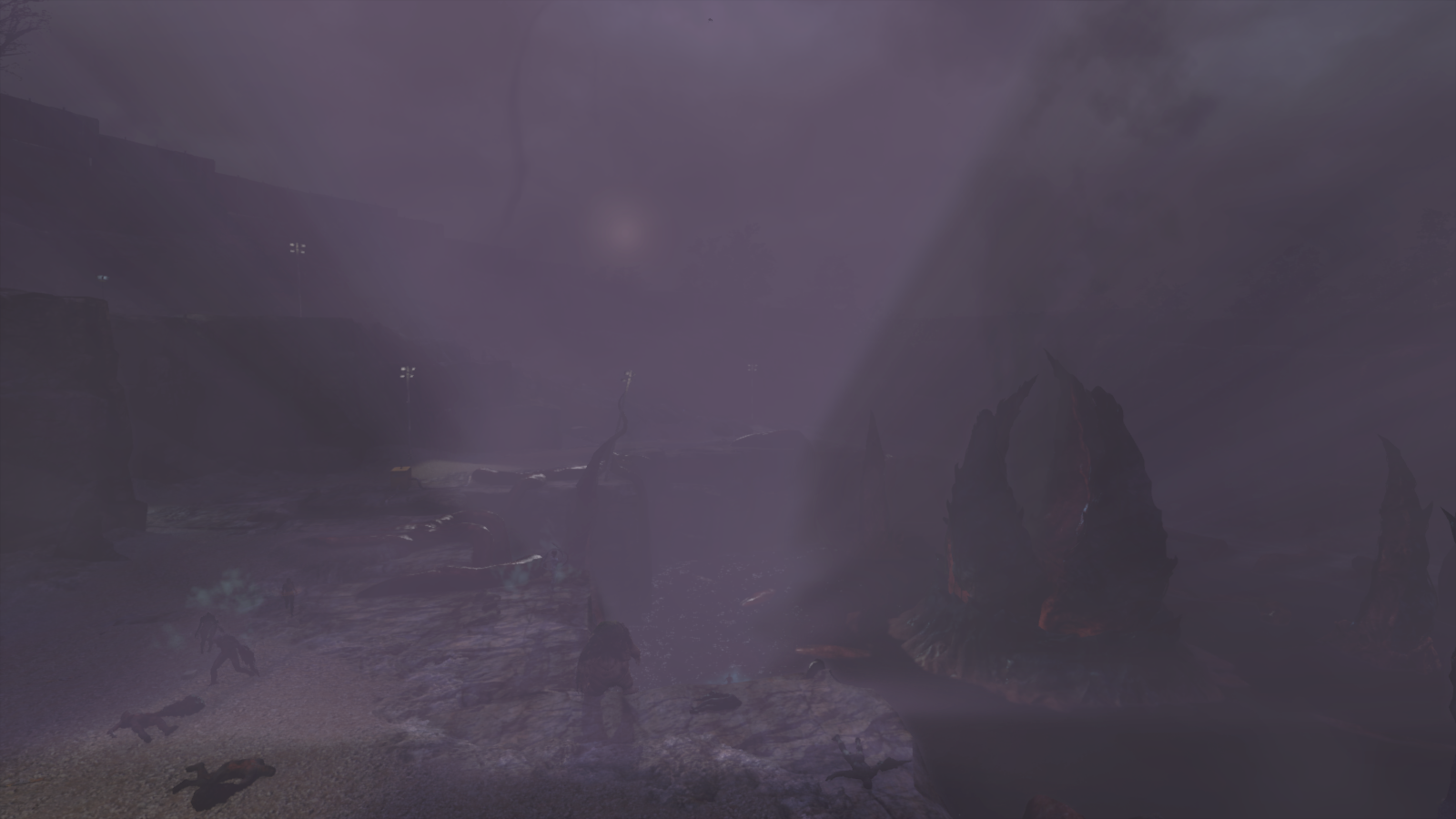
The Blue Mountain quarry in The Secret WorldAs with the first list’s winner, Warcraft III, The Secret World is probably as close to a perfect video game as we’re ever going to see.

Honourable mentions:

Despite some initial stumbles (and a few lingering problems), Diablo III has evolved into a really excellent game, as the hundreds of hours I’ve sunk into it can attest. It was sort of a dead heat between Diablo and Dungeon Siege for the fifth spot in this list.

Something that has been interesting about recent years in the gaming industry has been the growing push for video games as art, and it’s produced a number of titles that are truly amazing experiences despite being light on gameplay. The Park, Oxenfree, and Remember Me all come to mind as examples of this.

Obviously World of Warcraft is conspicuous in its absence from the list, but despite the countless hours I’ve spent with it, it has far too many flaws to be considered a truly great game. SW:TOR is another title that has given me some great times but has too much wrong with it to earn a spot among my all-time favourites.

It does seem a bit strange that I’ve spent the majority of my gaming time over the past ten years playing MMOs, and yet only one of them made my top five (albeit with top honours). I’m not sure what, if anything, should be read from that.

Ranking my Bioware Romances to Date

There was a time I eschewed the romance options in Bioware games because I found the concept of in-game romance a little strange. I still do to some extent, but ultimately these games are story-telling simulators, and it’s just another kind of story. I’ve done enough of them now that I thought it might be interesting to rank them against each other, from worst to best.

Some notes on the scoring: I have tried as much as possible to be objective and to separate how much I like each character from how good their romance arc is. This isn’t a ranking of my favourite romanceable characters; it’s a ranking of how well-executed I found their romance stories to be.

I’m sure my preferences still influence the ranking, but I’ve tried to minimize it.

Leliana (Dragon Age: Origins):

Leliana in Dragon Age: InquisitionLeliana is the one romance I genuinely regret pursuing. I picked her because I loved the stories she tells (and because of the sexy accent), but she’s too churchy, and when you romance her she gets so smarmy it’s just intolerable after a while.

Plus, I wound up having a kid with Morrigan anyway, so in retrospect I really should have just romanced her.

Samantha Traynor (Mass Effect III):

All the feelsI don’t like giving a poor rating to Traynor’s romance. Traynor herself is awesome, and I’ll fight anyone who says otherwise. If Bioware had designed a character to appeal specifically to me, I doubt they could have done a better job.

But if I’m being honest, the writing for her romance is terrible. There’s not much too it; mostly just minor tweaks to existing conversations, often involving awkwardly shoe-horned innuendo. The scene where you initiate the romance is so ridiculous I actually missed out on romancing her the first time through because I couldn’t believe the game actually wanted me to do that.

I still romance her on every playthrough, and to be fair, some of the scenes near the end are pretty good. But most of the time it plays out more like a cheesy porn parody of Mass Effect than anything, and turning Mass Effect into porn is supposed to be the Internet’s job.

Vector Hyllus (Star Wars: The Old Republic):

Vector Hyllus and Eckard Lokin in Star Wars: The Old RepublicI’m not sure why Vector’s romance leaves me cold. He’s a very unique character — a human incorporated into an alien hive mind — and a very nice guy despite all his oddness. I can’t say anything bad about him, and his romance is written well enough, even if it’s a bit by the numbers (rather surprising given his alien nature).

But for whatever reason I’ve already forgotten most of it, and it hasn’t even been that long since I did it. Maybe I just have trouble imagining Vector the soulful (if strange) romantic with my cavalier agent.

Kaidan Alenko (Mass Effect trilogy):

Kaidan Alenko in Mass Effect 3The problem with Kaidan is that he’s one of those characters who feels like he was written as a romance choice first and a person second. He’s very likable… maybe a little too likable. He feels like an archetype of romantic perfection, not a real person.

It is interesting to be able to continue the relationship with him over three games, and on the whole it’s a pretty well-written romance, but I can’t quite get over how unreal a character he seems.

Dorian (Dragon Age: Inquisition):

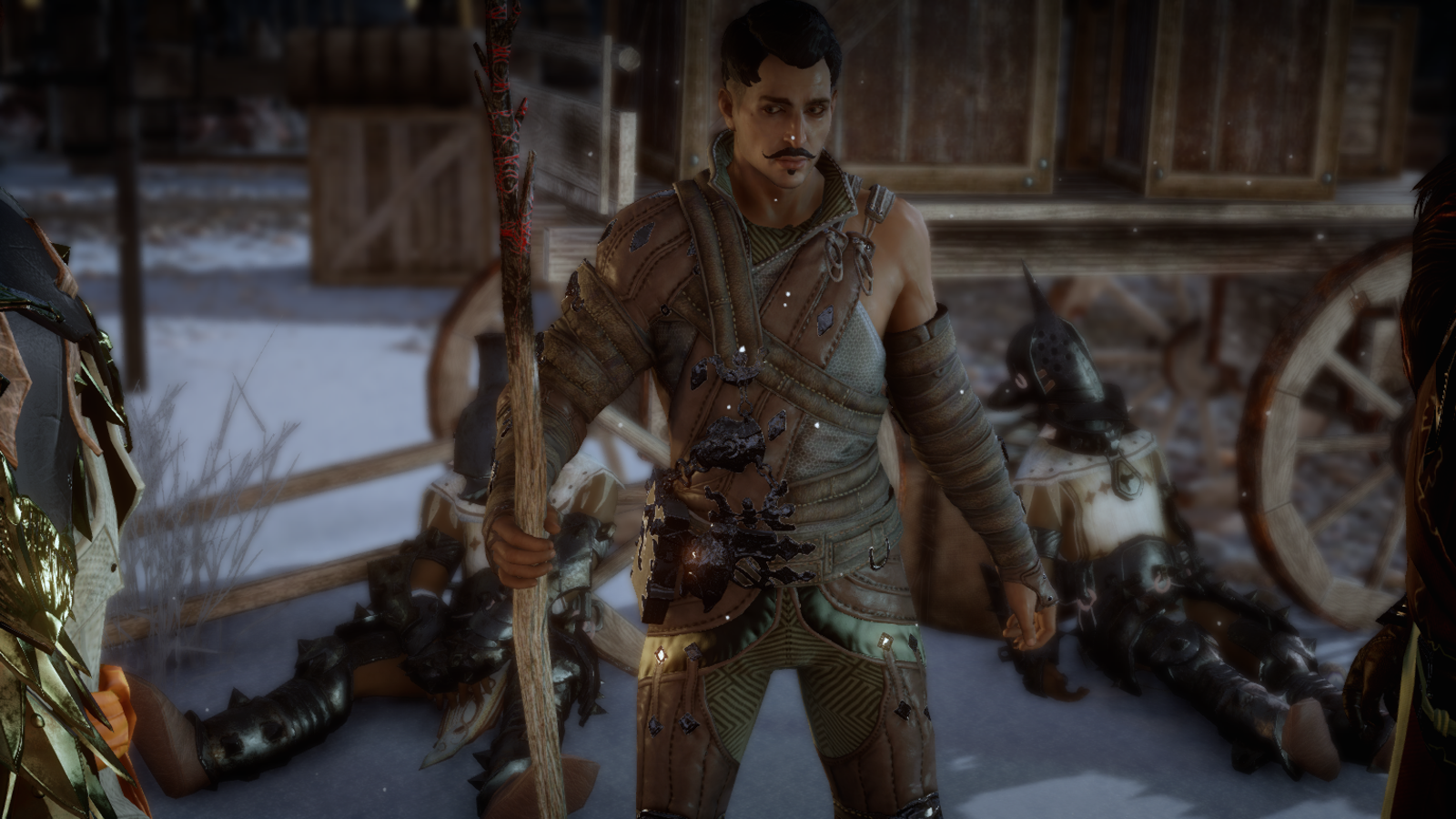
Dorian in Dragon Age: InquisitionThere’s nothing particularly wrong with Dorian’s romance, but not a lot about it stands out, either. It’s easy, and it’s sweet, and that’s about it. You learn a little more about what makes Dorian tick, but not much.

Dorian remains one of my favourite Inquisition characters, but romancing him isn’t really necessary. He’s just as awesome as a friend.

Vette (Star Wars: The Old Republic):

Vette and my warrior share a private moment in Star Wars: The Old RepublicMy adoration of Vette is by now well-documented. She’s just an awesome, delightful character in every way. She’s a bit like Dorian in that her romance doesn’t seem to add a whole lot to her story, but given how incredibly sad and lonely her life has been, I do like the idea of being able to bring her some happiness.

I suppose on some level I like the idea of playing the white knight.

Lana Beniko (Star Wars: The Old Republic):

My Imperial agent and Lana Beniko in Star Wars: The Old Republic's Shadow of Revan expansionLana’s romance is a hard one to rate. It spans several games, and due to the nature of MMOs, it isn’t over yet. Arguably this is true of the other SW:TOR romances as well, but companions from the base game still seem largely abandoned, and those romances tended to have a clear conclusion — usually marriage.

It’s also hard to rate because Lana is such an unusual character. She’s unusual in the context of Star Wars lore — a calm and selfless Sith, practically an oxymoron — but also just an unusual character in general. She’s so enigmatic, outwardly dispassionate with only tantalizing glimpses of the fierce emotion within.

But her oddness is what makes her compelling. I keep saying I want more variety in romantic fiction; here it is. Romancing Lana is far from the fairytale type of story we’re used to — it’s more sedate, more mature. Lana has other priorities beyond being arm candy for the player character, which helps her feel more real, and the story so far has hit a great balance between illustrating her feelings toward the PC without making them the sole focus of her character.

Lana is very three-dimensional, and by extension so is her romance.

Her occasional social awkwardness can be oddly endearing, too. You can ask her to fight a hundred Knights of Zakuul single-handedly and she won’t even blink, but try to compliment her or kiss her and she’ll get so adorably flustered.

My one complaint about her romance is can feel a bit rushed, a bit forced, at first — a common sin of these things. You’ll have known her for all of about fifteen minutes before she starts going on about your special connection.

Sera (Dragon Age: Inquisition):

My inquisitor and Sera on their wedding day in Dragon Age: InquisitonSera’s romance is many things: turbulent, challenging, frustrating, inconsistent. But it’s not boring.

Just initiating the romance with Sera was an uphill battle — though to be fair I made it harder on myself by being a Dalish mage — and even once I did lock in her romance there was still plenty of challenge. Sera is a strange, volatile person. She’s not easy to get along with, or even understand. Between her rambling speech pattern and thick accent, you practically need a translator sometimes.

There’s also one particular scene in her romance that really pissed me off, just for its poor design. I had to basically pretend that scene never happened for the sake of my sanity. I think the developers realize they screwed up there, though — Trespasser also seems to pretend it never happened.

However, there’s still something immensely gratifying about Sera’s romance if you can dodge all the landmines and make it through. Sera seems a simple character at first, but in actuality she’s spectacularly complex. Once you finally understand her, all her seemingly crazy behaviour starts to make sense.

She’s also an incredibly sweet and loving character (even if she can have odd ways of showing it). For all its frustrations, Sera’s romance probably has more “d’aww” moments than any other I’ve done.

Nadia Grell (Star Wars: The Old Republic):

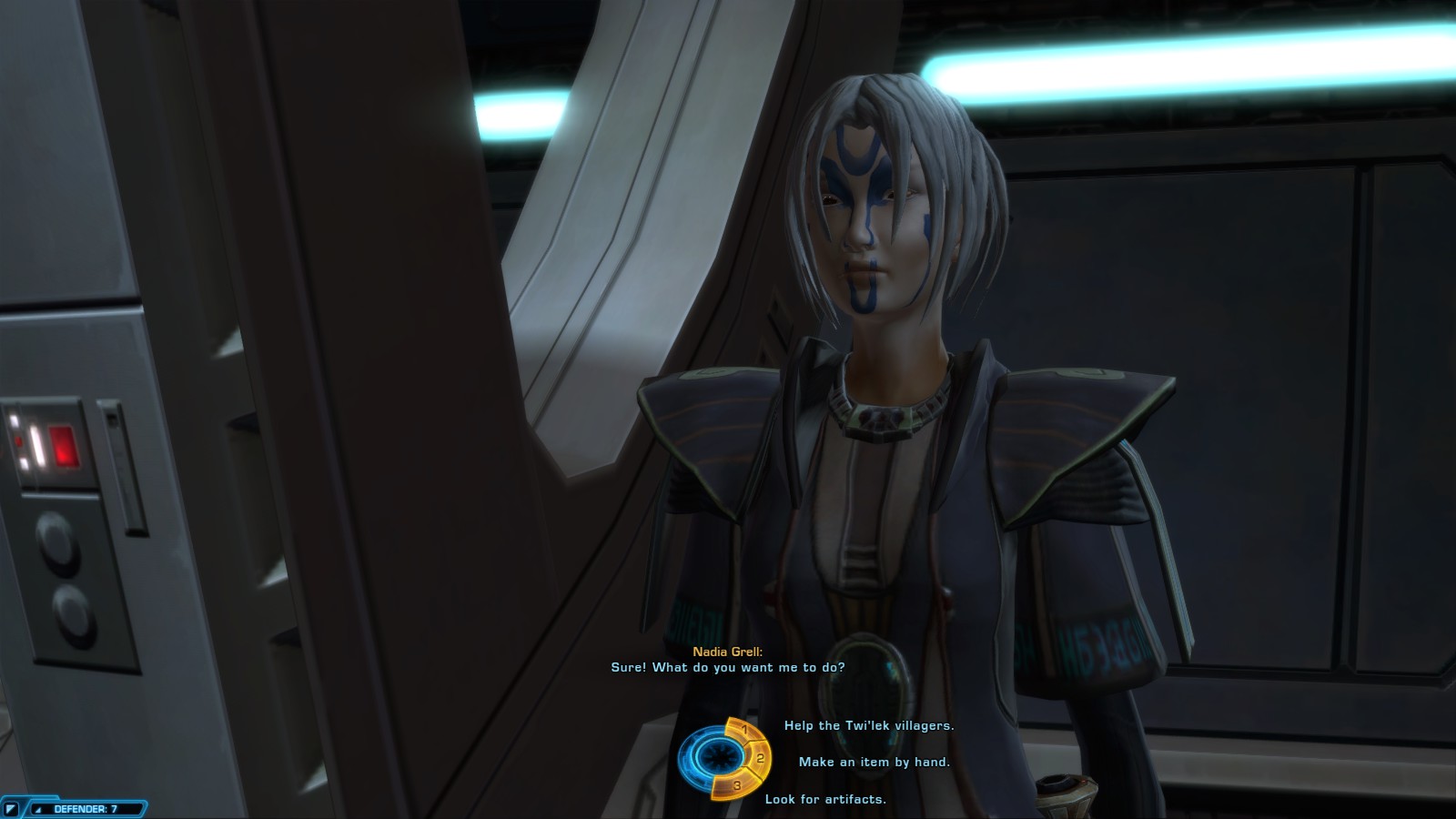
A conversation with Nadia Grell in Star Wars: The Old RepublicNadia is a character I really enjoy. I know she can rub some people the wrong way, and I understand why — she’s very over-eager, and she does have a certain air of “Senpai noticed me!” that can be a bit much at times — but I can’t help but find her enthusiasm infectious.

I also appreciate that she’s an idealist, but with a hard edge when the situation calls for it. She’s got a gentle heart, but she’s no push-over.

Yet that’s not why I’m giving her romance such high marks. The thing I find interesting about Nadia’s romance is that it seems more like she’s pursuing the player than the other way around. Normally in these games NPCs don’t display any interest at all until you’ve made a concerted effort to win them over. It made Nadia feel much more like a real person with agency all her own.

Plus it’s a pretty well-written romance all around. It’s got ups and downs and interesting choices to make, and you meet her pretty early in the game, so it feels natural to see the bond slowly grow between her and the player’s Jedi.

Merrill (Dragon Age II):

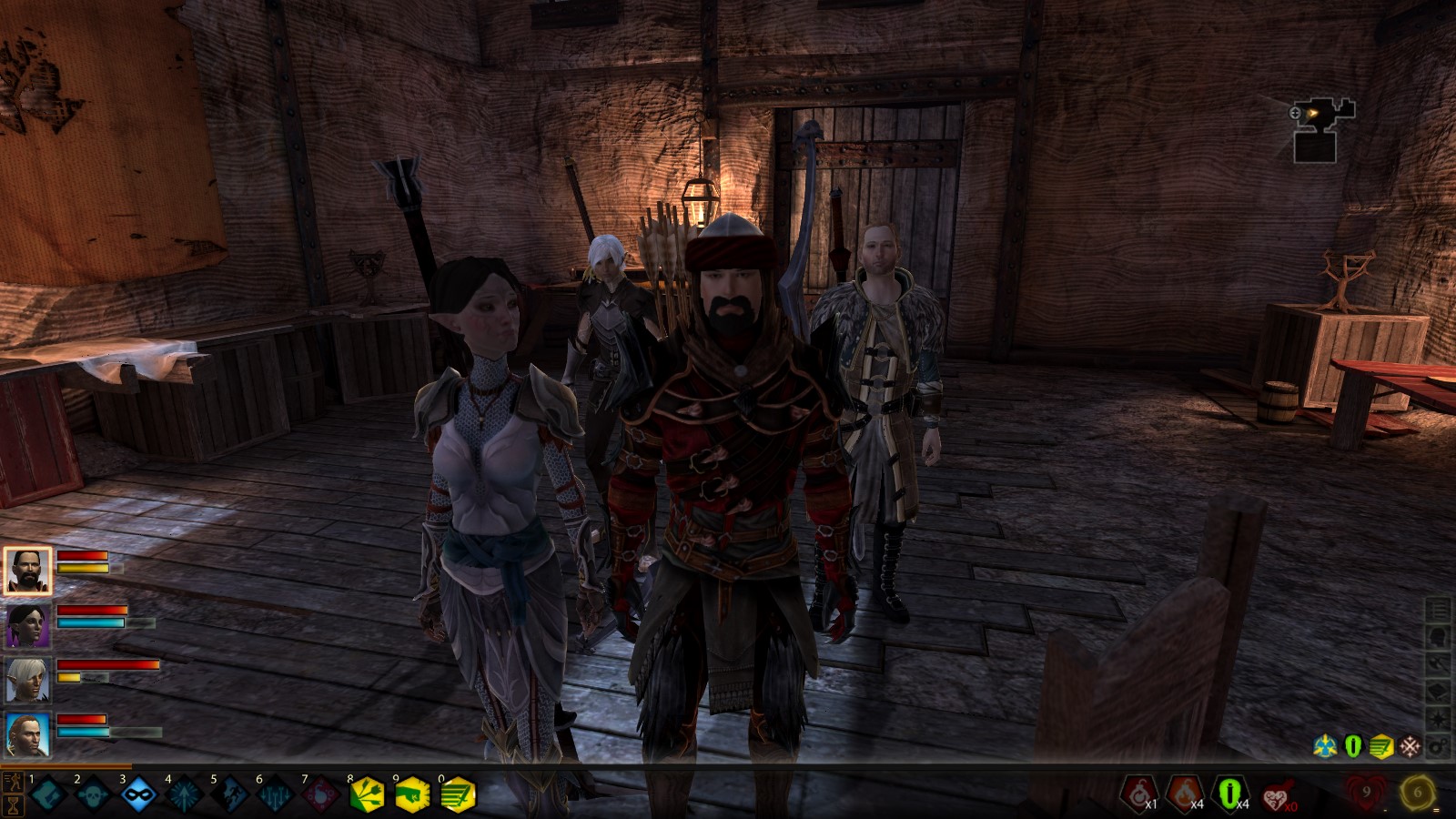
My party in Dragon Age 2Merrill is a bit like Traynor in that she’s a character who could easily have been designed to appeal specifically to my tastes. A selfless, adorkable Elven blood mage with awesome tattoos and a charming accent? Sign me up.

Unlike Traynor, though, her romance arc is very well-executed.

There’s a lot to like about Merrill’s romance. I appreciate that it’s a slow burn. You can start flirting with her almost immediately, but it takes a while for an actual relationship to form. That makes it feel a bit more natural than these things tend to.

I haven’t played DA2 without romancing Merrill, so I’m not sure how much a difference it makes, but certainly it seemed to have a significant impact on conversations with her. Even her party banter with other characters changed. Also, her moving into Hawke’s house was a nice touch.

As with Vette, Merrill’s life is so sad that it feels good to bring her some happiness. She’s such a nice person, and yet she ends up hated and distrusted by almost everyone. At least if you romance her, she has someone who stands by her. In fact I seem to recall some party banter where she says her relationship with Hawke is just about the only thing keeping her together.

And there’s just nothing to complain about in Merrill’s romance. There’s no blatant poor writing or obnoxious game design. It just works.