Retro Review: Killjoys, Season One: Episodes 1-5

I’m sure at least one of my readers will be happy to see this.

The logo for KilljoysWhile looking for new stuff to watch, I signed up for the free trial of another Netflix-like streaming service, CraveTV. Their selection isn’t vast, but they do have a few titles I’ve been meaning to check out, most notably the oft-recommended Killjoys.

Time for another series of binge-watch reviews. As usual, I may be a bit looser with spoilers than usual.

“Bangarang” (pilot episode):

My main problem with Killjoys right now is it feels like a story I’ve seen many times before. A group of misfit mercenaries go on rollicking adventures with lots of slick action sequences and sarcastic one-liners.

Specifically, it is the story of a woman calling herself Dutch and her partner, Johnny. They are what the locals call “Killjoys” — essentially bounty hunters — operating in a remote region of space known as the Quad. The pilot focuses on Johnny defying Dutch and risking the wrath of their handlers to rescue his brother, D’avin, who’s had a price put on his head.

Along the way, we get some hints of the characters’ various dark pasts, and the geopolitics surrounding the local oppressive regime, but not enough to really make much of an impression.
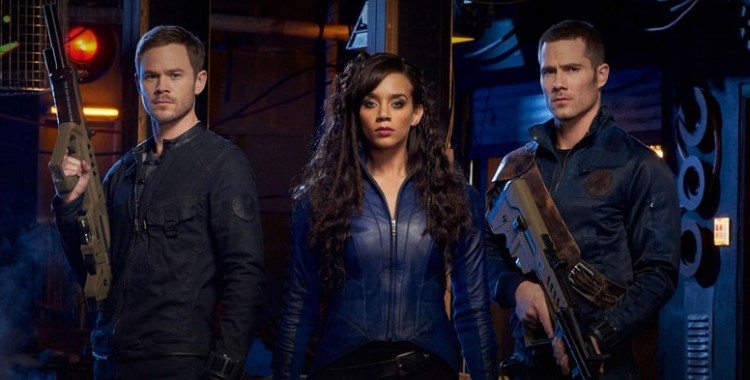
The cast of KilljoysIt’s not that it’s bad. The only thing that strongly bothered me about the pilot is its loud and obtrusive soundtrack.

It’s just generic. There’s very little to set Killjoys apart from the many and sundry other fictional works in this general vein, at least right now. There’s nothing about the premise, the world, the characters, or even the quality of its execution to set it apart from the pack.

Still, the special effects are good, the action sequences are fun enough, and I can think of worse ways to spend an hour, so I’ll stick with the show for now. Perhaps it will improve.

Overall rating: 6.9/10

“The Sugar Point Run”:

Usually the second episode of a series is pretty weak, but this one’s not bad.

Dutch and the team are sent to perform a prisoner exchange to rescue the daughter of a powerful Company official. To this end, they must venture into a post-apocalyptic former warzone riddled with scavengers, organ harvesters, and other colourful characters.

It pretty much goes without saying things don’t go according to plan.

The Quad, the setting for KilljoysThere’s a lot of twists in this episode, but most of them are the sort of thing you can easily see coming. It does, however, have the effect of keeping the viewer engaged and keeping the story flowing along at a good pace. It’s entertaining.

The real purpose of the episode is to give D’avin a chance to prove his worth and to establish him as a real member of the team. It performs this task adequately, though I can’t say I’m finding him particularly compelling as a character right now.

All in all, “The Sugar Point Run” is a simple but enjoyable episode. My only real complaint is how they keep overlaying the action sequences with such obnoxious, distracting music.

Overall rating: 7/10

“The Harvest”:

The plot of this one is once again fairly simple — a friend of Johnny’s needs his help to track down her husband — but it does serve to help flesh out the cast a little bit.

My favourite part of “The Harvest” is actually a B plot involving D’avin trying to get a rubber stamp for his Killjoy psych evaluation from a doctor of somewhat loose morals named Pawter. It establishes D’avin as a real person with some vulnerability, as well as offering a glimpse of an interesting mystery surrounding his past, and Dr. Pawter seems like an interesting character, too. I hope to see more of her.

Dutch and D'avin in KilljoysMeanwhile, Johnny’s sibling rivalry with D’avin, while predictable, also helps him feel a bit more like a real person, something all of the cast members have struggled with so far.

The mystery surrounding the missing husband turned out to be a bit of a disappointment, but I think fleshing out the characters makes “The Harvest” a worthwhile endeavour.

Boy am I starting to hate the soundtrack on this show, though.

Overall rating: 7.2/10

“Vessel”:

The Killjoys’ latest mission is to protect the unborn heir to a noble house in order to prevent a civil war. To this end, they venture into a toxic badlands to make contact with an enclave of surprisingly well-armed priestesses.

The problem with this episode is there’s no emotional investment. The Killjoys universe is not developed enough yet for me to care about a civil war — and the risk of such never feels terribly immediate — and the story has no relevance to the main characters. In theory I suppose we’re intended to get invested in the priestesses, but I can’t say I particularly cared about them, either.

The end result is a story that’s theoretically functional but which is utterly bland.
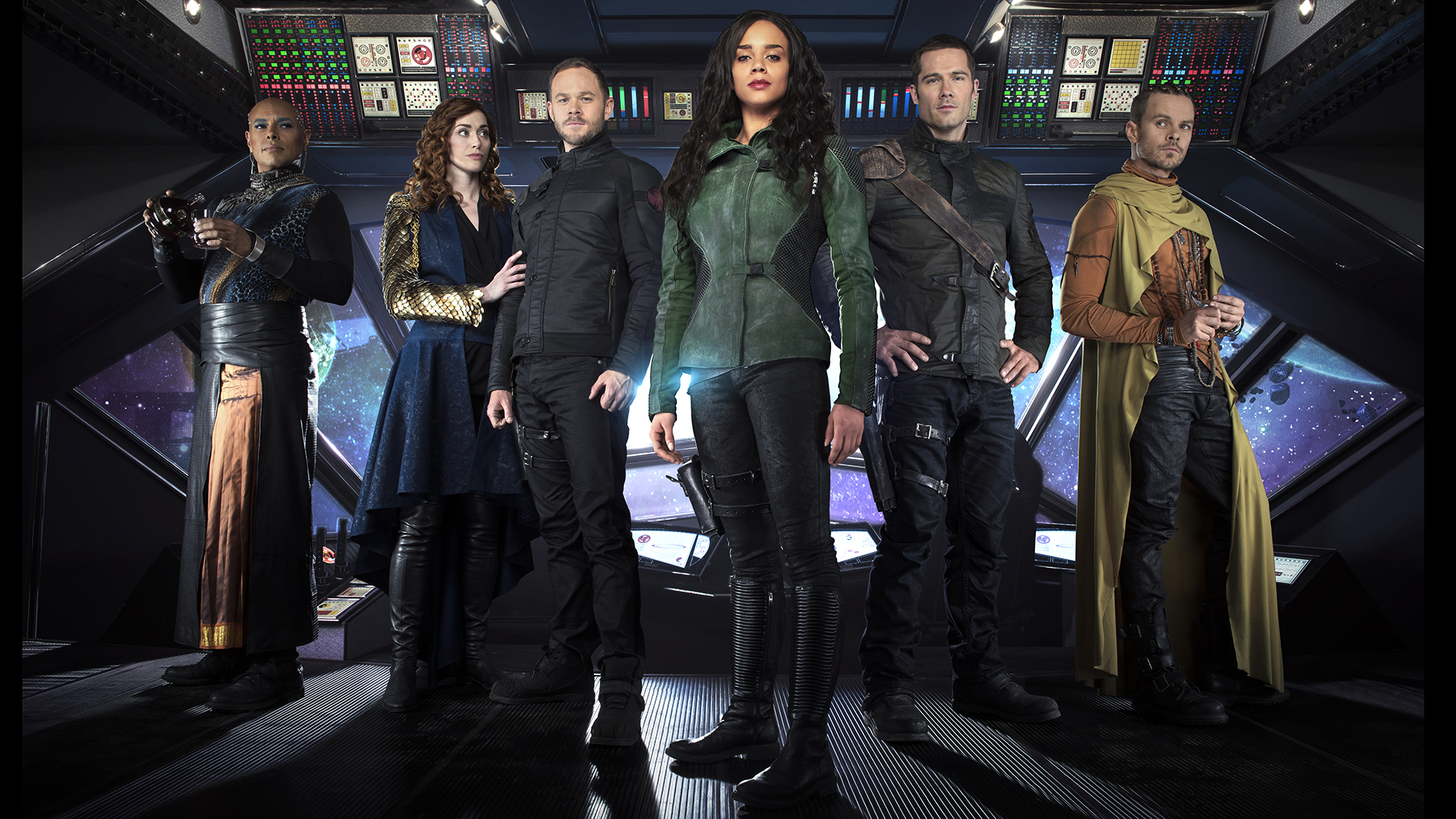
The cast of KilljoysAlso, no way a woman is going to be up and walking and that composed mere moments after giving birth.

Overall rating: 5/10

“A Glitch in the System”:

Obligatory ghost ship episode inc.

However, while this is a premise I’ve seen done by basically every sci-fi show ever, it’s actually a pretty good episode. The creepy factor is strong, there’s a decent element of mystery, and it gets pretty intense by the end.

We also got some more revelations into D’avin’s history, which is the show’s most compelling story right now.

Conversely, the plot around Dutch’s past is failing to capture my interest right now. I think they revealed too much of it too quickly. My curiosity isn’t peaked; while there’s still clearly more to learn, I nonetheless feel I know all that I need to.

Still, this is probably the strongest episode so far. The music wasn’t even all that annoying.

Overall rating: 7.8/10

Retro Review: No One Lives Forever 2: A Spy in H.A.R.M.’s Way

As regular readers may know, there was a period of several years in my life where I had to give up video games due to various Real Life issues. There are a number of games I regretted missing out on during this period, but few that stung as much as No One Lives Forever 2: A Spy in H.A.R.M.’s Way. The original had been an instant classic, and I sorely wanted to play the sequel.

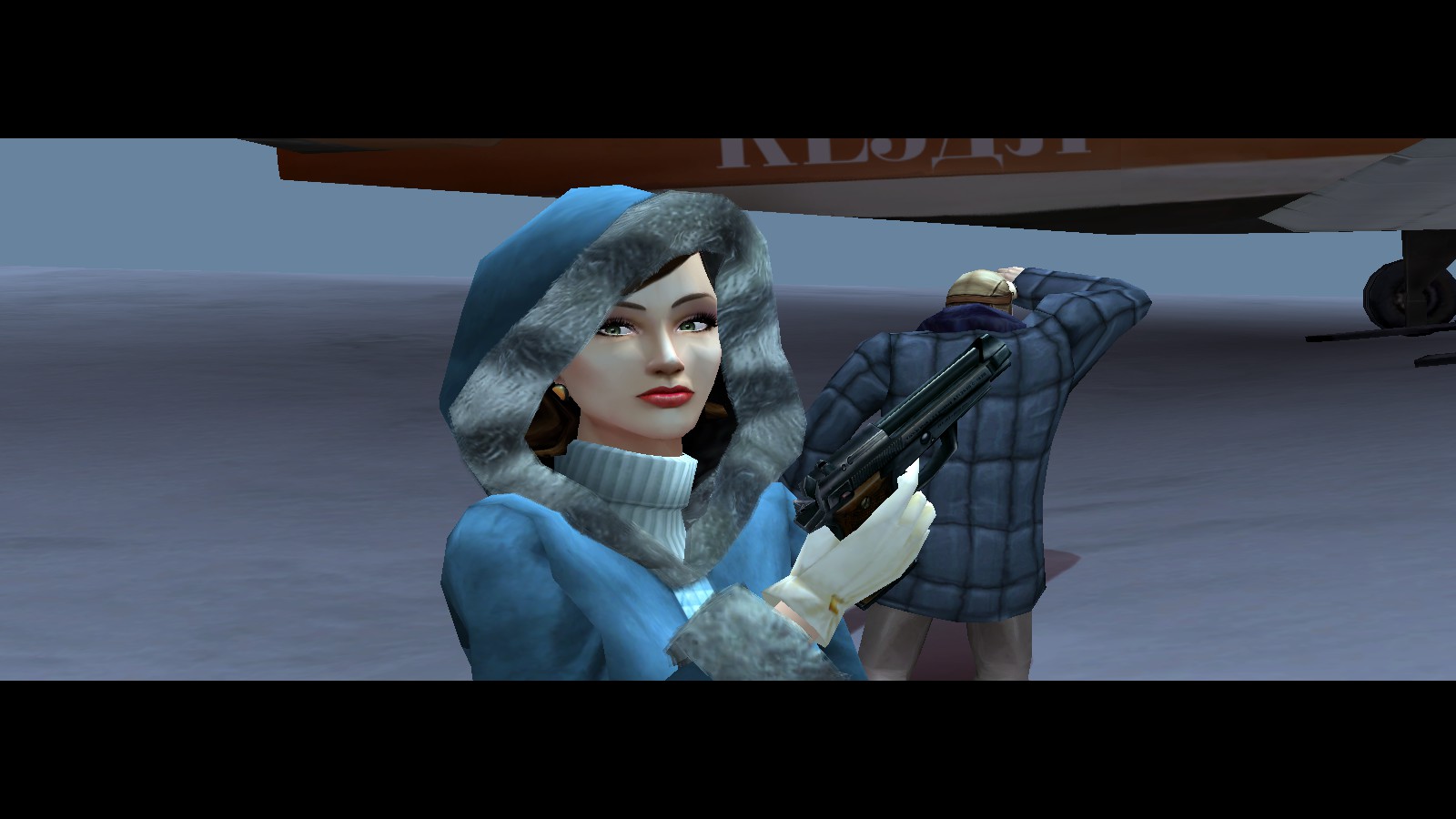
Cate Archer and Magnus Armstrong in No One Lives Forever 2: A Spy in H.A.R.M.'s WayNow, fourteen years later, the fan-made Revival Edition has at last given me the opportunity to play through NOLF 2. I went in with a mixture of excitement and trepidation. How could it possibly live up to the impossible standard set by its predecessor?

Aging in reverse:

There are a couple things that gave me a negative impression of No One Lives Forever 2 out of the gate.

By far the biggest is that an RPG-style skill point system has been implemented. I barely tolerate these sorts of things in RPGs; I definitely didn’t want one in No One Lives Forever.

And this particular skill system embodies pretty much all the worst sins of RPG design. In essence, they nerfed the player’s capabilities into the ground and then let you buy your way out of the suck with skill points. Upgrading a skill doesn’t feel like a reward; it just makes you feel less broken.

A lot of the skills are really basic quality of life things, too. I shouldn’t have to spend hard-won skill points just so it doesn’t take an eternity to loot a body.

Fighting ninjas in Japan in No One Lives Forever 2: A Spy in H.A.R.M.'s WayThe only silver lining is that it doesn’t take very long to earn enough skill points to overcome the most irritating disadvantages.

NOLF 2 is also missing a lot of the things that made the original special, such as being able to choose your equipment before a mission. This was one of the biggest contributors to the original’s high replayability. Missions could be a very different experience when you redid them with equipment earned later in the game.

It feels like a cheap way to add difficulty, too. There were lots of situations where I found myself badly wanting a specific tool or gadget, but the game had forbidden me from bringing it.

Dialogue choices are gone, too. The original game didn’t exactly have a lot of these, but they were a great element of flavour, and they added some interesting non-combat gameplay at times.

I’m not really fond of the addition of health power-ups, either. It’s a small thing, but I liked the balance between armour (which could be replenished) and health (which couldn’t) in the original game. Now armour and health are virtually interchangeable.

Cate Archer in No One Lives Forever 2: A Spy in H.A.R.M.'s WayHaving replayed some of The Operative recently, I’m left with the very strange feeling that the first No One Lives Forever was actually a lot more modern in its sensibilities than its sequel. Aside from the graphics and a few minor quirks, The Operative could pass for a game from the current year, whereas NOLF 2 feels like a product of a somewhat outdated school of game design.

Remember what H.A.R.M. stands for:

Something else that disappoints me is that they replaced the voice actress for Cate Archer. The new actress is not bad by any stretch of the imagination, but it’s just not the same. It’s especially distracting given that most if not all of the other returning characters have their original voices.

In general the characters this time around don’t feel as fleshed-out as they did in The Operative. Now, NOLF was never the most character-driven game, but it feels like the original put a bit more time into dialogue, backstory, and character development. The villain had a strong motivation, whereas NOLF 2’s villain is given no such depth.

One notable exception to this, though, and one major highlight of the game is a new character named Isako, who is the leader of a clan of ninja assassins. She’s a bit cliche in some ways… but this is No One Lives Forever. That’s the point. And I think she actually has a pretty interesting backstory and character arc.

Isako in No One Lives Forever 2: A Spy in H.A.R.M.'s Way

Found this one on Google. Somehow managed to go the whole game without getting a decent shot of Isako.

I tell you this: If Tumblr had been a thing back in the day, Cate/Isako shipping definitely would have been a thing.

Overall I would rate the story of NOLF 2 as good, not great. It’s a fun ride, but it’s a bit straightforward, and the ending is a bit of an anticlimax. There definitely aren’t as many twists as there were in the original.

This is one area where I’m willing to grant my nostalgia may be a factor, though. I’m definitely a more critical player now than when I played the original.

Super groovy:

But there’s still plenty to like about A Spy in H.A.R.M.’s Way. If I’m harsh with it, it’s mainly because the original was such an incredibly tough act to follow.

A lot of what made the original excellent remains. The core gameplay is still pretty fun. You still have lots of cool gadgets and toys. There are still informative and amusing intelligence items hidden everywhere. There are still hilarious conversations to eavesdrop on. Nothing like creeping through an enemy base only to have the tension shattered when you overhear an anguished voice wail, “Who keeps eating my mango chutney? My mother made that for me!”

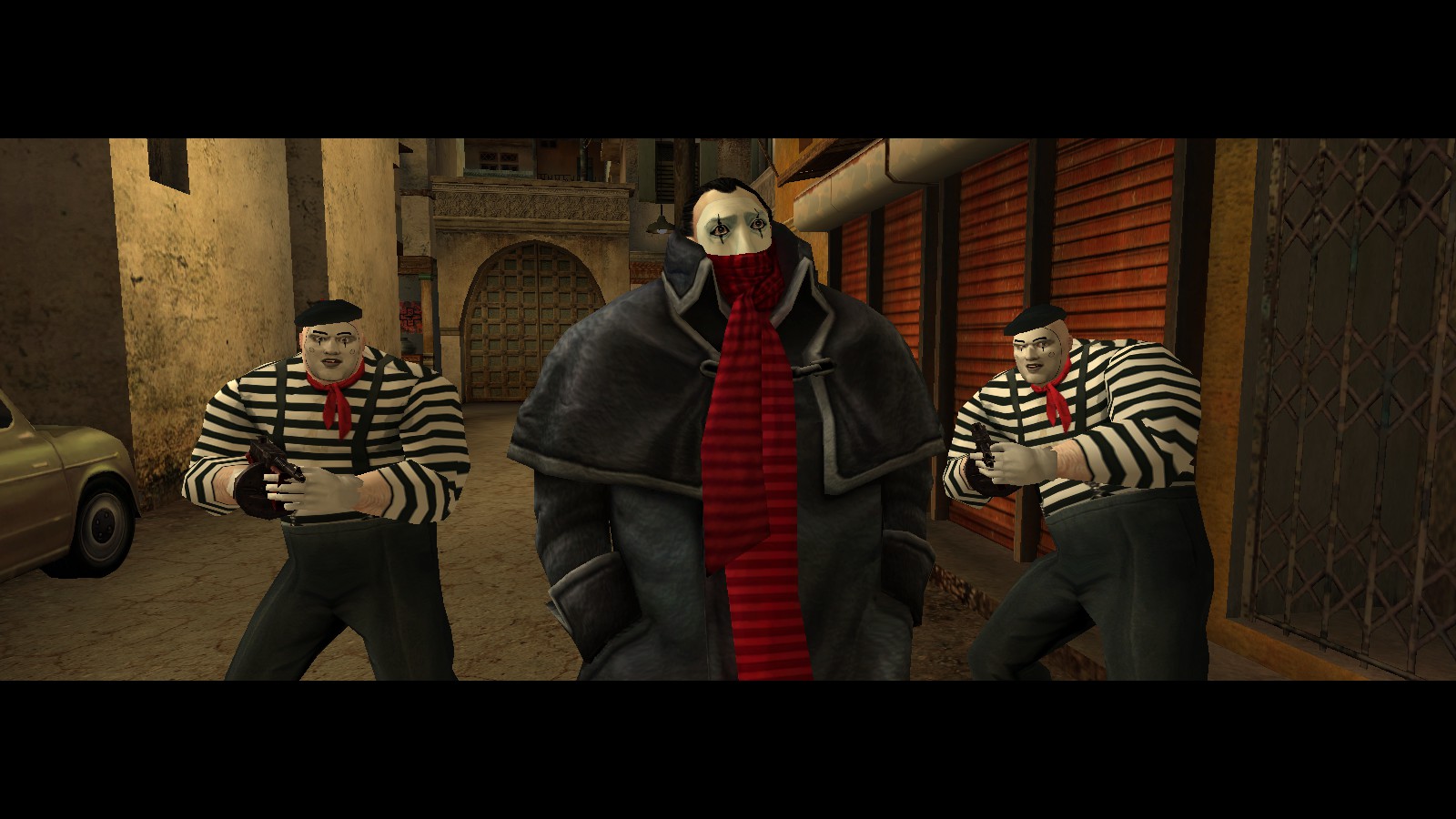
Mimes. YeahAnd then there were the fruit vendors and their growing fears of a vast and nefarious monkey conspiracy, and many others.

The Operative had some of the best level design in gaming history, and while NOLF 2 doesn’t quite equal it, it does make an admirable effort. One dramatic moment has the player fighting a boss while trapped in a mobile home that is being tossed around in a tornado… though in practice it’s just window dressing, since the tornado doesn’t do much to affect gameplay.

The real highlight of the game is a not so high speed chase in which the player pursues a tiny mime on a unicycle whilst riding a giant Scotsman riding a tiny tricycle.

Yeah, you heard me.

You also once again get to visit a dizzying variety of exotic locations, including India, Japan, Ohio, Antarctica, and a secret base at the bottom of the ocean.

Also, while NOLF 2 introduces a lot of new annoyances, it does scale back on the main problem with the original game: stealth missions. There’s really just one true stealth mission in the game; otherwise it’s mainly left up to the player whether they want to sneak around or do their best Rambo impersonation.

Cate and Isako in No One Lives Forever 2: A Spy in H.A.R.M.'s WayThe graphics also hold up very well, considering their age. In particular I was impressed by the quality of the facial animations. They’re not only good for their time but would even equal or surpass many more recent titles. The eyes, especially, are very expressive and realistic.

The soundtrack is still full of delightful retro cheese, too. I’ve still got the theme song stuck in my head as I write this. (“Cause no one lives forever… but evil never dies…”)

Overall, A Spy in H.A.R.M.’s Way is a good game. It’s just not the must-play eternal classic the original was.

Overall rating: 8/10

By the way, while I chose not to factor it into my review score, it is worth noting that I had a lot more technical problems with the Revival Edition of NOLF 2 than I did with the original’s. These range from minor graphical hiccups to frequent crashes and other catastrophic bugs. It wasn’t enough to stop me finishing the game (obviously), but it was undeniably frustrating.

At least I was able to get it to work through Steam and take screenshots this time.