
I continue to walk the tight rope of what to post on my blog versus what to write as paid columns on Massively Overpowered. As you may have already seen, I’ve got a four part series of columns covering my big thoughts on the state of World of Warcraft that will be releasing on MOP over the coming weeks, but I’ve got some more personal thoughts to share here.
 Consider this a bit of a follow-up to my previous post, where I wondered what characters I would be bringing forward into this new WoW era.
I started out leveling my rogue through Dragonflight. But it soon became clear that the rogue class had been butchered like a hog (A hog I tell you!) in my absence. More on that in my MOP column series, but suffice it to say it was time to return to her to the sad role of neglected alt.
I then spent my “enhanced” level seventy boost on my monk, who has become my main for this expansion. Despite my bringing her to level cap in every expansion I’ve played since the inception of the monk class, this is the first time she’s worn the mantle of “main.”
I’m glad to have done it once, but I’m not sure I’ll do it again. Monk is an excellent class, but I’m not sure it’s quite my absolute favourite.Windwalker is probably my vote for the most fun DPS in group content currently, but they’re kind of suffering from success when playing solo. All you do is one-shot everything with Touch of Death and Rising Sun Kick, and while WoW’s open world content is never challenging, it’d be nice to at least use more than one button while playing.
 Brewmaster was my preferred spec in the past, and it’s still okay, but it’s never been quite the same since Blizzard took chi away from it. Also tank damage in general seems to have gone done since I played last, so questing as a tank is once again kind of a slog.
Meanwhile Mistweaver still feels a bit odd to me. I don’t dislike it, but it’s never really clicked for me. I’ve actually mostly been Fistweaving (healing through damage) when I play it in raids this expansion, which I haven’t done before. Fits my backstory for the character better, and it’s not an unpleasant playstyle, but it doesn’t really feel like healing at that point. You’re just a discount Windwalker.
I’ve also gotten my warrior to cap. I’m a bit ambivalent on whether I’ll actually be playing The War Witihin (again, more on that on Massively in the coming weeks), but if I do it feels like a good time to go all-in on playing Dwarves. Underground expansion and all. And I did have a surprising amount of fun with the warrior class back in Legion, but didn’t spend a huge amount of time actually playing it.
It hasn’t changed much since, so I’m still having a lot more fun with it than I’d expect given my dislike for warrior as an archetype in most games, but it’s not quite what I’d call top tier fun-wise, so I’m not sure she’s “new main” material. Was fun to spend more time with the character, at least. It baffles me that almost no one plays female Dwarves in WoW. They’re absolutely adorable, and their animations are full of personality.
-

- The newbie
-

- she smol n angy
On that note, we have had our first major new addition to the cast. I’ve created a Dark Iron Dwarf shaman to replace my aged Orc shaman. Tentatively thinking she’ll be the new main if/when I play War Within. Elemental and Restoration remain extremely fun specs, and I’m quite enjoying the voice overs for the female Dark Irons. Again, why no love for the Dwarf girls?
Otherwise, I’ve toyed around with leveling some of my excess alts from Legion just enough to get a feel for how classes have changed and unlock the heritage armours for their races.
The heritage armour quests are pretty hit and miss. Most are a bit forgettable, but I did enjoy the human and Orc ones considerably. Especially the Orc heritage quest; that’s now one of my favourite quest chains from the whole history of the game.
I played it on my old shaman, and this felt like the perfect swansong for the character. He had always been about restoring the honour and spirituality of the Orcish people, and bringing back the traditions of the Kosh’harg festival is the ideal representation of that.
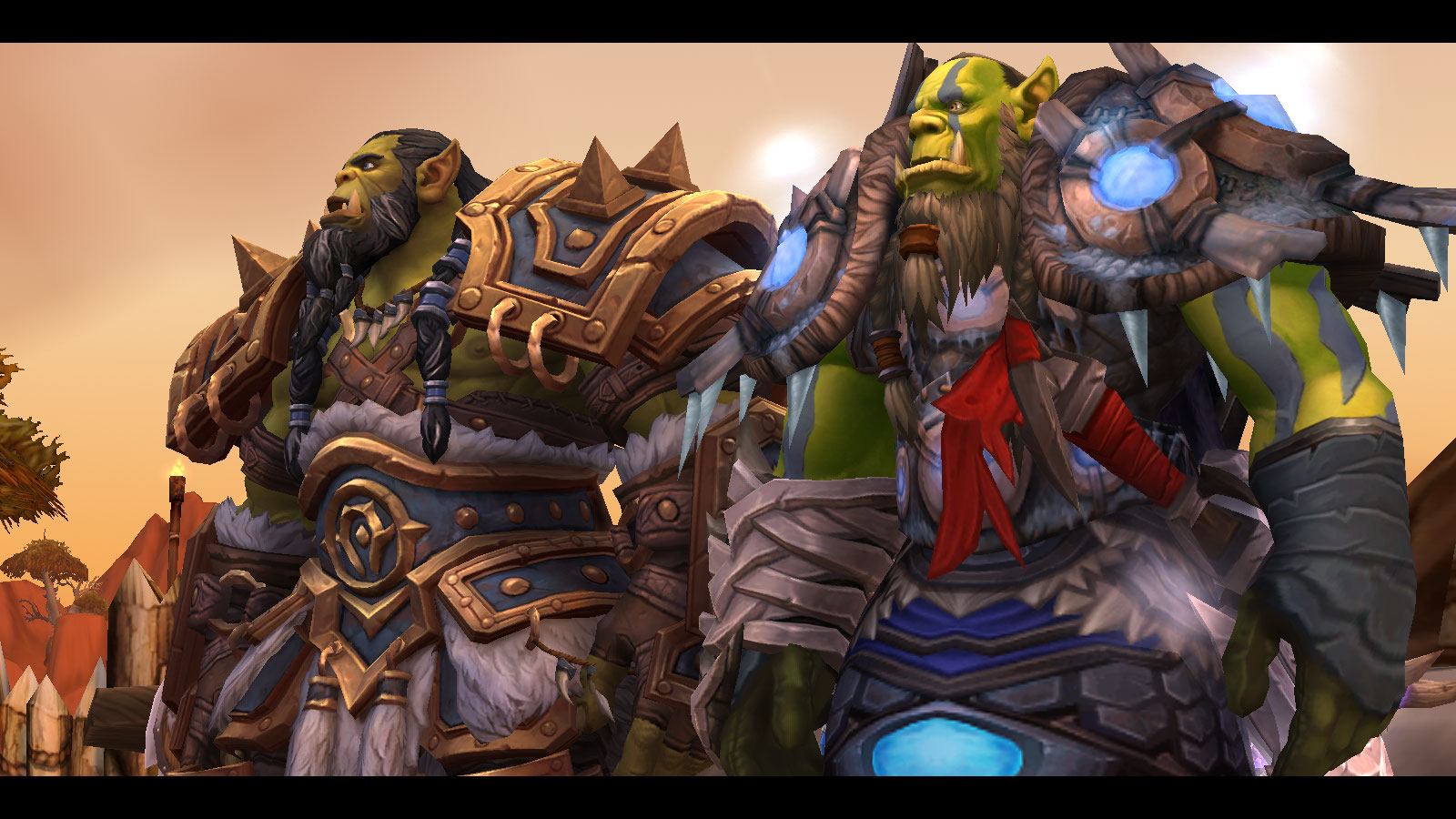 I’m not going to delete the character — maybe I might even dust him off for timewalking now and then — but for now I consider him retired, and in the story I tell to myself in my head, he’s reached the end of his days. I like to imagine he laid down on his furs the night of the festival, drifted off to sleep, and joined the spirits of his ancestors, his wartorn heart having found peace and redemption at last.
One thing I haven’t done much of this expansion is play Blood Elves, aside from a few timewalking runs and the heritage quest, and that does make me feel something is wrong in the universe.
Although I enjoy the current state of both classes, my warlock/demon hunter remains in moth balls for role-play reasons. If I make it that far, I’d thought of dusting her off for the Midnight expansion, which is supposed to be about defending Quel’thalas. That’d certainly get her out of retirement. I’ve also thought of playing her again with some sort of (cosmetic?) change to reflect her finding some form of emotional healing, but I haven’t settled on anything.
I had vaguely given some thought to leveling up my mage. The RP justification for him stepping out of the spotlight doesn’t feel as strong, and Fire spec is actually quite fun these days (even if I do hate that they gave Living Bomb a cooldown). The hero talents for mage in the upcoming expansion also look quite cool, which is more than I can say for most classes’ hero talents. Not sure I want to level through Dragonflight again, though, and there’s no real need for another max level alt right now.
 We may soon see some other new faces appear with the upcoming Pandaria Remix leveling event. Still not sure if I’m going to play a lot of that or not. I do love Pandaria, but I played plenty of it back in the day, and it remains to be seen how much I’ll appreciate the “remix” aspect.
I’ve been thinking of making a Blood Elf paladin to replace the old human one for a while, so that will likely be my first priority. I’ve also considered making a new death knight. Nothing really wrong with the old one, but he’s another character where I kind of like the idea of him getting to retire. Becoming an undead vessel of disease and violence is so far against what the Tauren hold dear it feels a bit depressing playing him sometimes.
Paradoxically, I do still kind of want to play a Tauren (especially now that I have their amazing heritage armour), but I’m not sure what class they’d be. I don’t really need another warrior or shaman, which would feel the most appropriate choices. I thought about a Survival hunter, but the current incarnation of that spec has them constantly chucking Looney Tunes bombs, and that just doesn’t fit a Tauren at all.
All that’s a lot of rumination for a game I’m still not sure I’ll be back to once my current sub expires, but for good or ill, it seems WoW can still get me obsessing like nothing else.


 Superior Realities