
We come now to part two of my trinity trinity, a trio of posts on the tank, healer, DPS triad of MMORPG group rules and how I’d really like to see the genre break free of it. Catch up on part one if you missed it.
 Today I’d like to highlight some of the best experiences I’ve had without the trinity, or at least with a modified version of it. Interestingly nearly all of these are from games that theoretically do subscribe to a rigid trinity, though I imagine that’s just a coincidence.
I hope to accomplish two things by doing this. First, it offers more insight into where I’m coming from when I talk about alternatives to the traditional trinity, and second, it further debunks the notion that a rigid trinity is necessary for interesting group content.
Two Sith walk into a bar flashpoint:
Star Wars: The Old Republic’s tactical flashpoints are a fascinating ground for experimentation with MMO group roles. The game builds a full group for these, but it does so agnostic of roles, and the content is tuned accordingly. Usually this means you end up with full DPS, or three DPS and a single tank or healer, but sometimes stranger things happen.
Such was the case a few weeks ago, when I had one of the most fun group experiences of my MMO career.
I queued for my first dungeon on my Sith inquisitor, who I’m building as a tank. I fully expected to be the only tank in a group of damage dealers, but I wound up matched with another tank of the same class alongside two ranged DPS. The responsibility usually placed on a single individual became spread between half the group.
 It was glorious.
All that social pressure, all that fear of failure, melted away. I had all the fun of tanking and none of the downsides. I waded into combat fearlessly, imposing my will on my enemies, without fear that a wrong move would doom the group. The other tank and I worked together, taunting mobs off each if one of us ever became overwhelmed.
The trinity is often held up as a shining example of team work, but really, everyone is kind of doing their own thing. My fellow Sith and I felt more like a team — in a random PUG with minimal communication — than most hard trinity groups I’ve been a part of.
Even aesthetically, it was a major improvement. My comrade and I formed a wall of armour and blazing lightsabers, holding back the enemies from our softer team mates. There was no breaking of immersion here; it looked and felt like a real battle.
I cannot overstate how fun this run was. I long for a time when experiences such as this might be commonplace in MMOs. This is how it ought to be.
Never say Neverwinter:
Neverwinter does have a traditional trinity, but of all the games I’ve played, it has the best take on it, at least if you ask me.
 Neverwinter may have the trinity, but if you’ll pardon the pun, it’s not religious about it. I’ve done high-end dungeons with no tank and done fine, and the roles are a bit softer. Tanks generally don’t hold aggro on everything all the time, and DPS can survive a few hits. Both tanks and healers still do decent damage, though less than their damage-oriented comrades. Heavy use of healing potions helps balance the responsibility of player survival.
The most fun I’ve had as a healer in an MMO — at least in terms of core mechanics — was as a devoted cleric in Neverwinter.
In Neverwinter, healers aren’t just slaves to HP bars. They’re more like Swiss army knives, utility characters adapting on a moment to moment basis. Sometimes you’ll be healing, but other times you’ll be throwing out buffs, and if nothing else is needed at the moment, you can put out some respectable damage.
I like this because it’s not forcing you into a narrow box the way the trinity does. I get to experience a broader wedge of combat without having to change character or specialization. To borrow the metaphor from my first post, it might not quite be a peanut butter sandwich yet, but it is at least toast with peanut butter.
…Hopefully I won’t get in trouble with the Hague for torturing that metaphor so much.
Old school oddness:
There isn’t much I miss about life before dungeon finders, but one thing that I do have some nostalgia for is being forced to come up with odd, random group compositions out of sheer desperation.
 The tank left? The warlock is pulling out his voidwalker. Healer ragequit? Well, the shadow priest is gonna throw out some heals, and the rogue has some bandages, and the mage is praying to every deity in the book that we finish this.
It didn’t always work. It often failed miserably. And it wasn’t sustainable. We were able to bluff our way through some leveling dungeons, but you couldn’t do challenging, endgame content that way.
But it was interesting to stretch your toolkit that way. It required a lot more thought than a rigid trinity does, and again, you weren’t being forced into some narrow role. That voidwalker wasn’t going to hold aggro on everything all the time. That shadow priest wasn’t going to save you if you didn’t make good use of your own survival tools.
It offered respite from the stifling order and choreography of the trinity.
Double D:
I was always surprised by how much I’ve enjoyed instanced group content in MMO shooters like Defiance and to a lesser extent The Division.
Now, I’ll be honest. It’s pretty mindless. It’s not exactly every man, woman, and rogue Castithan for themselves, but teamwork is much less than you’d find with a hard trinity.
 But it’s fun. There’s a joyful chaos to running in, guns blazing, and watching the bodies hit the floor.
Games are meant to be fun. They don’t always have to be super serious, or intellectually stimulating, or brutally challenging.
I wouldn’t want all games to devolve into mindless anarchy with little team play and no roles, but there is a place for that. Again, I want variety. Mindless slaughterfests should be part of a balanced MMO diet.
* * *
Next time, in my final post on the MMO trinity, I will outline my plan for how I would “fix” the trinity.
 For all their flaws, though, each of these developers brings something special to the world of gaming, something exquisite that keeps me coming back for more. I thought it would be interesting to look at these companies and explain why I am so loyal to them, despite everything.
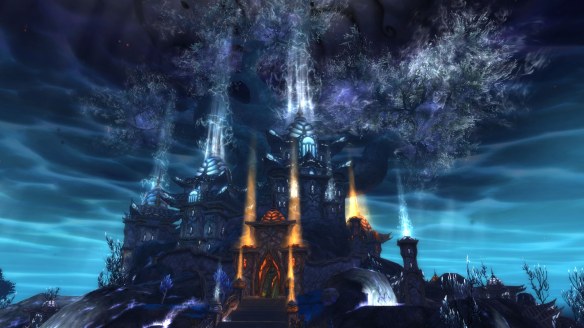 Have you ever seen Chris Metzen talk about the games he’s worked on? He’s the living embodiment of childlike joy and enthusiasm. He has so much passion for Blizzard’s games it’s like he could spontaneously combust at any moment.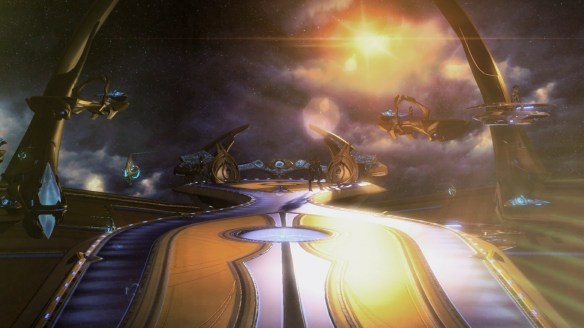
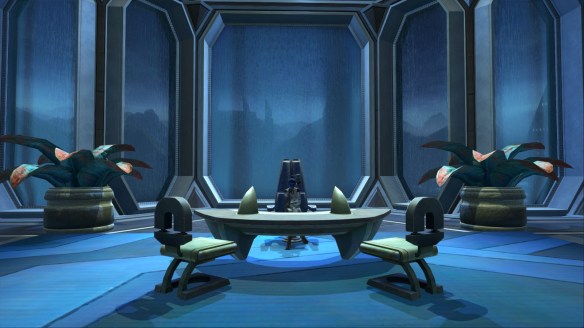 That leaves story-telling as Bioware’s strength, but even that isn’t entirely true. The main storylines in Bioware games are, at best, hit and miss. The only ones that really impressed me on that front are Dragon Age 2 and Mass Effect 3 (yeah, I’m a freak). Origins’ story was just weak, Inquisition and ME2 had potential but became entirely too bogged down with irrelevant side missions, and ME1’s story was okay but not exactly mind-blowing.
 It appeals to me as a writer, too. All the hard work of building a world and characters is done for me, and I can go nuts telling the story I want to.
 But even there, the depth of hatred I have for these characters speaks to their quality and realness.
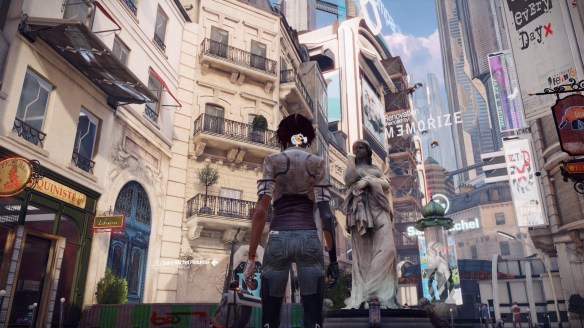 I’m already kind of excited about Vampyr, and I don’t even like vampire fiction.
 Superior Realities