
Right now, most World of Warcraft players are diving into the Broken Isles, but I’m holding back for a few days until the crowd dies down. Bar a, uh, minor detour or two…
 In the meanwhile, let’s check up on my alt addiction, shall we?
When last I reported on the self-imposed initiative I’m calling the Mustering of Azeroth, there were three classes left I had nowhere near ready for the new expansion: druid, hunter, and priest. I was struggling to decide which to use my free level 100 boost on, knowing that the others would be left behind.
But shortly after I posted that, Blizzard re-buffed the experience from the demon invasions event. They not only restored it to its previous, absurd height, they made it even more rewarding.
And a dark, sultry voice whispered in my ear, “You could have it all.”
It was crazy. But it was doable. So I buckled down, engaged full No-Lifer Mode, and set about grinding invasions. Over the space of about a week, I gained a combined total of 101 levels and got both my hunter and druid to level 98, the minimum for Legion content.
I doubt this did my mental or physical health any favours, but what’s done is done, and now I can reap the benefits of even more high level characters.
The hunt is on:
Despite a poor initial impression, the current incarnation of marksmanship spec for hunters is growing on me. The main problem is that it’s so visually bland — it shares the title of “most boring looking spec” with affliction — but mechanically it’s not bad. I’m enjoying the mobility and the relatively fast pace.
 After all these years, hunters are finally starting to feel like how I imagine an archer class should. Agile and versatile, dancing around their enemies and peppering them with arrows. And thank the Blizz gods for the lone wolf talent. It’s so good not to be shackled to a pet.
I haven’t bothered to investigate the other hunter specs, and while there’s good odds I will at some point, I’m not feeling a strong desire to. Beast mastery is all pets and is by all reports pretty slow — two cardinal sins for me — and the whole appeal of being a hunter to me is being able to use bows, so survival seems a bit pointless right now.
My one reservation about the character right now is her race. It’s not that I don’t like being a panda. I do — quite a bit, in fact. But in my heart of hearts an Elven archer is what I’ve always wanted. In retrospect I’m not sure why I made her a panda in the first place. I think I wanted to play through the Wandering Isle again?
It’s not helping that I don’t have much backstory or personality in mind for her. It’s hard to come up with interesting histories for Pandaren, seeing as they are for the most part a happy-go-lucky bunch that have not experienced much hardship until very recently. It’s not like Blood Elves where there’s no end of potential for angst-ridden backstories.
Howl at the moon:
My druid has not impressed me so much. It soon became clear that the new version of balance spec doesn’t excite me any more than the previous one did. I don’t hate it, but I don’t take any particular pleasure from it, either.
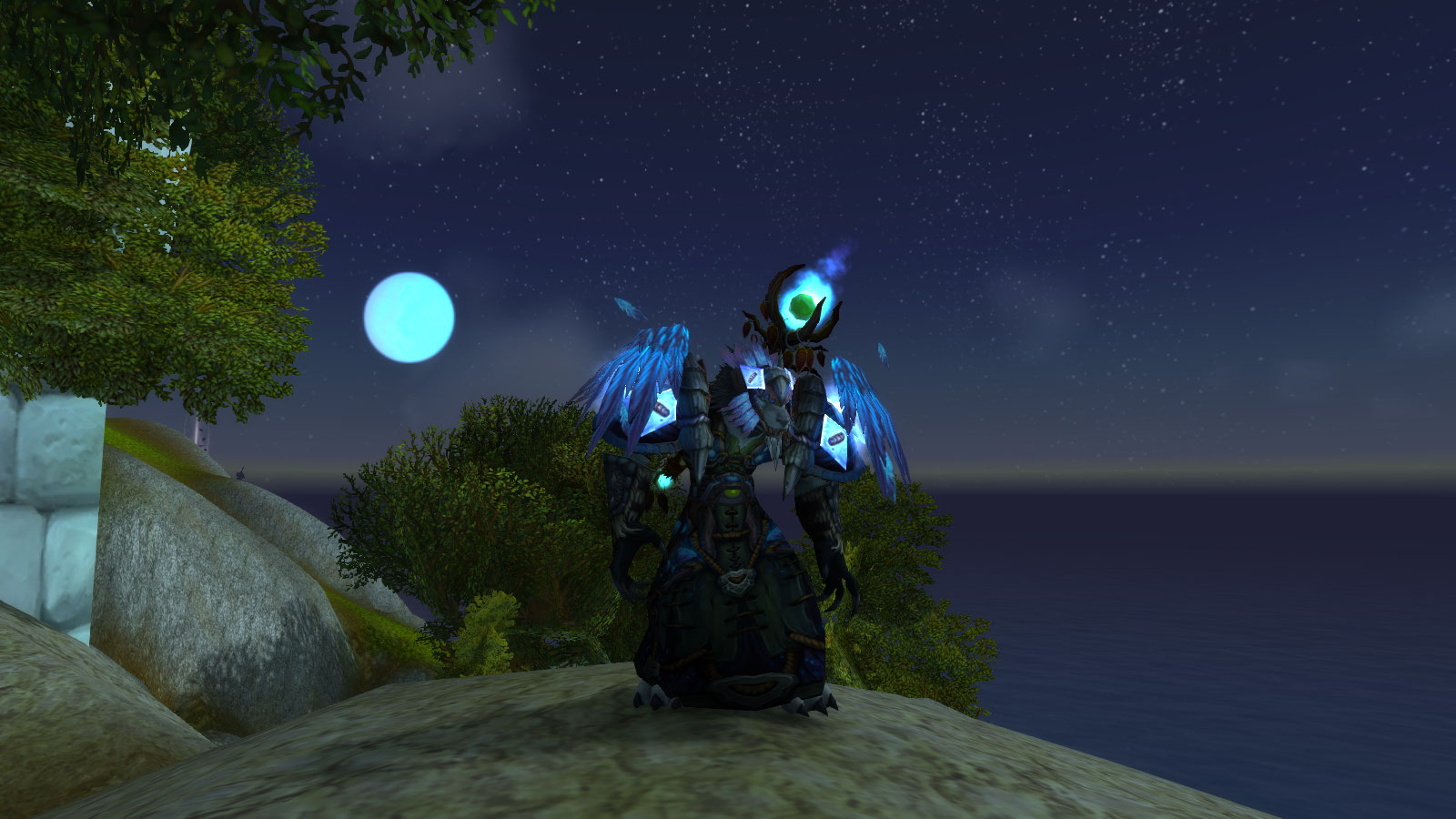
Doge durid. Such fite. Very balance. Wow.
I’m not sure what the issue is. Maybe it’s the asymmetrical DoTs, or lunar strike still being such a long cast. I adore the visual and sound effects for starfall, but it’s got too much ramp up time, and without it, balance’s options for AoE are woefully inadequate.
Whatever it is, the character isn’t doing much to grab me. I should probably try the other specs at some point, but I found them all very boring the last time I did so. Granted, that was a few expansions ago now.
I’m looking forward to doing the Scythe of Elune artifact quest for the story, but beyond that my druid will be at a very low priority in Legion.
Embrace the shadow:
That solved my indecision over what to use the boost on. Priest was the only class left.
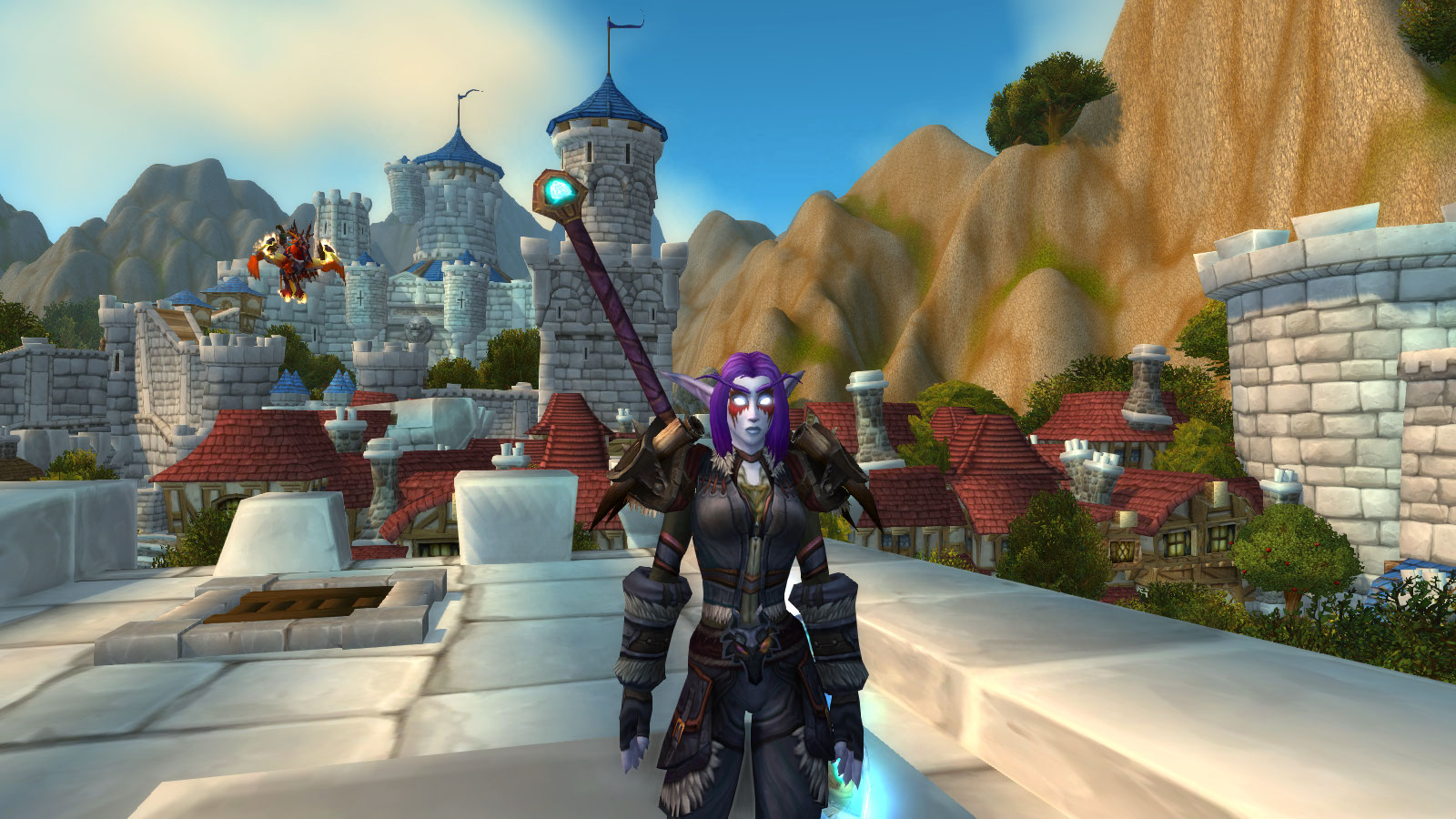
I was still torn between Undead and Blood Elf for race. Ultimately, and perhaps unsurprisingly, I settled on Blood Elf. I already had a good name reserved, and I came up with a good backstory for her, so those things broke the tie.
Nowadays boosted characters are apparently put into a brief tutorial scenario. I found it a bit tedious, but it’s probably a good thing to have for less experienced characters.
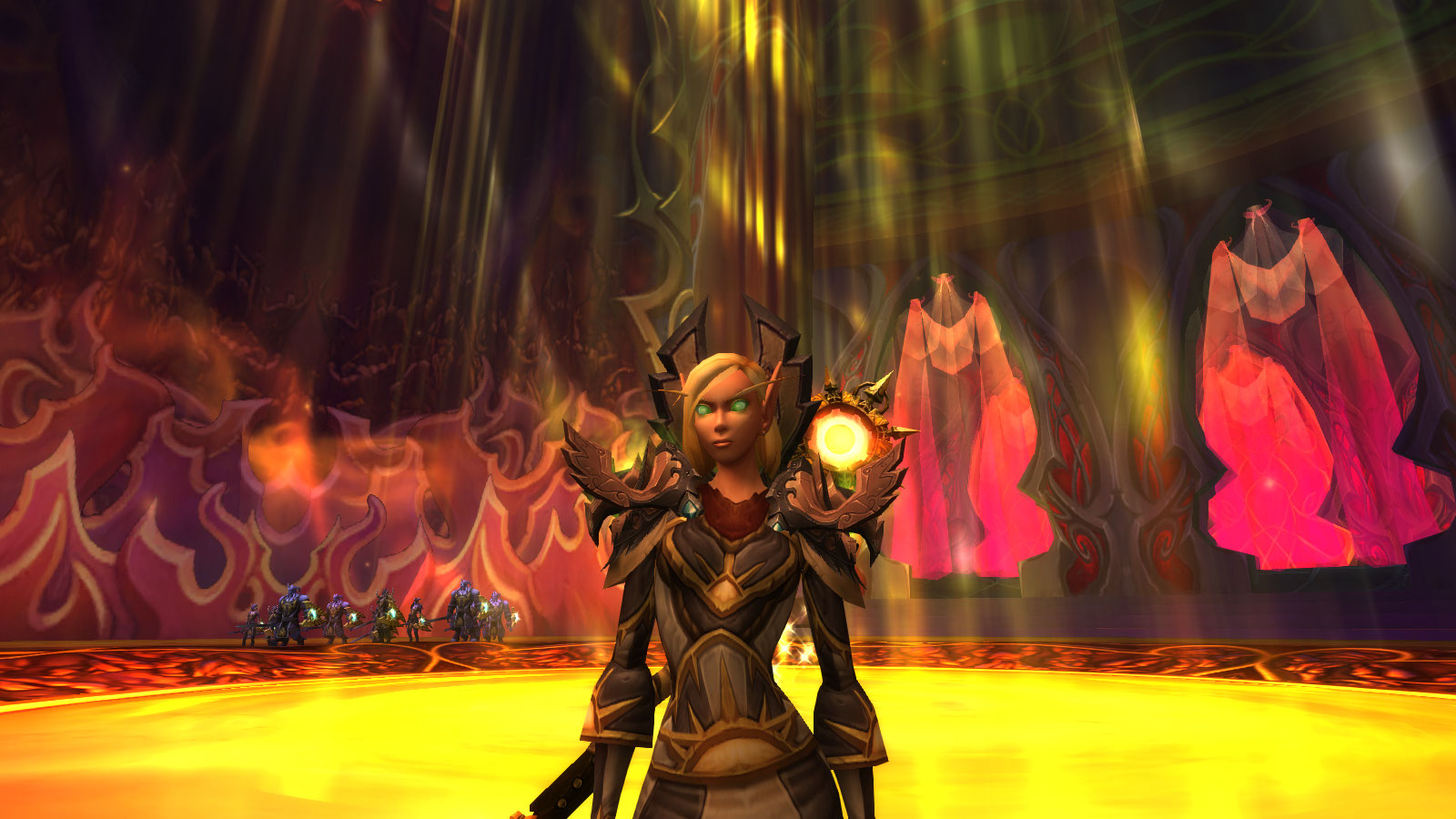 The one strange thing is that you’re locked into discipline as your spec to start. I find this an odd choice because the consensus seems to be that disc is one of the game’s most challenging specs right now, and based on my limited experience so far, I’d be inclined to agree.
The only rationale I can think of is that they picked disc because it combines both damage and healing, giving you a taste of both playstyles out of the gate. Even so…
I did try healing a dungeon as disc, and while nobody died on my watch, I wouldn’t call it a good run. I’m not sure if disc is underpowered, or if I suck, but I suspect a bit of both.
WoW’s UI just isn’t set-up to properly support a DPS healing playstyle. Disc would work much better in TSW. As it is, it’s a mess of constant target switching.
The one thing disc has in its favour is spectacular mobility compared to most other casters in WoW. Most of its core spells are instant cast, and penance can even be cast on the move. Not sure how that survived WoD’s crusade against caster mobility, but I won’t complain.
Also, halo is an incredibly fun spell to use. Numbers everywhere!
I also tried healing as holy. That went much better, despite a gong show of a group, but it felt a bit vanilla. Which, come to think of it, is true of most healers these days. Blizzard’s push for distinct class identities has not been applied consistently by any stretch of the imagination.
 I’ve always been most attracted to shadow out of all the priest specializations, and it does look like it will be my focus. I don’t think it will be my favourite spec in the game anytime soon, but it does feel pretty good.
On paper, the new shadow looks very similar to the old demonology (which I’m still missing terribly), but the more I’ve played it, the less similarity I’ve seen.
Demonology was all about knowing when to jump in and out of metamorphosis. It required a lot of strategy and forethought. With shadow, most of the decisions are made for you.
Once you cap out on insanity, you want to activate void form as soon as possible. There might be occasions where you want to delay it for a short time, but mostly you’d just be wasting damage by doing so. And once you’re in void form, it’s just a madcap dash to do as much as you can before your insanity meter runs out.
It’s still a pretty interesting playstyle in its own right. But it doesn’t bear much more than a superficial resemblance to old demonology.
On the whole I would put shadow together with elemental as the only ranged specs in 7.0 that don’t feel in any way unfinished.
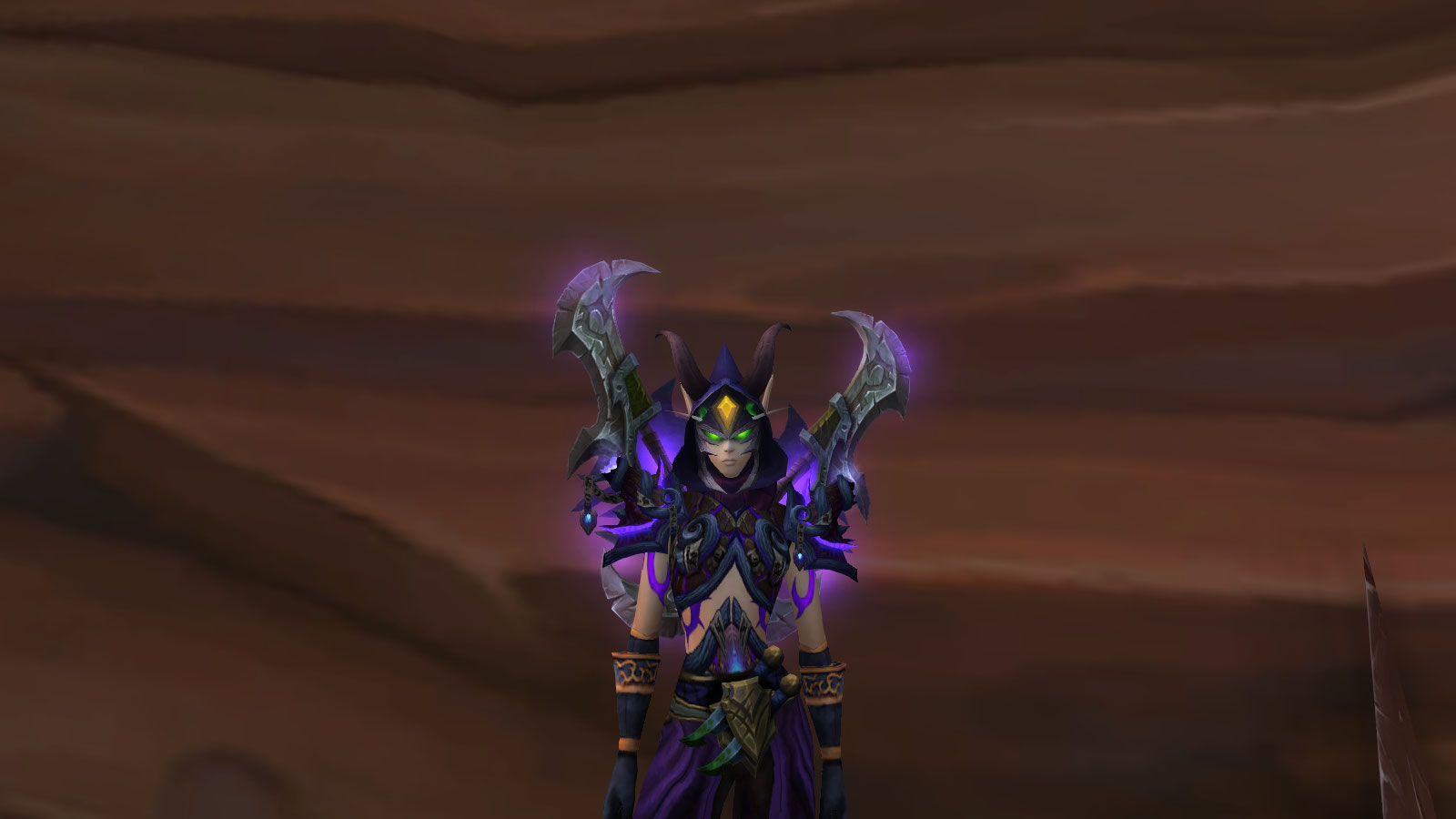
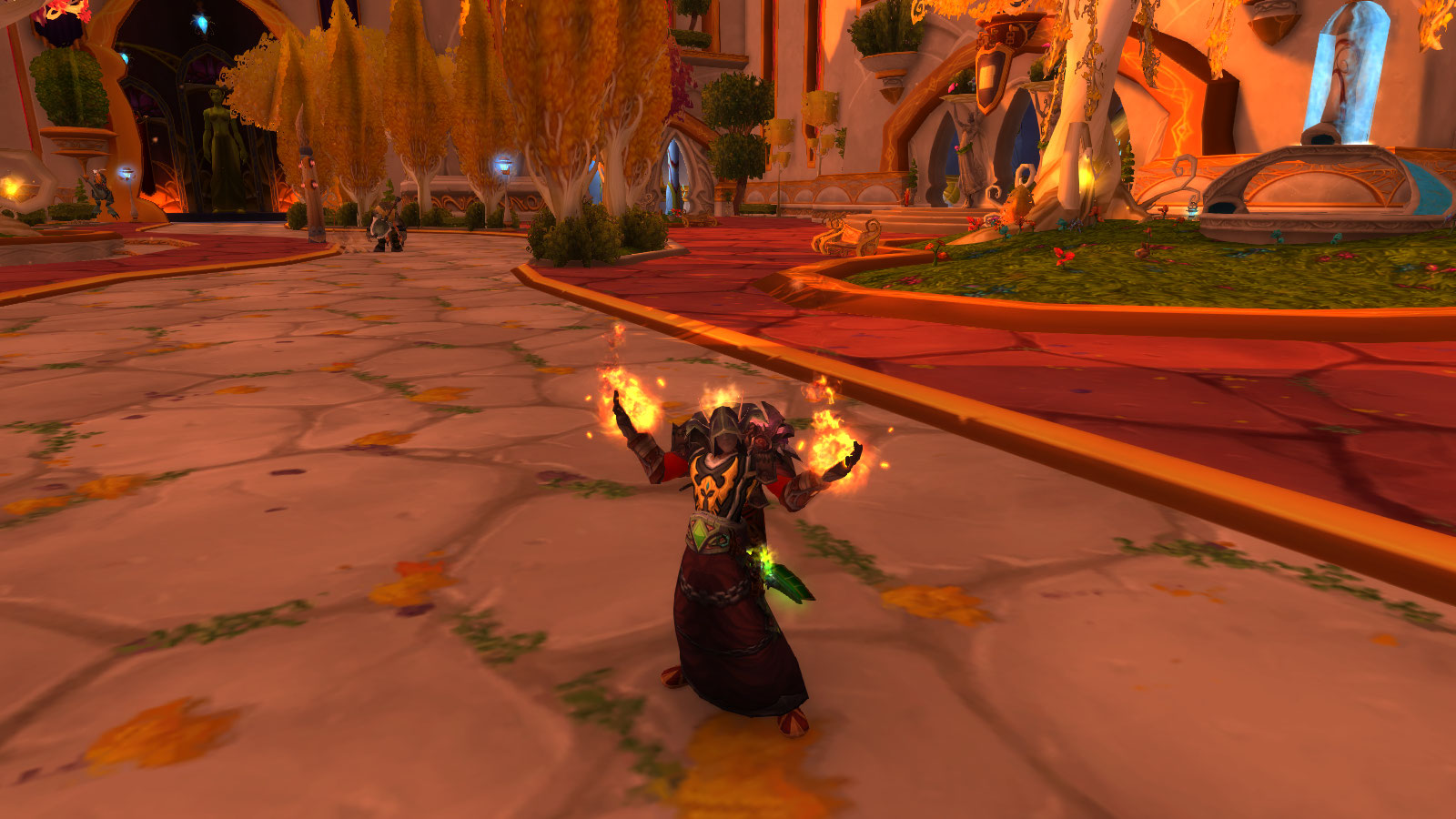
That’s not to say it’s perfect. I do spend a little too much time refreshing shadow word: pain, and mind flay barely tickles (I know it’s a filler spell, but wow). I also wish you could toggle off shadow form without changing specs outright. It really messes up first person screenshots.
But the visuals are nice, the gameplay is solid, and shadow crash is just awesome.
Ywaq maq oou; ywaq maq ssaggh. Ywaq ma shg’fhn.



 Superior Realities