
I’ve talked a lot about the content of the World Spectrum novels, but I haven’t spent as much time talking about the real world work that went into them. I’m going to rectify that with a few posts on the inspirations for the books, the real stories of how I came up with the universe and its plots.
I’ll start by talking about how the World Spectrum originally came to be.
 I started working on the World Spectrum about five years ago. It was… February, I think. At this time, I had not yet written any novels, though it had always been my goal. I didn’t want to commit to the work of writing a full novel until I had polished my craft some, so I was focusing on short fiction.
Rage of the Old Gods began as a piece of short fiction — my longest to date, at the time. In those days, it was called The Forgotten Gods. I always hated that title, but it took me forever to come up with a better idea.
The reason this story was bigger than all that came before it was that it was not the result of one idea, but several. I had several story ideas floating in my head, but none seemed complete on their own, so I tried combining them all.
Idea one: The world spectrum
The first was the idea for the world spectrum itself, a multiverse of different realities separated by their energy level. This idea hasn’t evolved much over the years; I had a pretty clear idea of what Tyzu and Sy’om, and even the worlds beyond them, were like from the start.
This idea drew inspiration from similar concepts in other stories. Notable among these would be the Seven Hells and Seven Heavens in Raymond E. Feist’s Midkemia novels, a series of concentric realities separated by their differing levels of life force.
 I was also heavily inspired by Ian Irvine’s Three Worlds universe. Both my work and his feature an Earth-like world (Barria/Santhenar), a cold and mountainous world (Sy’om/Aachan), and a heavily forested world (Tyzu/Tallallame). As in Ian Irvine’s work, the worlds are separated from each other by an ancient and mysterious magical barrier.
Idea two: The Automatons
My second idea was the idea of the Automatons, titanic magical war machines. This was a pretty simple concept. I was just in the mood for something steampunk-like, and I wanted to make some machines that were as ugly, bombastic, and over the top as possible.
Oddly enough, I had very little experience with the steampunk genre at this point. Just some random pieces of artwork here and there, mainly.
I’m ashamed to admit it, but I think the Automatons drew more inspiration from Michael Bay’s Transformers movies than anything.
DON’T JUDGE ME.
 Idea three: Heart
I’m very visual. Usually how I come up with new stories is I just start coming up with random pieces of fantastical imagery and then start building stories around them.
One of the images floating in my head as I was creating The Forgotten Gods was that of a city at the foot of a mountain range, filled with beautiful architecture and built around a circular artificial lake. I eventually decided this would be Heart, the capitol of Eastenhold.
My original vision for Heart was much more fantastic, featuring flying islands in the sky. I toned it down to suit the more gritty and “realistic” feel I was going for with the world spectrum, but the lake and the mountains remained.
Idea four: Leha
Character is what I struggle with more than anything as a writer. I find it incredibly difficult to come up with characters, and it tends to be pretty hit and miss as to whether I can actually make them interesting.
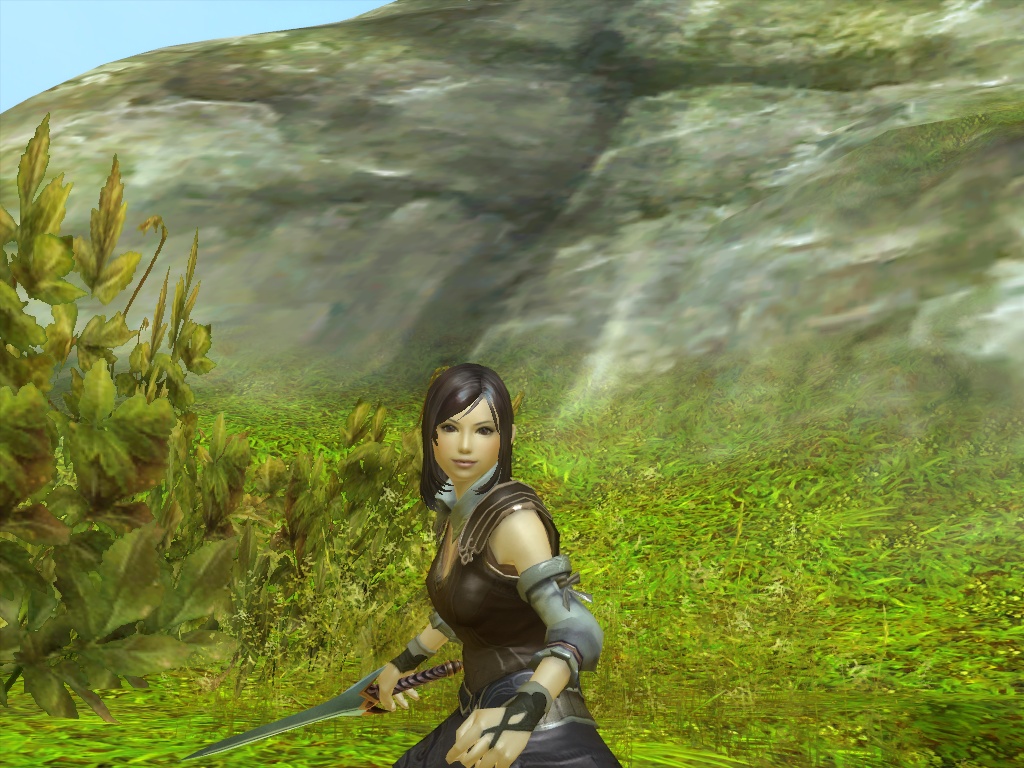
Leha is an exception. To paraphrase JK Rowling, Leha “just strode into my head, fully formed.”
I had already come up with the main plot by then. Normally, this would be followed by agonizing labor on the characters, but Leha just appeared. I instantly knew what she looked like and how she acted, and had a rudimentary idea of her history.
 I want to stress that this is very unusual to me. Nothing ever comes to me this easily, especially not on the character front. I can’t account for it.
I also had the idea for Drogin at the same time, but mostly only in the context that I knew Leha had a brother she was very close with. It took some time to flesh him out.
To this day, Leha still feels more real to me than any other character I’ve created, and I enjoy writing about her more than anyone else in the World Spectrum or any other series I’ve written.
How it came together:
Now, I’m going to be honest. I’m not very good at writing short fiction. The type of story I like to write is simply too big. Some of my short stories have worked out okay, but most were just failed intros to novels I never wrote.
The story that would become Rage of the Old Gods seemed fairly typical in that regard. That is, it was too big to be a short story. But I’d done many stories like that, so I didn’t consider this special. Although in retrospect, part of me may have suspected this would be more than a story.
When I finished The Forgotten Gods, I immediately considered continuing it as a serial fiction. I was afraid to use the term “novel.” I put a look of work into expanding the world and considering future plots, work that would eventually form the groundwork for the rest of the book. I ultimately decided to move on to other stories, though, feeling I was unready to tackle such a big project.
 I returned several months later. The idea of continuing The Forgotten Gods had been in my mind a lot, and I desperately wanted to write about Leha again. During an intense bought of writer’s block, I decided to begin work on the continuation. I had little plan and didn’t know where things would end up.
The Forgotten Gods eventually became the first section of the novel, “Transformation.” The continuation became the second section, “The Defense of Marlhem,” and continued until I had written the entire book, though it took me weeks to work up the courage to admit to myself I was writing a novel.
I then moved on to other projects, including an entire other series of novels, but Leha was always in the back of my mind, nagging me that her story was not finished…
 Superior Realities