
I think nuance is important in life. It’s always good to remind yourself nothing is entirely good or bad, to see the flaws even in things you enjoy. Blind devotion is never a positive trait.
To that end, I have compiled a list of things I truly hate about things I truly love. None of these things are enough to turn me off my passions, but that doesn’t mean they don’t really get under my skin.
This is by no means a comprehensive list; it’s just the things that stood out to me as I was writing.
And just so you know, to continue the theme of balance and nuance, I will also be doing a post on things I love about things I hate.
World of Warcraft: Mandatory subscription
There’s no shortage of things I could have picked where WoW is concerned. It’s a game with much that I love, but also much that I would gladly purge with cleansing fire.
I settled on the subscription. I’ve said it all before; I don’t like subscriptions and the psychological pressure they create.
 In WoW’s case, I find the subscription is having an increasingly toxic impact on the game’s design. More and more the overriding thought behind Blizzard’s decisions seems to not be “How can we make this more fun?” but “How can we make this take longer?”
Star Trek: Enterprise: Gratuitous T&A
Enterprise’s infamous decon scenes and other acts of shameless fan service have received much criticism, and while I think it’s a bit unfair to act as if this was something new to the Star Trek franchise (mini-skirts — just sayin’), it does deserve to be criticized.
Yeah, it’s sexist. It’s also silly, ridiculous, and unnecessary, and it cheapened what was otherwise a fantastic piece of intellectual science fiction.
I mean, I was going through puberty when Enterprise was on the air, and even so, I still didn’t enjoy the decon scenes.
Much.
Seriously, though, even then I was like, “This is dumb. Why are they doing this? I mean, I like seeing Linda Park in her underpants and all, but really, this is dumb. Get back to the plot.”
At least they made some small effort toward being equal opportunity. Trip did spend an awful lot of time in his underwear and/or sweaty and covered in dirt.
 Fun fact: TrekUnited’s “let’s drool over Connor Trinneer” thread was roughly ten to twenty times longer than the equivalent threads for Jolene Blalock and Linda Park combined.
This is not an exaggeration.
Battlestar Galactica: Season four
I have a lot of love for Ron Moore’s Battlestar Galactica reboot. My autographed photos of Katee Sackhoff and Aaron Douglas sit proudly next to my computer desk. My pilot’s wings pin occupies a place of honour on the headboard above my bed. One of my first major writing projects was a massive BSG fan fic up that ended being nearly novel length. BSG produced three of the best seasons of television ever made.
And then season four happened.
Sigh.
I mean, there was still some really great stuff in season four. I loved the mutiny arc. The acting and character arcs were fantastic until the end. “Revelations” was possibly the best episode of the series.
But most of season four was defined by random drama and shock value for the sake of drama and shock value. It killed off beloved characters for no apparent reason.
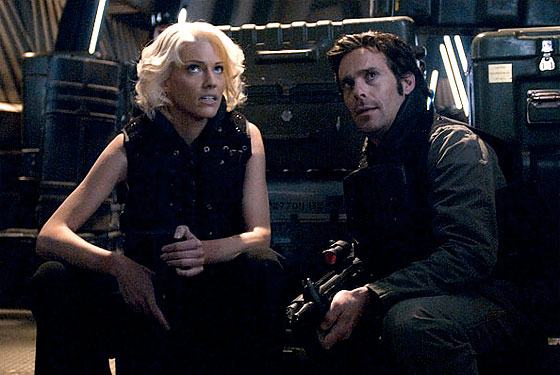 Worse still, it became clear that, despite what the opening credits said, they did not have a plan. The writers were clearly making it up as they went along, and in the end, the show “collapsed under its own weight,” as an old friend of mine aptly put it. The ending was a nonsensical mess that boiled down to two hours of “a wizard did it.”
The first three seasons of BSG were so brilliant that season four cannot diminish what they accomplished. But that’s not for lack of effort.
These days I mostly try to pretend season four ever happened. Though not as hard as I try to pretend Blood and Chrome never happened.
Stargate: Universe: Montages
I loved SG:U. After its shaky first few episodes, it evolved into one of the great sci-fi shows of all time. But there’s one nasty habit it never quite shook off.
Those damn musical montages.
Nearly every episode had to conclude with five minutes of the cast staring off into space and looking depressed while some crappy song plays in the background. It never stopped being irritating.
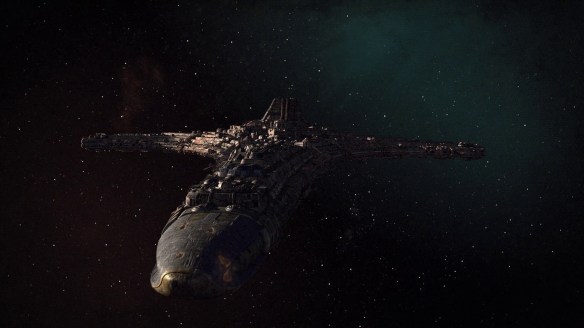 Take that time and come up with some proper opening credits instead. Would be as useful.
Mass Effect: Asari
With a few notable exceptions, I’m not fond of the alien races in the Mass Effect franchise. It feels like very little effort was put into them — they’re almost entirely bland archetypes the likes of which you could find in any generic sci-fi story.
The Asari stand out as the worst, though. They’re basically an entire species of adolescent sexual fantasies — gorgeous, bisexual alien girls. Considering how progressive Bioware tends to be, shameless fan service such as the Asari sticks out like a sore thumb.
I find it ironic that the games try to make it this offensive stereotype that Asari are defined by sex, but the games spend more time stereotyping them than any of the characters. There’s next to nothing unique or noteworthy about the Asari culture or temperament other than their sexuality, nearly all Asari plots revolve sex or relationships in some way, and Asari strippers are utterly ubiquitous.
Admittedly, my view has perhaps been skewed by the fact Liara is the most prominent Asari in the franchise. Her entire personality boils down to, “Gee, Shepard, you’re so awesome; wanna feel my boobs?”
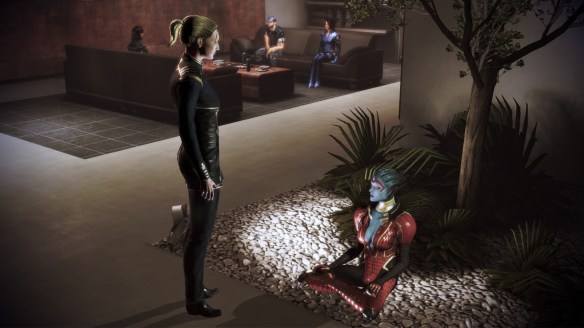 In fairness, Samara is pretty cool.
Heroes of the Storm: Dragon Shire
I was going to mention the amount of filler in Bioware games, but then I remembered how much I hate Dragon Shire, and there wasn’t room for both.
Heroes of the Storm’s map variety is one of its great strengths… unless you get Dragon Shire.
I hate this map so very, very much. It’s just endless back and forth — you can easily go ten to fifteen minutes into a match without either team winning the map objective. It’s so slow, and so tedious. It’s also really easy to get screwed over by your team composition in quick matches because you need a very specific set of heroes and roles to hold all three shrines effectively.
It also seems very snowbally compared to other maps. Winning the dragon is such a massive advantage, and there’s no “consolation prize” for the team who doesn’t capture it. It’s agonizing to spend half a match fighting over the damn thing, only to have the enemy team cap it and wreck half your forts because your team made one mistake.
Oh, and it has the most boring visuals and the dullest announcer of all the maps.
 I have my highest win rate on Dragon Shire, but even that does nothing to quell my hate for this awful, terrible, no good map. I have at times (briefly) considered quitting Heroes because of Dragon Shire — I’m not kidding.
Fantasy in general: Lack of diversity
This isn’t necessarily something I hate, but it confuses and disappointments me.
Science fiction has a pretty rich tradition of showing a future where humanity is more united and giving us diverse casts composed of a good balance of sexes, races, and even sexual orientations.
Fantasy, for whatever reason, isn’t like that. The vast majority of fantasy novels are about straight white guys. If an author is feeling really daring and progressive, it might be about a straight white woman.
There are a few exceptions. Ian Irvine and Glen Cook have made at least some effort toward racial diversity in their casts, Mercedes Lackey gives good representation to LGBT characters, and… that’s all I got.
I guess Dragon Age could merit a mention, too. Good balance of sexes and sexual orientations, at least.
StarCraft II: Too much macro
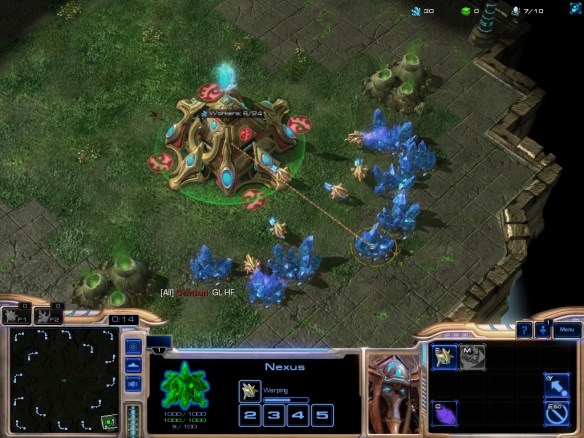 StarCraft II is one of the great RTS games of all time, and the countless hours I’ve sunk into prove my love for it. But it always bothers me how much of the game boils down to macro, to economy.
If you run your economy well, you can all but ignore what happens on the battlefield, at least until you reach the highest levels of play. I remember hearing a guy saying he made it from silver to platinum league by giving up on commanding his army and just devoting all his attention to macro.
That’s pretty messed up.
And it’s just boring. Way too much of every game is spent churning out workers, and pylons, and overlords, and so forth. “YOU MUST CONSTRUCT ADDITIONAL PYLONS” is a meme for a reason, but it’s not necessarily a good reason.
Everything: The fans
“It’s not the band I hate. It’s their fans.”
The sad truth is I have yet to find anything that can’t have the fun sucked out of it by its fans. The worst part of playing WoW is the other WoW players. The worst part of being a Trek fan is the Trekkies. And so on and so forth.
That’s not to say you won’t encounter nice people in fandom. Some of the best friends I have were made through fan communities. But on the whole, I’ve found my every attempt to engage in the fan community for any game, TV series, movie franchise, etcetera has ultimately proven frustrating and lessened my enjoyment of the original product.
 I have
 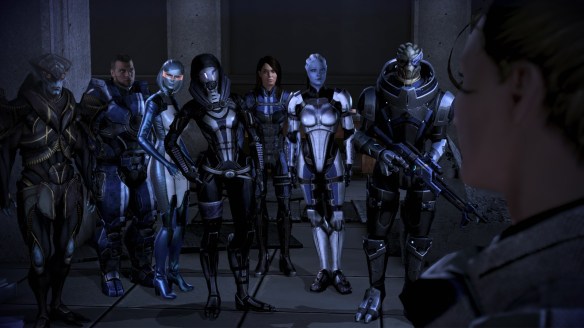 Mass Effect could have done better when it comes to the ideal of infinite diversity in infinite combinations (IDIC), but they at least made an admirable effort toward it, featuring a core cast composed of both humans and aliens, a decent balance of genders, and at least some non-white humans.
 There’s that same sense of optimism Trek embodied, too. The idea of trying to inspire us to our fullest potential. What was that quote from Winston’s short? Something like, “Don’t see the world as it is. Dare to the see the world as it could be.”
 And we’re back to video games.
 Superior Realities