
And so we come to the end. After just six episodes, the fourth season of Continuum has concluded, and with it one of the best science fiction television series of recent memory — perhaps of all time.
 The stage is set for a final showdown at the warehouse where Kellogg’s future soldiers are planning to open a portal to their own time. The Vancouver Police Department, led by Carlos and (surprisingly) Dillon, alongside Piron’s security forces plan to crush them in a pincers movement, while Kiera and Alec attempt to infiltrate the facility in the hopes of sending Kiera home.
Meanwhile, Kellogg plans yet another double cross, and along the way proves himself even more gross than we thought.
Considering all the build-up around this epic final clash and Continuum’s penchant for frequent and spectacular fight scenes, “Final Hour” isn’t as action-packed as you might expect. Oh, there’s more than a few bullets and explosions, but there’s also quite a lot of time given to tearful farewells and waxing philosophical about the implications of time travel.
To be honest, it felt like a case of telling and not showing. The entire series has been a thesis on the personal and ethical implications of time travel. We didn’t need any more.
And as much as it pains me to say it, that’s not the only way “Final Hour” didn’t quite meet my expectations. It’s an episode that seems filled with missed opportunities.
The Traveler’s storyline, for instance, doesn’t ultimately amount to much, and honestly I don’t understand its resolution at all.
 Similarly, Garza is just sort of there and doesn’t really do anything. This is very disappointing, because Garza is awesome, and I spent the whole episode expecting her to do something crazy and throw everything into chaos.
The list goes on. I would have liked to have seen Emily be involved somehow. Her plot was just sort of left hanging. I want to know what Jason wrote in that note.
I don’t like how things wound up with Brad, either. It doesn’t feel right after his ruthless backstabbing in the last episode.
There were some high notes, though.
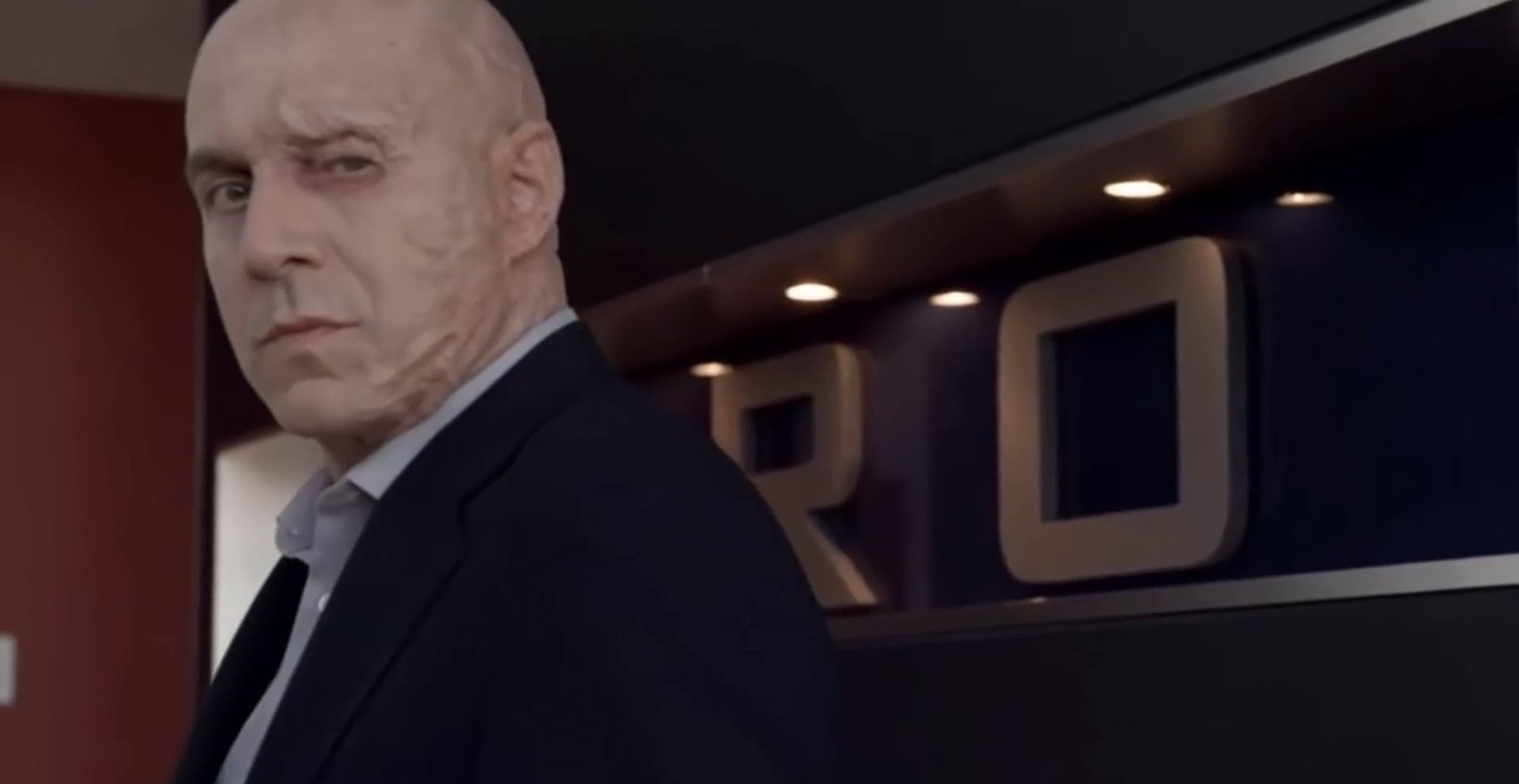
I actually rather liked Dillon getting some redemption in the end. At first I thought it was too sudden and didn’t fit with his character, but thinking about it, it makes sense from a thematic perspective.
Dillon was always a kind of metaphor for the trajectory of the world. As time went on, he became more and more corrupt, a forebear of the totalitarianism of Kiera’s time. Having him break free of that darkness is a good way to illustrate the changing course of the timeline. He’s a microcosm of the entire arc of Continuum.
 And I did truly love the very end. It was powerful, emotional, and incredibly satisfying, if rather bittersweet. I’m very glad they found a way to provide a positive outcome without giving Kiera a perfect shiny happy ending. Very well done.
So in the end, “Final Hour” wasn’t all I was hoping for from the conclusion of Continuum, but it wasn’t exactly bad, either, and I’ve certainly seen far more disastrous ends to sci-fi shows. I’m looking at you, Battlestar Galactica.
For all its faults, “Final Hour” cannot tarnish the incredible legacy of Continuum, and it serves as an effective, if uneven, conclusion to the truly brilliant arc of the series. When you consider where the show started, and how much the characters and the mythos grew and evolved in that time, it’s awe-inspiring.
Overall rating: 7.5/10
I’m sad to see Continuum end, but I am very grateful that it had the chance to end on its own terms, and that we were able to see such an incredible story come to its conclusion.
Farewell, Continuum. You were a shining example of science fiction at its very best.

 Superior Realities