
Guild Wars 2 Thoughts:
 I’ve been hesitant to write on Guild Wars 2. If I praise it, then I’m just repeating things that have been said a thousand times over, but if I focus on its negative aspects (and yes, they do exist), I’ll just seem like one of those haters who always comes out to trash the latest game.
However, it has been filling up most of my free time lately, so I figured I might as well give my thoughts. I’m far enough into the game now that I feel my hype goggles have fallen off, allowing me to view the game honestly.
Full disclosure first, though: my main has only just hit level 30, though since the whole game is endgame, that probably doesn’t make much difference. I also have not tried dungeons or PvP yet, though I’ve yet to hear a single good thing about dungeons.
Open road, open sky:
I won’t give you a laundry list of the positive features of Guild Wars 2. It’s all been said before, both on this blog and elsewhere.
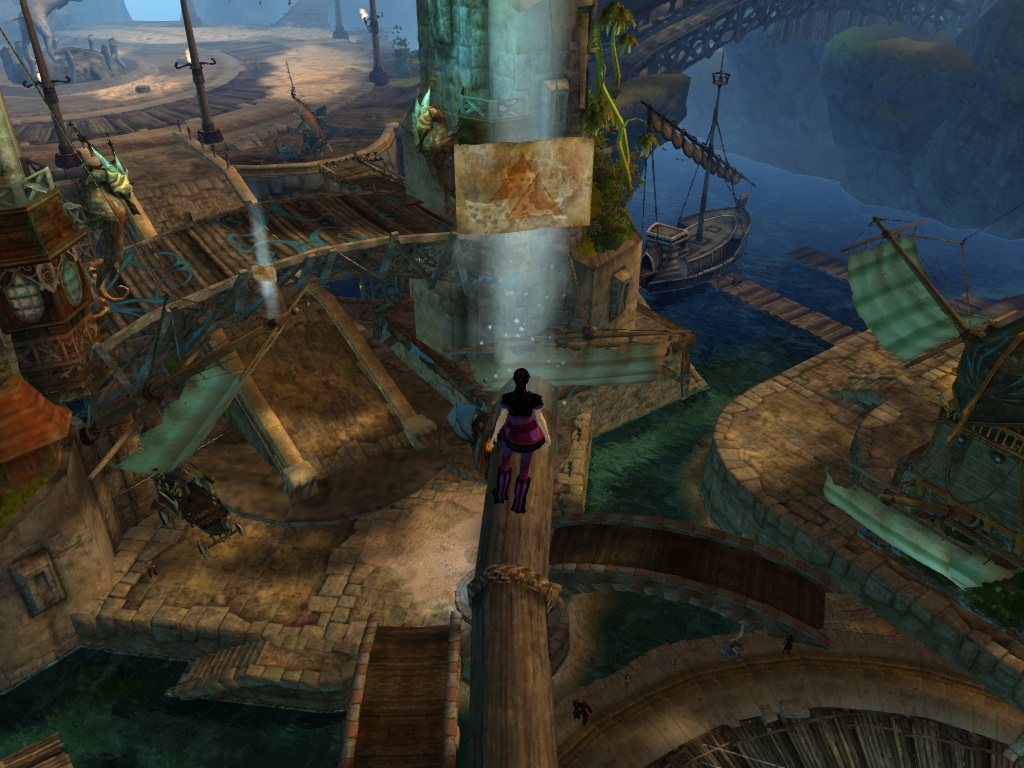 Besides, this is a game that’s more than the sum of its parts. It’s not that dynamic events are exceptionally fun. It’s not that heart tasks are thrilling and unique. Nor is it that skill challenges or vistas are especially exciting to track down. It’s the full package created by all these features.
I don’t know about you, but I used to play a lot of make believe games when I was a child. I recall one in particular my friends and I played for a while, which we simply called “the wandering knight game.” The idea was that we were all knights (with magical powers, of course) who wandered the land, solving problems and fighting evil.
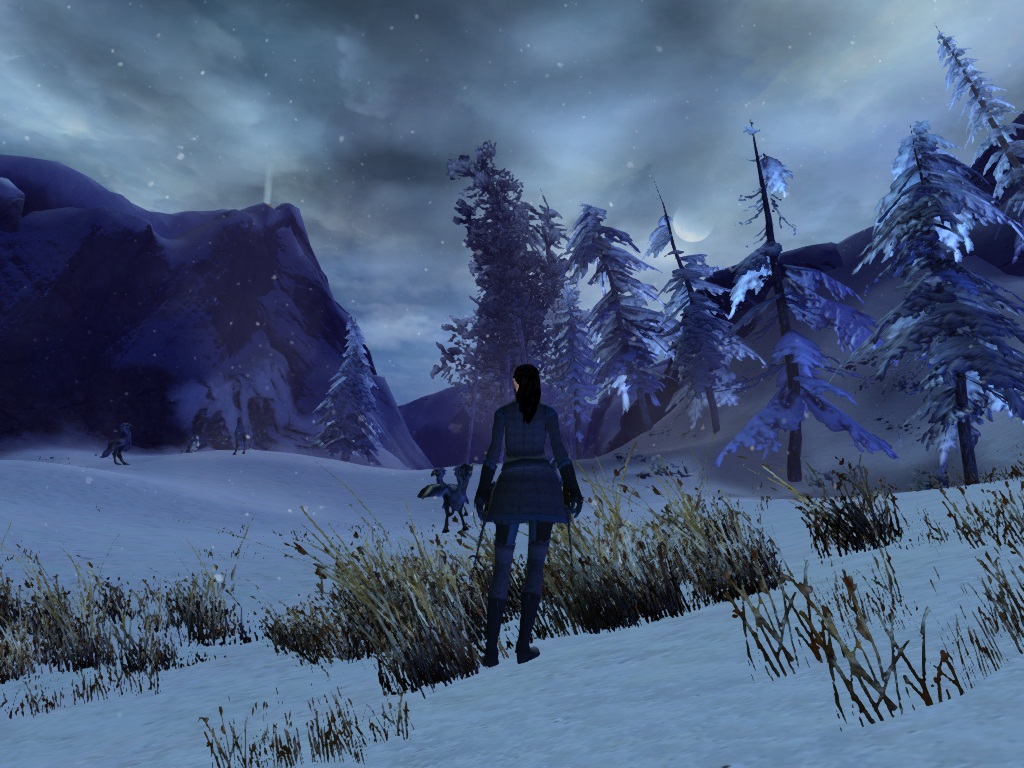
That’s what Guild Wars 2 is. It’s the dream of being the itinerant adventurer, the wandering hero. With no set progression path or linear quest chains, the game consists simply of you picking a direction and walking until you find something to do. It’s the total freedom of the open road.
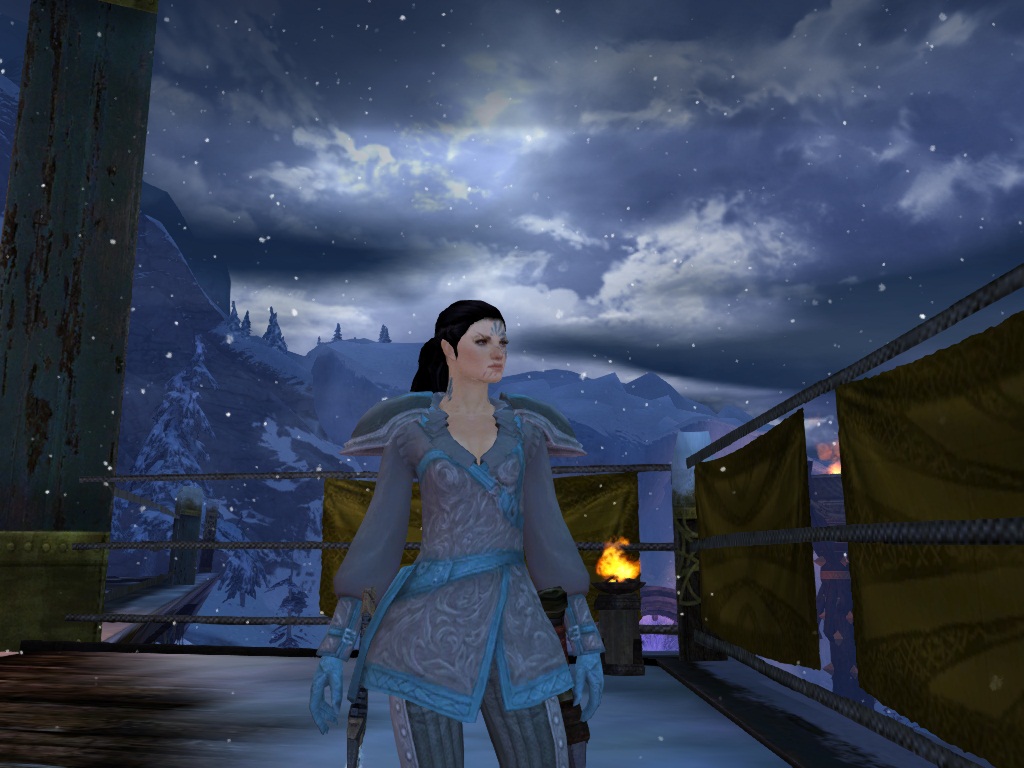 You never have to go far to find something interesting, either. I’ve never seen a game so jam-packed with content in every single nook and cranny. There’s always an event, vista, heart, jumping puzzle, or skill challenge around the next bend.
In fact, there’s so much to do that I feel as if I’ve suddenly developed a severe case of ADD. I set out to fill a heart in one corner of the map, but then I run into a chain of dynamic events, and next thing I know, I’m halfway across the map and working to complete the hearts and challenges in that region. An hour later, I remember I still haven’t done the original heart I set out to complete.
The feeling of freedom is further enhanced by the complete lack of the usual MMO BS. Gearing is never much of an issue. There’s no competition with other players whatsoever, leading you to want to quest with the crowd instead of avoiding it. Travel is quick and easy. You can sell things at the auction house and move crafting materials to your bank from anywhere in the world.
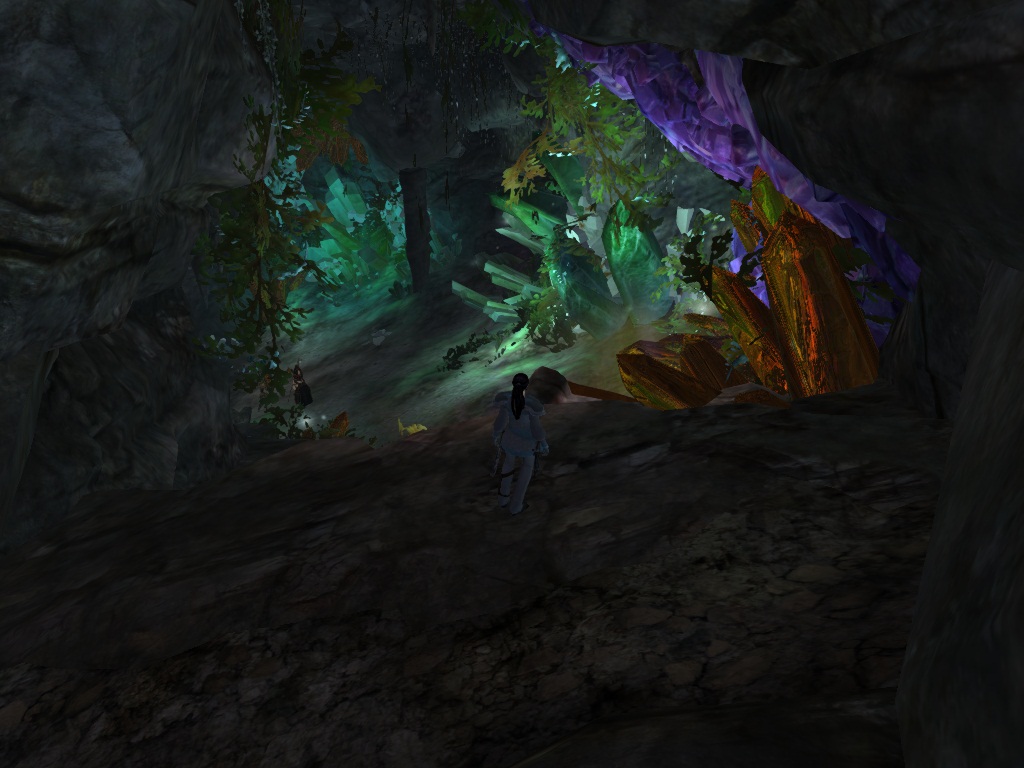 It’s difficult to explain to someone who hasn’t played GW2, but if you ever dreamed of being the wandering hero in your youth as I did, this game will awaken some inner child you didn’t even know you had.
Get your quarters:
But that doesn’t mean the game is perfect. It does have some significant flaws, and as these are probably not so well known, they do deserve a nice, neat list.
The two main issues for me are the story and the classes.
For such a polished and progressive game, I can’t believe how backwards and unfinished the classes feel. You have access to very few abilities, and most of them are utility or AoE. This leaves you with almost no options whatsoever for single target DPS, which feels extremely awkward to me.
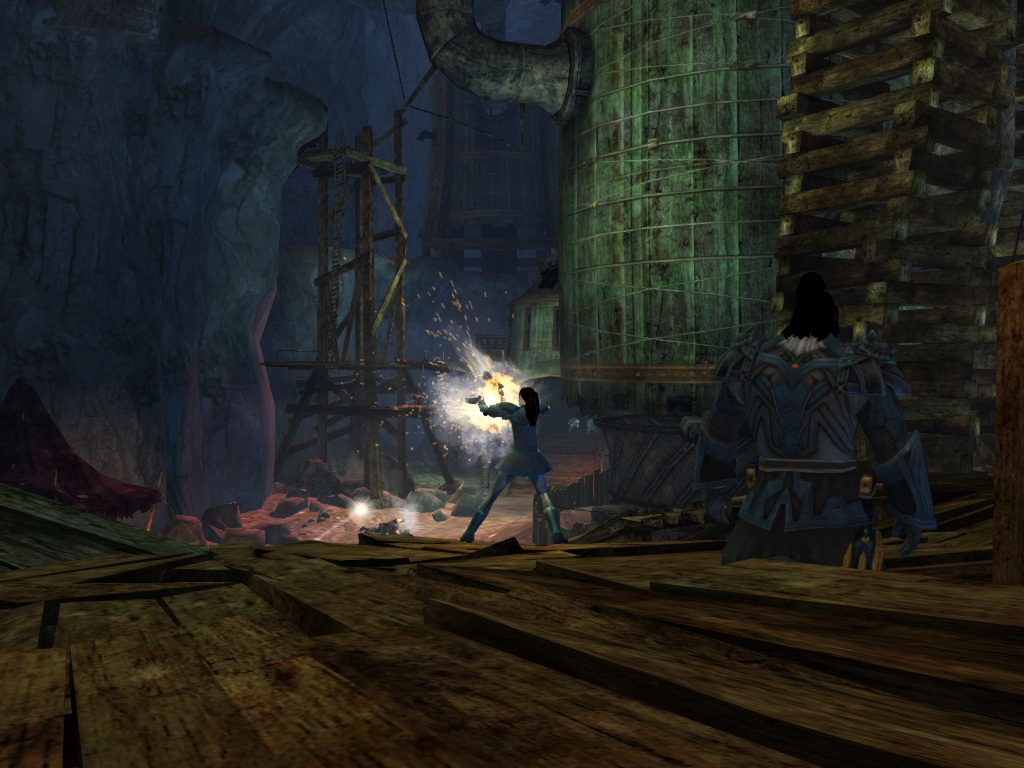 To make matters worse, all classes except for the thief are limited by cooldowns instead of resources, and the cooldowns tend to be quite lengthy. This leaves you with nothing to do but spam auto-attack must of the time. I’ve always hated cooldown-based classes, so I’m playing a thief not so much because I enjoy it — although I do — but simply because I can’t stomach the other classes.
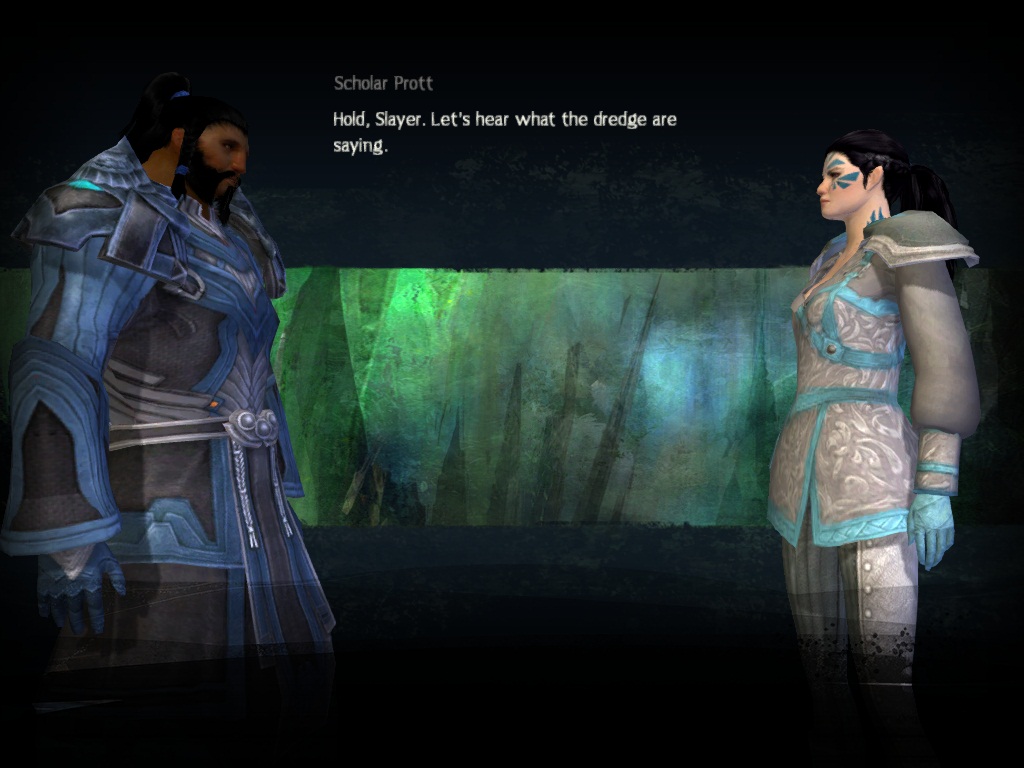
The story is also something of a disappointment. It reminds me of classic WoW in the worst way. There’s very little plot to speak of, and most of it is thin, cliche, and poorly written. WoW’s plot may be cheesy at times, but at least it’s colourful and full of personality. GW2’s story is all of WoW’s weaknesses without its strengths.
Normally, both of these things would be potential deal-breakers for me, so it’s a testament to how awesome the rest of the game is that I still love it despite these issues.
 The business model:
While it’s not a huge concern for me, I feel I should address the free to play (buy to play, technically) business model for Guild Wars 2, because I know some people are understandably wary of F2P games.
Everyone has different limits for what’s acceptable, but for what it’s worth, I don’t find the cash shop to be an issue. Most of its items are cosmetic, and none are remotely essential. The closest it gets to “pay to win” are some consumables to temporarily boost experience and currency gains, but since there’s no competition in PvE or rush to endgame and everything in PvP is normalized, I don’t see how these could create any problems.
The one thing that worried me beforehand is that transmutation stones, GW2’s equivalent of WoW’s transmogrification, come from the cash shop, but you can also acquire them from completing achievements in-game, so it’s not much of an issue.
 The one time I feel slightly pressured to use the cash shop is when I get Black Lion Chests, which are locked treasure chests you get as random drops. The keys to unlock them do drop in the game, but the drop rate is extremely low, so you’re encouraged to buy them from the cash shop.
However, opening the chests is in no way necessary to progress in the game, so you can just throw the unopened chests in the bank and forget them. Or sell them to other players.
Finally, the most important thing to remember about the Guild Wars 2 cash shop is that you can buy its currency, gems, from other players for gold, meaning you can get everything in the store without spending a single real cent if you want. The economy may change over time, but currently, gems are dirt cheap, so there’s no need to worry about the game being a grind or a money sink right now.
 Conclusion:
Guild Wars 2 is a revolutionary game. It’s such a unique and special experience you can ignore its few but major shortfalls. My main concern is its staying power. Its weak story gives me little attachment to the world, and if another game came along and offered the same kind of experience with a better story and/or classes, I could see GW2 getting crushed.
Overall rating: 9/10 MMOs are never finished, so this rating could change with time. But this is how I would rate it for now.
New Article:
My latest article for WhatMMO is 6 Surprises Players Can’t Handle. I originally wanted to call it “Things That Break People’s Brains,” but that seemed too vague.

 Superior Realities