
I am really desperate for a good, faithful film adaption of ancient mythology.
Immortals is not that movie.
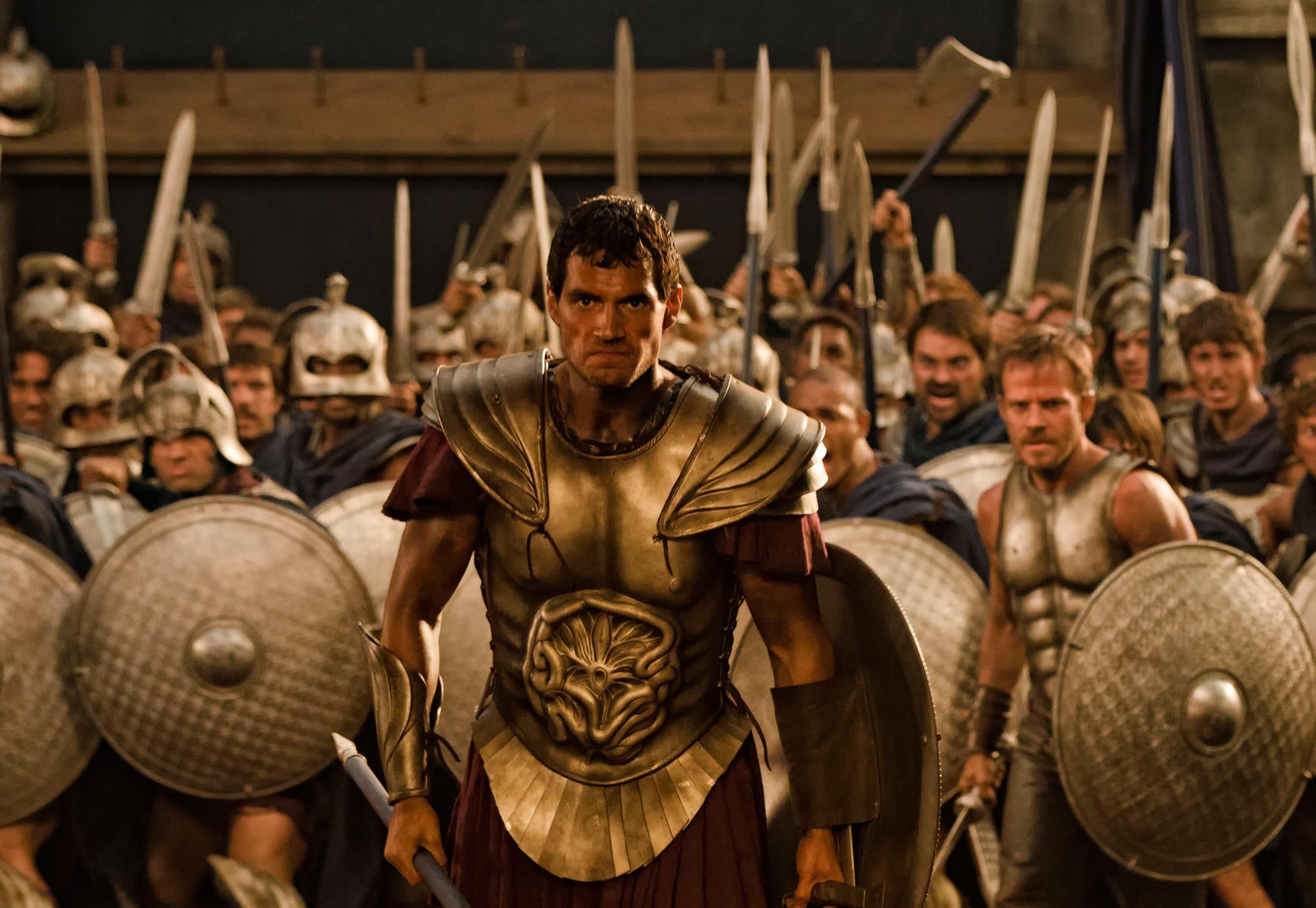 I went into this movie with fairly low expectations — expecting at best a goofy 300-esque romp — but it still managed to disappoint bitterly.
Ostensibly inspired by Greek mythology, Immortals follows a young Theseus as he battles a mad king who seeks to release the Titans from Tartarus. The king is after a magical bow of incredible power, so the race is on to stop him from getting it.
I won’t waste too much time listing off all the different ways this movie was bad. It was overflowing with cliches, there was no character development to speak of, and so on and so forth. It’s every sin you can expect a mindless action movie to commit.
I don’t even mind a simple popcorn movie from time to time — sometimes you just want to watch stuff blow up without thinking too hard — but Immortals doesn’t even work as a popcorn movie. There’s surprisingly little action for a movie that clearly put no effort at all into its actual story, and the action that does exist is very repetitive and uncreative.
It manages the incredible feat of making the story feel both incredibly rushed and painfully stretched out. There is no foreshadowing or natural development, but this is a movie that is far longer than it needed to be.
What bothers me more than anything, though, is how little this has to do with actual mythology. They’re just using the names — this movie has nothing to do with the actual Greek myths. There is virtually no correlation between the plot of Immortals and the actual myths surrounding Theseus, and the rest of the movie’s mythological elements fare no better.
The Titans, for example, are portrayed as these mindless, inhuman zombie-like creatures, not regal progenitors of the gods. Athena is a dual-wielding ninja for some incomprehensible reason. This is Aegis-bearing Athena we’re talking about, here. Hyperion is psycho mortal king instead of a Titan. Theseus has no connection to Athens…
Much of the movie deals with the law that gods must not interfere with mortals, and Zeus’ fanatical adherence to enforcing it. But there’s nothing like that in Greek mythology. The gods were constantly interfering with the lives of mortals — it was pretty much their thing. This is doubly true of Zeus. Dude couldn’t go two weeks without knocking up some mortal girl. Half of bloody Greece was Zeus’ bastard progeny.
 Let’s be clear here: I was not expecting Immortals to be a faithful representation of Greek mythology. But there’s artistic license, and then there’s appropriating and bastardizing a rich cultural heritage to sell tickets. This movie has nothing to do with Greek mythology.
I don’t understand why it’s so hard to find a faithful adaption of ancient mythology. Movie producers seem to think they need to sexy up the old stories, but they really don’t. If you actually study ancient mythology, you know that it’s already full of so much absurd sex and violence it could pass as a Game of Thrones episode.
If anything, they might have to tone things down a bit.
I can’t help but compare Immortals to 300. 300 clearly wasn’t trying to be slavishly accurate to history, yet the broad strokes of the story were remarkably accurate to the true events of the Battle of Thermopylae, and I when I studied the Greek-Persian War, I was amazed to learn how much of the movie’s events and dialogue are taken straight from the pages of history.
That whole “tonight we dine in Hell” speech? If you trust the historical records, Leonidas really said all that.
300 was also far more creative and colourful in its action scenes, and it did not waste time, focusing on the bloodshed we all wanted to see. Despite that, it was still a movie with some heart and a relatively strong amount of character development.
Immortals has none of that. I could forgive it being crude and poorly written. I could maybe even forgive it being a ludicrously inaccurate debauchery of the Greek myths. But on top of all that, it’s also frightfully dull, and that just can’t be forgiven.
I have only two good things to say about this movie.
One is that I thought it was cool that the super powerful magical weapon is a bow this time around instead of a sword. That’s a nice change of pace. Too bad the bow is hardly ever used for anything.
 The other is that Mickey Rourke is very good as King Hyperion. The character is written terribly, but Rourke portrays him with a great deal of gravitas, and he’s chillingly convincing as a brilliant but cruel despot.
Those things aren’t anywhere near enough to save this trainwreck of a movie, though.
Overall rating: 3.3/10 Just don’t.

 Superior Realities