
One of the most contentious issues among fiction writers is the debate over whether it’s better to plan your stories ahead of time, having everything laid out before the first word is typed, or to fly by the seat of your pants, reveling in the joy of creation.
 Ask ten writers for their opinions on this, and you will get at least eleven answers. I’ve seen detailed breakdowns on how a failure to plan ahead is nothing but a recipe for writers’ block, sloppy stories, and failure. I’ve also seen people argue that meticulously planning ahead robs you of your freedom as a writer, turning you into a machine that churns out work without inspiration.
For my part, I have a very unorthodox take on the issue:
I think both can work.
You see, I’ve used both methods extensively over the years. When I first started, I planned every story in detail before sitting down to write it. I’d write out a lengthy timeline featuring every single scene. I’d then agonize over this road map to make sure everything fit together well and that I hadn’t missed anything important.
This had a lot of advantages. Planning a story ahead makes writers’ block much less of a problem. Every time you sit down to write, you know what lies ahead. You’ve just got to put the words on paper.
It’s also a great source of confidence to a growing writer, to know that you’ve got a pre-planned plot to keep referring back to. When you have a map handy, you’re much less likely to get lost.
For this reason, I recommend writers who are just beginning plan ahead. I wouldn’t consider winging it until you become more comfortable in your craft.
 But at the same time, it did make writing feel like a chore. A lot of the fun of writing* is developing the story and watching the plot unfold. Just as when reading, you want to see what happens next.
*(PSA: Writing is rarely fun. Don’t become a writer if you want to have fun. The rarity of fun in writing is what makes it worth preserving.)
Planning ahead robs you of this. And while I don’t believe in writing for purely for one’s own amusement, I do think it’s important to be able to take at least some level of pleasure in your writing. When you’re enjoying yourself, your passion infuses and enriches your work. It inspires you to new levels of creativity.
Furthermore, if writing feels like a chore, that makes it much harder to get motivated to write, and for a lot of people, that’s an uphill battle at the best of times. You don’t want to do anything to damage your own motivation.
On the other hand, writing without a detailed plan makes the art of story-telling more of an adventure. You’re as eager to find out what happens next as your readers will (hopefully) be. You want to keep writing. You want to know what surprises your characters have in store for you.
It opens you up to sudden flashes of inspiration, as well. I find that writing with a plan makes me work rather mechanically, and I’m less likely to have sudden ideas for interesting twists or powerful scenes.
 Holding an entire story in your mind can be taxing, as well. If you’re not juggling the entirety of a plot at all times, I find one’s mind is better able to focus on the task at hand, and you can put more effort and thought into each individual scene. When you focus less on the big picture, the details come alive.
Of course, it also has downsides. When you have no plan, sometimes things just ramble and never amount to anything worth reading. You can paint yourself into a corner and have no idea where to take the plot. You leave yourself more vulnerable to being side-lined by writers’ block.
In some extreme cases, I’ve had to abandon major projects because I planned ahead so poorly that the story just fizzled out halfway through.
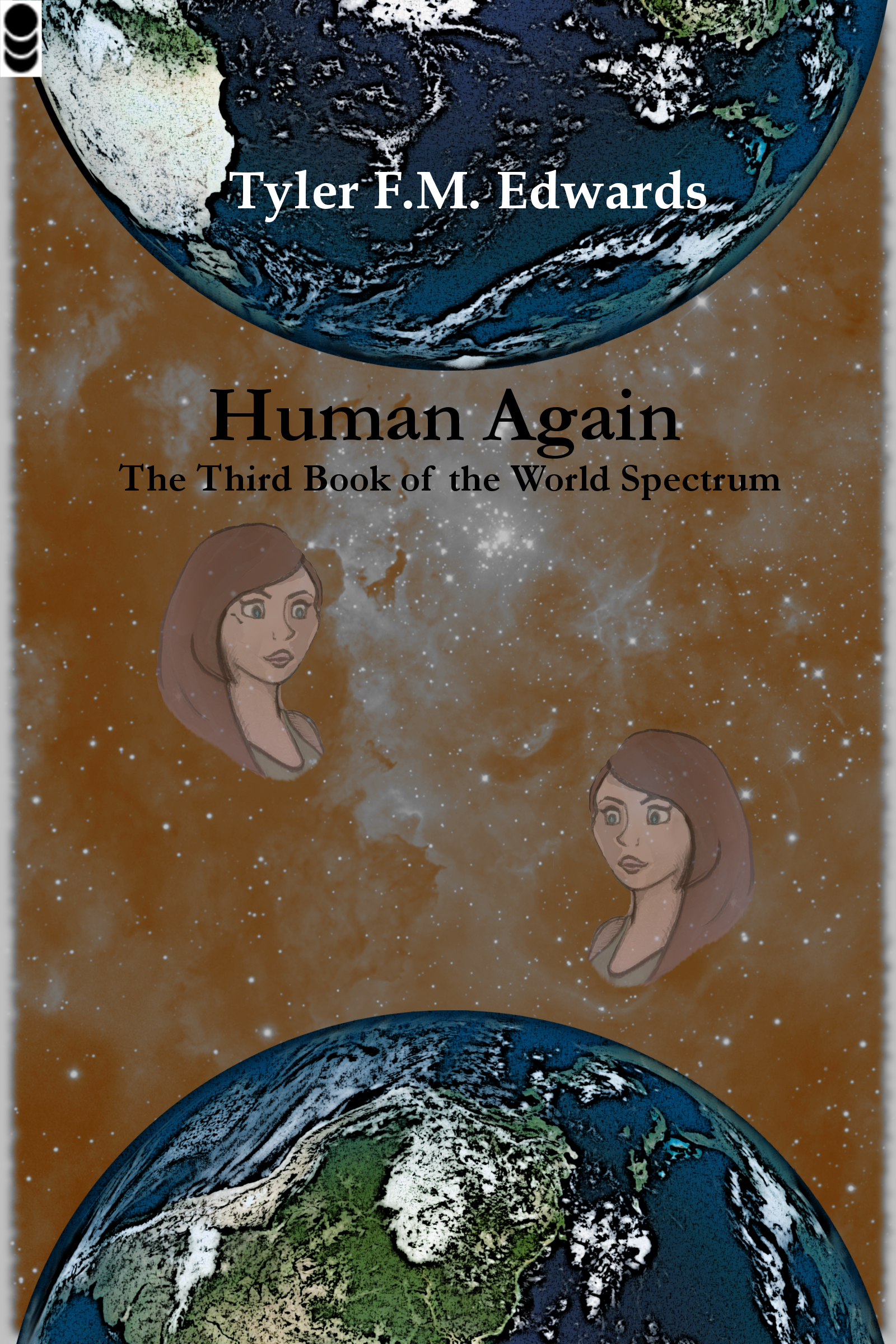
My World Spectrum novels really taught me a lot about the pros and cons of planning versus winging it.
The original novella that started it, The Forgotten Gods (now the first section of Rage of the Old Gods), was meticulously planned as was my way at the time. It was a bigger story than I’d ever written before, and I don’t think I could have managed it in my nascent creative state without such planning.
But when I revisited the story several months later, it was an act of desperation for lack of any better ideas of what to write. I didn’t want to commit to anything, so for the first time, I didn’t plan far ahead. I let my creativity run free, and the story evolved organically.
 This was very important. It allowed me to write without burning myself out by trying to plan vastly far ahead. It allowed me to focus on telling a good story without worrying about what the final outcome would be.
The prospect of writing an entire book was at that time incredibly intimidating. If I’d planned ahead and set out to write a novel, I think my courage would have failed me, and I never would have accomplished anything. I just told the story I wanted to tell, and it became a novel.
That was to set the standard for much of my future writing works, especially the World Spectrum series. The World Spectrum shows both the good and the bad of winging it.
I’ve talked before about how I never really had a plan for certain characters, most notably Doga, and unfortunately, I think it shows. For much of the books, Doga is just sort of there. He doesn’t do much, and his character arc is almost nonexistent. I think some elements of the plot, especially in book one, can also be a bit rambling at times due to my scattered flights of fancy.
But on the other hand, the very existence of the books is owed to letting my creativity take wing, as are many of their finest moments. I’ve very proud of Prince Tyrom’s character and how his story evolved, and virtually all of it was the result of making it up as I go along. Similarly, all of the events of Children of the Gods that formed the groundwork for Human Again were things I came up with in the process of writing the book.
There’s not too much I can talk about without getting into major spoilers territory, but suffice it to say that if you’ve tried the World Spectrum books (And why haven’t you? It’s free!), pretty much any major plot event you’ve enjoyed was something that grew organically while I was writing.
 I suppose I should clarify that even when I have thrown caution to the wind, I’ve never flown by the seat of my pants to the extent that I was making up the plot one sentence at a time as I was writing it, and I’m not sure I would recommend trying that. I’ve always had a plan for whatever scene I’m writing, even if a vague one and even if I have no plans for after that scene.
These days, I like to do a little of both techniques. I’ll have a broad plan of the plot for each book/story/section/character, but I’ll leave much of the space in between blank and fill it out as I write. I may have a destination in mind, but the journey there is something that evolves while writing.
For me, this seems to bring the best of both worlds. My ideas are loose enough to allow for experimentation, there’s plenty of room for exploration, and writing has a pleasant sense of discovery, but I always have a general direction to aim for, I’m not likely to paint myself into a corner, and I’m at little risk of an arc going nowhere because I didn’t have a plan.
This is what works for me. It might not be what works for you. I’d encourage every writer to experiment and find the balance that works for them. For some people, meticulous planning really is the best. For others, plans are anathema. There’s no objectively right or wrong answer, in my opinion. It’s a matter of what works best for each individual writer.

 Superior Realities