
For the last little while, life has been too hectic to afford me much time to read. Now, I’ve finally managed to get into some books again, and the first one I dove into was the second book of Jay Kristoff’s Lotus War series, which I had been looking forward to since I finished the slightly flawed but mostly impressive first book.
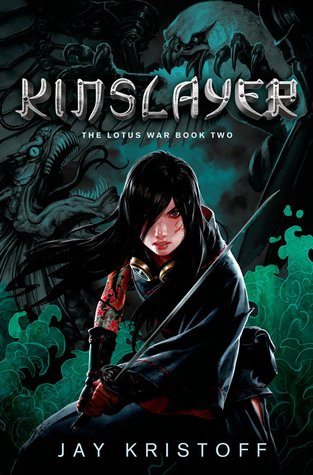 It wasn’t worth the wait.
Kinslayer wastes no time in establishing a new set of problems for the heroes to deal with. Still consumed with grief from the loss of her father, Yukiko finds the Kenning, her ability to telepathically commune with animals, is growing agonizingly strong, her mind and body breaking under the strain, and she and the gryphon Buruu fly far into the north in search of a cure.
Bereft of Yukiko’s protection, the renegade Lotus Guildsman Kin finds himself increasingly unwelcome among Shima’s rebels, and when another Guild renegade joins their cause, bloodshed is inevitable.
Meanwhile, the Tiger Clan and the Lotus Guild scramble to prevent civil war following the shogun’s assassination by Yukiko. They settle on Hiro, Yukiko’s treacherous former lover, as a replacement ruler, having brought him back from the brink of death with the aid of Guild machinery.
I noticed almost immediately that the author seemed to be trying too hard to be dark and gritty. The constant and often overwrought descriptions of Yukiko’s endless physical and emotional torment quickly became wearing. And that was just the beginning.
Book one wasn’t exactly cheery. This is a dystopia, after all. But it still had some moments of levity and humour, and some very endearing characters.
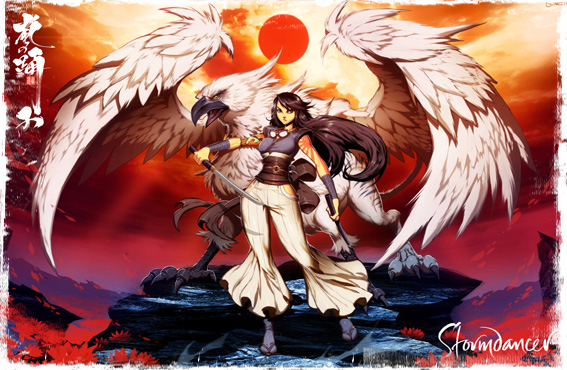 Kinslayer has largely lost that. It’s just an unrelenting spree of pain and misery from beginning to end, and it is equal parts depressing and repetitive. You can only cram so much rape, torture, and tragedy into a single book before it stops being entertainment and becomes an endurance test.
Kinslayer also leaves one with few people to root for, few characters to pin their hopes to. It is made abundantly clear that the rebels Yukiko has signed on with are not in any way better than the corrupt culture they seek to bring down.
I appreciate a story where the line between the good guys and the bad guys is blurry, but there’s a difference between some moral ambiguity and just not caring about anyone, hoping that they all just kill each other. Stormdancer stayed on the good side of that line, but Kinslayer most definitely does not.
Even on the level of individual characters, there’s little to inspire. Yukiko devolves into a ball of anger, bitterness, and pain, only overcoming this very late in the book and with no real explanation given as to how or why. Kin is twisted from an idealist to a cold-blooded killer, though at least in his case it’s hard to blame him. Buruu remains likable, but is given a disappointingly small role.
Overall rating: 4.7/10 Rarely have I seen a series go from so promising to so disappointing so quickly.


 Superior Realities