
I like playing caster classes in video games. Why muck about with ordinary weapons when you can rain arcane fury on your foes?
 But often mage classes do feel a bit hobbled. You’re mana-starved or baby-sitting cooldowns or an immobile turret or some other nonsense. I hate that.
So when I heard of Lichdom: Battlemage, a game which promises total freedom and unlimited power as a mage, I was immediately intrigued, and I opted to pick it up during a Steam sale.
Mechanically, Lichdom: Battlemage is essentially a first person shooter with some RPG elements. True to the advertisements, your spells in Lichdom are not limited by mana or cooldowns. You can spam them to your heart’s content. You’re also free to cast while moving, and you pretty much have to because enemies hit hard, and combat is very intense and frenetic.
The RPG elements come in the form of leveling your sigils, as well as loot drops. Instead of traditional gear, enemies drop spell components that you can craft into new and more powerful spells.
Unfortunately, it does suffer from the common issue of having copious amounts of loot… most of which is utter crap. Inventory management becomes a major time-sink.
 I also would have preferred if they’d just done away with vertical progression altogether and made spell crafting purely a way to customize your abilities, rather than something you have to do regularly to keep your spells up to snuff.
The spell system is a little odd. It’s very deep, to the point of being overwhelming at times, and there’s an enormous of options… but yet it still felt fairly limiting to me. Most of the spell elements and shapes struck me as too odd and niche to be worth using most of the time, though I’ll grant this may be a failure of creativity on my part.
What I eventually settled on was a fire/necromancy/corruption build that involved blanketing enemies with debuffs and then killing them with fireballs, triggering a chain reaction as each dead enemy spawned a new zombie minion and a horde of aggressive insects that would then seek and attack enemy targets.
I did love the necromancy in particular.
“Who is it?”
“Goons.”
“Who?”
 “Zombie goons.”
“…Zombie goons?”
Ahem, anyway.
The combat in Lichdom is fast, intense, and satisfying. However, it suffers from being extremely repetitive.
There is very little variety in enemy types in this game. You’ll have seen almost all of them within the first hour or two. Thus, after a while, the constant battles all start to feel the same, and I found my enjoyment of Lichdom petered off as the game progressed. First five hours? Awesome, loving very minute. Next ten hours? Luster’s worn off, but still pretty fun. Final five hours? I just want this to be over.
Another serious flaw is that Lichdom uses a checkpoint-based save system — something I’m not fond of at the best of times — and checkpoints tend to be pretty far apart, which makes death a very punishing experience and makes the repetitive nature of encounters even more painful.
 The story is… odd.
It’s almost like a fantasy version of a Stephen Seagal movie, or maybe the weirdest Taken sequel yet.
The story begins with your sister (or wife, if you play a male character) being abducted by a death cult, so of course you go off to rescue her, but then that sort of gets forgotten after a while and you end up just pursuing the cult on a mad quest for revenge. It’s a bit disjointed, and there are a lot of things that are just left hanging.
The dialogue is less than stellar. At first I wondered if they were being intentionally cheesy, but in the end I came to the conclusion that we’re actually meant to take this game seriously, which is disquieting.
Also, I have no idea where the “Lichdom” part of the title comes from. There’s lots of undead in the story, but the concept of liches never comes up.
 On the plus side, the backstory for the world — while not entirely fleshed out — was pretty interesting, and I was always eager to learn more about the history of the setting.
Something else that saves what would otherwise be a very underwhelming story is that Lichdom features a surprisingly stellar cast that almost reads like a who’s who of awesome voice talent: Jennifer Hale, Troy Baker, Clancy Brown, David Lodge, Jaime Murray…
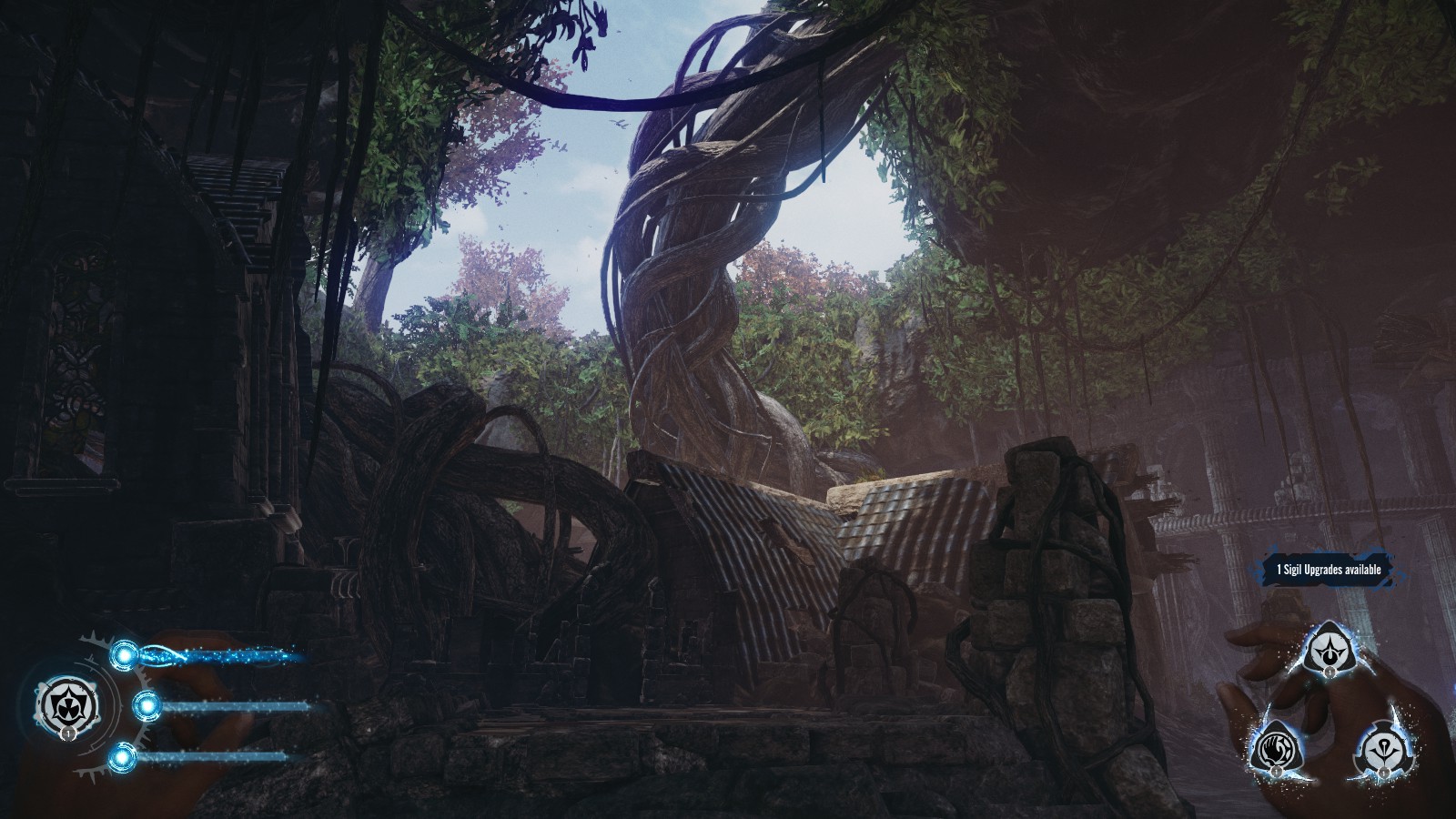
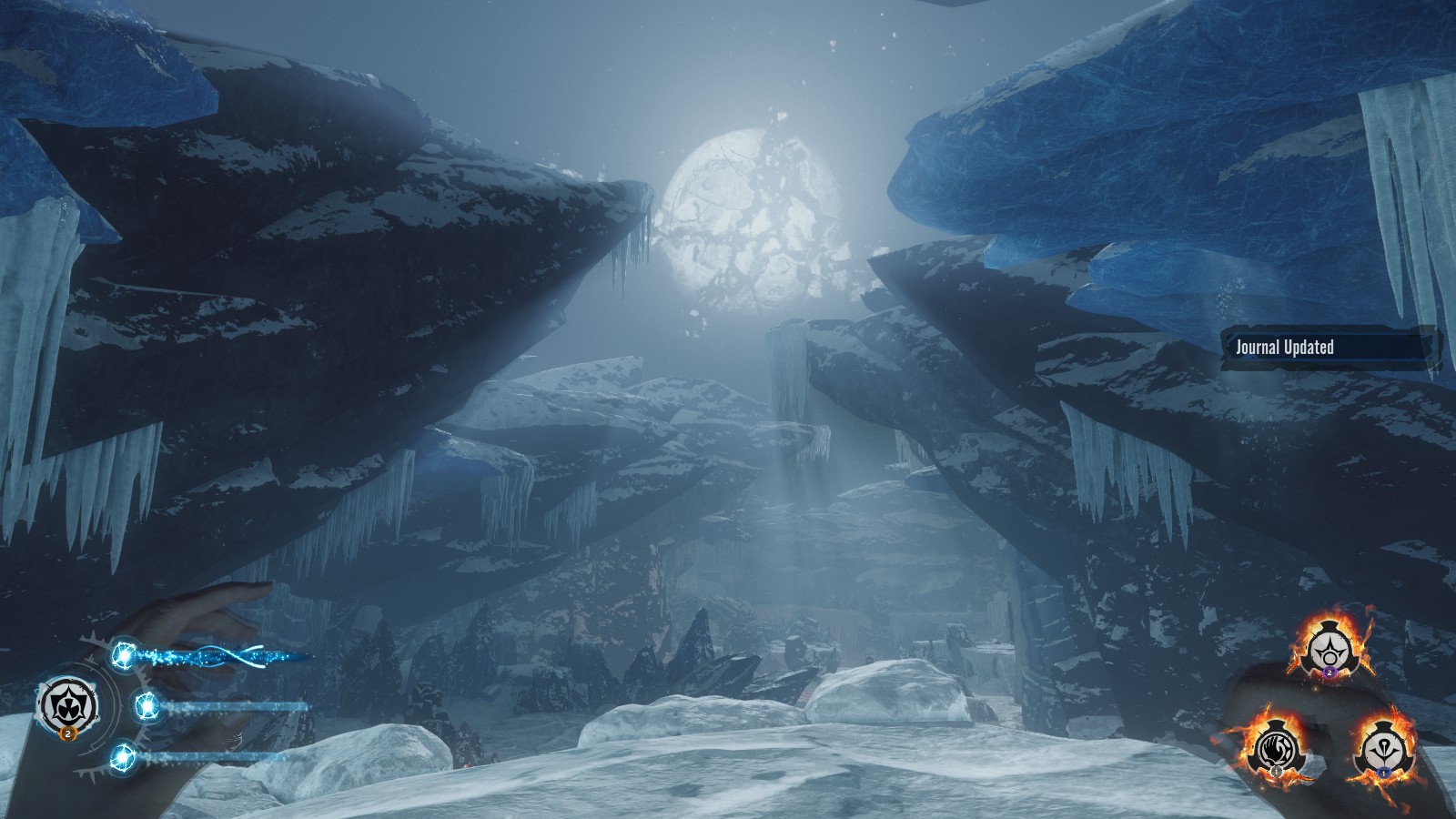
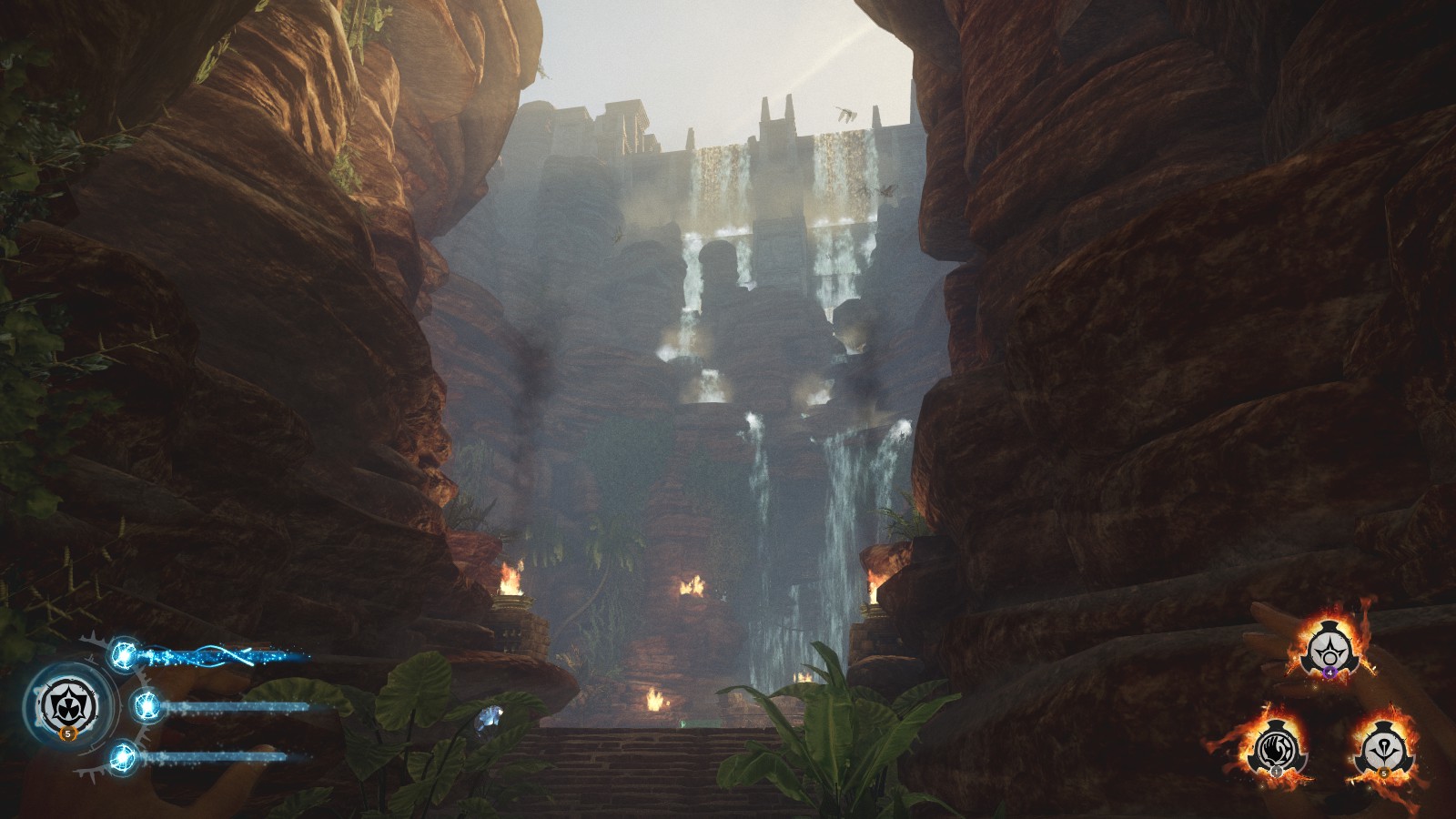
Visuals are also an area where Lichdom hits it out of the park. It’s not just that the graphics are fantastic, although they are. I’ve played games that had excellent graphics but squandered them on mostly generic environments.
Lichdom’s environments are often more unusual and exude a great deal of personality. This further enhances the strong world-building I mentioned above.
My personal favourite location was a giant, frozen whirpool filled with ruined ships. It’s not something any amount of screenshots can do justice to — it’s one of the most amazing things I’ve ever seen in a video game.
 On the whole, Lichdom: Battlemage is a bit of a wonky, mixed-bag of a game. It has a lot of good ideas, but the execution is often lacking.
Overall rating: 7/10



 Superior Realities