The Secret World: Scenario Survival Guide + New Article

The new scenarios have proven a bit controversial among fans of The Secret World. Some love them, but many are struggling with their high difficulty. Surprisingly, I’ve been doing okay, at least on solo normal and group elite, so I thought I’d do a post advising people on how to cope with the Council of Venice’s trials.
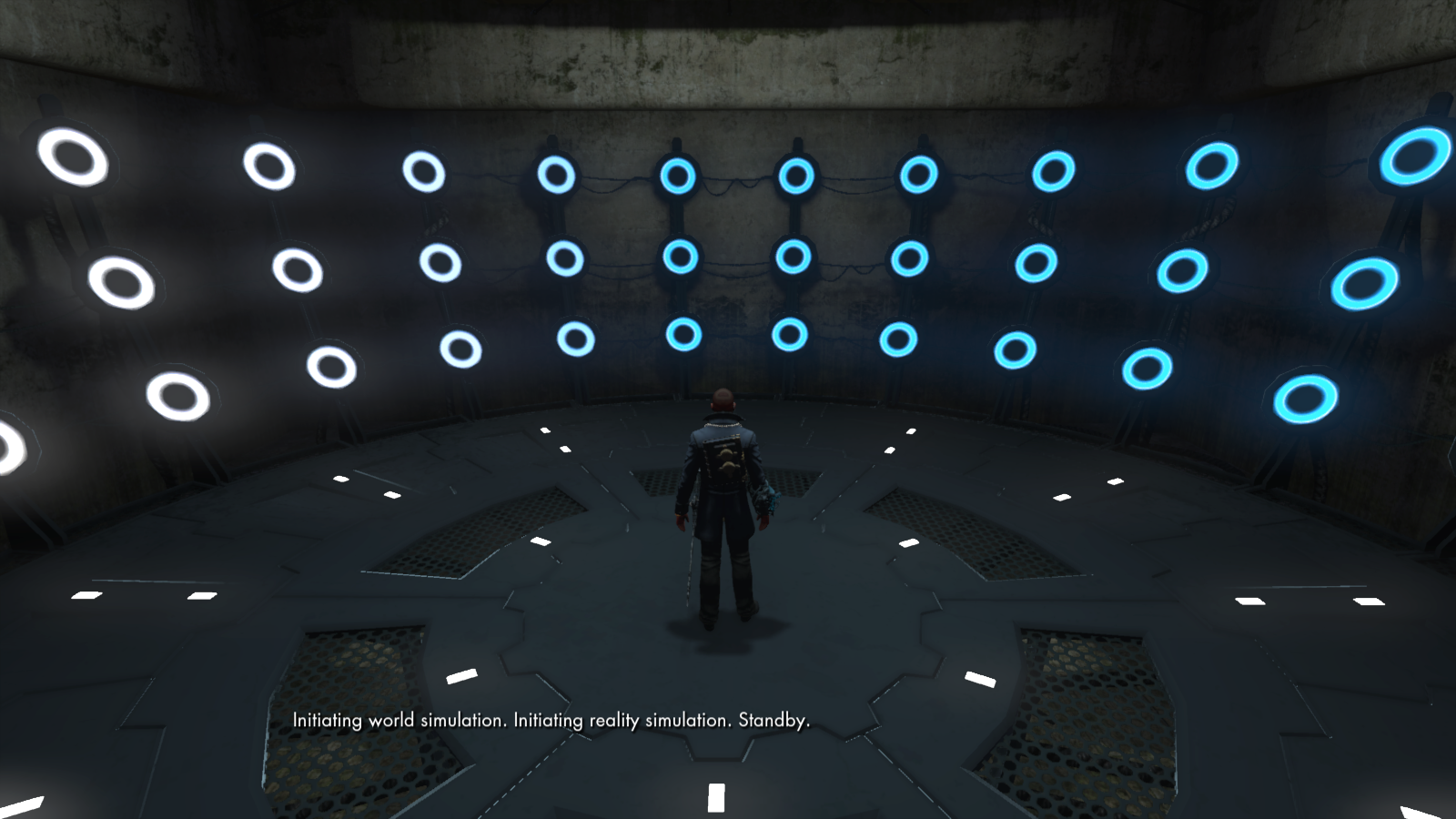
Beginning a scenario in The Secret WorldAs with my other guides, this isn’t intended to be comprehensive. It’s a basic primer for those who are just starting, or for those who have done a few scenarios but are still struggling.

It’s not a dungeon:

One of the most important things to understand before you start scenarios is that they are not just dungeons with randomized elements. They are a completely different type of content that requires entirely different ways of thinking.

For example, you don’t necessarily want to adhere to a hard trinity in groups. Having a dedicated tank and healer is helpful, but you could also consider having each player take a more balanced build, at least on the lower difficulty settings. I definitely don’t recommend ever using a full 1970 health glass cannon DPS build in scenarios, under any circumstance.

It’s also important to understand that victory is not all or nothing. It’s not like a dungeon where bosses are dead or they aren’t. I’ve seen a lot of people get frustrated because they can’t save every single survivor and thus feel like they’re failing, but this is not at all the case. As long as one survivor makes it out in one piece, you win. There’s nothing wrong with getting a few bronze or silver scores, especially when you’re just learning.

All your score affects is the number of Aurei you earn at the scenario’s closure, and Aurei are fairly easy to get, so don’t stress over them. Even with just a few survivors alive, you’ll still be getting lots of loot, copious amounts of XP, and augments.

Caught in a dust storm during the Hotel scenario in The Secret WorldUse a solo build:

Unless you’re playing as a pure tank or healer in a group situation, I think that a soloing build tends to be ideal for scenarios. This is true whether you’re playing them alone, or serving as a DPS in a group.

I’ve already done some guides on solo builds, but the general idea is that you want to find a balance between DPS and survivability. The reasoning as far as group scenarios go is that your group will often need to split up, and you can’t rely on a tank or healer to always be there to keep you alive.

Having some AoE is also fairly helpful, as most enemies in scenarios travel in packs. Sword, chaos, and assault rifle (with Suppressive Fire as a builder) all seem like ideal weapons for scenarios.

Personally, I’ve found my Dragon’s standard soloing build with blade/blood absolutely rocks scenarios.

I’ve also heard tell that PvP builds work very well in scenarios, but I haven’t put the theory to the test myself.
My Illuminati running through the woods of Kingsmouth in The Secret WorldCC is your friend:

MMOs have trained us to think that crowd control is not for endgame PvE, and TSW has been no exception to that rule prior to now. Using impairs or hinders in a dungeon is generally a very bad idea, unless you’re a tank or there’s some special circumstance that requires it, and most open world nightmare mobs are immune to such effects, so we’ve also learned not to include a lot of CC in our solo builds.

But scenarios are where these abilities stage their epic comeback. Most enemies in scenarios are fully susceptible to both hinders and impairs, and that makes both of these excellent choices, especially AoE abilities such as Stunning Swirl from blades.

Hinders can help to keep enemies from reaching survivors. Impairs can do the same, or be used to interrupt enemies who are already attacking survivors, buying you a few moments to grab aggro. Impairs can also be useful versus bosses, especially the ghoul and bear bosses. When they gain their frenzy buffs that allow them to one-shot you, you can impair them to effectively shorten the buff’s duration, meaning less time fleeing and more time fighting.

I would also highly recommend including some hinders in your build any time you run the Castle scenario. One of the possible bosses is a fata padurii, and as anyone who’s done Last Dance of the Padurii knows, you can’t defeat them without first hindering their spirits and then kiting them away until their spirits despawn.

Personally, I like to switch over to blades/elemental for the Castle. Coldwave is pretty awesome.
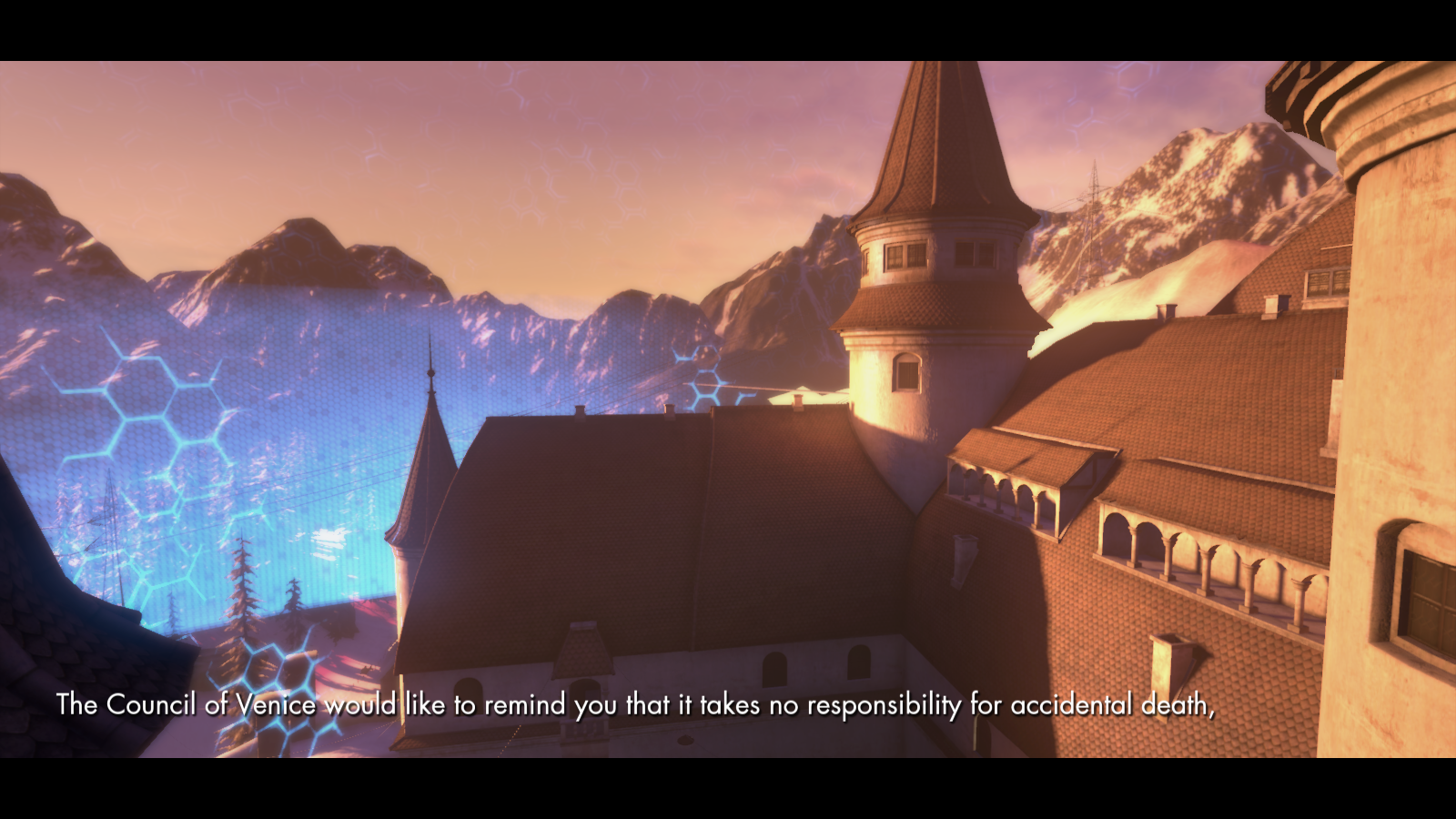
The intro cinematic for the Castle scenario in The Secret WorldThe best defense is a good offense:

This tip won’t be of much use until you’ve had some experience with scenarios, but I’ve found the best way to defend survivors is to not wait for enemies to come to you. Once you understand where each spawn point is, it’s best to run to it and meet the enemies long before they reach the survivors.

No matter how good you are at grabbing aggro, if you wait by the survivors, the enemies are going to get a few hits in here or there. Might not seem like much, but it adds up, and it can make the difference between getting gold and platinum.

Most maps have choke points where you can cut off waves of enemies and mow them down long before they threaten your survivors. Learn these chokes, and use them to your advantage. They’re also a good place to put mines if you get a supply drop.

On the subject of mines, I’d also recommend fighting enemies before they reach your mines. This may seem counter-intuitive, but the best use of mines is to use them as insurance in case a group comes under attack while you’re far away. If you’re already in the area, letting the enemies walk into your mines is a bit of a waste.

You probably don’t need augments:
My Templar enjoys the evening air in The Secret World's LondonMy final piece of advice for scenarios is not to stress over what a massive grind augments are. Augments are first and foremost a sink for AP and SP for those who are already maxed out on most everything else.

Most augments don’t provide a very strong benefit until they’ve been upgraded multiple times, and the average player will have a better result from spending their time on other things, like filling out the main wheel or improving their gear.

There is currently no content in the game tuned around full, or even partial, augments, and Joel has recently confirmed Tokyo will not require augments. Augments are a bonus, not a mandatory checkbox that needs to be filled. So contrary to what some claim, there’s no need to grind hundreds upon hundreds of scenarios day after day, month after month. Relax and play through them at your own pace.

New article:

My latest article over at WhatMMO covers the Most Iconic MMO Abilities. It includes a screenshot of me QQing about subtlety spec, because why not?
World Spectrum: A Brief History of Human Civilization on Barria

Back at WorldSpectrum.net, I did a series of lore posts to provide backstory for the universe and its characters, and I thought I should get back to that, so I now present to you a brief history of human civilization on Barria, up until just before the events of Rage of the Old Gods.

Books of the World Spectrum bannerEarly history:

While the legendary struggles of the Liberation have been told and retold down through the millenia, few records survive of the centuries following the overthrow of the Old Gods.

What is known is that the unity the human race had enjoyed during the war did not last. Humanity broke apart into differing tribes, clans, and city-states.

One of the first cultures to break away was a group descended from the followers of the hero Noria. Theirs was a wilder spirit, and the soft lands and safe cities of their fellows were not for them. They traveled north, to the unexplored frontiers far beyond where any humans had gone before, and took up a nomadic existence in that untamed wilderness. These people became known as the Northern Clans.

Meanwhile, the rest of humanity took up residence around the south and eastern edges of the body of water now known as the Gulf of Jansia, forming many rival city-states who often vied against each for the best land and resources.

The rise of Jansia:

One such city-state was known as Jansia. There was little to distinguish it from any of the other coastal cities, but its rulers dreamed of forging a greater future for people.

Into this environment was born a brilliant wizard named Vorren. He spent many long years working in secret in his laboratory, perfecting the arts of technomancy, engineering, and experimental magic. At last, he made a breakthrough and succeeded in creating a mighty war machine capable of following simple instructions.

The first Automaton was born.

It took only one demonstration of the Automaton’s power for Jansia’s monarch to commission an entire fleet of the terrible machines.

World SpectrumSoon after, Jansia’s newly forged army was unleashed on its neighbors. Possessed of fantastic strength and virtually impervious to the conventional weapons of the time, the Automatons were unstoppable, and every city besieged promptly fell before them. It soon reached a point where many cities would surrender as soon as the Jansians arrived rather than face a battle they knew they could not win.

Jansia’s monarch crowned himself supreme emperor, and the Jansian Empire was born.

Jansia’s lust for conquest was not sated, though. Over the following decades, they continued to expand their borders, driven forward by the strength of their machines.

Initially, they focused their efforts on the clement lands of the southeast. In so doing, they absorbed the Uran people, a prosperous culture who dwelled within the shadow of the southern stretch of the Gormorra Range. The Uran were many in number, but their military was crude, and they readily fell before the Jansian forces. They were then integrated into the empire as a laborer caste, and many of Jansia’s greatest works were forged with their blood and sweat.

As time went on, Jansia’s progress slowed as it became increasingly difficult to manage all of the land under their banner, but their conquests continued all the same. They moved north into the center of the continent.

The local population — a series of farming tribes with small stature and earth-toned hair and eyes — knew they could not face Jansia, so they simply fled.

The largest tribe, known as the Tors, headed north. There, they came into conflict with the Northern Clans, but the Tors’ desperation and superior numbers won out, and the Clanspeople were pushed even farther north, into the barren wastes of the arctic.

The Tors then set about building their own nation of Tor Som — or “Tor Home.” But they never forgot what they had lost to the Jansians, and they set about building a strong nation that would not have to fear conquest again. The Tor ruler crowned himself emperor in defiance of the Jansians, and his line became known as the Tor Sinnis — the Tor Makers.

World SpectrumMeanwhile, their cousins fled into the unexplored wedge of land between the Northern and Southern Spurs of the Gormorra Range. In the shadow of the mountains, they founded the nation of Eastenhold.

Jansia’s conquests finally found their limit once the empire had claimed all of the land around the Gulf of Jansia and south of the Southern Spur. The empire had become so bloated that it was divided into provinces, each with their own monarch. These monarchs were known as princes so they would always remember that they were subservient to the Jansian throne.

The decline of Jansia and the modern era:

The Tors’ troubles did not end with their escape from Jansia. A few decades after the founding of Tor Som, the Northern Clans launched a blitz invasion and succeeded in occupying the nation for the next century.

Eventually, the Tors built a resistance movement and enacted a guerrilla war that succeeded in ousting the Northern Clans and driving them back into the arctic wastes. The leader of this resistance became the new emperor, founding the house of Tor Vargis — the Tor Liberators –but when his rule ended, he bequeathed the throne to the last scion of the Tor Sinnis, and so began the tradition of Tor Som’s royal houses alternating rulership over the generations.

Tor Som and Eastenhold both grew in size and strength, occasionally clashing with each other over the fertile farmland on their mutual border.

The Jansians watched these developments with nervous eyes, fearing their neighbors would teach each other the art of war and become a threat to the empire. These fears only greatened when the secrets of Automaton construction finally leaked, and they lost their monopoly on the great war machines.

But the Jansian rulers could do little to address their concerns. The empire had become bloated and unwieldy. Its bureaucracies had become corrupt, its aristocracy was too caught in their intrigues to acknowledge the rest of the world, and their various client peoples had begun to chafe under their chains.

Things came to a head when the Jansians caught wind that the Tors were planning an invasion. They decided to strike first with a preemptive attack on Tor Som.

This proved to be a mistake.

World SpectrumThe Jansians had grown complacent, and the Tor Automatons were now more effective than their own. Even so, their superior numbers might have won the day, but infighting proved their downfall. The Jansian aristocrats were more interested in seeing their rivals fall than they were in defeating the Tors.

Meanwhile, the long-oppressed Uran people took advantage of the departure of the Jansian army and erupted into open revolt, sending the empire into chaos.

With their forces in disarray, the Jansian invasion of Tor Som crumbled. The Tors retaliated and at last took their vengeance on Jansia. The Eastenholders seized the opportunity to also strike at their old enemies — if only to ensure their Tor rivals didn’t claim too much of Jansia’s power.

Beset on all sides, the Jansian Empire fell apart.

Decades of strife followed. Maps were redrawn time and again as the great forces of the world struggled to find a new balance.

When the dust finally settled, the Uran people had succeeded in laying claim to most of Jansia’s land, wealth, and military strength. With their large numbers and the power of Jansia at their command, their new nation of Uranna became the greatest power on Barria.

Tor Som and Eastenhold ultimately claimed little new territory and resumed their aggressions against each other.

Only one area of Jansia survived the wars: the northwestern province of Pira. Pira had always been the least powerful of Jansia’s provinces, and it had not been a significant military target. By the time the surrounding nations had defeated the rest of Jansia, they were too battle-weary to bother attacking Pira. Pira became its own sovereign state, preserving the arts and culture of Jansia but little of its warlike ways. However, the Pirans never ceased to view themselves as a mere province of Jansia.

Pira clashed with Uranna several times, but eventually, their relations cooled down to a chilly indifference.

The land between these four nations became its own state, Karkar. Karkar was formed from the refugees and deserting soldiers left behind from the wars following the fall of Jansia, and it became a melting pot of all surrounding cultures. As such, it was able to maintain favorable relations with all of its neighbors, becoming a center of trade.

At last, the cries of war faded. In large part thanks to Karkar playing referee, the nations of the world were able to maintain largely civil relations, and an era of peace settled upon Barria.

It wouldn’t last.