
Sci-fi TV seems to be going through something of a renaissance these days. After Battlestar Galactica and the Stargate shows ended, the future of science fiction on television seemed rather bleak, but these days there’s a pretty good crop of shows, with more on the way.
Two upcoming titles in particular have caught my eye, and one of them has got me thinking about how much my own country is playing a role in the future of the sci-fi genre.
Rain:
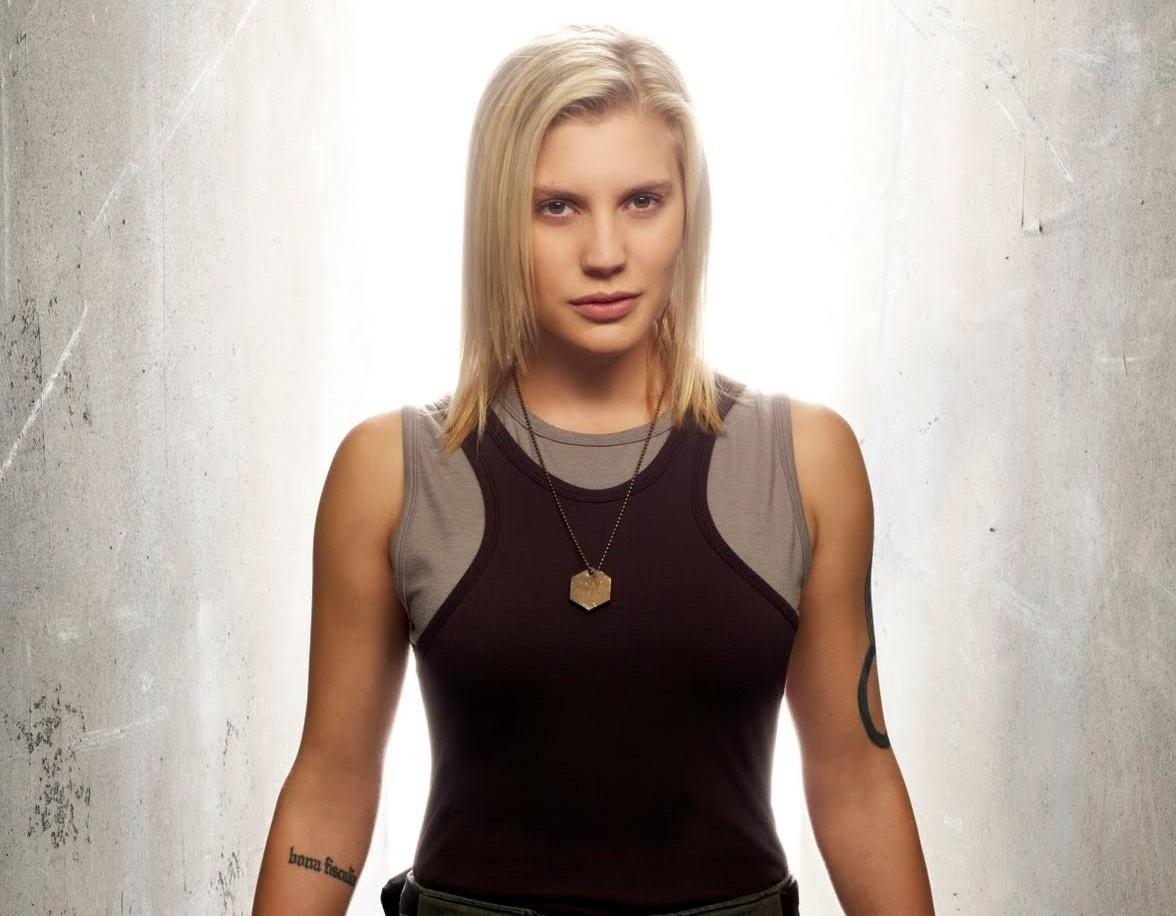 I think it’s pretty much a safe bet that if you have any interest in sci-fi, you probably love Katee Sackhoff. As Kara “Starbuck” Thrace, she was one of the highlights of Battlestar Galactica, and that’s saying something considering how much great acting there was on that show.
Since then, she hasn’t fled from the sci-fi genre, earning more fans through her roles in the Bionic Woman remake and the Riddick movies. Anecdotally, I’m also told she’s a very kind person who is quite good to her fans, and she does a lot of charity work.
So when I found out she’s planning to not only star in a new TV series but is also its creator, my ears immediately perked up.
The show is titled Rain, and it stars Katee as the title character, a soldier in a world ravaged by global warming and ecological disaster.
Now, granted, we have no idea how good she is at working behind the camera — we only know she’s a great actress. But Katee’s awesome — I can’t imagine this not going well.
 My confidence is further bolstered by the fact Rain is being produced by the same company and many of the same people behind Continuum. With Star Trek, Stargate: Universe, and Battlestar Galactica gone, Continuum is carrying the torch for intelligent sci-fi these days, and doing a pretty bang-up job of it. The expertise behind it plus Katee’s charisma and acting ability seems like a match made in Heaven.
Let’s hope Rain is picked up by a network soon.
Dark Matter:
This is one I’ve just started paying attention to. Scheduled to premiere the same night as Defiance’s third season, this series follows a space ship crew who awaken from stasis with no memory of their identities or their mission.
That’s not really the greatest premise in the world — I fear the potential for stringing the viewer along with lots of mystery and no pay-off. But the pedigree gives me hope. The series was created by Joseph Mallozzi and Paul Mullie, who headlined the Stargate TV shows.
This leads me to believe that Dark Matter may be the closest we ever get to a third season of Stargate: Universe, and that thought alone is enough to get me interested.
Even if that assumption proves wrong, it remains a fact that Mallozzi and Mullie are both talented writers and producers, and they haven’t disappointed me yet.
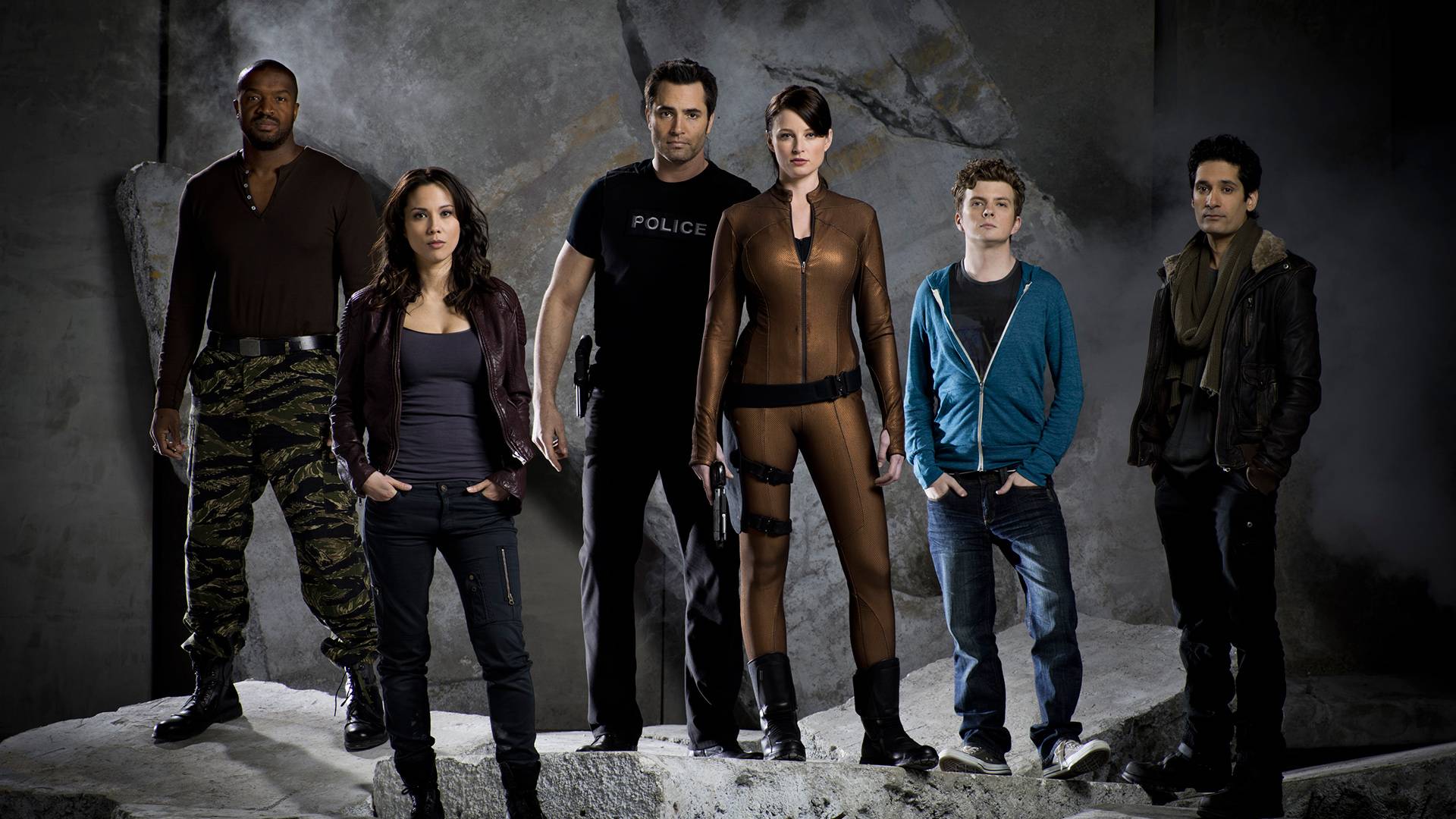
There’s also a Continuum connection in that Dark Matter will star (among others) Roger Cross, who plays Travis Verta.
Unfortunately, I haven’t been able to find any info on when or where Dark Matter will be shown in Canada, but hopefully I’ll be able to give it a try before too long.
Canada: The new leader in sci-fi?
Something else that’s interesting about Dark Matter is that it’s being filmed in Toronto.
It seems to me that Canada has become quite the sci-fi Mecca all of a sudden. Orphan Black is both filmed and set in Toronto. Continuum is both filmed and set in Vancouver. Defiance is set in Missouri, but it’s actually filmed in the GTA. The recent mini-series Ascension was shot in Montreal. Although it’s not sci-fi, Once Upon a Time is still definitely speculative fiction, and it’s filmed in BC.
 We could even talk about video games a bit. Bioware is a Canadian company, and I always appreciated the nods to their roots in the Mass Effect games. Whereas sci-fi often ignores Canada, in Mass Effect, Alliance headquarters are in Vancouver, Kaidan Alenko is Canadian, and some fans believe Commander Shepard is meant to be of Canadian stock based on the fact both voice actors who play the character are Canadian.
Of course, I suppose this isn’t entirely new. There’s always been a lot of good sci-fi coming out of Canada. Battlestar Galactica, Caprica, the Stargate shows, and Sanctuary all come to mind.
It just seems a little more widespread to me now, rightly or wrongly. Maybe it’s that these days we have shows that are truly Canadian productions — like Continuum — rather than American shows filming in Canada to save money. Maybe it’s that shows are starting to wear their Canadiana on their sleeves. Continuum embraces its Vancouverite identity, and while Orphan Black doesn’t explicitly state where it takes place, we see characters reference locations like Parkdale and Scarborough, so it’s not exactly a secret that this is Toronto.
Or maybe I’m just noticing it more. Either way, as a Canadian sci-fi fan, I’m glad to see my country making such a contribution to the genre. In a time where most of our country seems devoted to being backward and turning a blind eye to science, it’s nice to see that Canada still looks to the future in at least one way.
I wonder where Rain is going to film?


 Superior Realities