
Has it ever occurred to anyone that the video games we refer to as role-playing games, or RPGs, are spectacularly mislabeled?
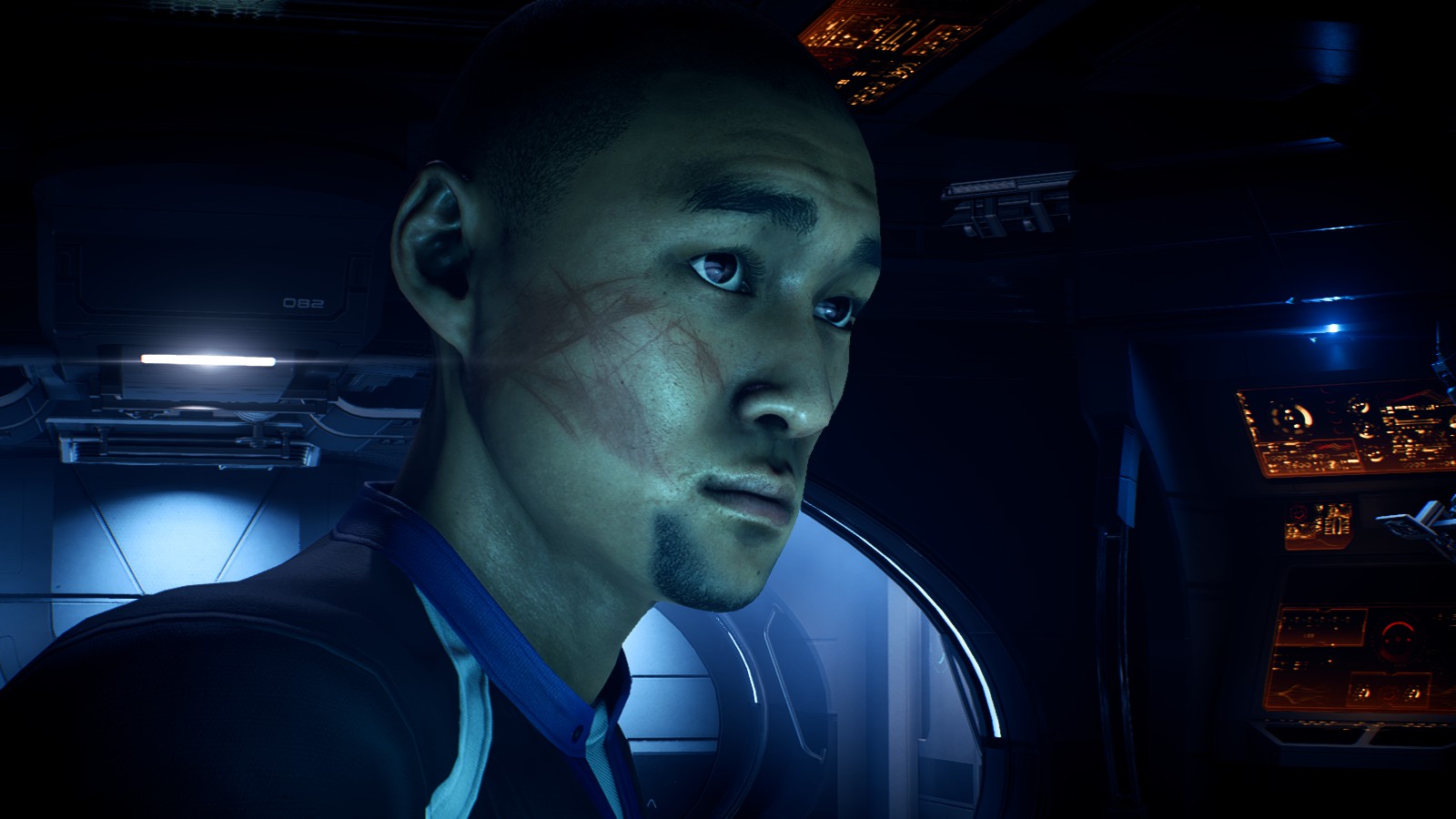 Let’s look at what that term actually means. “Role-playing” refers to assuming an identity or personality other than your own. To pretend to be someone else, usually to act out a scenario or tell a story.
While most RPGs incorporate at least some element of this, it’s very rarely the focus. It isn’t what defines the genre. In video game terms, RPG elements are considered to be things like character levels, stat sheets, experience points, and unlockable abilities. All of these things have little or nothing to do with role-playing.
I understand that the ingrained terminology of the genre is not going to change just because a chubby blogger in Toronto says so, but I would like to outline why I believe that most if not all video games we call RPGs are mislabeled, and how this goes a long way to explaining my love-hate relationship with the genre.
Stop, drop, and role:
I know quoting Wikipedia is in the same realm of tackiness as bringing 7 Up as a wedding gift, but while looking for definitions of role-playing, I found this one pretty apt: “A role-playing game is a game in which the participants assume the roles of characters and collaboratively create stories.” [Source]
I would argue that video games eliminate the need for other players in the creation of your role-play story, as scripted NPCs can fulfill the same need. That doesn’t mean you can’t or shouldn’t role-play with other people, of course; it just means they aren’t a necessity.
 Either way, role-play is about assuming a role and telling a story.
Now what does that have to do with level grinds and character stats? Nothing whatsoever.
In the early days of tabletop role-playing, things like character sheets and stat rolls and such were necessary to give the experience some degree of order and consistent logic. Video games, on the other hand, have the ability to keep all that under the hood and provide the player a seamless, immersive experience.
But because the genre’s origins were rooted in numbers and stats, gamers and developers have come to conflate the two. The character sheets and dice rolls continued into the digital space, and now they’ve taken over the genre entirely to the point where they’ve shoved out the actual role-playing.
Consider MMOs. Traditionally developers have had to designate special servers (usually a minority of the total server pool) for role-playing, and increasingly they’re not even bothering to do that.
Those who do role-play in MMOs are often viewed by other players as strange or even deviant, and openly mocked. They are a minority, and like all minorities in gaming, held in very low regard.
 Does this not seem incredibly bizarre to anyone else? If we’re to believe the name of the genre, role-players are the only ones who are actually playing the games correctly, and I say that as someone who is at best only on the barest periphery of role-play.
I think this proves the games we call RPGs aren’t about role-playing at all. Most of them incorporate RPG elements, but that doesn’t make them true RPGs.
To give you an idea, I think Life Is Strange is much more of an RPG than World of Warcraft. It’s all about playing a character and making choices as that character to shape the story. I’m not sure it’s a perfect example of what an RPG could or should be, but it’s certainly much closer than most of the games we call RPGs.
So what should we call them?
I name your true name:
I would argue that the genre we have come to call RPGs should instead be known as progression games.
The core concept that unifies the genre is that of progression, of growing more powerful and improving your character’s performance. You level up, unlock new abilities, get better gear, and so forth. This is true regardless of whether you’re playing Mass Effect, Pillars of Eternity, Diablo, Aion, Persona, or whatever other example you want to give.
 Progression is the mechanic that purists of the genre cling to. I’ve often heard complaints that level-scaling such as was introduced to the Elder Scrolls Online with One Tamriel is bad because it makes games less of an RPG. That’s an absolutely ridiculous argument; level-scaling makes a game more of an RPG by eliminating ridiculous scenarios like slaying a dragon with a single punch.
But level-scaling does make it less of a progression game. We have conflated RPGs and progression mechanics to the point where people are unable to separate them, but in truth it’s little more than an accident of history that the two are related at all.
Pretty much the only area where the two concepts meet is when constructing a character build. Your choices of which stats to stack and which abilities to unlock help express the identity of your character, and that is an element of role-playing as well as a means of progression.
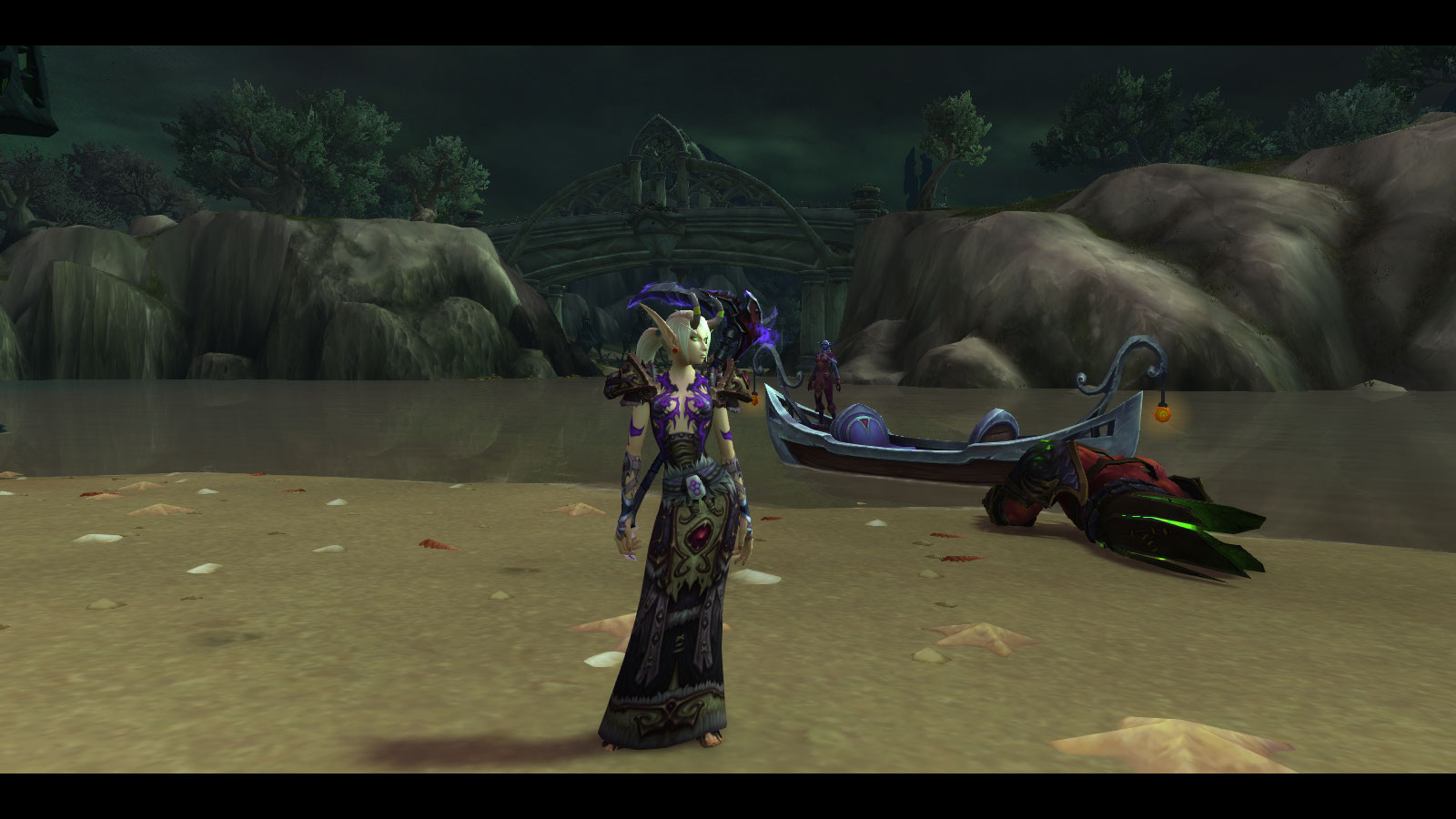
For example, in World of Warcraft, my warlock actually hates demons. As a result, I choose the talent Grimoire of Sacrifice whenever possible, allowing her to sacrifice her demon minion to increase her own power. This enhances the fantasy of the character. To her, demons are simply a resource to fuel her own quest for vengeance, and Grimoire of Sacrifice lets me express this concept through the gameplay.
But even then performance concerns in progression games can often cause you to make compromises in your character concept in order to ensure your character is strong enough to overcome the challenges before you. This is especially a problem in MMOs, where there’s an element of social pressure to conform.
 Stalled by progression:
Understanding the difference between role-playing and progression games goes a long way to explaining the love/hate relationship that I have with the genre we tend to call RPGs. You see, I’m a big fan of role-playing games, but much less fond of progression games.
Certainly progression provides a very strong psychological hook, which is why nearly every game of every genre now has at least some small element of it. We are as a species keyed to appreciate reward structures like this.
But that doesn’t necessarily make it interesting gameplay, and the more time you spend with it, the more transparent it becomes. After so many years of playing progression games — especially MMOs, where the treadmill is at its most naked and cynical — I have almost entirely stopped caring. I’ve gotten so much phat lewt and heard so many level dings that it’s stopped meaning anything to me at all.
I still like making builds, and earning new abilities is the one part of progression that still consistently excites me, hence my two Panoptic Cores in TSW (RIP). But for the most part I’m reaching the point where I just want to establish a good build as quickly as possible and then focus on actually playing the game.
Progression inhibits role-play at least as much as it enhances it. It’s a distraction at best, a roadblock at worst. Hence my eternal frustration with a genre I otherwise love. What I want is to inhabit a character, to immerse myself in a world. Most of what we call RPGs offer this, but not always to the extent I crave. Too much focus is put on the numbers, not enough on the texture and character of the world and its story.
 I think this is what keeps me coming back to Bioware, despite their inconsistencies. They’re progression games, but they haven’t forgotten their RPG roots. They’re still, at their heart, about people, places, and stories.
And that’s what attracts me: Exploring new lands, getting to know characters, and living out stories. Those are the experiences I crave. That’s what role-playing games are truly about.


 Superior Realities