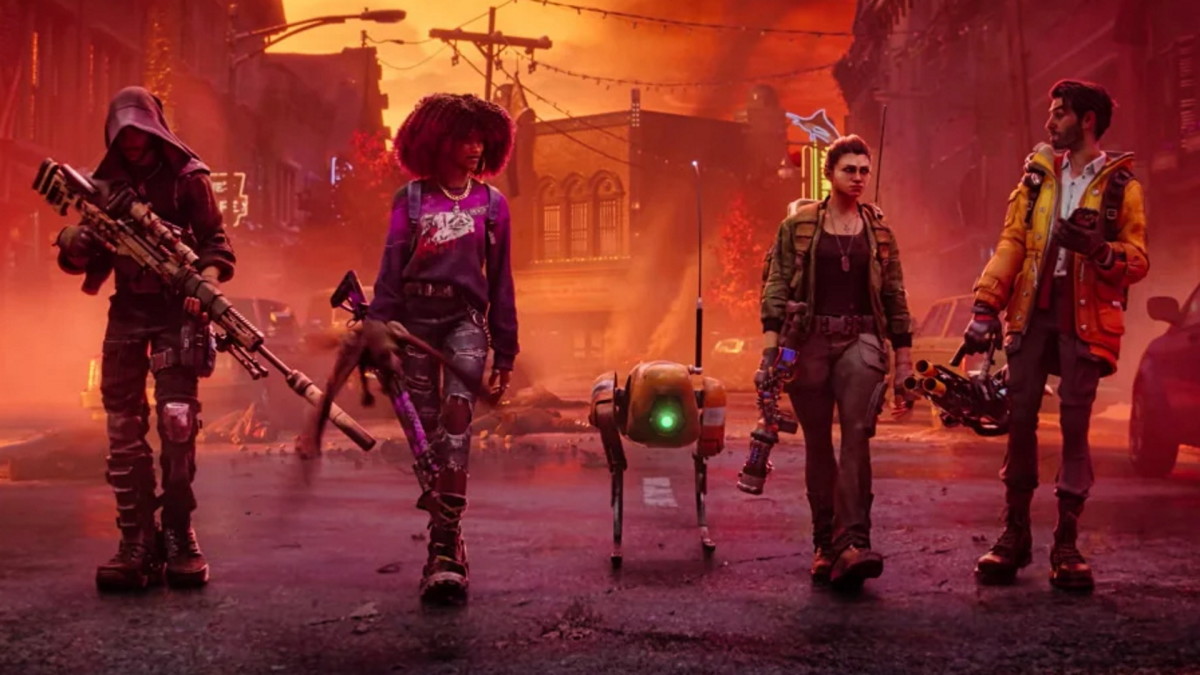
I’ve been keeping one eye on the vampire-hunting shooter Redfall for a while. The colourful art style and vague whiff of The Secret World-style surrealism are intriguing.
 Of course, if you’ve been paying any attention, you know that Redfall has had an overwhelmingly negative reception. The problem is that in the current climate that doesn’t really tell me much.
Clearly the game has flaws. I don’t think the complaints came from nowhere. But there’s no way for me to tell if those flaws are minor hiccups, or if the game is genuinely a dumpster fire. These days, the gaming community seems to see both those things as one and the same.
Nowadays any time a game stumbles even a little, the brigades charge in to rage and foam at the mouth. Anything less than flawless execution is dubbed an unforgivable disaster.
Some of my favourite games from the last few years were considered to be disasters. Anthem and Mass Effect: Andromeda both come to mind. Both had issues, but those issues were relatively minor in the grand scheme of things, yet word of mouth would have you believe they were utterly irredeemable. The Secret World is perhaps the best game I’ve ever played, despite its rough edges, but mainstream opinion is that it was an unplayable mess.
Nothing’s perfect, and as I’ve often said, the mark of true greatness isn’t a lack of flaws, but excelling in a way that allows you to forgive the flaws. But according to the modern gaming community, no flaw can ever be forgiven.
 Maybe Redfall really is completely terrible. There are definitely still games out there that just plain suck. But we now find ourselves in a living parody of the boy who cried wolf. When everything is called a dumpster fire, there’s no way of knowing which games are actually dumpster fires.
We’ve all seen the supercuts of bugs and bad AI behaviour from Redfall, but are those representative of an average session, or just cherry-picked to harvest clicks? When this all first blew up, one of the top posts on the subject I saw on reddit was a screenshot of someone who’d crawled up onto a roof, looked down a chimney, and found that the chimney had the roof texture at the bottom.
What an incredibly petty, trivial thing to complain about. Maybe the game really is bad, but throwing hissy fits over over meaningless things like this make it really difficult to take any of the other criticisms seriously.
(As some wiser minds on reddit point out, purely decorative chimneys like this are a real thing that some houses have, which makes the whole furor even more absurd.)
Social media and the toxicity of the gaming community itself are huge drivers of this culture of outrage, but the media isn’t helping, either. Outrage sells, and flamboyant headlines about disastrous launches and dead games bring in the clicks.
 As a minor member of the gaming media myself, I’m not immune to this. I genuinely do make an effort to not be overly negative in my writing on Massively Overpowered, but honestly I’d forgive you if you never noticed. It’s human nature to focus on the negative, and it’s just much easier to write about what’s going wrong than what’s going right.
But that doesn’t mean all this is inevitable. It’s always going to be easier to talk about the bad than the good, and we should call out games when they stumble, but the culture we have now is beyond counter-productive. It’s all noise and no signal. Word of mouth, unless perhaps from a trusted friend, is less than worthless.
For my part, I’m probably going to hold off on getting Redfall at least for now, but not because of the bad reviews. I’m just hesitant to spend triple-A prices on any new game unless there’s a demo or it’s a franchise I’m familiar with.
Now, developers neglecting to offer demos, that’s something worth getting angry over…



 Superior Realities