As you may recall, my feelings on the cross-media experiment known as Defiance are somewhat lukewarm. I still don’t have much interest in Defiance the MMO, but it’s been a long time since I had any sci-fi TV to watch, so I decided to give Defiance the TV show a try.
After watching the pilot, my feelings remain lukewarm.
 The lowdown:
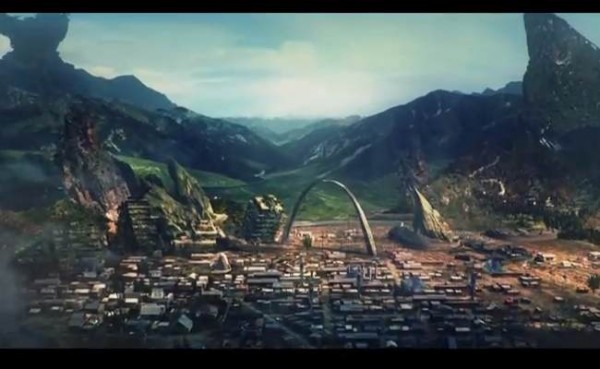
If you’re not familiar with it, Defiance is a post-apocalyptic science fiction series about the titular town, a ragtag encampment in the ruins of Saint Louis.
Defiance takes place in the aftermath of a cataclysmic war between humanity and aliens known as Votans. The interesting thing about the Votans is that they are not one species, but an alliance of several from the same star system. These range from the aristocratic Castithans (or Space Elves, as I’ve been calling them) to the savage Irathients (see: Klingons).
The Votans’ home system was destroyed, and they sought to claim Earth as their new home. The ensuing war utterly devastated both them and humanity, and after several brutal years of conflict, soldiers on both sides simply tired of fighting and gave up, resulting in an armistice and a shaky alliance between humans and Votans.
However, by then, Earth had been changed forever. The terraforming technology of the Votans had run amok, completely rewriting Earth’s landscape and ecology and creating a world that was alien and hostile to both humans and Votans alike.
 The survivors of both sides now cling to life in towns like Defiance, scavenging the continually falling wrecks of Votan ships (a phenomenon known as the Arkfalls) for technology. Those who follow the Arkfalls are called Ark hunters.
The good:
The main positive thing I have to say about Defiance is that the cast seems very good so far. I didn’t see any of the opening night jitters you normally get in pilot episodes. Everyone seemed really comfortable in their roles, and there were few weak links.
Most of the characters are pretty cliched, but they’re sufficiently well-acted that you can overcome that. Even if they’re not very original, they’re all filling their roles very well. The likable characters are very likable, and the vile characters are truly vile.
The main character, Joshua Nolan (played by Grant Bowler), is a good example. A former Ark hunter turned sheriff of Defiance, he is an utterly archetypical “lovable rogue” type, but Bowler plays him with such an easy charm that you completely forget how painfully cliched the character is. You just want to smile every time he’s on screen.
My personal favourite character so far is Yewll (Trenna Keating), Defiance’s alien doctor. I spent a good chunk of the pilot laughing my face off at the utter condescension that drips from her every word and action.
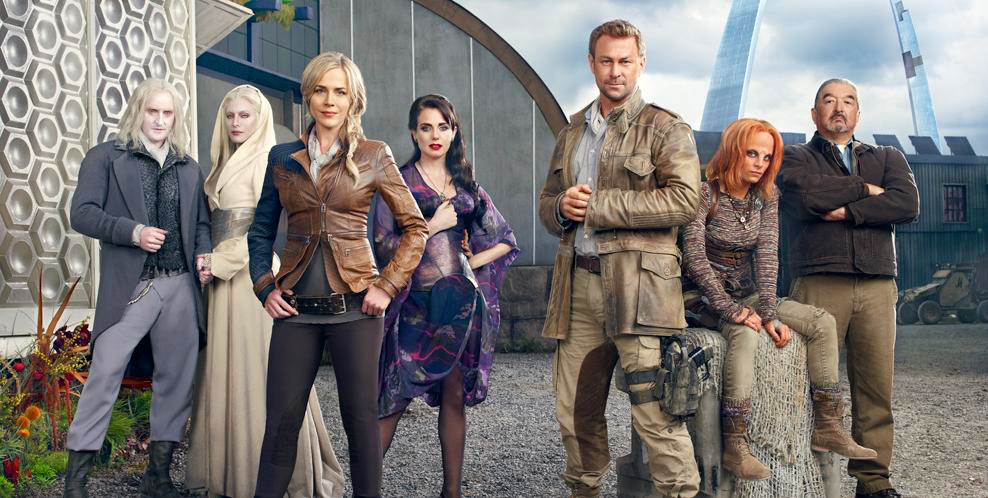 The only significant weak link in the cast so far is Nolan’s adopted Irathient daughter, Irisa (Stephanie Leonidas). But to be fair, they didn’t give her much to do, so she could be more interesting once they give her something to work with.
I was also a bit distracted by how, well, white the cast was. Considering Defiance’s message of racial tolerance and uniting diverse peoples, it was strange that they put so little effort into showing the diversity of the human race.
Aside from First Nations actor Graham Greene, I only noticed one other non-white character of any significance, and he might as well have just worn a sign that read, “token black guy.” His only purpose in the plot was to be deemed too incompetent to be sheriff so that Nolan could get the job.
One other mark in Defiance’s favour is that the soundtrack is provided by the great Bear McReary of Battlestar Galactica fame. It may be worth watching on that criteria alone.
The less than good:
Aside from the cast, though, I find little to praise in Defiance. It’s mostly just a bag of tired post-apocalyptic and space Western cliches thrown together in the hopes that a plot will emerge.
The biggest problem is the flow of the story. Simply put, it doesn’t have any.
It seems like they weren’t able to decide what kind of show they wanted Defiance to be. One moment, it’s a rollicking space Western full of adventure and light humor. The next, it’s a more serious epic with the inhabitants of Defiance fighting in the trenches to defend their town. A scene later, it’s a political drama about the intrigues of the town’s ruling families.
The show just kind of sways drunkenly between these different styles of story without rhyme or reason, and it makes it difficult to get invested in the plot.
Furthermore, there were a few times where things simply happened without any foreshadowing or explanation, including but not limited to the obligatory random sex scene for no reason at all.
 On the fence:
On the whole, I’m not sure if I’ll stick with Defiance or not. It has potential, and I am eager to have some sci-fi to watch again, but I’ve yet to be blown away, and if past history is any guide, it will probably be cancelled after one or two seasons anyway.
Overall rating for the pilot: 6.8/10
New article:
My latest article at WhatMMO is a roundup of the rumors and speculation surrounding Blizzard’s Project: Titan. Some of the ideas you may have heard me discuss before, but others are new.
What do you think Titan will be?