WoW: It’s Not About Flying

Lately, I’ve been spending a lot of time on the official forum for World of Warcraft, expressing my displeasure with things like the decision to prevent the use of flying mounts for the first several months of the next expansion.
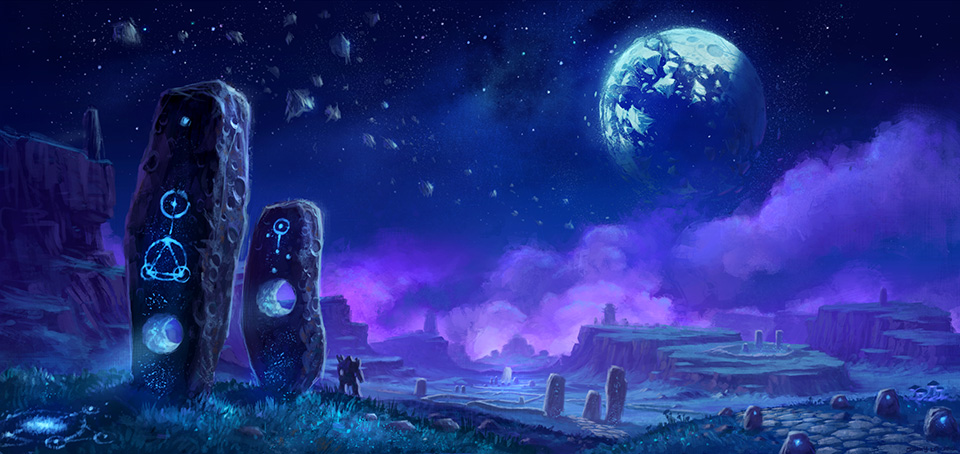
Concept art of Shadowmoon Valley for World of Warcraft: Warlords of DraenorBecause I’m a masochist, I decided to start my own thread to talk not just about that issue, but also how I feel it’s representative of a pattern of regressive behaviour on Blizzard’s part that is the crux of many of my current complaints about the game.

I put enough thought into my rant that I thought it might be worth sharing here.

———————-

As you may have noticed, there’s been a lot of talk lately about Blizzard delaying flying in WoD until the first major patch. And a lot of people have responded to complaints about this by saying that people are overreacting, that flying isn’t that big of a deal. In a vacuum, they’d be right.

But here’s the thing: It’s not really about flying.

What has me, and a lot of others, so frustrated is that these new restrictions on flying are just the latest in a series of regressive decisions made by Blizzard.

My warlock looking out over Icecrown from Orgrim's HammerI joined in Wrath. I enjoyed the game a lot back then, but it also had a lot of problems. Over the years, many of those problems have been resolved. The game has improved immeasurable since Wrath, and I would never go back.

But it’s not any more fun now than it was then. Why? Because it’s also gotten worse in just as many ways. For every step forward, there’s also been a step back.

Look at valor and justice. They’ve been nerfed, and nerfed, and nerfed again. First, you could buy a full tier set with them, then only a partial set, then only off-set pieces. Then the rate at which you earned them got massively cut down, and the rewards for them were locked behind a massive rep grind of epic proportions. Now they’re only good for out-dated gear and upgrades.

Justice was so useless for much of MoP that people mainly just used it to buy PvP epics as starter gear in PvE.

The fact that the primary PvE currency was only used to buy PvP gear to use in PvE really should have been a red flag to someone.
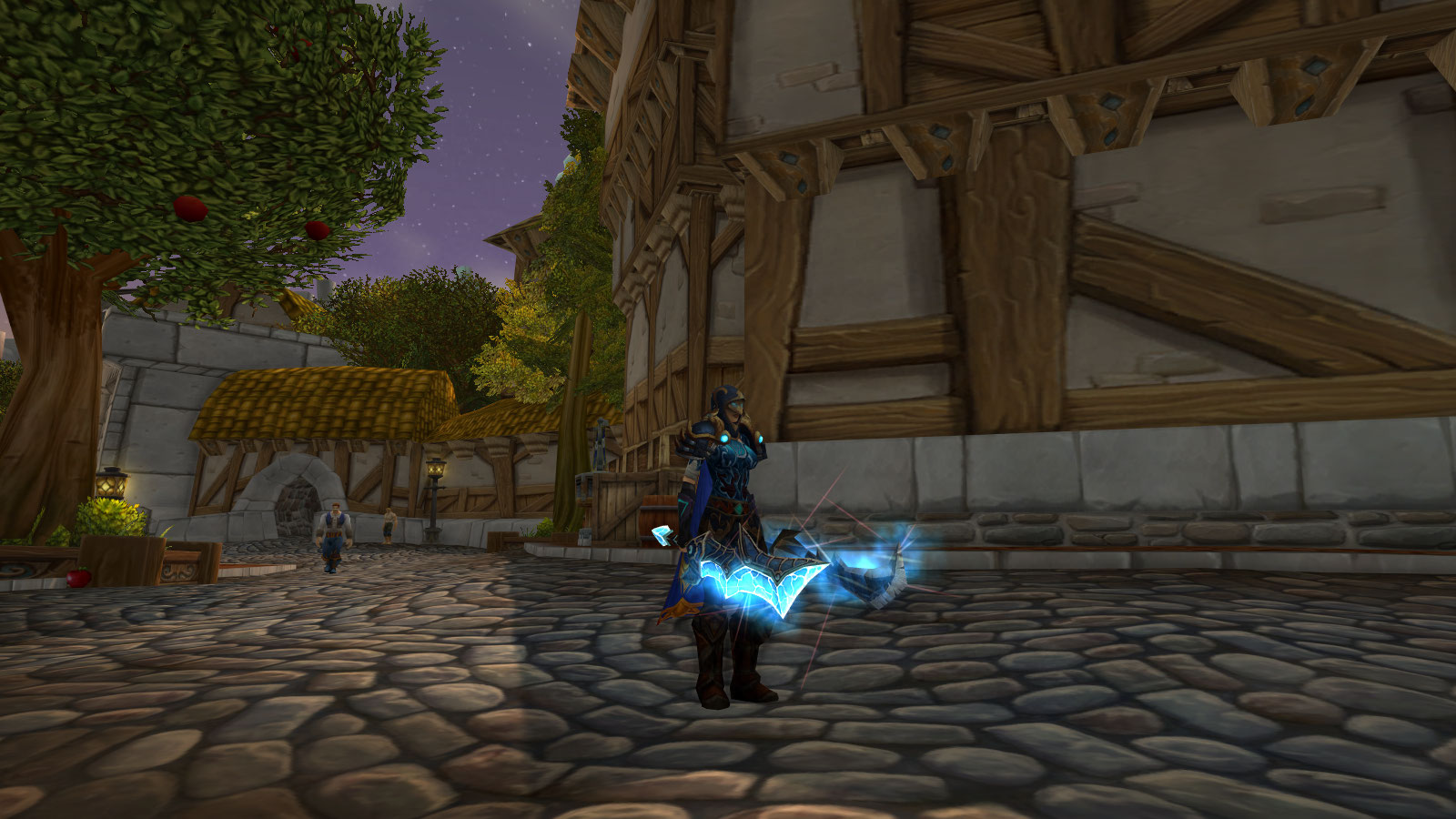
My rogue on the streets of Stormwind at sunsetThere was the removal of Have Group, Will Travel. We’re back to enjoying the “epic” experience of going AFK on a flightpath for five minutes while hoping the Horde doesn’t tag the world boss first, or else pestering the raid to get organized about summoning people, because clicking a portal is hard apparently.

The Quick and the Dead was nerfed to the ground, to the point where it doesn’t make any significant difference at all anymore. Instead of getting right back into the action, we’re slowly jogging through the spirit world, increasing the chances of mobs respawning or someone else tapping that rare you spent weeks looking for. Simply failing in your task isn’t enough, apparently; you need to be more thoroughly punished for your love of adventure and risk-taking.

And you better hope you don’t die in a hard to reach place, because spectral gryphons are a thing of the past.

Rep tabards got removed. I actually do agree that becoming exalted with a faction by putting on a piece of cloth for a week was a bit silly, but taking that away at the same time as reputation was made far more important than it had ever been, and quests were made to award far less reputation, and certain reputations were locked behind other reputations… That just crossed into the realm of the absurd.

And then there’s the excessive way they’ve been gating LFR. A week or two, sure, but setting things back more than a month is just too much. It forces you to either cut yourself off from the WoW community entirely for weeks, or have everything spoiled for you long before you get to see it.

My Pandaren hunter running through the Ruins of Gilneas in World of WarcraftAnd then there are the restrictions on flying. Now, I am absolutely, 100% in favour of not letting people fly on the first character they take to level cap in a new expansion. It heightens the sense of discovery.

But once you’ve gone through the content once, that sense of discovery is gone. After that, not being able to fly is just a pointless time sink. MoP should have included a tome of flying I could send to my alts.

And now WoD is taking it to a new level of silliness with its “no flying for the first couple months because hey look a dog *running footsteps*.”

On its own, I could live with not being able to fly. I’d be annoyed, but I’d live.

But I am so, so sick of Blizzard taking the game backwards instead of forwards. Isn’t the whole reason they won’t do classic servers because they say they want to keep going forward? That philosophy’s a bit contradictory with their actions, isn’t it?

It’s at the point now where I’m not so much looking forward to what fun new things will be added in future as I am worried about what fun old things will be removed.

My warlock showing off her legendary cloak in World of WarcraftAll of the removed or mangled features I’ve talked about were optional, too. Anyone who didn’t like them could simply choose to ignore them. There aren’t any players who are benefiting from these changes. Only players suffering because of them.

I remember StarCraft II originally planned to remove a bunch of the less popular units in Heart of the Swarm. But there was a massive fan backlash, and they ended up dropping the idea. After all, an expansion is supposed to expand the game, not shrink it, right?

The WoW team should take a lesson from that.

You can’t put a genie back in its bottle, Blizzard. The more try, the harder it is for me to enjoy the things you still do well — and there are a lot of those.

——————–

If you’d like to share your thoughts and/or flame me back to the stone age, you can find the original post here.

You’re Doing It Wrong:

On a largely unrelated note, I recently beat the silver tanking challenge in Proving Grounds, earning the achievement, “You’re Doing It Wrong.” I had to redo all my talents and glyphs for maximum survivability, but once I did that, it was relatively easy. Only took me three tries.

My warlock earns the achievement for completing the silver tanking challenge in Proving GroundsYay me.

My Love/Hate Relationship With RPGS

You might be surprised to learn this, but for a good chunk of my life, I considered RPGs to be my least favourite of the major video game genres. I played several, but I usually felt them to be more frustrating than fun.

My rogue surveys her domainEven now that I’ve matured a bit and learned to appreciate RPGs more, there’s still a very significant part of me that’s constantly rolling its eyes and cursing under its breath as I play them. I’ve coined the term “RPG BS” to describe the more irritating habits of the genre, and my opinion of an RPG usually boils down to how much it can minimize this “BS.”

So why do I keep playing RPGs despite loathing many of their fundamental aspects? I asked myself that question, and I’ve come to the conclusion that I love the fantasy of the RPG, but that the reality of the genre often doesn’t align with that fantasy, and in many cases, even actively works against it.

Fantasy versus reality:

At its heart, the RPG genre is about putting the player into the classic hero myth. Start from humble beginnings, go through many trials and tribulations, learn from those experiences and grow into a more powerful hero, and achieve glorious victory.

That’s an awesome concept for a video game. You take the most core and powerful human story, and you put the player center stage. A good RPG is like a brilliant novel or a masterpiece film, but even better, because it’s not some abstract character you’re watching from the outside. You’re living it. It’s your story.

Even if you’re someone who doesn’t pay a lot of attention to story in games, it’s still a thrill to go through that archetypal journey. We’re just hardwired as a species to be drawn to that concept of growth, trial, and achievement.

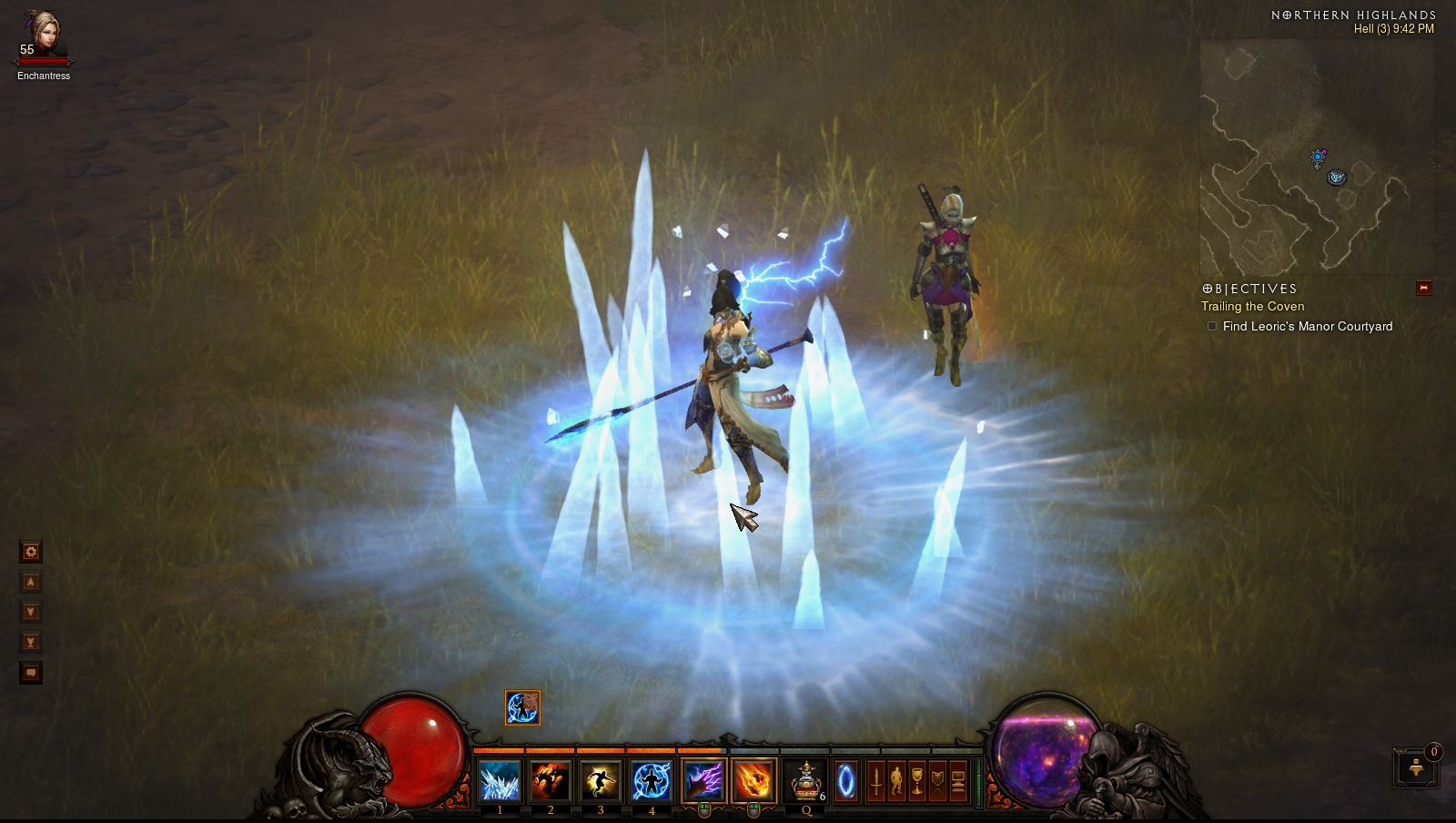
My wizard posing with Eirena in Diablo IIIThis is what draws me to RPGs. To live the fantasy of the epic hero.

But a lot of the traditional mechanics of RPGs are completely divorced from that fantasy, or outright harmful to it.

I’m sure a lot of purists will sneer at me this, but the obsession with numerical balancing acts is one of the worst aspects of the RPG genre for me. Everything in these supposedly epic adventures boils down to math.

You’ve got to carefully pick and choose where all your stats go, and there’s generally very little thought to it since there are rarely more than a handful of ways to build a character effectively. Rare indeed is the RPG where a warrior stacks intelligence.

Boiling everything down to math rips me right out of the fantasy. I don’t recall Shea Ohmsford having to reach at least 35 points of strength or learn the “Mystic Sword Mastery” talent to wield the Sword of Shannara.

A lot of the restrictions RPGs place on characters based on their stats are completely illogical, too. You level up skills or attributes so that you can wield powerful weapons or spells. Logically, it should be the other way around. You practice with melee weapons; you get better at melee weapons. You try a new spell and slowly become more adept at it.

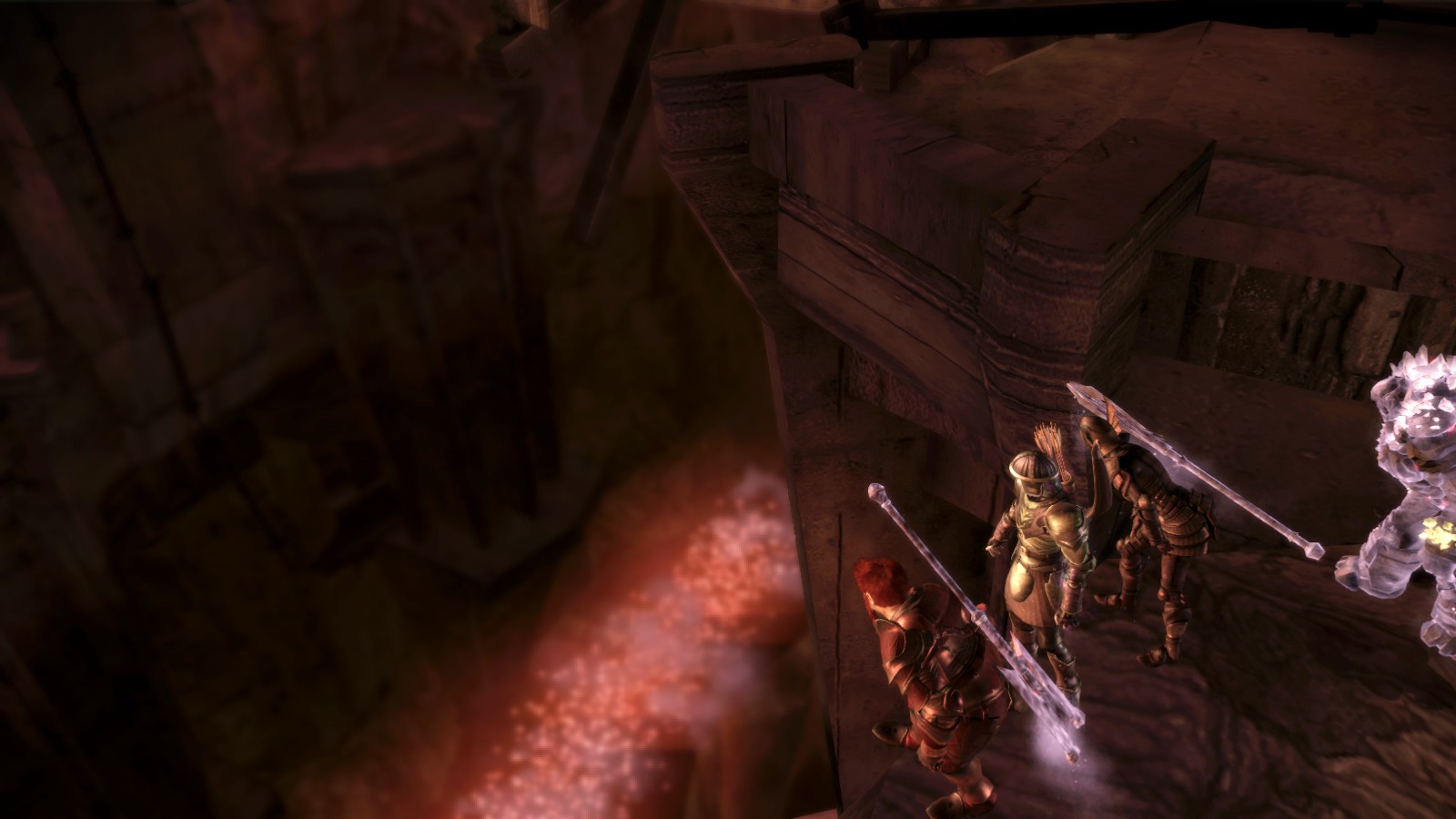
The Darkspawn march through the Dead Trenches in Dragon Age: OriginsGranted, in a lot of games it functions more or less this way anyway since you’ll generally be using the same fighting style the whole way through — God forbid a player have the chance to experiment — so a melee fighter will slowly work their way up to more powerful weapons. But having to think excessively about your stats or your build distracts from the fantasy and detracts from the adventure.

Winning on the character sheet, not the battlefield:

In the end, success in the majority of RPGs relies much less to how you play your character and much more on how you build your character. Aside from detracting from the heroic fantasy, this also sucks a lot of the fun out of the gameplay. Combat isn’t very exciting when you know the outcome has likely been decided long before it begins. It devalues things like reflexes and snap decision-making and makes one feel unheroic.

Excitement comes from narrowly avoiding boss attacks, executing perfect combinations of abilities, and making sound strategic decisions in the heat of combat, not from Googling a theorycrafted build, equipping some phat lewt, and facerolling your way through enemies.

The reason I loved the original Dungeon Siege was that it was a game that got out of its own way and let you live the heroic fantasy. You just picked up whatever kind of weapons or magic you wanted to use and got fighting. The more you used melee weapons, the more skilled you became with them. Want to be a combat mage? Just start throwing fireballs. You built your character by playing the game, as opposed to playing the game by building your character.

The logo for Dungeon SiegeThis focus on building over playing is compounded by the fact that most RPGs make changing builds difficult, costly, or outright impossible, thus punishing mistakes or experimentation. I don’t mind The Secret World’s dependence on build choices for success because swapping abilities is incredibly quick and easy. It’s an element of gameplay, not a chore. Plus, it encourages experimentation, rather than discouraging it.

Thinking of TSW and its adaptability, another pet peeve of mine about RPGs is how they limit players and force them into such narrow boxes. Most force you to pick a class, and there’s generally little opportunity to customize these classes in truly meaningful ways. You can be a warrior who specializes in swords, or a warrior who specializes in axes.

This one isn’t so black and white. Classes do have a positive impact, as well, because it gives people readily identifiable archetypes and allows them to jump into a game and know what kind of experience they’re going to have. Most people are going to gravitate to certain playstyles, anyway.

But still, I wish games would be a little more creative with their classes or at least offer some more diverse ways to customize them. Given the choice, I’d probably play every game as a plate-wearing mage who dual wields swords. Or maybe an arcane archer.

Humble beginnings:

There is one way that RPGs are good at sticking to the heroic fantasy, but it’s the one way that they probably shouldn’t: the idea of starting as nobody.

My hunter on the Wandering IsleStarting from nothing and working your up to a great hero makes for a good story — though I think the “humble beginnings” angle is overplayed, myself — but it doesn’t make for exciting gameplay. I don’t particularly enjoy running around in rags and killing boars with a rusty kitchen knife.

In my experience, single-player RPGs are getting better about throwing you into the exciting stuff immediately, but a lot of MMOs still have the nasty habit of forcing you to wade through level upon level of tedium to get to the good stuff.

Gear:

And we come to my final gripe.

The idea of iconic weapons and armor is very core to a lot of heroic stories. Frodo had Sting and his mithril tunic. Perseus had his mirrored shield and winged sandals. Tirion Fordring has the Ashbringer.

Nothing says “fantasy hero” like slaying a terrible beast, collecting a weapon of incredible power from its hoard, and using this weapon to bring justice to the world.

My Dragon under the moonlight in Blue MountainRPG developers recognize this and make gear core to progression in most games, but therein lies the problem. They’ve made gear so central that it’s fallen away from the original fantasy.

See, Frodo didn’t replace Sting with the Bloodied Handaxe of Savagery, and then replace that with the +1 Giant Stick of Compensation.

The whole thing about iconic weapons and armor is that they’re iconic. RPGs have made gear so meaningful that it’s become meaningless. You never grow attached to your equipment. It doesn’t become a core part of your character’s identity.

I’m reminded of a game I played in my youth called Drakan: Order of the Flame. It wasn’t exactly an RPG, but it had elements of one, such as gear. But in Drakan, new items were relatively uncommon, and really good items were even rarer. I remember one weapon you could find in act one, the Mace of the Hand, was so good that you generally wouldn’t replace it until act three. That’s how gear should work.

In the case of MMOs, gear is especially problematic because it becomes a treadmill. You need to regularly perform gear resets and make people start over again. My characters in WoW aren’t any more powerful now than they were when I joined back in Wrath of the Lich King.

My mesmer showing off her gear in Diessa PlateauI like how The Secret World handles gear, because they don’t do resets. They add new forms of progression instead. Gear upgrades are also rare enough to feel meaningful. My Dragon used his sword from last year’s Mayan event up until just a few weeks ago.

The later Mass Effect games also had an interesting take on gear. Rather than making new pieces of armor numerically superior, they just granted different kinds of bonuses. Gearing was a strategic choice, not a matter of “this has bigger numbers, so I’ll equip it.”

Making everything depend on gear also devalues the concept of your character as a hero. My WoW characters are weak as kittens without their gear. That’s not exciting; a hero should be a badass no matter what they’re wearing or what weapons they wield.

* * *

RPGs have become more interesting since I was a kid, and they are amazing games when they can effectively capture that heroic fantasy. But far too often, they’re bogged down in mechanics that do more harm than good.