Review: Sanctuary, “Tempus” (Season Premiere)

Review: Sanctuary, Tempus:

Warning: the following review contains vague spoilers.Watching Sanctuary is a bit like being friends with Doctor Jekyll (no pun intended considering most recent episodes have focused on that character). You never know what you’re getting: the good, the bad, or the ugly.
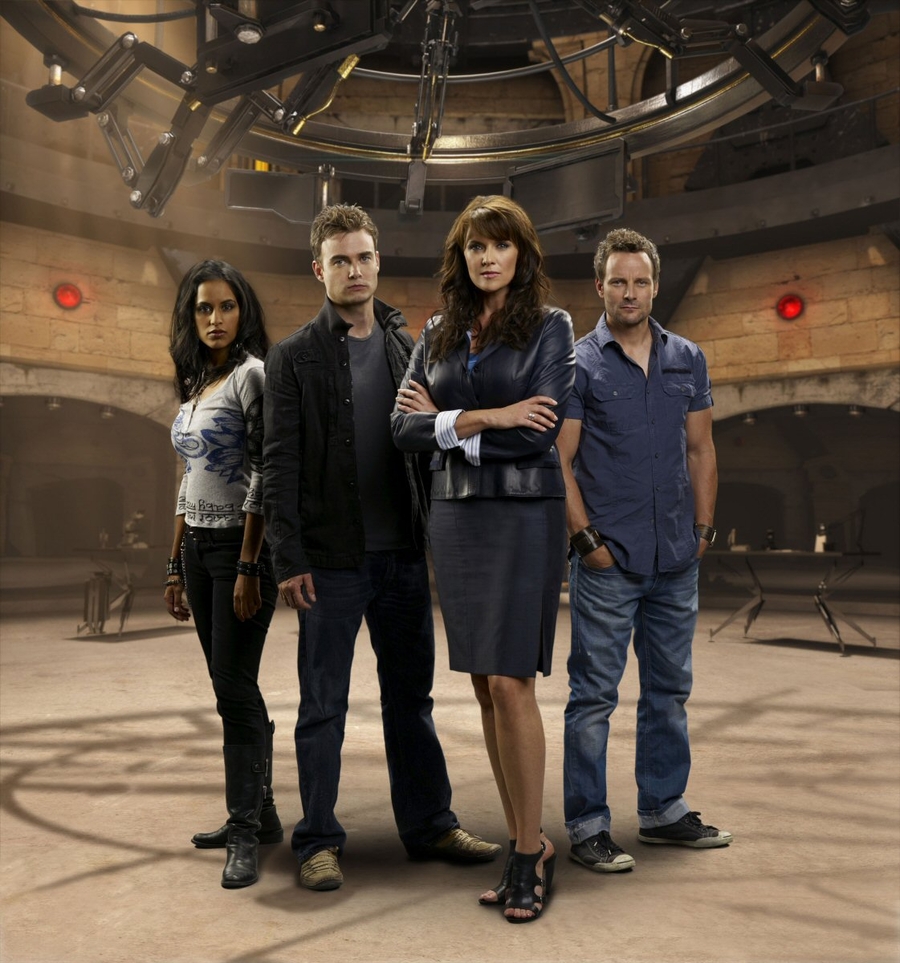
This episode, I’m pleased to report, falls under the “good” category.

The episode picks up immediately from where the last one left off, with Adam Worth (Dr. Jekyll) traveling back to the 19th century to attempt to cure his terminally daughter, and the series’ protagonist, the immortal Helen Magnus, following him to prevent corruption of the timeline.

“Tempus” has Magnus simultaneously struggling to stop Adam, who plans world conquest once his daughter is cured, and to prevent herself from contaminating the timeline while interacting with fellow Five members John Druitt and Detective Watson and the past version of Adam Worth.

Things are complicated by the fact that they have arrived during the height of Jack the Ripper’s killing spree, which, as any Sanctuary fan knows, were committed by Druitt, who was Magnus’s fiance at the time. So while all the craziness with Adam is going on, we’re also treated to many interesting little moments between Druitt and Magnus (both her past and future selves), which give some very interesting revelations into their past relationship. Druitt is easily the most interesting character on the show, so this was a very welcome addition, in my view.

The entire episode takes place in the past, with no mention of the other difficulties taking place in the future (or present, depending on your perspective), which is frankly welcome. This show is always at its best when focusing on Helen and the Five at the expense of its far less interesting modern characters.Adam Worth, AKA Doctor Jekyll, from Sanctuary

Ultimately, the struggle to preserve time is a very common one in sci-fi TV shows, but this episode managed to set itself away from the pack, at least a little bit. It felt a bit more edgy and dangerous (words I would generally never use to describe Sanctuary). Normally, these episodes end with all problems being solved and all time changes turning out to be what was supposed to happen anyway.

“Tempus” didn’t end nearly so neatly. While it’s true that Magnus achieved her goals, it ended up feeling like a Pyrrhic victory in my view, and I found the ending rather heartbreaking.

Furthermore, the events of the past did end up being changed significantly.  We’ll have to wait until future episodes to see if these changes have any lasting impact. Given this show’s spotty history, I find myself doubting the possibility, but there’s always hope. This show could really use an ongoing crisis to keep it interesting, and a world irreparably changed by time travel seems like just the thing.

If I have any complaint about this episode, it’s that I would have liked to see the Adam Worth arc drag out a bit longer. But at the same time, they couldn’t really have given it a better ending than this, and the door is left open for more appearances by the character.

Overall rating: 9.1/10 A good start to the season. Let’s hope they keep this level of quality consistent for once.

If you’d like to get caught up on Sanctuary, you can buy the DVDs on my Amazon Affiliate–now includes the third season.

Retro Review: Stargate: Universe

Retro Review: Stargate: Universe

Time for me to voice some unpopular opinions. If you know me well, you’re used to such things, and if you don’t, well, let’s just say my tastes are sometimes a little odd. And by sometimes, I mean usually. And by a little, I mean very.The logo for SG:UUniverse is the third TV spin-off of the ’90s sci-fi action movie, Stargate. The previous two, SG-1 and Atlantis, enjoyed a fair degree of success. In fact, SG-1 was the longest running sci-fi TV series in history. Universe, however, lasted only two seasons, and is generally bashed for killing the franchise.

The reasons for this aren’t hard to understand. It was a major departure from the previous two series. Instead of a bright, peppy show about well-groomed heroes saving the universe, we had a gritty tale of a small group of scruffy refugees trying to survive aboard a decaying alien starship, Destiny, at the far edges of space. Changes like that–sadly–tend to bother people. And to be entirely honest, the first few episodes simply weren’t very good. They were slow, dull, and smacked of “trying too hard to be serious.”

But all that doesn’t mean it was a ultimately a bad show.

Even during its shaky beginning, Universe had a lot of things going for it. For starters, a unique concept. We’ve all seen the Voyager model of a crew trying to find its way home, but SG:U was a different take on the idea. They weren’t flying home; they couldn’t. They didn’t possess the access codes necessary to run the ship, and they were simply along for the ride. It added an extra element of peril; if one of their away teams didn’t make it back to the ship before it jumped back into FTL (Faster Than Light), they would be permanently marooned.

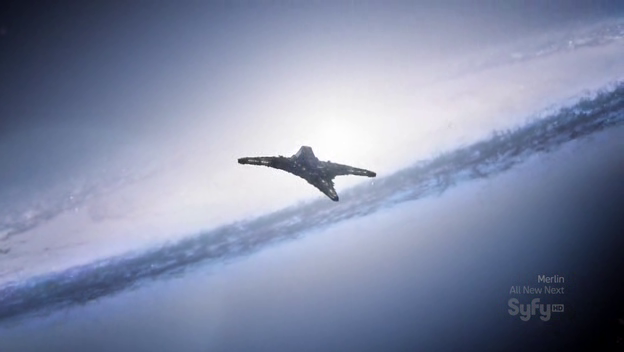
Destiny itself was a character. The ship, while not exactly an entity as we would understand the term, was capable of thinking, and it had a plan. One of my favourite things about the show was the constant question of, “What is Destiny up to this week? Why did it bring them to this planet?” In fact, I’d go so far as to say Destiny may have been my favourite character, and that’s no small feat, which brings me to my next point. The star ship Destiny from Stargate: UniverseThe greatest strength of every Stargate series has been their casts, and SG:U was no exception. Whereas previous casts were mostly plucky and likable, Universe’s refugees were a little more rough around the edges, but no less interesting for that.

Virtually everyone was deep and multifaceted, and the acting was universally strong (no pun intended). Particular stand-outs included Robert Carlyle as the brilliant but pathologically dishonest Dr. Nicholas Rush and Louis Ferreira as reluctant commander Colonel Everett Young, whose characters constantly butted heads (sometimes literally) throughout the series, making for and endless amount of wonderful drama. But even initially weaker characters such as Elyse Levesque’s Chloe Armstrong quickly found ways to become more interesting, and by the end of the show’s short run, there wasn’t a character I didn’t love seeing.

Most important to note, though, is that the mediocre story-telling of the first few episodes didn’t last. Things slowly improved, and then the quality shot upward with the stellar cliff-hanger in the middle of the first season. After that, with only a few brief exceptions, we got nothing but interesting episodes full of action, human drama, mystery, and suspense.

Unlike the rather straight-forward plots of previous Stargate incarnations, SG:U featured a lot of mysteries. “What is Destiny‘s purpose? Why did the Ancients launch it into the far reaches of the universe?” I won’t spoil anything, but suffice it to say that some of those questions were answered, and SG:U was shaping up to be truly epic and awe-inspiring before it was cut down prematurely.

Finally, one other thing that made Universe very unique is the way it portrayed the feeling of being lost in deep space. I’ve watched a lot of sci-fi TV in my time, and it never really felt right. Space was just a backdrop that added nothing to the story. But SG:U hammered home the lonely isolation of being adrift in the cold depths of space. It had a haunting feeling that stuck with me long after the episodes ended.

The worlds and the alien creatures really felt foreign. It illustrated both the wonder and the horror that space has to offer.

I think SG:U actually may have been the final nail in the coffin of my Star Trek fandom. Star Trek is supposed to be about uncovering the mysteries of space, but SG:U did more boldly going in its two seasons than any Star Trek series did in their longer runs.

Overall rating: 8.8/10 If you haven’t seen it, I strongly recommend giving it a try. Just don’t let its slow start throw you. And if you have seen it, please comment and tell me what you think, especially if you enjoyed it–I’d dearly like to discover that I’m not the only SG:U fan out there, which is how it feels sometimes.

You can buy Stargate: Universe DVDs on my Amazon Affiliate. In addition to the DVDs of the two seasons, I’ve included a download of a single second season episode, “Malice.” Normally I wouldn’t recommend skipping ahead like that, especially on a serialized show like SG:U, but “Malice” was masterful, and if you’re a skeptic, it might just win you over.