
Review: Heirs of the Blade
“Heirs of the Blade” is the seventh book in Adrian Tchaikovsky’s vast steampunk/fantasy series, “Shadows of the Apt.” For a quick rundown on what the series is about, please see my review of the last installment, “The Sea Watch.”
 After the rather rambling detour of the last book, “Shadows of the Apt” gets its groove back in a big way with “Heirs of the Blade,” which I found an exciting emotional roller-coaster from beginning to end.
In contrast to the epic and varied (almost to the point of being scattered) plots of most of the previous books in the series, “Heirs of the Blade” focuses almost exclusively on just three women.
The first is Tynisa Maker, halfbreed child of the forbidden union of a Mantis-kinden man and a Spider-kinden woman. You’ll remember from my previous review that I find the Inapt races the most interesting part of this series, and the Mantids and Spiders the most interesting of the Inapt, so you can probably imagine how I feel about a girl who is half Spider and half Mantis.
Haunted by the ghosts of her past — both metaphorically and literally — Tynisa flees into the exotic lands of the Dragonfly-kinden Commonweal, seeking only death. In the finest tradition of her Mantis ancestors, she isn’t particular about whether she gives or receives it.
The second is Seda, teenage empress of the Wasp Empire. Now, I’ve said before that I find the Wasps very unremarkable as villains go, but Seda is single-handedly turning this perception around. Every scene with her is chilling, as we learn more and more about the depths of her cruelty and her need to dominate the world.
Seda is not just the glorified schoolyard bully most powerful Wasps are. Exposed to the dark power of an Inapt ritual, Seda’s Aptitude has vanished, leaving her in the dark and uncertain world of the Inapt. But rather than fear this change, she has embraced it, learning the blood magic of the Mosquito-kinden and using it to solidify her rule.
She now stands poised to unleash not only the vast Apt armies of the Empire upon her enemies, but also the dark and forgotten powers of the Days of Lore. And her magic grows stronger with every passing day.
The third woman upon whom “Heirs of Blade” revolves is the unfortunately named Cheerwell Maker (called “Che”), Tynisa’s Beetle foster sister. Che was once my least favourite of the major cast members, but she has finally started to carve a place for herself alongside such stellar characters as Seda and Tynisa.
Che was exposed to the same magic that changed Seda, and she now finds herself in the same position as the empress: her Aptitude lost, but a vast well of magical power put in its place. In “Heirs of the Blade,” Che begins to learn the full extent of her new powers, and the lengths Seda will go to to stop them reaching their full potential.
One final thing about Che’s plot that I greatly enjoy is her traveling companion, the rogue Wasp agent Thalric. Thalric is an incredible complex character, and I could write a whole blog just about him, but suffice it to say, the man is awesome.
Each of these three main plots is engaging and exciting individually, and together, they make for a thoroughly enjoyable book. But it is Tchaikovsky’s skill as a world-builder, always his greatest strength, that takes this book from “good” to “great.”
It’s not just the intricate culture of the Commonweal, or the gradual way the reader learns it’s not the fairytale land it’s cracked up to be. It’s the way every kinden is given such a distinct and recognizable personality, and the way those personalities inform every aspect of the novel.
The whole way through Tynisa’s plot, I kept thinking things like, “That’s such a Mantid thing to do” or “What a perfectly Mantis dilemma.” The fact that what constitutes a “Mantid” thing to do is something I readily recognize without needing to be constantly reminded is a testament to the skill with which Tchaikovsky develops the various kinden.
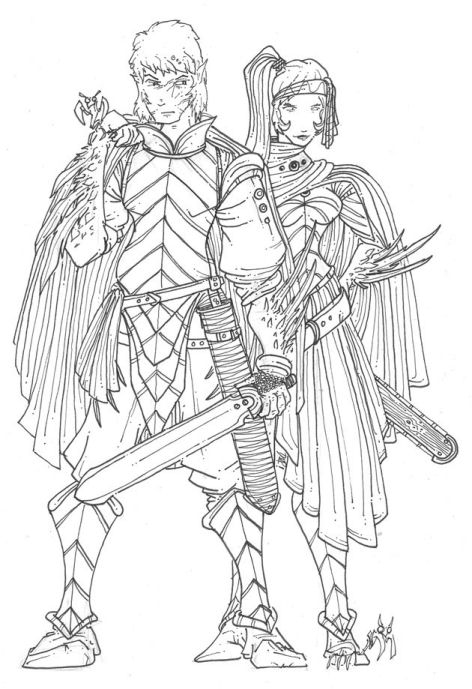 And it’s not limited to Tynisa, either. The way Che and Seda react to their newfound magic is perfectly archetypical of their kindens. Respectable Beetle girl that she is, Che is rather overwhelmed by it all, but being a Beetle, she just keeps stumbling along and somehow finds a way to adapt. Seda, in true Wasp-kinden fashion, sees her magic only as a potential weapon, a way to further her own power and that of the Empire.
If I have one complaint about this book, it’s that it lacks the feeling of epic struggle the earlier novels in the series had. The war with the Wasps has been on the back-burner for three whole books now, and while I somewhat understand why the author has chosen this route, I’m growing rather weary of the calm before the storm. Let’s get to the storm already, shall we?
Overall rating: 8.8/10 An above average installment in an above average series.
All installments of Shadows of the Apt are available on my Amazon Affiliate. I encourage you all to check it out.
New writing:
Weird Worm has posted another of my articles, “Three Weird Guys (Who Could Beat You to a Pulp).” If you ever wanted to watch a large angry man rip apart a door, this is the article for you!


 Superior Realities