
The sci-fi mini-series Ascension intrigued from the moment I heard about it. A new show about deep space exploration, and it has Tricia Helfer? Sign me up.
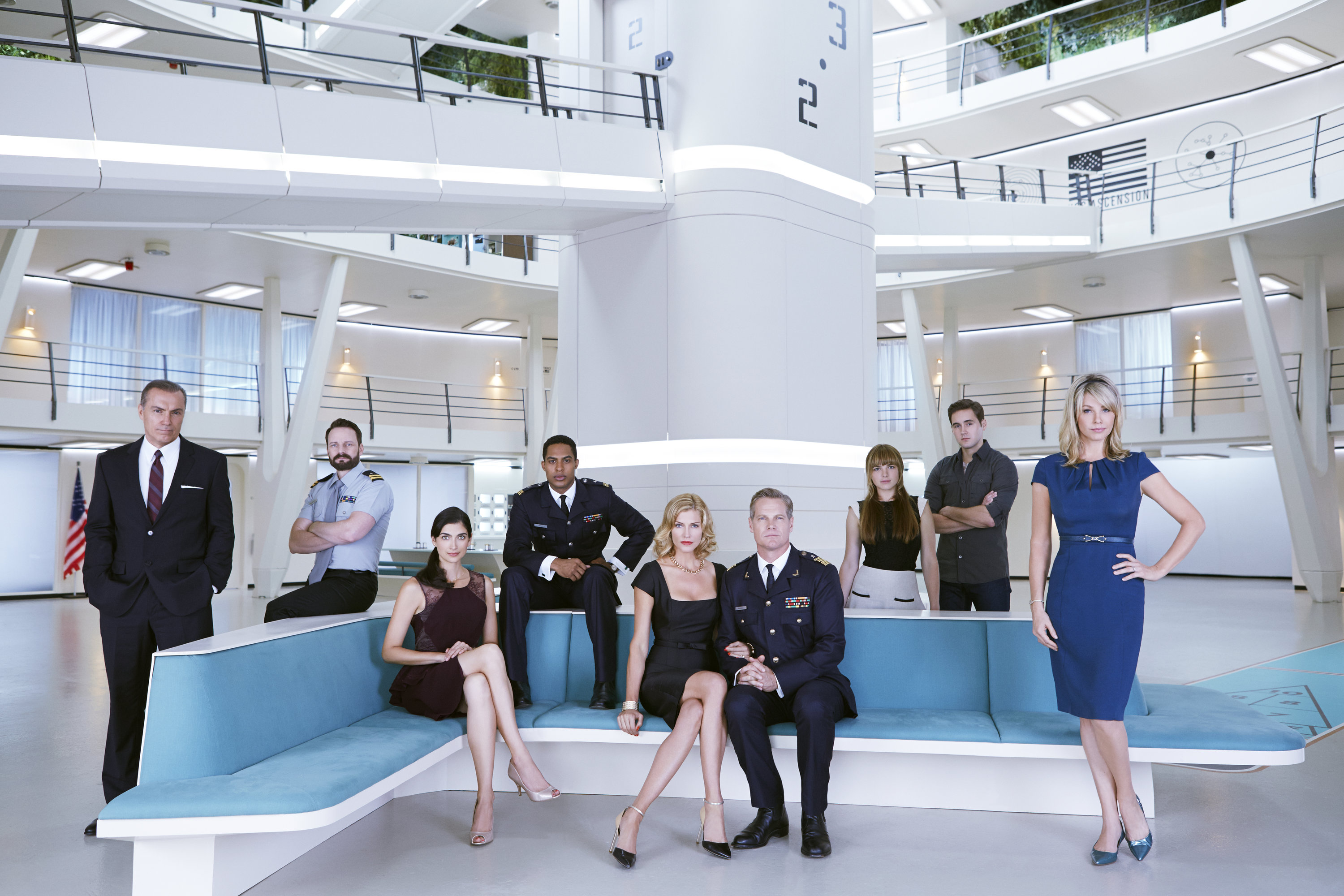 I wanted to see it as soon as it released, but CBC’s online video player sucks, so it’s only now that it’s on Netflix that I’ve gotten a chance to watch. In the interim, I’d heard that it was not picked up as a full series, and the buzz on the whole was lukewarm, so my expectations were fairly low. As a result, I was not disappointed.
I didn’t sign up for this:
Ascension follows the crew of the titular starship, a generational vessel secretly launched in the 1960s and now halfway through its century-long voyage to colonize Proxima Centauri. No one on the ship now remembers Earth — they were born on the ship, and they know they’ll die on the ship. The confinement and the inhuman conditions the crew must endure are taking their toll, and when the ship has its first murder, the tiny community begins to come apart at the seams.
There’s also a plot back on Earth following a washed-up spy who is investigating the Ascension program.
Also there’s a lot of sex. A lot.
I was hoping for a story about the perils of deep space exploration, but ultimately it’s more a story about the people on the ship and their complex web of often dysfunctional relationships. The appeal is further undermined by the fact that most of the characters are fairly unlikable or uninteresting, and the acting tends to be uninspiring. Tricia Helfer is good, of course, but her role isn’t major, and she doesn’t really get to show off how awesome she can be until the very end.
But that’s not the only reason Ascension is less sci-fi than I was led to believe. There is a big twist early on that sucked away a lot of the appeal for me, and while I normally try to avoid major plot points in my reviews, I can’t avoid talking about this one.
 If you haven’t seen Ascension yet and want to avoid spoilers, leave now.
…
…
So they’re not really in space. It’s all some ridiculously elaborate ruse to make them think they’re in space, but the “ship” never left Earth — it’s just an underground bunker, and the real purpose of the project is to run some freaky eugenics program.
I can’t help but feel a little cheated. A lot of hype around Ascension was based on the fact there’s a lack of space-based sci-fi at the moment. I love Continuum and Defiance, but they’re very much Earth-bound. I wanted a show about exploring the stars again.
It’s also a premise that completely falls apart under any kind of scrutiny. You’re telling me that in fifty years, no one had to do an EVA, no noticed that all the ship’s systems are connected to exterior equipment, no one noticed that the entire ship is wired with hidden cameras?
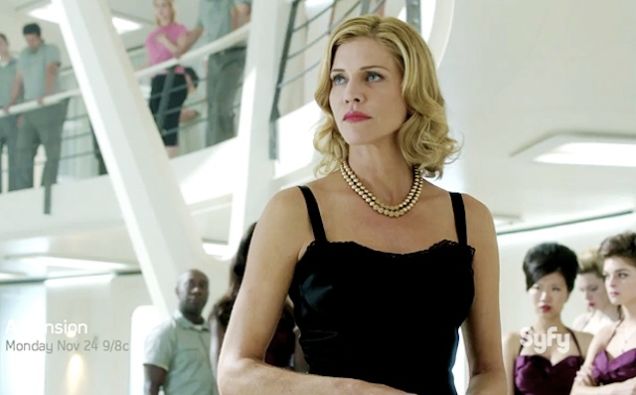 Still, these are things I would be willing to overlook if the rest of the show was entertaining. On this front, it doesn’t excel, but it doesn’t entirely fail, either.
The good, the bad, and the pretty:
With the sci-fi elements taking a back seat, the focus in Ascension is on intrigue and character drama. While the characters are fairly weak (as previously noted), it is good at keeping you interested through mystery and suspense.
Ascension is a show that’s genuinely hard to predict, and that’s something of a rarity. I generally didn’t know what was going to happen next, and the murder mystery, in particular, kept my constantly guessing.
The pacing is also quite strong, and it never feels too slow or bogged down in useless side-stories. Ascension didn’t quite have me on the edge of my seat, but I was always eager to see what was coming next.
That said, I struggle to see where the plot could have gone from here even if the series had been picked up. It doesn’t seem like a concept with a lot of legs.
 Furthermore, the one and only character in the series I really liked ended up getting killed off, so I finished the mini-series feeling rather soured.
Ascension is a very visually interesting show. The special effects are few, but well done, and the design of sets, props, and costumes is excellent. It hits a very interesting balance of being both futuristic and retro. I kept having flashbacks to Bioshock throughout the series.
A lot of thought clearly went into making the ship look like something out of the 60s, but unfortunately, the same attention to detail wasn’t given to the rest of the show.
Speech patterns, for example, seem suspiciously modern. Mind you, the 60s were several decades before I was born, but I’m pretty sure they didn’t talk exactly like we do now, nor does it make sense for the speech patterns on the ship to evolve exactly like those on Earth in the same period of time.
The show is also selective in its adoption of cultural norms of the time. Ascension makes a big deal of how the ship is essentially a cultural time capsule of the time before the civil rights movement, but while that era’s attitude towards women seems largely intact — likely an excuse to have the female cast members disrobe at every possible opportunity — the first officer is a black man, and since the ship launched before civil rights, this is a bit hard to believe.
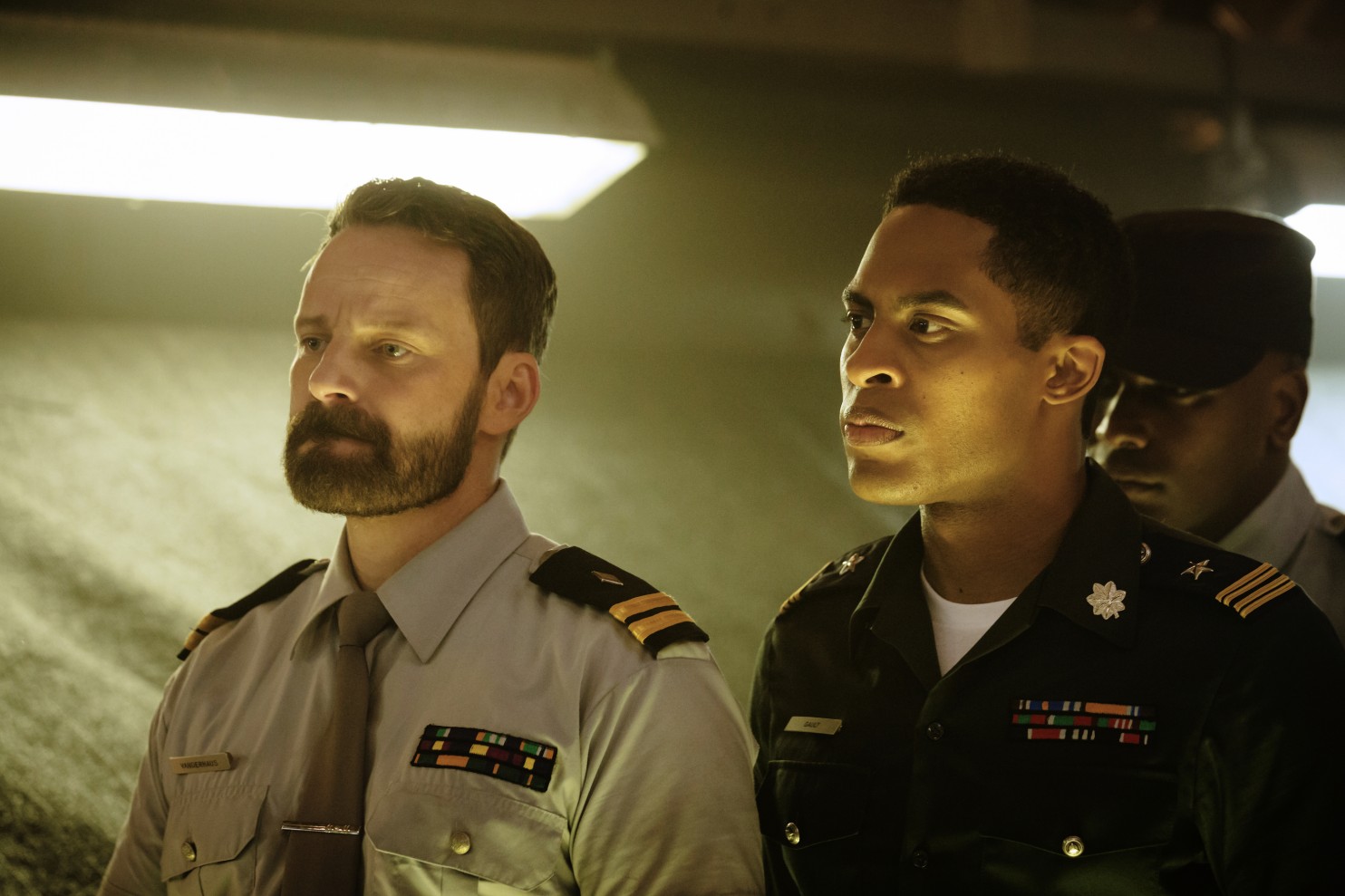 I have mixed feelings because I’m not exactly eager to see a show steeped in the darker parts of our history, and from a certain perspective, this could seem an admirable decision. But again, it seems oddly selective, considering the women of Ascension are largely treated as a commodity.
* * *
In the end, Ascension isn’t a bad show, but it is largely mediocre. I won’t be shedding any tears over the fact it didn’t become a full series.
Overall rating: 6.7/10



 Superior Realities