It seems like real-time strategy games are a waning genre. Once common and popular, these days it seems like they’ve been replaced by MOBAs, and StarCraft and Total War are just about the only franchises still carrying the torch. As a long-time fan of the RTS genre, this saddens me greatly.
 You know something else that frustrates me about the current state of the video game medium? Despite the utter ubiquity of dragons in fantasy games, you almost never get the chance to play as a dragon, which seems like an incredible waste of potential.
I remember one of my favourite games growing up was Drakan: Order of the Flame, largely because it allowed you to ride a fire-breathing dragon through much of the game. Even today, few games can offer something so purely fun as that was. Who wouldn’t want to soar across the skies and send your enemies fleeing in terror of your fiery destruction?
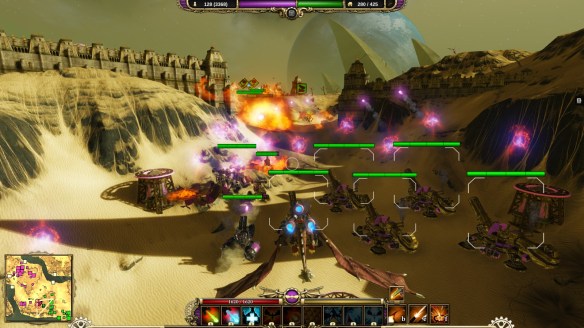
Enter Divinity: Dragon Commander. This is a real-time strategy game that allows you to transform into a dragon and battle alongside your troops.
Oh Hells yes.
A game of many layers:
The most strange yet interesting thing about Dragon Commander is how multilayered it is. It’s like several games smashed together, and while you’d think this would create a horrible Frankenstein monster of a game, it somehow works.
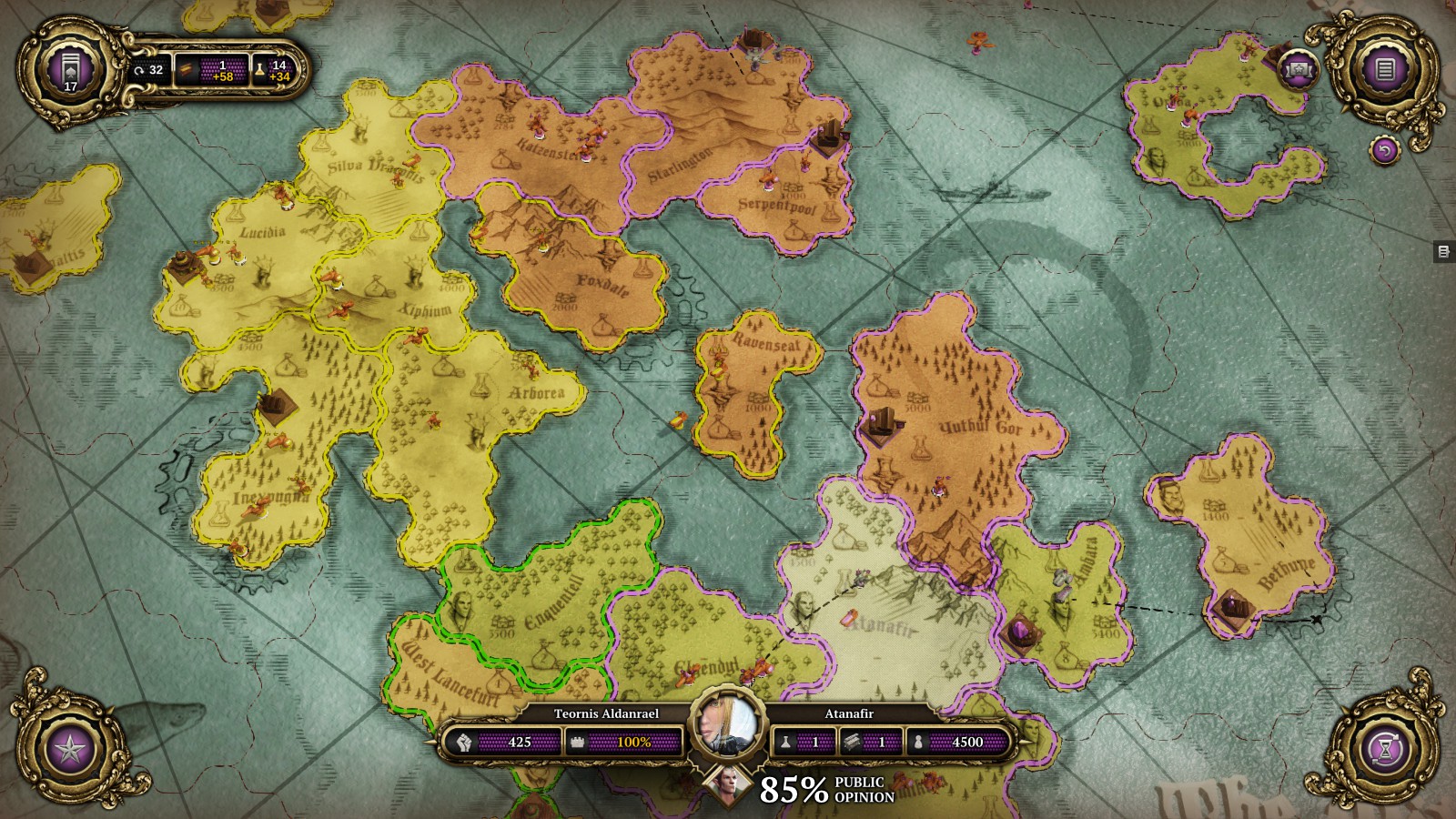
 In addition to the RTS battles, the larger campaign plays out on a turn-based map similar to a digitized game of Risk, but more complex. You’ve got to balance your navy with your land army and air force, you’ve got to construct factories and gold mines to support your forces, and you can play various cards to boost your forces or cripple your enemies.
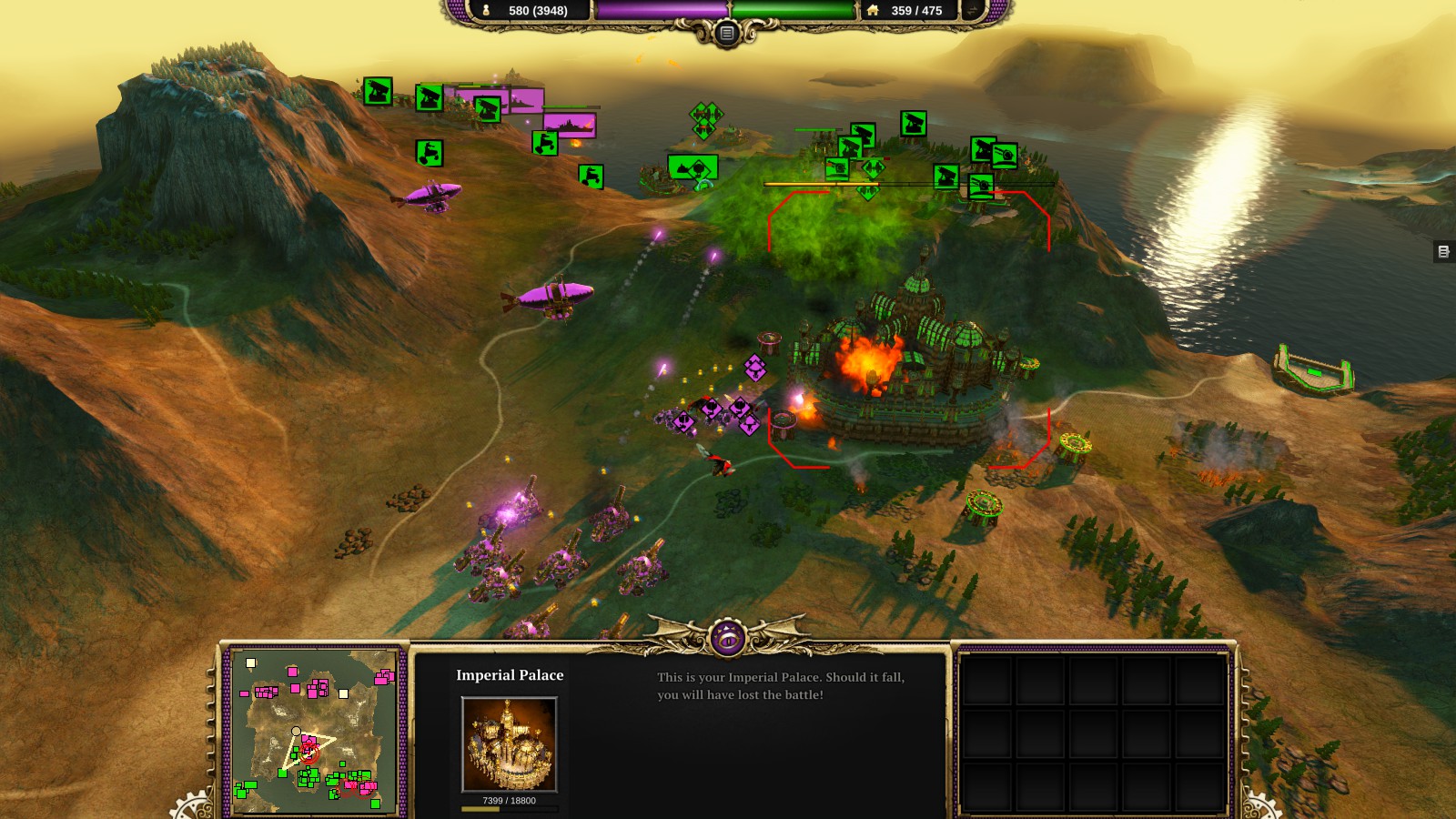
When you invade a country on the turn-based map (or are invaded), the actual RTS part begins. These segments play out a bit like the old Command and Conquer or Dune games, being fairly simple but still having a certain degree of satisfaction to them.
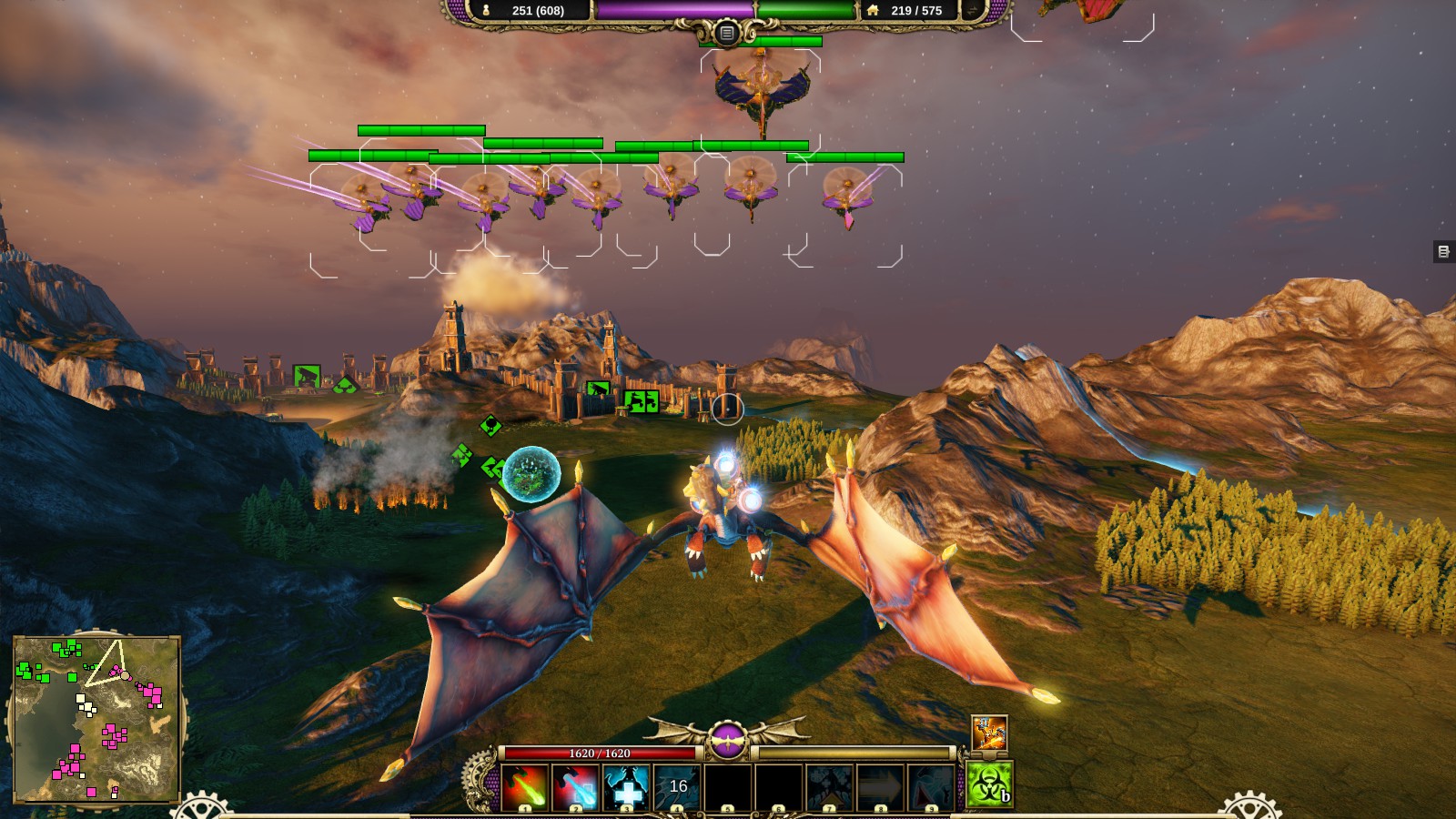
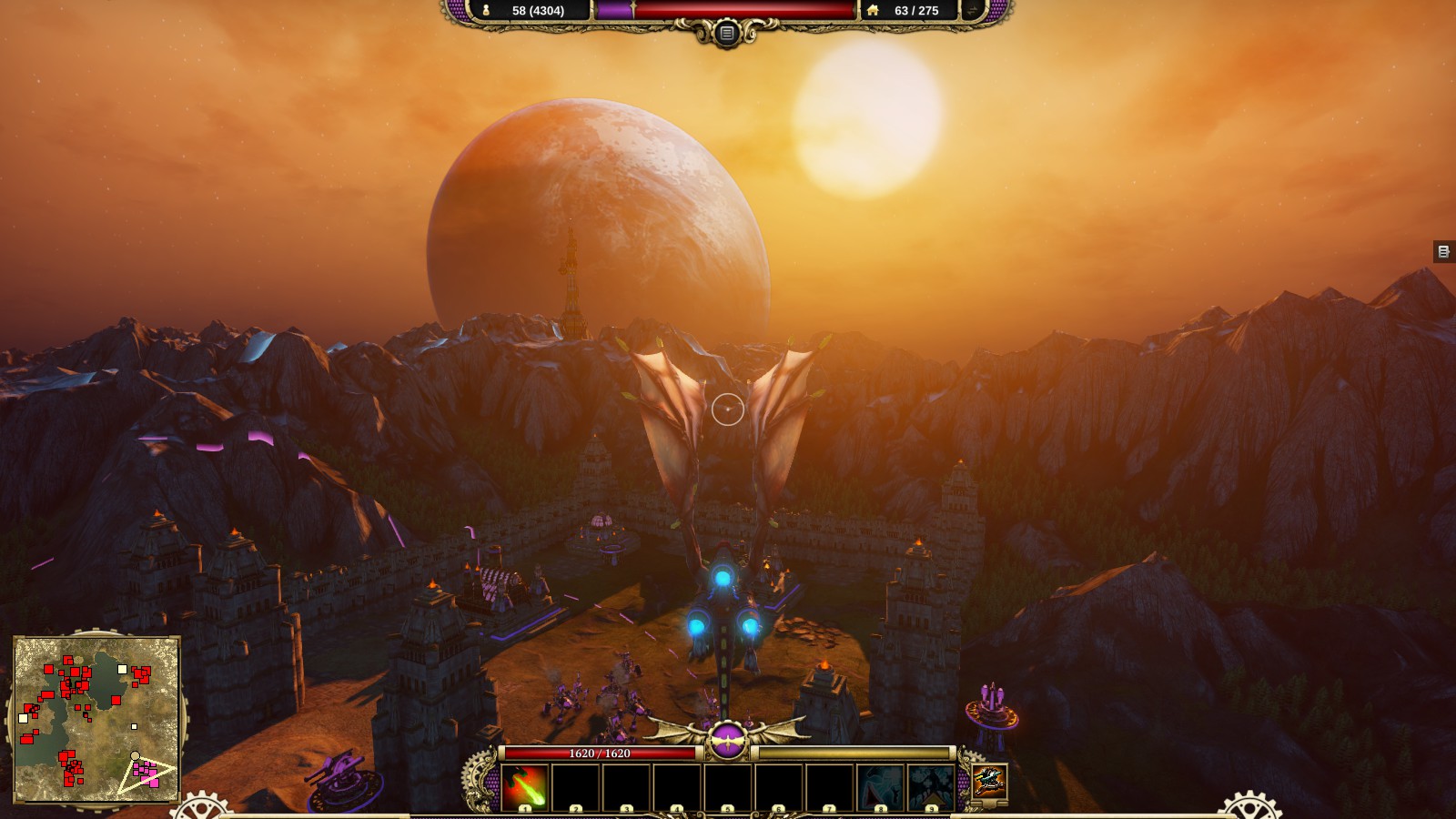
During these sections, you have the option to transform into a dragon — a steampunk, jetpack-equipped techno-dragon, I might add — and support your troops. This most closely resembles an RPG in its control scheme — you’ve got your basic fireball attacks plus an action bar of abilities.
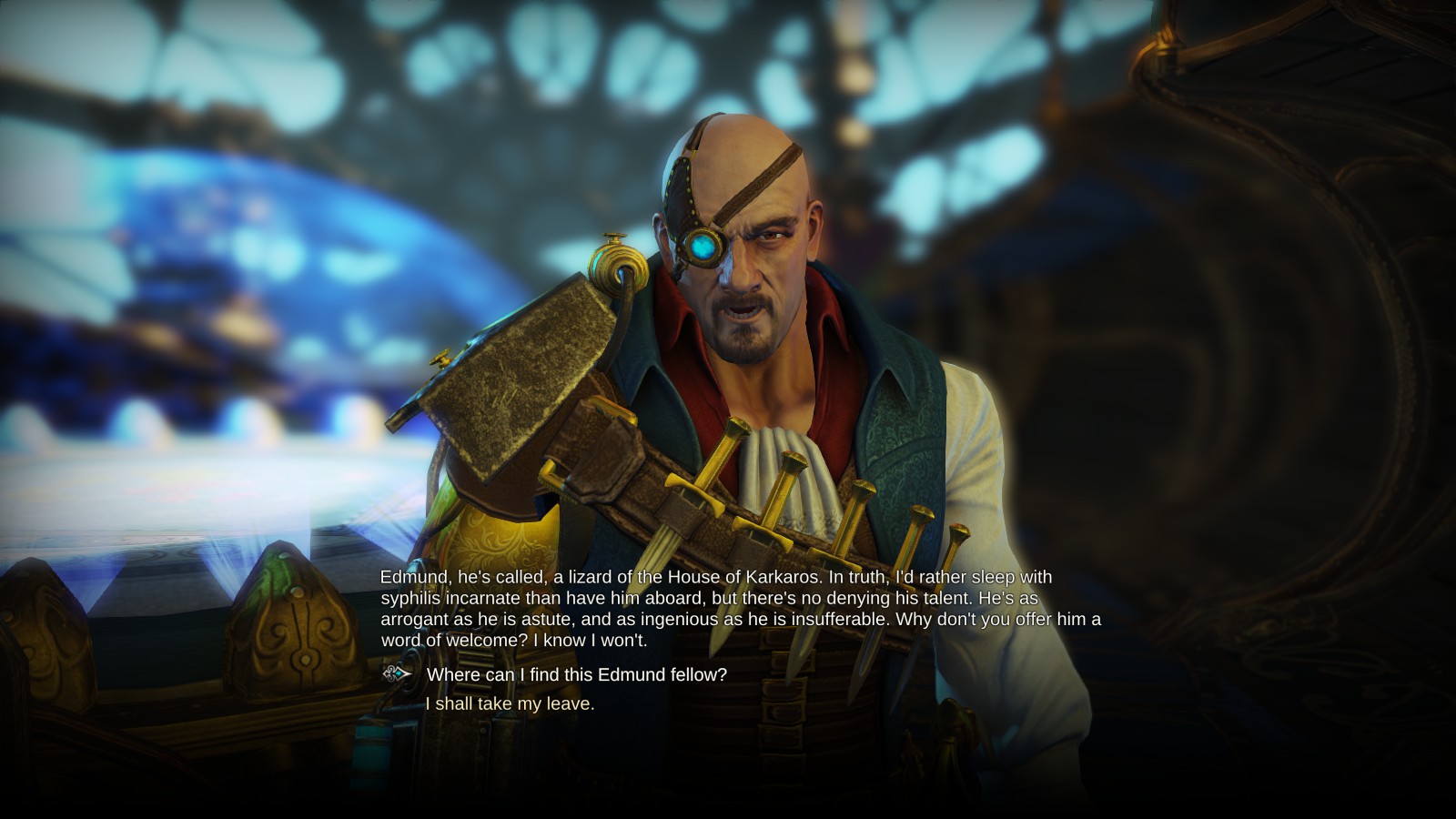
In between battles, you return to your command ship, the Raven. These sections are reminiscent of StarCraft II’s interludes aboard the Hyperion. You can travel to different sections of the ship to interact with your crew and allies, research upgrades, or make political decisions about your empire.
These sections add yet more layers. The Raven is crewed by several generals who can help command your forces on the strategy map when you are otherwise occupied, and your interactions with them aboard the Raven can impact their combat abilities as well as their opinions of you and their fellow generals.
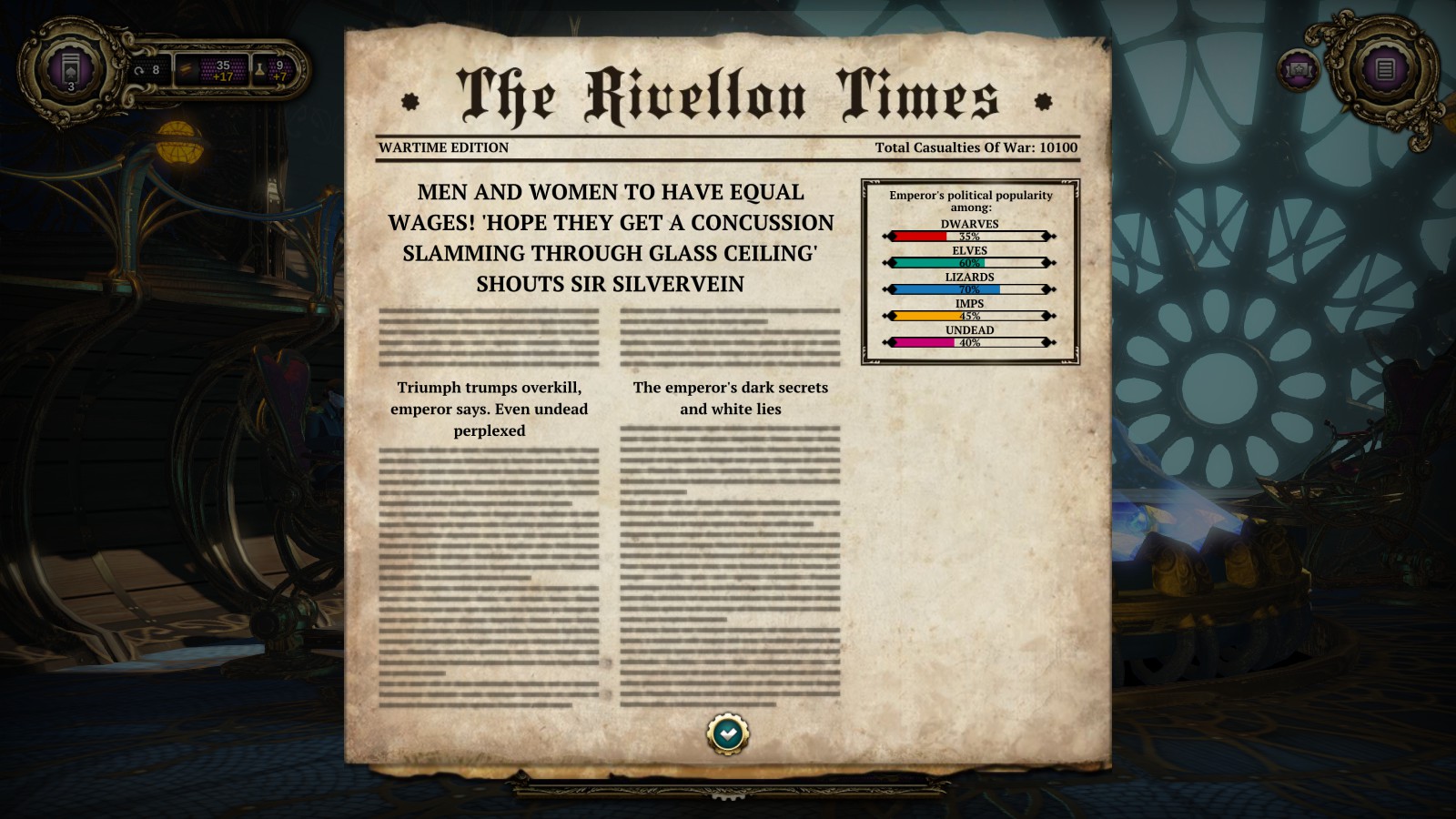
 Then there’s the political aspect of the game. Each of the five non-human races — Lizards, Elves, Undead, Dwarves, and Imps — has an ambassador aboard the Raven, and they will often come to you for proposals for new policies that can have dramatic impacts on your empire.
The complexity of all these disparate elements is both the greatest strength and the greatest weakness of Dragon Commander. On the one hand, they make for a steep learning curve, and each element is perhaps not as developed as it could have been, making for an inconsistent experience.
However, rarely have I seen a game bring so many different types of gameplay together, and it makes boredom virtually impossible. There’s just so much to do , and the complexity of the game as a whole makes up for the relatively simplicity of its individual components.
Overall, I’d say Dragon Commander’s complexity did more good than harm.
The player as commander:
The RTS component of Dragon Commander can be a bit on the simplistic side. There is only one resource, recruits, which is produced by building recruitment citadels, and you can only construct buildings on pre-planned building sites.
 At first, I thought this was incredibly limiting, but I actually found it made territorial control a much bigger part of the game, and I came to appreciate it. I felt it made me think about the terrain and positioning my troops a lot more than I normally would.
In the end, the only downside was that it made the first few minutes of every match a mad dash to capture more bases than your enemy, meaning matches were often decided in the first five minutes or less.
At first, controlling my troops seemed fairly mindless. The early sections of the game largely boil down to to building a bigger blob of units than your opponent and smashing them into the enemy until you win.
However, later levels add a fair bit more complexity as you unlock more units and abilities. It’s important to build the proper counters to enemy units, and again, use of terrain is important. Funneling the enemy into a canyon makes them easy pray for bombardments by your devastators and your zeppelins’ mustard gas ability.
And of course, the ability to turn into a dragon adds a whole other layer of intricacy to things.
 Dragon mode is a pure power trip. Your jetpack allows you to zoom around the map at fantastic speed, your auras and support skills can vastly increase the power of your troops, your fire breath can ravage entire armies, and even death is just a minor setback — you can resurrect yourself for a minimal cost. At times, dragon mode borders on being an “I win” button.
But it’s not without its trade-offs. You can still control your troops in dragon mode, but your ability to to do so with precision is greatly inhibited, and if your enemy has plentiful anti-air, turning into a dragon is just hurling yourself into a meatgrinder for nothing.
The best moments of Dragon Commander are those in which your dragon and your army are working together, each supporting the other. Rarely has a video game ever provided an experience so epic.
The player as emperor:
You may have noticed I haven’t mentioned anything about the game’s story yet. This is because there’s not much to say about the main plot. It’s incredibly basic, providing a mere framework to hang the rest of the game on.
Basically, the story is the player is the bastard, half-dragon son of an assassinated emperor who must bring peace to the empire by crushing all other claimants to the throne.
 But that doesn’t mean the game is bereft of interesting story. It just doesn’t come from the main plot. Instead, the meat of the plot is more in the story you create through your interactions with your generals and ambassadors.
Your generals straddle a fine line between being delightfully larger than life and completely cartoonish, but mostly, they stay on the good side of that line. They all have interesting quirks of personality (to put it kindly), and one of the challenges of the game is to corral their disparate personalities to make them work with you and each other effectively. It’s quite satisfying to see them evolve over time.
The political aspect of the game is something I have mixed feelings on. Going into the game, I’d heard the political issues within the game mirror those of the real world, but that’s not true. They’re not mirrors; they’re exactly the issues of the real world.
For instance, the issue of gay rights comes up often in the game. One of the more viscerally satisfying moments came as I discovered an Elven noble had gone on a violent anti-gay crusade. Around this time, I’d also learned that one of my generals was gay, so my solution was to give her a cohort of knights and tell her, “Do whatever you want.”
Needless to say, things did not end well for the bigoted noble.
 I find the use of issues torn right from the headlines to be a little ham-fisted, and it tends to mean little thought is required. Just vote according to your real life politics. I’d have preferred it if they had used the fantasy setting to bring some different twists to ideas and make the player look at things from new perspectives.
On the other hand, it’s great that a game has the guts to talk about serious stuff for once. Even Mass Effect had to dance around the issue of homosexuality with some cheap “mono-gendered alien” crutch up until the most recent game.
There’s also a gameplay element to politics, as each decision will earn you certain bonuses and penalties. Each race has its own set of political ideals, and disagreeing with them will lower their support for your war, which can greatly hobble your ability to fight in their territory. So you could theoretically just make decisions based on what will benefit your army the most, ignoring any specific political ideal.
Of course, I voted with my conscience, which mostly worked out except for my abysmal approval rating with the ultra-conservative Undead, which made some missions in their lands very difficult.
 Finally, you will also be required to marry a representative of one of the races at some point. Those expecting a romance plot with the depth of Bioware’s (which are themselves fairly shallow) will be disappointed, but it’s another character to interact with, and it can provide some amusing moments.
I of course picked the Elven princess. Once you go Elf, you’ll never… put them on the shelf?
Verdict:
Divinity: Dragon Commander is a game with many flaws, but it also has many strengths. It’s a varied experience with many different facets to appreciate, and in addition to all the positives I’ve already mentioned, it also boasts a very bright and engaging art style, a great sense of humour, and a strong eye for detail.
I’d highly recommend playing it for how unique it is, if nothing else. What other game allows you travel the countryside in a steampunk airship, sharing drinks with an alliterative lizard-man and a chauvinistic cyborg while your hippie Elven wife gets your entire political cabinet stoned out of their minds?
And you can turn into a dragon.
 Oh hells yes.
Overall rating: 8/10
…Is it just me, or are my reviews just getting longer and longer? I’m too damn wordy.

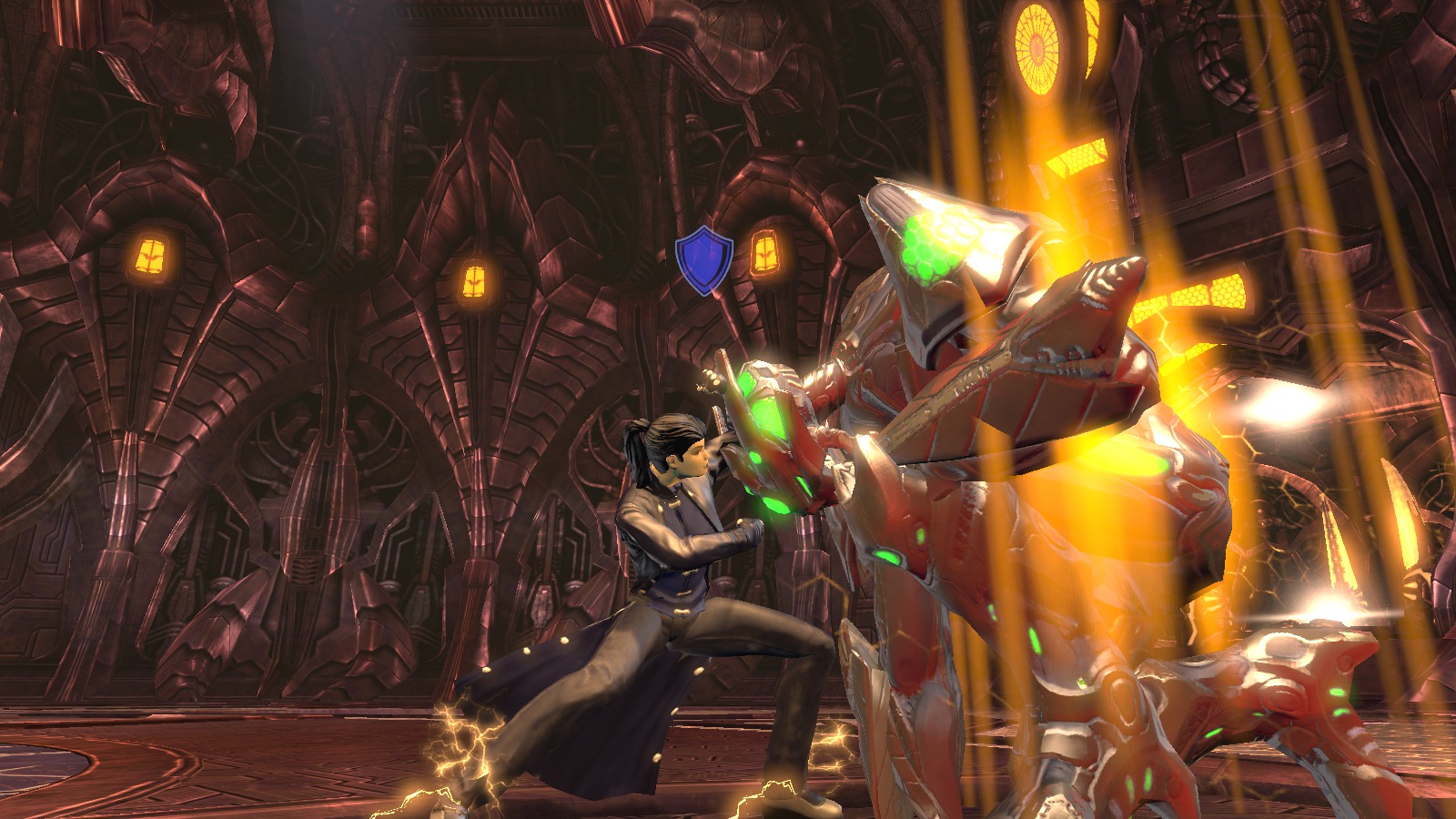 Recently, I found myself seized by the urge to try out a superhero-themed MMO, but I had a bit of a problem. There aren’t many options for superhero MMOs these days. I’ve never heard a good thing about Champions Online, so that was out. That left it down to Marvel Heroes versus DC Universe Online.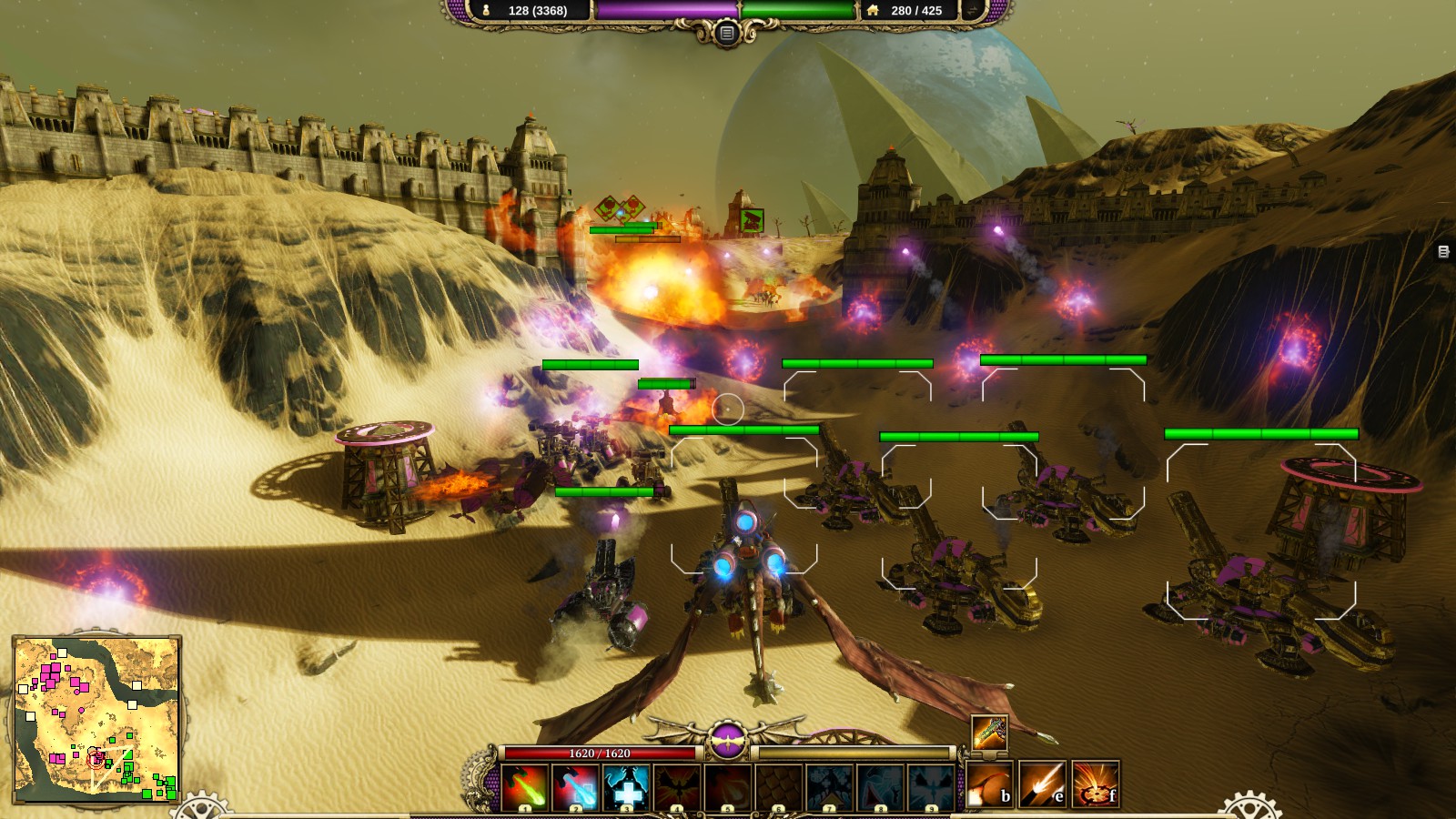


 Superior Realities