Review: The Lotus War: Stormdancer

I don’t normally pay attention to cover quotes on books. I rarely agree with the opinions of others, especially reviewers. I prefer to make my buying decisions based on the book itself, not what people are saying about it.

Cover art for "The Lotus War, book one: Stormdancer" by Jay KristoffBut one quote slapped onto the cover of Stormdancer, the first book of a series called The Lotus War by Jar Kristoff, caught my eye:

“What’s that? You say you’ve got a Japanese steampunk with mythic creatures, civil unrest, and a strong female protagonist? I’m afraid I missed everything you said after ‘Japanese steampunk.’ That’s all I really needed to hear.”-Patrick Ruthfuss.

For the first time in my life, I bought a book based on the cover quote.

And that quote pretty much sums up my thoughts on the book, too. Its strength is entirely grounded in its setting, a spectacularly intricate and original blending of dystopic steampunk and feudal Japanese culture.

The story takes place in the Shima Imperium, an island nation that has undergone an industrial revolution fueled by a toxic plant known as the blood lotus. Blood lotus is used to make chi, which can fuel any number of wondrous and terrible machines.

But this advancement comes at a great cost, as the the fields of blood lotus poison the land, rendering it barren and infertile, and chi exhaust shrouds the entire nation in toxic smog. The people of Shima wither and die in the gutters, ground beneath the military dictatorship of the shogun and the inhuman fanaticism of the cybernetic Lotus Guildsmen.

The strength of the setting is what carries this book. That’s not to say that the actual plot is bad; it’s just not on the same level of quality as the setting, and the best parts of the story are those that take full advantage of the grim horror of life in Shima.

Stormdancer follows a young girl named Yukiko. Along with her father, a legendary hunter fallen from grace, she is sent to help capture a legendary gryphon at the whim of Shima’s deranged shogun. Every member of the party expects to die, for everyone knows that gryphons are extinct, and to disappoint the shogun is a death sentence.

But this is fantasy. If something is thought to be pure myth, then it’s guaranteed the characters are going to stumble across it sooner or later.

Yukiko possesses a special gift, the ability to psychically commune with animals, and she uses this to form an uneasy understanding with the gryphon. Alongside the gryphon, lost in Shima’s last piece of unspoiled wilderness, Yukiko comes to understand just how corrupt and twisted her world truly is.
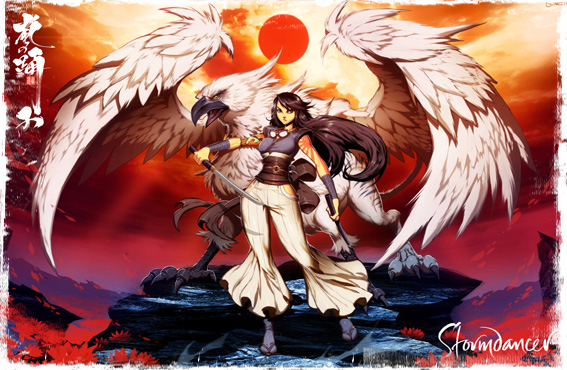
Art of Yukiko and the gryphon Buruu from "The Lotus War, book one: Stormdancer"Aside from the setting, I think the gryphon is the main mark in Stormdancer‘s favour. Kristoff does an excellent job of convincingly presenting him as a beast, with a different thought process than humans. He’s simple, but not stupid — uncomplicated in the way that animals are. He sees the world through the harsh lens of a predator’s eyes, in stark shades of black and white. He believes that most any problem can be solved with his talons, and he sees no greater joy in the world than being able to soar free among the thunderclouds.

The rest of the cast is strong, as well. Yukiko is a very effective protagonist, good-hearted but fierce, and the other characters are all interestingly imperfect yet still ultimately likable.

However, I did find that the way the characters’ stories were handled could be odd at times. Characters that seem to be important early on will vanish for much of the story, and sometimes characters behave in ways that feel forced or make little sense.

I sometimes get the impression the author was so caught up in the story he simply forgot about some plot threads and left them hanging.

7.9/10 Worth reading purely for the amazing depth and originality of the setting. Everything else is just gravy.
Review: The Dragon Prophecy: Crown of Vengeance

For some time now, Mercedes Lackey and James Mallory have been collaborating on a series of epic fantasy trilogies. These trilogies don’t share an over-arching title as far as I’m aware, but they’re all set in the same universe and are more or less part of an ongoing story, so I’d consider them all part of the same series.

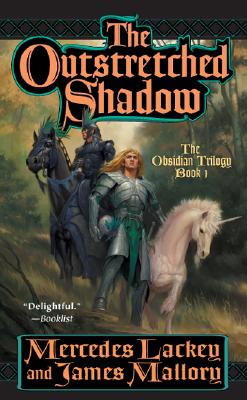
Cover art for "The Obsidian Trilogy, book one: The Outstretched Shadow" by Mercedes Lackey and James MalloryFirst came The Obsidian Trilogy. I loved it — it was a classical high fantasy epic comforting in its familiarity but memorable for its detail and strong execution. I was particularly fond of the Elves in this series, who were among the most intricate and alien interpretations of the archetype I’ve ever seen.

This was followed by a second trilogy called The Enduring Flame. This I found extremely disappointing. It lacked almost all of the action of its predecessor, and its pacing could only be called glacial. It did get interesting by the very end, but I see no good reason why it needed to be a trilogy rather than a single book.

Between that and reading several of Mercedes Lackey’s other novels — and being disappointed by them all — I wonder how I enjoyed the Obsidian Trilogy so much. Part of me wonders if I was just young and easily dazzled and that I wouldn’t be so impressed if I read it again, but I read it around the same time I got into Ian Irvine, and his work has lost none of its luster over the years.

But I’m veering off-topic. The point is that a third trilogy has now been added to this saga, The Dragon Prophecy. This one is a prequel, going back to the earliest history of the world. It’s a story only hinted at in the Obsidian Trilogy, the first war between the forces of the Light and the demonic Endarkened. It is the tale of the greatest hero of Elven history, Great Queen Vieliessar Farcarinon.

But in this first book of the series, Crown of Vengeance, Vieliessar is not yet the Great Queen, and her people are not the Elves we know.

At this point in history, the Elves are a divided people. For thousands of years, the Hundred Houses of nobles have been in a state of unceasing war with each other, each seeking to gain dominion over all others but never succeeding.

These ancient Elves are nothing like their descendants. They are not wise or gentle. They are a warrior people, longing to die gloriously in battle so that they may ride with the Silver Hooves of the Starry Hunt.

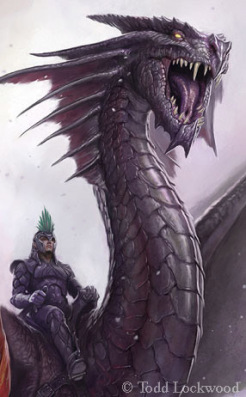
Art of Ancaladar and Jermayan from "The Obsidian Trilogy"There is almost nothing recognizable about their culture from the previous books, and to be honest, they don’t feel much like Elves. They’re as selfish, petty, and cruel as humans.

At first, I found this jarring, but I came to realize it makes sense. A core component is the Elven archetype is that they are very ancient, and they have outgrown the pettiness that plagues humanity.

So this is the story of how they outgrew their darker aspects. This is the Elves before they were Elves as we knew them. This is their transition to the wise elder race we know and love.

Vieliessar herself begins the story as an orphan without friends or allies, the last survivor of House Farcarinon. She is haunted by a mysterious prophecy that names her the doom of the Hundred Houses, and for this reason, she is hated and hunted.

It’s a pretty classical fantasy story, to be sure. If you’re looking for originality, you’ll be disappointed, but I found it fresh enough to still be interesting. The dark side of Vieliessar’s destiny adds an interesting twist.

Right away, though, there are some major problems with this book. One of the biggest is its names, which are absurdly long and virtually impossible to pronounce. If you thought “Vieliessar” was a bit of a mouthful, you should know that’s one of the easiest names to manage in this book.

Cover art for "The Dragon Prophecy, book one: Crown of Vengeance" by Mercedes Lackey and James MalloryIt’s always been established that Elves in this series have incredibly long and hard to pronounce names. It didn’t bother me before; it was a source of comedy relief, and since Elves were just one part of the story, it was tolerable.
But in this trilogy, the Elves are the whole story, and it’s just horrible. The authors don’t do anything to lessen the pain, either. Nicknames are in short supply, and to make matters even worse, they also make a point to include the incredibly long titles of each character with needless frequency, so the reader is constantly stumbling over names like “Astromancer Hamphuliadiel” and “War Prince Bolecthindial Caerthalien.”

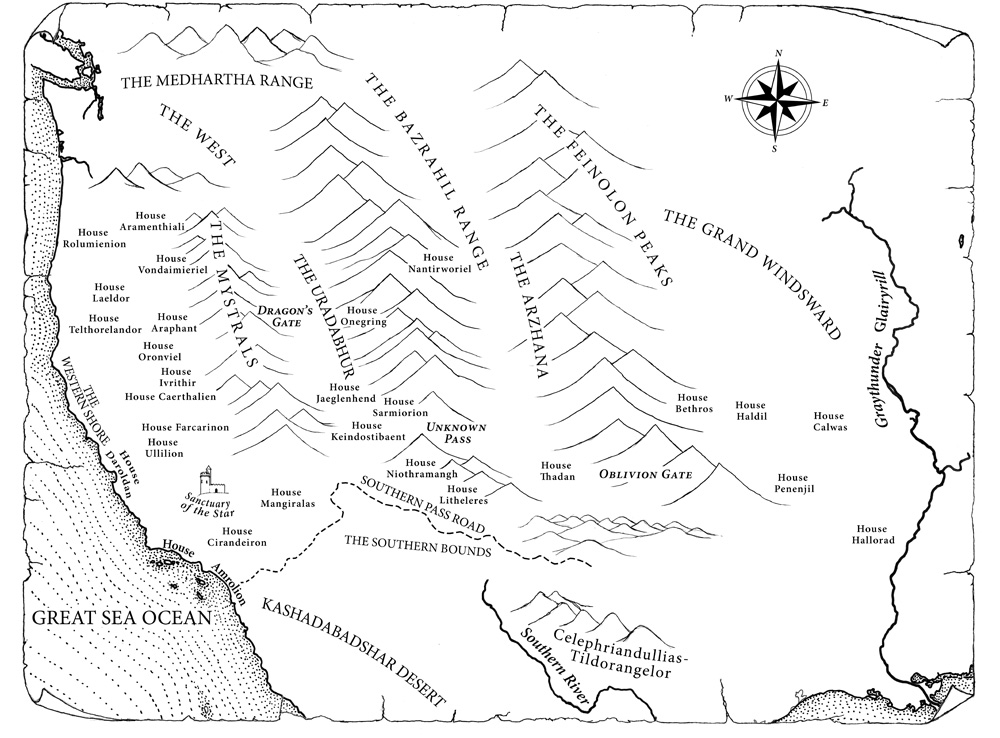
Also, Celephriandullias-Tildorangelor. I’m just gonna put that out there.

Normally, I’d consider bad names a petty concern, but these are just so absurdly hard to manage that it constantly rips you right out of the story.

Mercedes Lackey also has the awful habit of coming up with goofy fantasy names for ordinary things for no good reason. We can’t just call them knights; they have to be komentai’a!

There are some other major stumbles, as well. While I’m pleased to say this is far from the “go nowhere slowly” story Enduring Flame was, the first half of the book is incredibly slow in its pacing, and you’ll need a lot of patience to get to the good stuff.

Crown of Vengeance is also very weak on the character front. This is quite surprising because one of the things that made the previous installments of this series so charming was the depth and strength of their casts. About the only thing that made Enduring Flame worth slogging through was the quality of its protagonists and their banter.

Crown of Vengeance has an enormous cast, but that’s the problem. There are so many characters that almost none of them ever get enough development to become more than a name on a page.

A map of the Fortunate Lands from "The Dragon Prophecy"The only exception — and the main strength of the book — is Vieliessar herself. Vieliessar is a fantastically rich character and one of the best reasons to read through the entire book.

A lot fantasy epics try to present a protagonist who feels like a legendary hero, but rarely do they succeed. Vieliessar is one of the very few characters I’ve encountered who is truly believable as someone who could completely change the world.

The interesting thing about Vieliessar is that she’s not particularly nice. She’s a hero with a very harsh edge. She is admirable in many ways — holding ideals of justice and equality for all — and her goals are pure, but she can be ruthless in pursuing them. She is never cruel, but she is harsh and relentless, and she does not shy away from the fact that her gleaming future can only be achieved by marching across the corpses of her many enemies. She’s inspiring and frightening in equal measure.

There are a few other bright notes, as well. I’m a big fan of the Endarkened. I’m not sure why — they’re pretty much just cliche world-destroying demons. But as cliche world-destroying demons go, there are none better (especially since Warcraft defanged the Burning Legion). They’re just so utterly and completely evil that you just have to love them.

And as is always the case with Mercedes Lackey, the world-building is impeccable. Once you get past the awful names, that is.

Overall rating: 6.9/10 A decent read despite its flaws, but if you’re not already emotionally invested in this world and its history, I’m not sure I’d bother.

However, I would recommend checking out the Obsidian Trilogy, and if you like it, then maybe give Crown of Vengeance a try.