Sci-Fi TV: Dark Matter, Rain, and Canada’s Role

Sci-fi TV seems to be going through something of a renaissance these days. After Battlestar Galactica and the Stargate shows ended, the future of science fiction on television seemed rather bleak, but these days there’s a pretty good crop of shows, with more on the way.

Two upcoming titles in particular have caught my eye, and one of them has got me thinking about how much my own country is playing a role in the future of the sci-fi genre.

Rain:
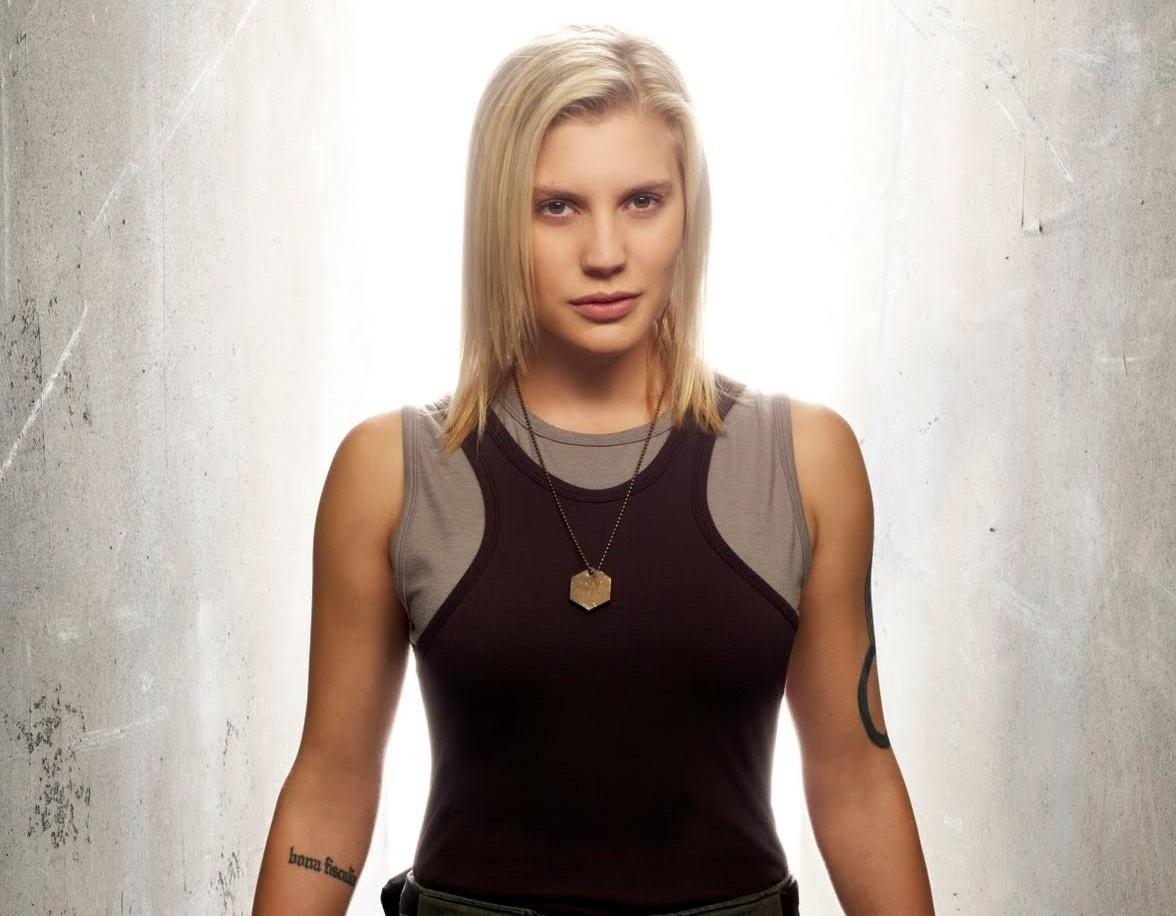
Katee Sackhoff in her role as Kara "Starbuck" Thrace on Battlestar GalacticaI think it’s pretty much a safe bet that if you have any interest in sci-fi, you probably love Katee Sackhoff. As Kara “Starbuck” Thrace, she was one of the highlights of Battlestar Galactica, and that’s saying something considering how much great acting there was on that show.

Since then, she hasn’t fled from the sci-fi genre, earning more fans through her roles in the Bionic Woman remake and the Riddick movies. Anecdotally, I’m also told she’s a very kind person who is quite good to her fans, and she does a lot of charity work.

So when I found out she’s planning to not only star in a new TV series but is also its creator, my ears immediately perked up.

The show is titled Rain, and it stars Katee as the title character, a soldier in a world ravaged by global warming and ecological disaster.

Now, granted, we have no idea how good she is at working behind the camera — we only know she’s a great actress. But Katee’s awesome — I can’t imagine this not going well.

A photo of Katee Sackhoff at Comic ConMy confidence is further bolstered by the fact Rain is being produced by the same company and many of the same people behind Continuum. With Star Trek, Stargate: Universe, and Battlestar Galactica gone, Continuum is carrying the torch for intelligent sci-fi these days, and doing a pretty bang-up job of it. The expertise behind it plus Katee’s charisma and acting ability seems like a match made in Heaven.

Let’s hope Rain is picked up by a network soon.

Dark Matter:

This is one I’ve just started paying attention to. Scheduled to premiere the same night as Defiance’s third season, this series follows a space ship crew who awaken from stasis with no memory of their identities or their mission.

That’s not really the greatest premise in the world — I fear the potential for stringing the viewer along with lots of mystery and no pay-off. But the pedigree gives me hope. The series was created by Joseph Mallozzi and Paul Mullie, who headlined the Stargate TV shows.

This leads me to believe that Dark Matter may be the closest we ever get to a third season of Stargate: Universe, and that thought alone is enough to get me interested.

Even if that assumption proves wrong, it remains a fact that Mallozzi and Mullie are both talented writers and producers, and they haven’t disappointed me yet.

There’s also a Continuum connection in that Dark Matter will star (among others) Roger Cross, who plays Travis Verta.

Unfortunately, I haven’t been able to find any info on when or where Dark Matter will be shown in Canada, but hopefully I’ll be able to give it a try before too long.

Canada: The new leader in sci-fi?

Something else that’s interesting about Dark Matter is that it’s being filmed in Toronto.

It seems to me that Canada has become quite the sci-fi Mecca all of a sudden. Orphan Black is both filmed and set in Toronto. Continuum is both filmed and set in Vancouver. Defiance is set in Missouri, but it’s actually filmed in the GTA. The recent mini-series Ascension was shot in Montreal. Although it’s not sci-fi, Once Upon a Time is still definitely speculative fiction, and it’s filmed in BC.
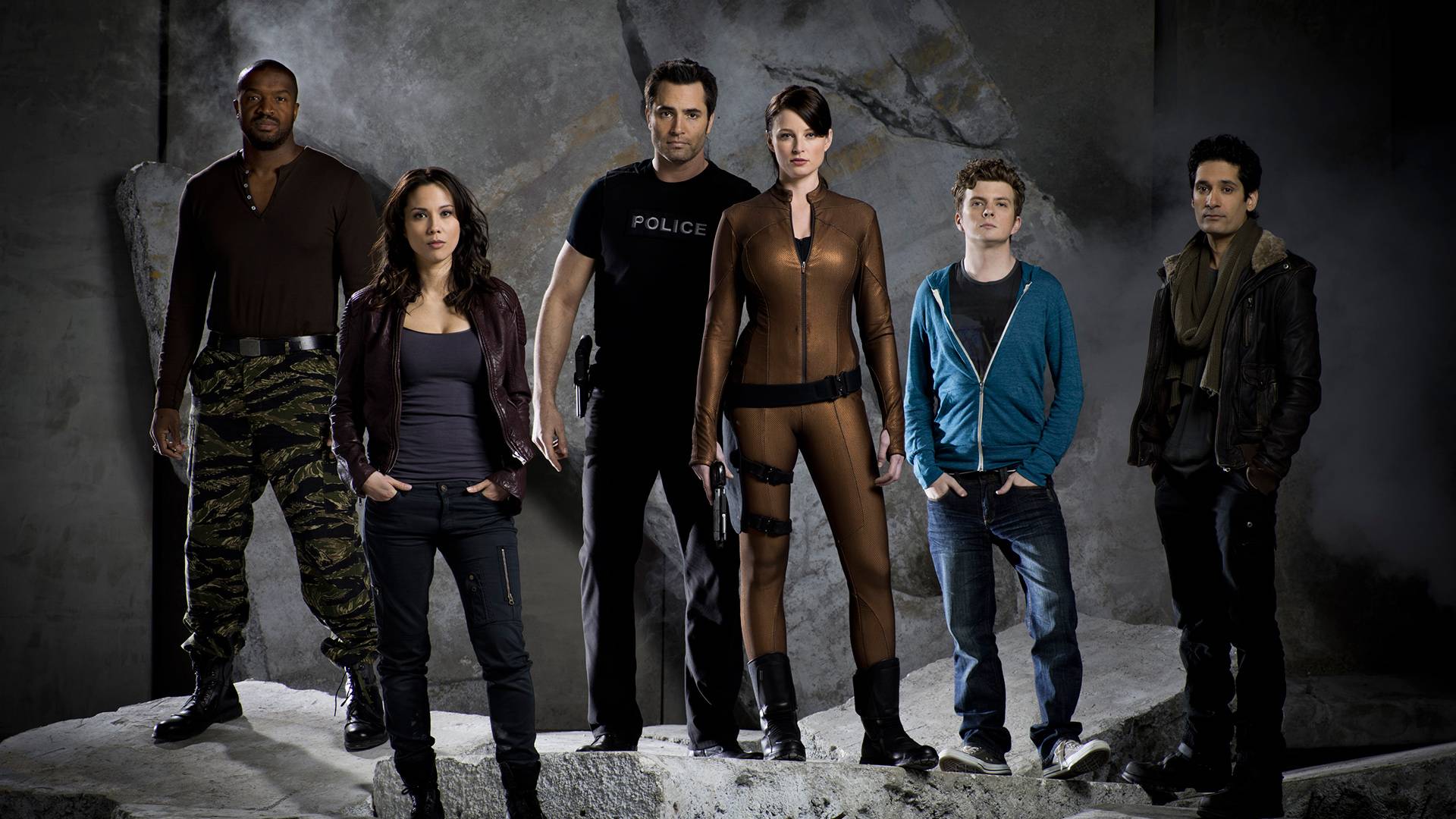
The cast of ContinuumWe could even talk about video games a bit. Bioware is a Canadian company, and I always appreciated the nods to their roots in the Mass Effect games. Whereas sci-fi often ignores Canada, in Mass Effect, Alliance headquarters are in Vancouver, Kaidan Alenko is Canadian, and some fans believe Commander Shepard is meant to be of Canadian stock based on the fact both voice actors who play the character are Canadian.

Of course, I suppose this isn’t entirely new. There’s always been a lot of good sci-fi coming out of Canada. Battlestar Galactica, Caprica, the Stargate shows, and Sanctuary all come to mind.

It just seems a little more widespread to me now, rightly or wrongly. Maybe it’s that these days we have shows that are truly Canadian productions — like Continuum — rather than American shows filming in Canada to save money. Maybe it’s that shows are starting to wear their Canadiana on their sleeves. Continuum embraces its Vancouverite identity, and while Orphan Black doesn’t explicitly state where it takes place, we see characters reference locations like Parkdale and Scarborough, so it’s not exactly a secret that this is Toronto.

Or maybe I’m just noticing it more. Either way, as a Canadian sci-fi fan, I’m glad to see my country making such a contribution to the genre. In a time where most of our country seems devoted to being backward and turning a blind eye to science, it’s nice to see that Canada still looks to the future in at least one way.

I wonder where Rain is going to film?

Mass Effect: Looking Back

You may recall I mentioned that I was following my overdue completion of the original Mass Effect by playing through the rest of the trilogy in order while making different choices. I’ve now completed the Great ME Play-through, and I’ve decided to do one more post to sum up my remaining thoughts on the series.

Choices:

Ilos in Mass EffectI’m not going to go through my feelings on every major choice within the story — I’d be here all day — but there are a few that I’ve only gained a full appreciation for after playing through the series more than once.

One is whether to save Ashley or Kaidan. I’d always gone with Ashley, so I had no experience with Kaidan until I played the original and decided to keep him alive for the subsequent games.

But as much as I tried to keep an open mind about Mr. Alenko, I think I prefer Ashley. Kaidan’s a very likable guy — but that’s the problem. He has the same problem that Jacob and Liara do, albeit to a less obnoxious degree: He seems to have been designed to be a romance choice first and a person second.

Kaidan just doesn’t have any flaws. He’s the perfect noble romantic. I tend to prefer characters that are very likable, perhaps unrealistically so, but after a while, Kaidan just feels like an ideal created for female fans (and 10% of the male fans) to drool over.

Ashley, on the other hand, is a bit more rough around the edges, but ultimately more endearing. She’s angry, rigid, and borderline racist, but that’s just a nice balance for her courage, loyalty, and sense of honour. She’s likable, but she also feels like a real person.

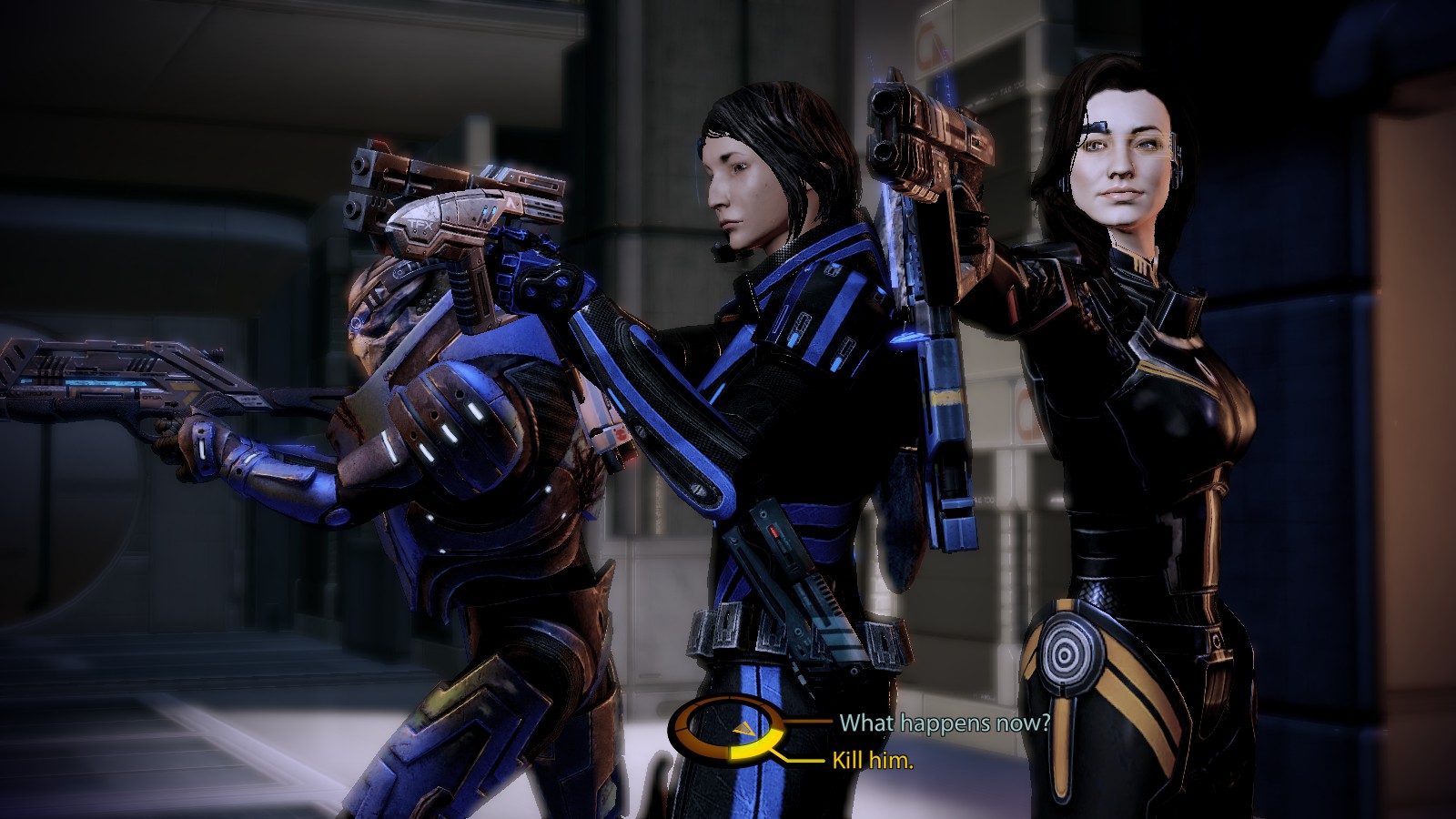
A tense stand-off during Miranda's loyalty mission in Mass Effect 2I like both options, but Ashley just makes for a more interesting story. That said, it’s a win on Bioware’s part that I wish I could keep both alive.

The other choice that seemed to have a really interesting impact on the story is whether to kill or spare Wrex, though that’s not apparent until you get to third game.

I really didn’t like how the genophage story was handled in ME3 with Wrex alive. It was incredibly one-sided with Eve, Wrex, and Mordin all arguing for a cure, and no real argument being made for not curing the Krogan. It felt like a guilt trip, and although I think curing the Krogan is a really bad idea, I always picked it.

But this time around, I killed Wrex, and things got much more interesting.

Wreav is a psychopath. Giving him an infinite army of angry Krogan can’t possibly end well. The Salarians’ concerns seemed much more well-founded. It became a true dilemma.

On the one hand, we have Eve arguing for the good and potential within the Krogan. On the other, Wreav reminds us how dangerous the Krogan can be. Whether to dispense the cure becomes a very difficult choice, not a foregone conclusion.

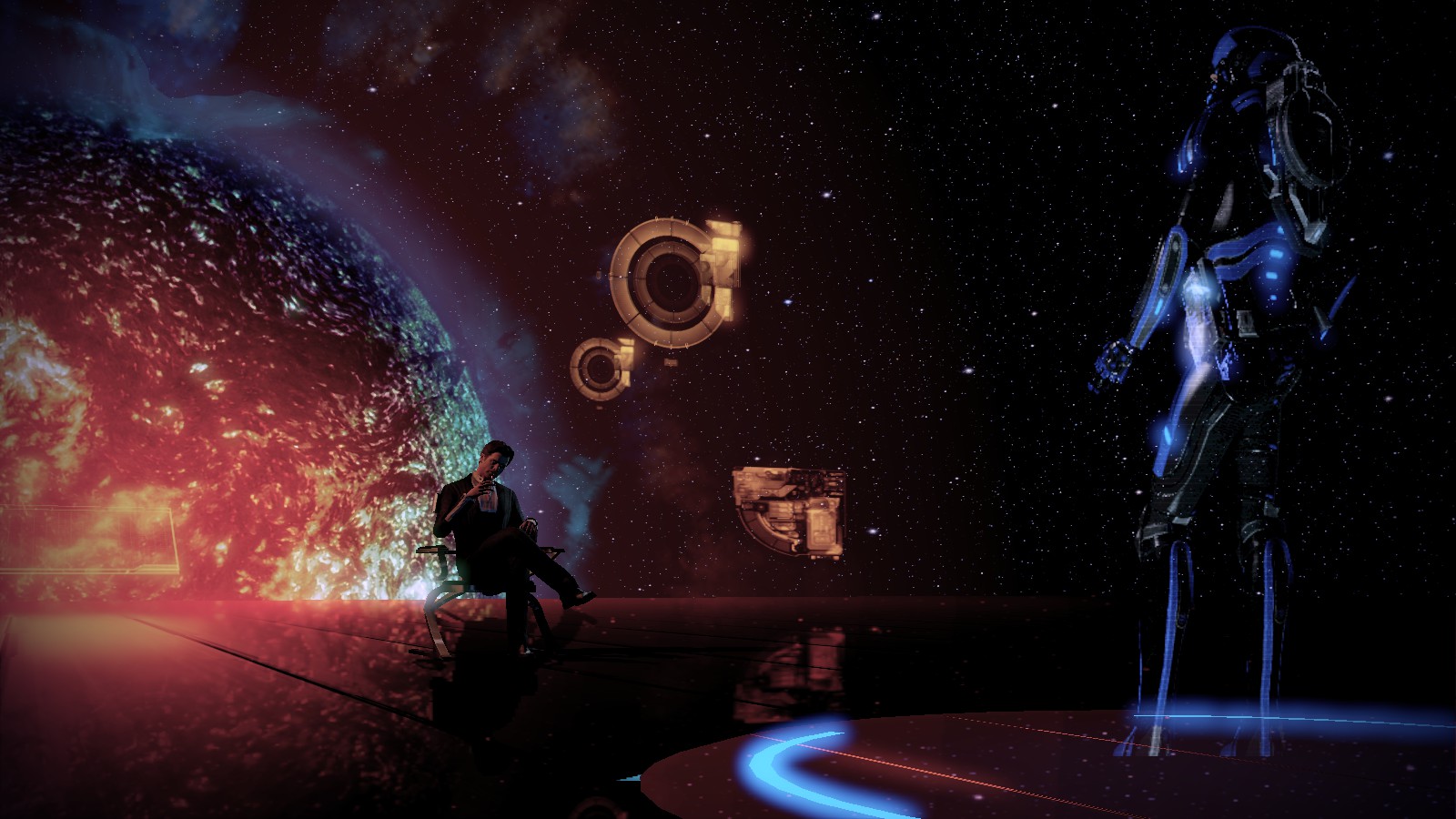
The Illusive Man in Mass Effect 2And paradoxically, I found making the cure a less desirable choice made me more inclined to feel sympathy for the Krogan. When I actually had to think about the issue instead of swallowing the game’s predetermined choice, I found myself thinking the Krogan might deserve another chance after all.

This strengthens a belief I’ve had for a while that letting consumers draw their own conclusions about a story’s morality is better than just telling them what’s right or wrong.

Lasting complaints:

There are a few issues that bugged me all through the series, so I might as well get them off my chest.

One is the combat. I’ve said it before, but the gameplay feels like an afterthought in the Mass Effect series. It’s not bad, but it is incredibly forgettable and underdeveloped.

On this play-through, I came to the conclusion the problem isn’t the underlying design, but merely a lack of ambition. The fundamental system of combat is sound — at least after ME1 — but they never bothered to get creative with it.

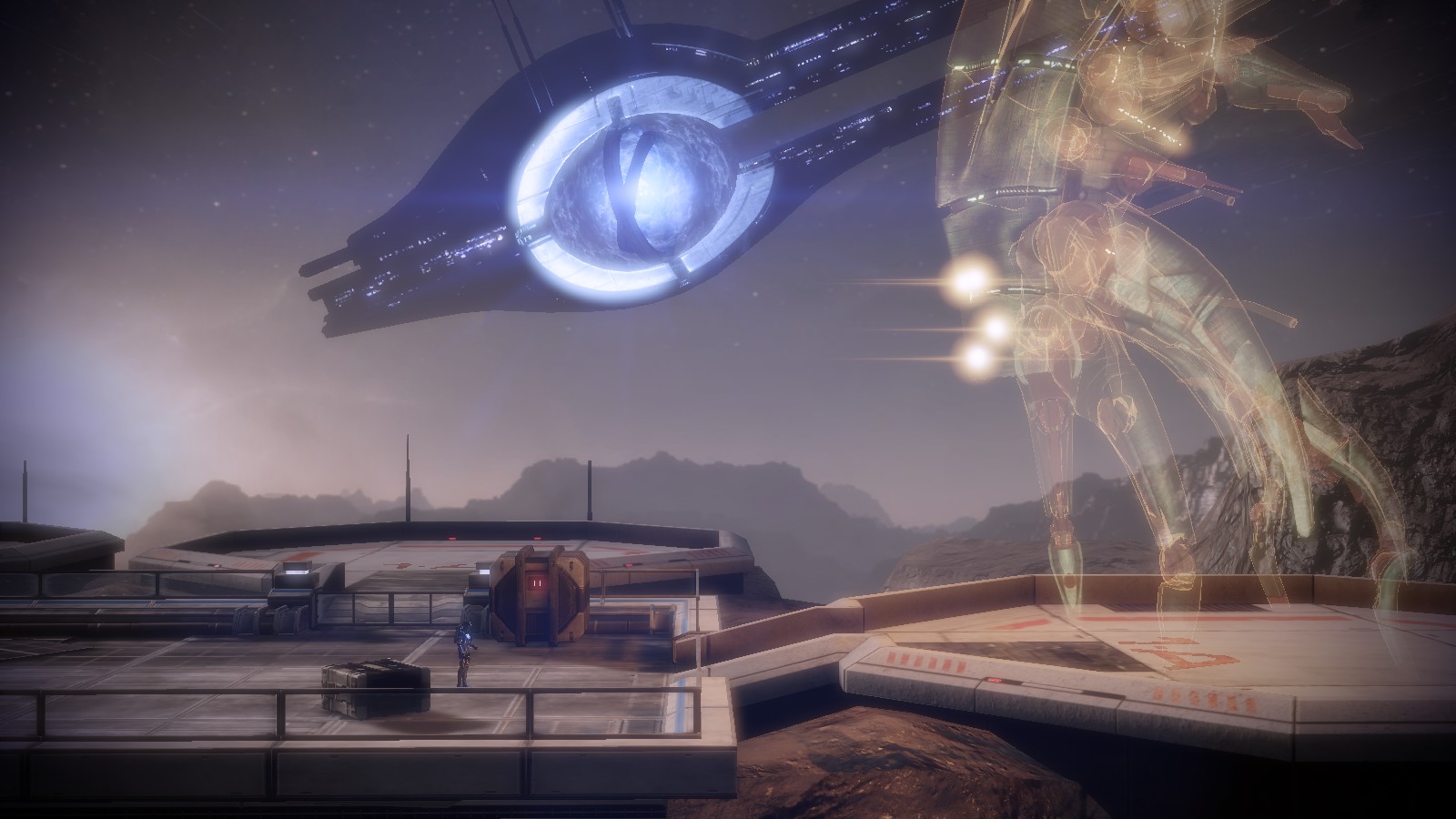
Confronting Harbinger during the Arrival DLC in Mass Effect 2Every fight plays out the same way. There are hardly any unique enemies or bosses. There’s no random element. There are rarely any special mechanics to shake things up, and most of the ones that do exist don’t really make any difference. For example, the shockwaves in the Geth ship in ME3. The counter to the mechanic is to stay in cover, which is something you should always do anyway.

The handful of times they did bother to shake up the core mechanics — like the car chase on Ilium or the fight with Shadow Broker — the game actually got very fun. Even something as simple as the time limit while helping your crew member through the ducts on the Collector base made things infinitely more exciting.

Things could have been much more fun if they’d just tried a little harder.

Another thing I never quite got over was how bland most of the alien species are. This is a problem a lot of sci-fi has: The aliens aren’t cultures; they’re archetypes. There’s Angry, Chaotic Aliens; there’s Angry, Militaristic Aliens; there’s Brainy, Socially Awkward Aliens; there’s Sexy, Empathic Aliens…

I take particular issue with the Asari. As an entire species of adolescent sexual fantasies come to life, they’re nothing but shameless pandering. In another game, that might be tolerable, but considering how progressive most of Mass Effect is, stumbles like the Asari stick out like a sore thumb.

The only aliens who actually feel like people are the Quarians, and even they’re admittedly little more than a giant Battlestar Galactica homage.

The Reapers demolish Vancouver in Mass Effect 3Finally, while the ability to steer the story with your choices is Mass Effect’s greatest strength, it nonetheless falls flat on its face far too often. It’s far too easy to make the wrong choices simply because the consequences aren’t properly explained.

By far the most egregious example was picking your specialists for the attack on the Collector base at the end of ME2. It’s hard to figure out which choices are correct, but what’s worse is that it’s not even immediately clear that choices can be right or wrong.

When I first played that mission, my interpretation of the (incredibly vague) instructions was that certain roles would result in crewmember death, and I was simply choosing who lived and who died. There was nothing to indicate that your choice of squad member for each task mattered. As a result, I got most of my crew killed and had to do it over again so I wouldn’t have an empty ship in ME3.

I know a lot of “serious” gamers will sneer at me for wanting things dumbed down, but I will never accept obfuscating the player as good game design. Difficulty should like in overcoming challenges, not in understanding what the challenges are.

Final thoughts:

I may have many complaints about the Mass Effect series, and I don’t think it really achieved greatness until ME3, but don’t take that to mean it doesn’t enjoy a fond place in my heart.

The Normandy on approach to the CitadelThere is something indefinably special about the ME games that few others can equal. They suck you in, and I can now finally understand why people get so obsessive about them.

They may be flawed, but there’s nothing else quite like them, and they’re not games I’m likely to soon forget.

And I will say one thing: I think Mass Effect is good for the industry. I think it’s good that they’ve proven smart, story-driven, progressive games can be both artistically and financially successful.

What I’m really hoping to see is other game companies taking the best aspects of Mass Effect — rich character development, deep player involvement in the story, mature and progressive attitudes — and pairing them with deeper gameplay, better world-building, and a more lively game world.