
When I watched the first couple of episodes of Matt Groening’s Disenchantment, I have to admit I was a bit disappointed. Being a massive fan of The Simpsons and Futurama, and a huge fantasy nerd, my expectations were very high. It seemed like the perfect series for me.
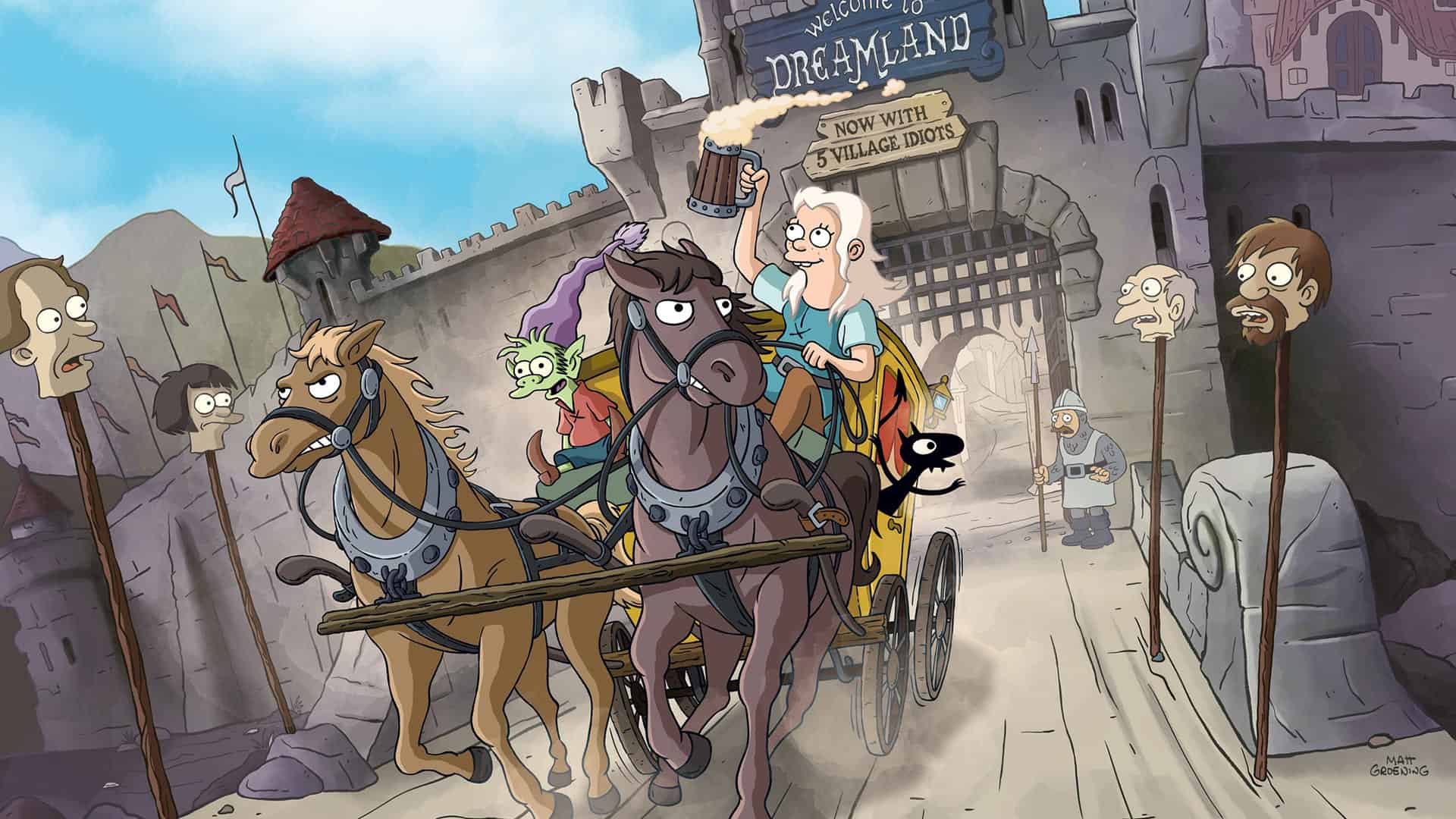 My expectations were sky high, so maybe it’s not surprising they weren’t met.
Don’t get me wrong. I enjoyed it. There are good gags, and the characters grabbed me pretty quickly. I also loved the animation. While the characters are of the same cartoony Matt Groening style we recognize, the environments are very detailed, with a unique style clearly meant to emulate Medieval artwork. Disenchantment is a feast for the eyes.
So it was good, but it wasn’t the Second Coming of Futurama I hoped for. However, as I got farther into the season, it did start to grow on me. It got a bit funnier, with some of the later episodes being genuinely hilarious, though it did maintain a certain inconsistency through to the end.
A real strength of Disenchantment, as alluded to above, is its characters. Though there’s a diverse background cast, as you might expect from a Groening show, the focus of the story is pretty heavily placed on Princess Tiabeanie (or “Bean” as she prefers to be known) of Dreamland and her companions, Elfo the renegade Elf and a self-appointed “personal demon” named Luci.
Luci doesn’t add much beyond the occasional one-liner, but Bean and Elfo are, for such a silly show, surprisingly real and endearing characters. At times they feel like a bit of a retread of Fry and Leela, but their arc progresses more quickly, and I think it may be headed in a different direction.
I especially want to highlight Abbi Jacobson as doing a fantastic job voicing Bean. She feels very comfortable in the role right of the gate, and she infuses Bean with a great deal of personality, perfectly nailing both serious and comedic moments. Despite her many bad habits, Bean is an intensely lovable character.
 The characters help carry the series, even during the slower moments when there aren’t as many jokes.
One other thing that makes Disenchantment unique compared to Groening’s other shows is that it is much more serialized. Some episodes are still standalone, but it’s clearly following a continuous arc. The writers have a plan, and it shows.
Events start to come to a head in the final episodes of the season, and things actually get pretty serious and intense, all things considered. Some of the twists are a bit predictable, but I enjoy them for the effect they have on the characters, and I’m really curious where things are going to go in the long run.
In the end, it might not be quite as good as Futurama at its best, but Disenchantment is definitely worth your time.
Overall rating: 8/10

 Superior Realities