
I was pretty convinced I was finished with World of Warcraft. I wrote a whole fan fic to say goodbye to the game and everything. I’m not yet ready to say the announcements at BlizzCon have changed my mind, but they’ve brought me closer than I thought possible.
 To be sure, it is an uphill battle for WoW to win me back at this point. I’ve missed three expansions, and the effort of catching up is daunting. The talent system has been overhauled yet again, into a form I strongly dislike at that, and the thought of relearning my characters for the umpteenth time is exhausting.
Nor do I relish returning to the yoke of subscription fees and the constant feeling of needing to rush my way through the game to save money, and one must also consider how very old the game is. Even with all the updates, its core gameplay — which I was always merely lukewarm to — feels downright ancient. Can I go back to tab target after becoming so accustomed to New World’s sublime combat?
Honestly, with the trajectory my life, I’m not sure I’m even going to have the time to reinvest in WoW come next year.
Buuuut…
But the Worldsoul Saga does look really cool.
 Firstly, we have to admire the sheer ballsiness of announcing three expansions at once. For better or worse, Blizzard has not historically planned this far ahead, nor are they known for their transparency. After three expansions that all felt like the most tired, safe plays to nostalgia possible, this is the kind of ambition they needed to get my attention back.
There does seem to be a bit of a tacit admission that the last few expansions were a misstep, as well. Aside from Anduin’s PTSD, whose source I am only vaguely familiar with, everything we’ve seen so far feels like it could have come immediately after the end of Legion, for my money the last great WoW expansion.
I’m always mixed about these kind of things. Everything has some fans, and whitewashing canon will always be messy. I’m still upset by how Diablo IV ignores the events of III. But selfishly, I don’t mind the idea of the Worldsoul Saga sweeping the last few expansions under the rug to serve as Legion’s direct sequel.
The concept of Azeroth’s worldsoul is one of the coolest things to come out of modern Warcraft lore, both conceptually and as a way to give meaning and purpose behind all the calamity that’s befallen Azeroth. Doubling down on that is one of the few things meaningful enough that it could actually draw me back.
 And we need to talk about the second expansion in the trilogy, Midnight. I’m trying not to be an easy mark for big franchises these days, but an entire expansion set in Quel’thalas, focused on uniting the Elven peoples to defend the Sunwell? JUST INJECT THAT SHIT STRAIGHT INTO MY VEINS, METZEN.
I try not to overly lionize or villainize specific game developers. Game development is a collaborative process, and it’s rarely down to one individual to make or break anything. But the difference between Warcraft with and without Metzen really does feel like night and day. There’s vision again. The passion is back.
This could all still go wrong. The best story concepts can be ruined by poor execution, and I’m concerned by how much this feels like an ending to the franchise, considering business forces will undoubtedly lead to more expansions after the Saga concludes, something that has already been all but confirmed. How can you provide a satisfying conclusion to the Warcraft franchise when you plan to trot out a new villain of the week in the next patch?
But still, it’s tantalizing, and there seems to be a lot of positive movement on the gameplay front, as well. By far the biggest gameplay factor that kept me away from the game was the restrictions on flight, but now flight mechanics and being able to fly from the start are a selling feature for The War Within, the first part of the trilogy. This started in Dragonflight with dragon-riding, but I really didn’t expect it to be a permanent addition. Now they’re giving (nearly) all mounts dragon-riding mechanics and fully embracing flight as part of the game’s identity, as it always should have been.
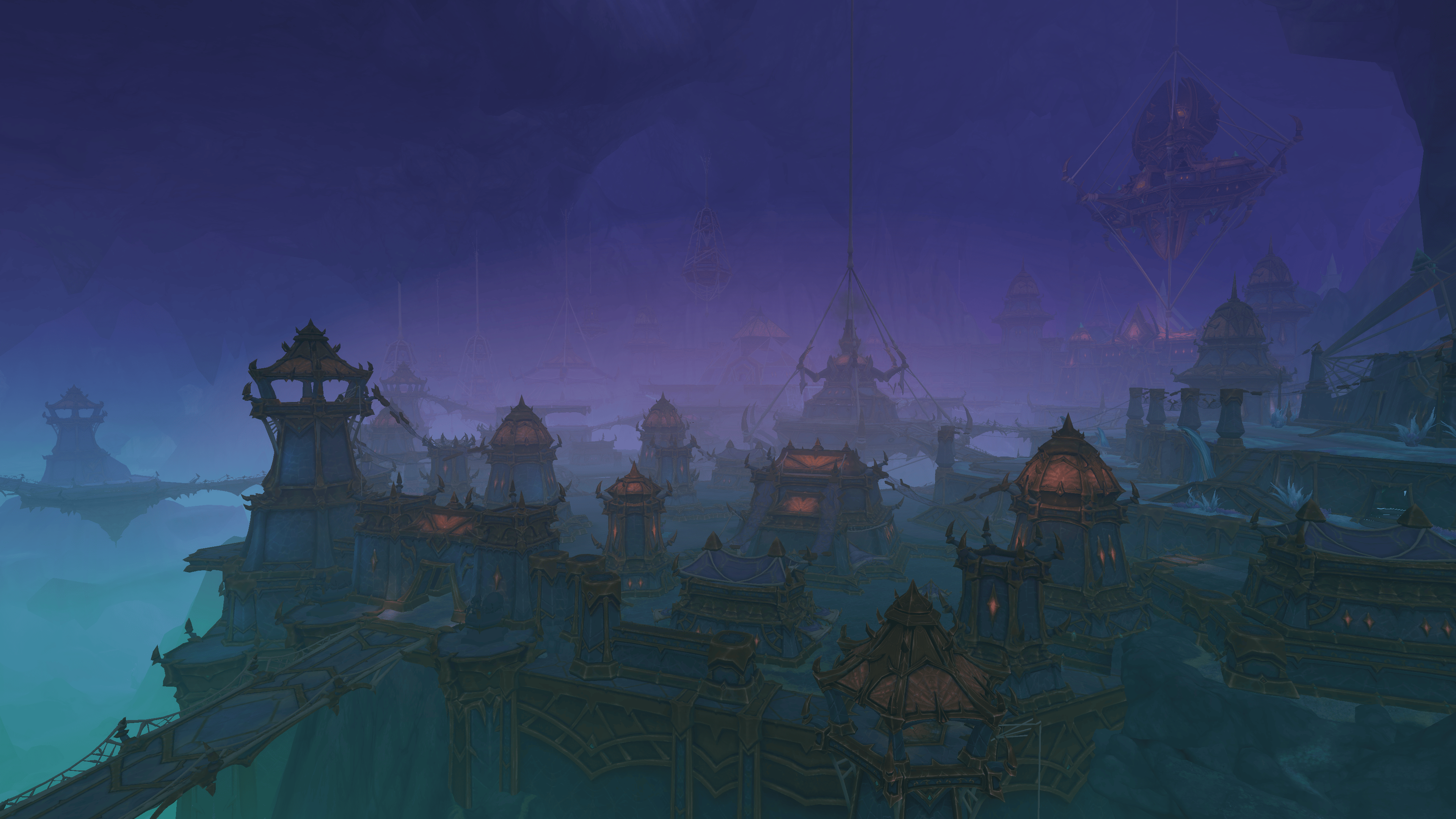 I haven’t played Dragonflight, mind you, so I don’t know firsthand what dragon-riding is like, but it looks cool, and the reception seems to have been very positive. I’m just glad any form of flight is being embraced.
Delves and warbands are more nice-to-haves than need-to-haves, but they both sound like welcome features all the same. Delves seem like they’re basically just the scenarios from Pandaria with a rebranding and a few tweaks, and warbands are basically WoW’s take on SWTOR’s legacy system. Both solid ideas.
I’m a little more mixed on hero talents. Despite the talent tree layout, they sound more like Mists talents with choosing one option per tier, which is good, and a lot of them at least sound very cool based on the names. Dark Rangers! Frostfire mages!
But I can see a lot of ways for this to go wrong. How do you scale it in future expansions without continuing the endless talent tree redesigns that have dogged WoW forever? How do you balance between those who want them to really shake up their class and those that want to keep playing their characters as they always have? As someone who rarely plays hunters, I know I’d love it if Dark Ranger completely changed the class into something wildly different, but I wouldn’t be so happy to see my rogue suddenly unrecognizable because of her hero talents.
 If they’re smart, they’ll provide a mix of subtler and more radical hero talent trees, giving people the choice to maintain their current playstyle or go crazy, and they’ll add new hero talent trees with future expansions (say one per class) so as to make them a form of horizontal rather than vertical progression, but I’m not terribly confident in either of those things actually happening.
I still don’t know if I’m ever really going to get back to WoW, but regardless, I do take some comfort in seeing it move in what seems to be a much better direction. It feels like Warcraft again.


 Superior Realities