Continuing on my Once Upon a Time binge watch, I run into a patch of almost entirely good episodes after a long run of rambling inconsistency.
 “Dark Hollow”:
After half a dozen episodes set exclusively in Neverland (bar flashbacks, anyway), we return to Storybrook as Ariel and Belle work to recover the artifact Rumpel needs to defeat Peter Pan. But Pan’s agents are on their trail.
Back in Neverland, Baelfire, Hook, and Emma set out to capture Pan’s shadow, hoping to use it to escape Neverland, and must battle dark magic and a whole lot of social awkwardness in the process.
I liked Belle and Ariel’s story mainly because I like Belle, and any time she gets to play the hero, I’m happy. That said, it was all a bit too quick and easy.
It’s also a bit hard to accept that a bookish woman in heals and a ditzy mermaid who doesn’t know what a shirt button is could defeat two armed, century-old agents of one of the multiverse’s most powerful magical beings through sheer brute force and determination.
It’s not that I don’t think Belle could beat those two, but it would have felt better if she’d done so using her own special knowledge and skills, as she did when she assisted Mulan and Philip.
 Still, more Belle is better than less Belle, so it’s still a win on the whole.
Emma’s plot also had potential, but was too bogged down by the love triangle between her, Baelfire, and Hook.
Man, if I could ban one story-telling device, it would be love triangles. They are so overused and utterly tiresome. I’m sure someone out there finds this kind of story appealing, but I can’t for the life of me find any value of them. Add to that the fact that one third of the triangle is someone I don’t care about at all (Emma), another is someone I find only marginally less irrelevant (Baelfire), and the third is someone I dearly want to see fall into industrial machinery (Hook), and just… ugh. Make it stop.
But hey, at least there was Belle.
Overall rating: 7/10
“Think Lovely Thoughts”:
Once Upon a Time has odd pacing. Here we are in the middle of a season, and yet this episode has the kind of epic scale, drama, and major revelations you normally only see in season finales.
Pan has reached the endgame. He plans to sacrifice Henry to achieve ultimate power, but Emma, Rumpel, Regina, and company are hot on his trail.
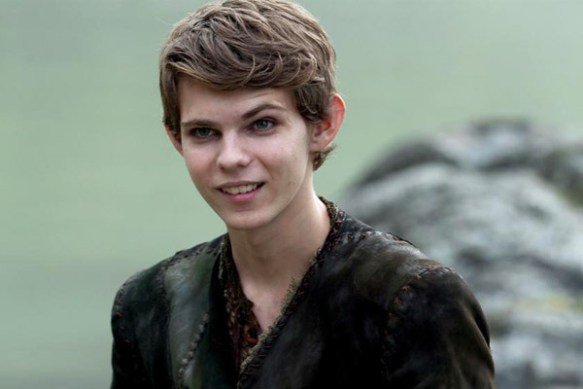 Meanwhile, a series of flashbacks delves into Rumpelstitlskin’s childhood, his first encounter with Neverland, and the true nature of Peter Pan.
At the risk of being cliche, there was nary a dull moment in this episode. There was plenty of action and suspense, and some very good twists and revelations.
I liked the actor they got to play Rumpel’s father, too. You could see a real resemblance between him and the adult Rumpel in terms of mannerisms — similar laugh, too.
My only complaint is that it’s a bit hard to believe Henry was foolish enough to fall for Pan’s lies. Henry is usually shown to be smarter than that.
Overall rating: 8.1/10
“Save Henry”:
You’ll never guess what they’re trying to do in this episode.
…
All right, sorry.
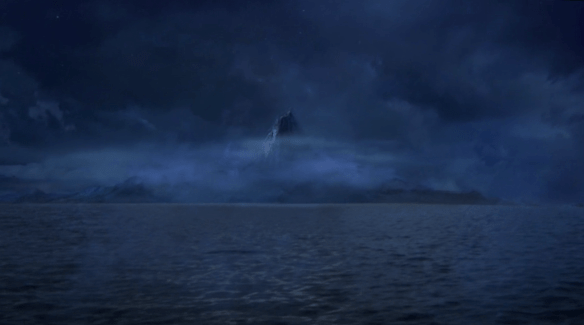 So, yes, the race is on to save Henry before Pan can fully absorb the power of his heart, gaining unlimited power at the cost of Henry’s life.
No one is more determined than Regina, and for once, her ruthlessness might just save everyone.
Our flashbacks this time chronicle Regina’s adoption of Henry and the early days of their life together. It’s not really that interesting a story, and it didn’t tell me anything I didn’t already surmise — Regina was kind of cold as a mother but came to love him — but Lana Parilla puts on a very strong performance, so that makes it worthwhile.
As is often the case with Once Upon a Time, this episode doesn’t quite live up to the epic expectations set by the last episode, but it’s still mostly enjoyable.
I continue to be impressed with Pan as a villain. Not only is he incredibly cruel and genuinely frightening, but he’s also fiercely clever and persistent. Every time you think he’s lost, it turns out he’s still two steps ahead.
Overall rating: 7.3/10
“The New Neverland”:
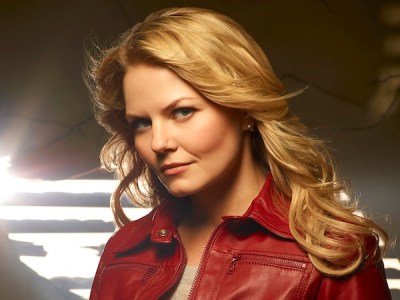 By the relatively modest standards of Once Upon a Time, this is an intense season so far.
Emma and company have returned to Storybrook, and joyful reunions abound. But Emma is not content. She can’t shake the feeling that this isn’t her happily ever after, that something terrible is imminent.
Emma’s anxiety is well-founded. Pan, within Henry’s body, wastes no time in enacting his plan to control Storybrook and turn it into a new Neverland. Emma has her suspicions, but by the time she can prove anything, it may be too late.
Meanwhile, the flashbacks this time are a fairly random tale of Snow and Charming facing down the Medusa in an ill-conceived attempt to gain a weapon for use against Regina.
This is another episode that feels more like a season finale than anything, complete with nail-biting cliff-hanger. Once again, Pan proves himself two steps ahead of our heroes.
The death of the Blue Fairy is quite shocking, though with the abundance of magic she could always return. I somewhat hope so; she’s certainly a grave loss for Storybrook. Unless Tinkerbell gets her act together, she’s the only practitioner of light magic to be found.
 However, the flashbacks feel like a waste of time. They’re not that interesting, they offer no illumination on current events, and their message of living in the moment feels completely out of place considering Emma turns out to be entirely right to be worried. If she’d taken her parents’ advice, Henry would still be stuck in Pandora’s box.
More and more I’m thinking Once Upon a Time’s traditional flashbacks have become a burden rather than an asset. They used to be my favourite part of the show, but now they just feel like distractions from the important stuff.
Best line of the series to date for Charming: “You think I’m interested in Hook? Emma, I’m a married man!”
Stupid thing that shouldn’t bother me but does: This was not accurate to the true Medusa myth.
Overall rating: 7.5/10
“Going Home”:
The best villains have a few things in common. They’re despicable, they’re powerful, and they require tremendous sacrifices in order to defeat.
 All of these things are true of Peter Pan. “Going Home” focuses on the last ditch effort of the people of Storybrook to prevent Pan’s curse, which will render them all his slaves in a new Neverland. Even if they succeed, many will lose everything in the process.
This episode once again shows Pan to be epitome of cruelty and ruthless self interest, and illustrates that his centuries of life have allowed him to plan ahead for nearly every eventuality.
Yet in the end the most memorable thing about this episode is not Pan, but what has to be sacrificed to stop his plans, even after he’s no longer a threat. Stellar performances from Regina, Rumpel, and Belle make for an incredibly powerful episode.
This is another episode that could have worked well as a season finale, or even a series finale. But to some extent this episode’s strength is also its weakness. It’s a spectacular, beautifully bittersweet ending… but it’s still an ending.
Yet the show isn’t over. We don’t even need to skip ahead to the next episode to see proof of that. Undoubtedly the status quo — or something resembling it — will return before long. I suspect even Rumpel’s death will likely prove as temporary as the Blue Fairy’s.
 That rather sucks the impact out of what is otherwise an absolutely stellar episode.
Overall rating: 7.9/10
“New York City Serenade”:
Wouldn’t it have been wonderful if they had used this opportunity to shift the focus entirely to the Enchanted Forest, so we’d never have to see Emma again?
I had that thought before watching this episode, so it’s not a commentary on it, but nonetheless, “New York City Serenade” is a good illustration of why the series would be better off without Emma.
Once again, the story is split between worlds and times: a forgetful Emma beset by Hook in the now, and the former residents of Storybrook trying to build a new life for themselves in the Enchanted Forest a year ago.
The Enchanted Forest plot is great. We’ve got Regina tearing out her own heart to deal with the pain of losing Henry, Belle and Baelfire plotting to bring back Rumpelstiltskin, and the mystery of a new dark power in the Forest.
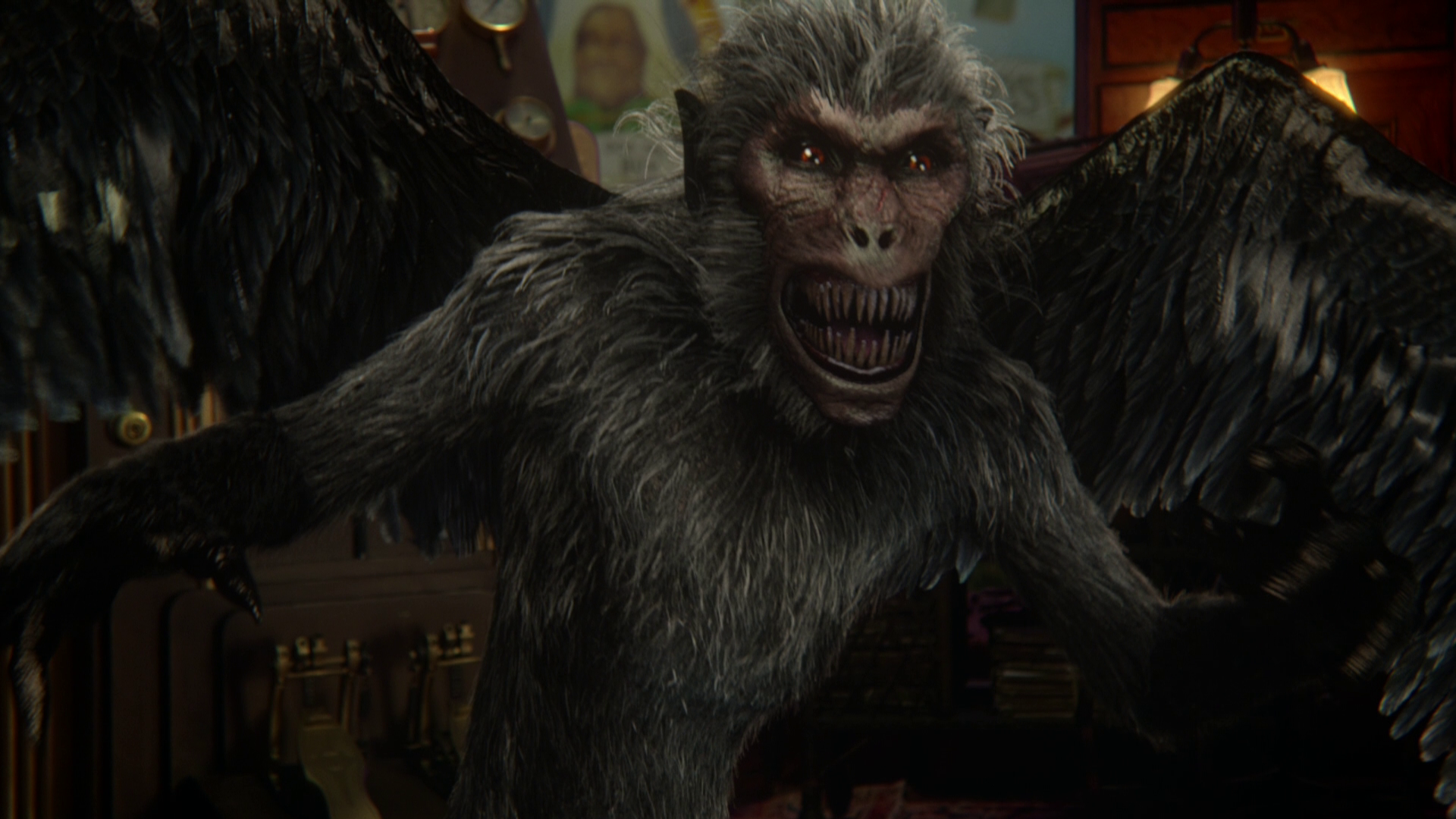
 Though admittedly the flying monkeys are a bit of a dead giveaway. Can’t say I’m thrilled with the idea of bringing in the Wizard of Oz — that’s a bit too modern for my taste. At the very least, they should have spent a few episodes dealing with the aftermath of recent events before adding a new threat.
Kudos for making something as ridiculous as flying monkeys actually scary, though.
Also, Baelfire looks surprisingly dapper in fantasy clothes. In real world garb, he looks like a hobo who recently won the lottery, but put him in a tunic and cape and suddenly he looks heroic. I don’t get it.
On the other hand, Emma’s side of the story is just bad. No other way to put it. It’s little more than a retread of the first season in miniature. It’s full of Hook stank. Too much time wasted on Emma’s new boyfriend. And Emma just isn’t interesting enough to carry a story like this. Three seasons in, and her acting is still flat as day-old soda.
Also, dem plot holes. After more than a year, no else took Baelfire’s apartment? The cops didn’t search Hook when they arrested him?
The best part of the plot was seeing Emma and Henry play Diablo III. The fact that Emma plays a wizard is my favourite thing about her to date.
Overall rating: 7/10

 I’m still not entirely convinced Feist won’t start churning out prequels and spin-offs or even just more sequels in a few years.
 This does have the side effect of making Hal’s otherwise dull story a little more interesting — it is at least a welcome counterpoint to the somewhat ponderous meditations on the true nature of reality.




 Superior Realities