Review: The Dragon Apocalypse, Cinder

It’s been many long years of waiting, but I’ve finally gotten my hands on the fourth and final book of James Maxey’s wildly original Dragon Apocalypse series, Cinder.

Cover art for Cinder, book four of the Dragon Apocalypse series by James MaxeyThis is a series with a strange history. The first book, Greatshadow, is easily one of the best novels I’ve ever read, but while the following volumes still had many strengths, the truth is it’s pretty much been downhill from there. That sounds harsher than I mean it to, but the fact remains that while I’ve enjoyed each book, I’ve enjoyed each one less than the previous.

Part of this is due to the strange structure of the series. Halfway through, the Dragon Apocalypse changed its main character and its entire writing style. It was a jarring transition I still haven’t fully adjusted to.

It also seems there has been some real world turbulence for the series. I’m not clear on what exactly the story is, but Cinder seemed to take an awfully long time to make it to market, and it’s now under a different publisher than the previous books.

The change in publishers definitely wasn’t an upgrade, either, as the quality of the product has taken a hit. I have never seen a professional novel with anywhere near this many typos.

But whatever the journey, Cinder is finally here now.

It is a book of inconsistent quality. Once again, there’s been a shake-up of perspective. Now the novel’s perspective shifts regularly between the series’ large cast of characters, and while many of these characters are familiar, a lot of attention is spent on a new character, the book’s namesake, Cinder.

Cinder is the daughter of Stagger and Infidel. Conceived in the spirit realm, she has skin as black as midnight and the ability to shift between the physical and abstract realms at will.

Cinder is one of my main problems with the book, because I find her fairly dull in comparison to most of the other characters. This is the same problem I had with Sorrow in the last book, though ironically by now Sorrow has grown on me and I would have liked to have seen her get more attention this time.

It should also be noted that the long gap between Cinder and the previous book left my memory of the series to date rather atrophied, and that also probably hindered my enjoyment of the story. In retrospect I should have reread the rest of the series first, but my impatience got the better of me, and I spent the first few chapters mostly trying to remember who everyone was and what was going on.

However, my biggest problem with Cinder is that it feels very, very rushed. In this fourth and final installment, the Dragon Apocalypse has come at last, the primal dragons of ice and storm uniting to destroy the world of humanity and plunge the world into an eternal blizzard.

Cinder deals with spectacular, earth-shattering events. It has a massive cast of characters whose stories need closure. And it tries to deal with all this in less than 300 pages. There’s just not enough time to give everyone and everything its due.

If ever there was a series that should have been spread out to ten or so books, this was it. The Dragon Apocalypse boasts one of the most brilliantly colourful and wildly inventive settings in all of fantasy, with no shortage of bizarre and awe-inspiring places, creatures, characters, and concepts. Four short books simply isn’t enough to do justice to the world or its story.

Still, I don’t like dumping on this book so much. Partly this is because I have spent some time speaking with James Maxey in the past (briefly, several years ago, over email), and I found him to be very humble and gracious and an all around good guy.

And partly there is still a fair bit to appreciate in Cinder. As mentioned above, the setting of the Dragon Apocalypse still offers no shortage of wonders. I love the concept of the primal dragons, immortal beings whose souls have fused with the fundamental aspects of the natural world, and Cinder more so than any of its predecessors shows off the terrible grandeur of the primal dragons.

There are also still many great characters in the story, even if Cinder herself didn’t blow me away. It was great to see Infidel back in action, even if her role was relatively small, and I’d happily read an entire series devoted to the adventures of the Romer clan. Seriously, Gale is awesome; can we get a book that’s all about her?
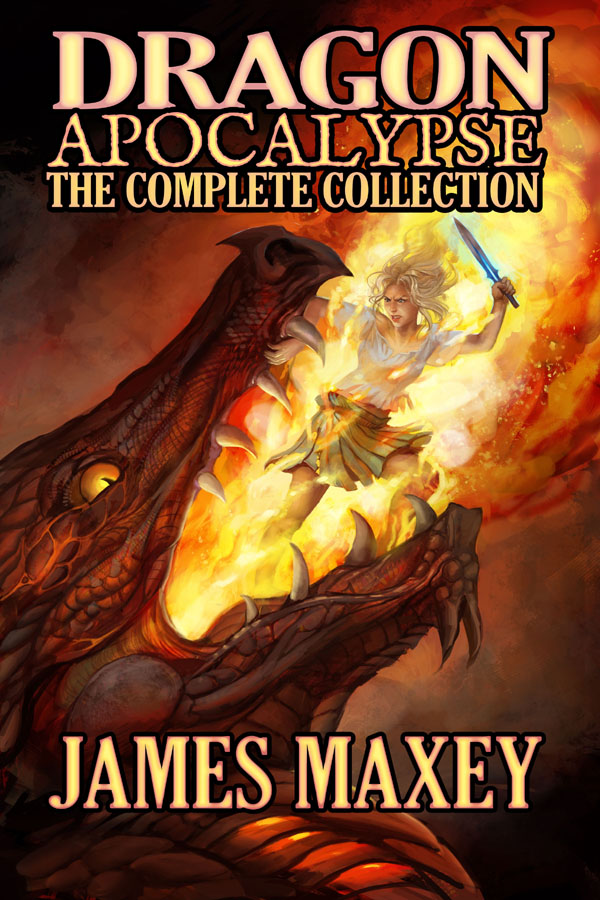
Cover art for the complete Dragon Apocalypse collection by James MaxeyAnd I have to say that I did really like how it ended. Without spoiling anything, I think there’s a beautiful poetry to the final conclusion of Stagger and Infidel’s long, bizarre story.

In the end, it does remain true that every Dragon Apocalypse book is less enjoyable than the previous, but it started from such lofty heights that even after four books, the end result is not bad.

Overall rating: 7/10

I do want to say again that despite whatever flaws the series might have developed after, Greatshadow is one of the best books I’ve ever read and something that is absolutely worth your time. It’s a hilarious, heartfelt, and brilliantly strange story that I can guarantee is not like anything you’ve read before.

ESO: Main Story Complete and Other Lore Thoughts

I’ve now completed the goal I set for myself when returning to Elder Scrolls Online: Finishing the Aldmeri zones and the main story. I now bring you my (mostly spoiler free) thoughts on the matter.

The leaders of the Aldmeri Dominion in Elder Scrolls OnlineUnder the eagle banner:

The Aldmeri zones, for the most part, maintain ESO’s commitment to a consistent “good not great” level of quality. They’re an enjoyable experience, if not necessarily mind-blowing.

The one exception that really stands above the others is Malabal Tor, a zone focused on the spiritual side of the Bosmer. The story there has a very traditional mythic feel, like you’re playing through an old folktale, and I really enjoyed that.

It’s also above average in terms of environment. Jungle zones are one of my least favourite biomes for games, and I was getting a bit burnt out on them after Grahtwood and Greenshade, but Malabal Tor has a wilder, more fantastical feel to it that helps it stand out. The trees twine around each other in surreal shapes, and the whole place is just far enough to the left of normal to feel enchanting.

This is how I imagine all of Valenwood should look, based on its lore.

It’s funny because I have a reader who swore by Greenshade, viewing it as the one zone that stood above all others in ESO. I almost wonder if they were confused and meant Malabal Tor, though it’s probably just another case of differing tastes. I found Greenshade had interesting moments, but the story as a whole was a little too scattered to really stand above the pack, if you ask me.

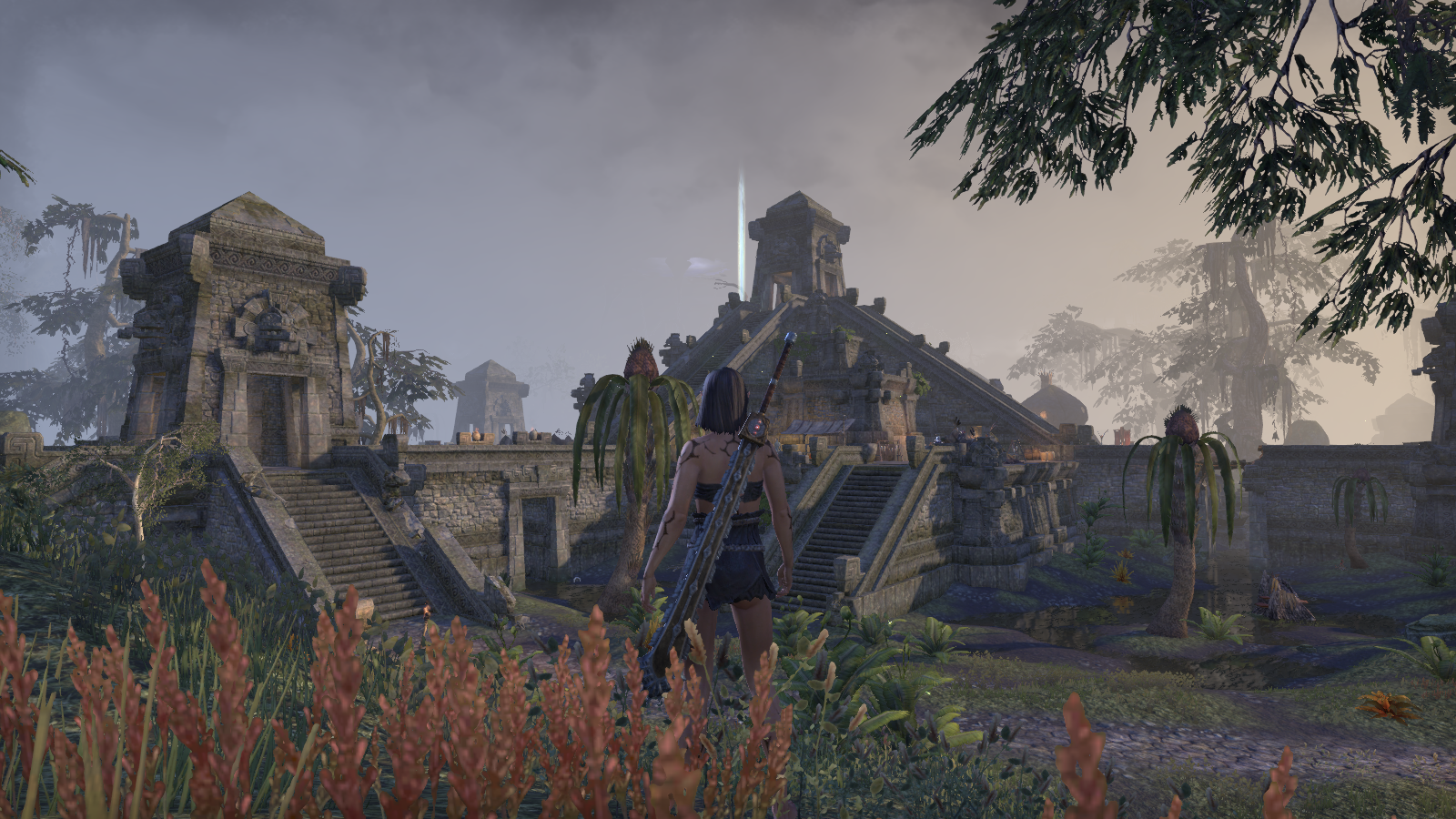
The Malabor Tor zone in Elder Scrolls OnlineReaper’s March was interesting, too. I didn’t love the main story there — it probably makes sense if you know Elder Scrolls lore better than I do, but I never quite grasped the why and the how of the glow in the dark Khajiit popping out of the ground to murder people — but the side quests were pretty fun. Nice to see the Khajiit get some attention.

After completing their story, I maintain a very high opinion of the Aldmeri Dominion. They’re an interesting faction with fascinating cultures, compelling themes, and solid characters. Razum-dar is still my favourite character in the game so far, and Ayrenn is second.

The quest on Stirk only strengthened my loyalty to the Dominion and its queen. Ayrenn was the only faction leader to come out of it looking anything like an adult.

The Breton king, in particular, has earned my ire. What an insufferable, arrogant, condescending, sexist prick.

I’ve decided to make some extra gold by robbing his castle on the regular.

To Oblivion:

The main quest dealing with Molag Bal and the Planemeld never really managed to win me over.

The dread realm of Coldharbour in Elder Scrolls OnlineNormally I’m a sucker for an epic quest to save the world, but this one was just dull and generic in pretty much every way.

The fundamental structure of it drags the story down a lot. There’s so much time between each quest that you’ve already forgotten most of what’s happened so far by the time you start progressing it again.

There’s no emotional investment, either. None of the characters in the main quest are particularly memorable. Tharn is the only one I’ll give any credit to for decent writing, and even there it’s a “love to hate” thing.

The fact they’re all humans is probably part of the problem. I think a strength of Elder Scrolls as a setting is the sheer breadth and diversity of it, but in the main quest all you’re dealing with are the most vanilla human adventurers possible. The one non-human in the story is just a one-note villain with the depth of a mud puddle. The fact he’s an Altmer affects his character not at all.

There are some things about the main story I liked, mainly near the end. The open world Coldharbour zone is surprisingly beautiful and definitely one of the best zones in the game from an aesthetic perspective, and the very last quest offered some cool gameplay.

Opening an ancient tomb as part of the main quest in Elder Scrolls OnlineStill, the main story is ultimately something I did because I needed the skillpoints, not because I was excited to.

Scrolls of lore:

When I first spoke at length about the lore of the Elder Scrolls universe (as experienced through ESO), I described it as “mediocre.” Having gotten farther into the game, that opinion has changed somewhat, but not entirely.

I think I’m going to upgrade my view of Elder Scrolls lore to “inconsistent.” There are some aspects of it I very much like, and some that I don’t.

As mentioned previously, I greatly enjoy the Bosmer, and my opinion of them has only grown with time. I think they’re an incredibly fun and fresh take on the Elf archetype, and I’m really glad I had the foresight to pick Bosmer for my main’s race.

There’s a lot of layers you can appreciate about the Bosmer. They’re one of the more innately fantastical races in the setting, often feeling like they’ve leapt off the pages of mythology. Their savage edge is equal parts terrifying and fascinating. And they’re also surprisingly funny, especially if your sense of humour is as twisted as mine. Their casual bloodthirst never ceases to amuse.

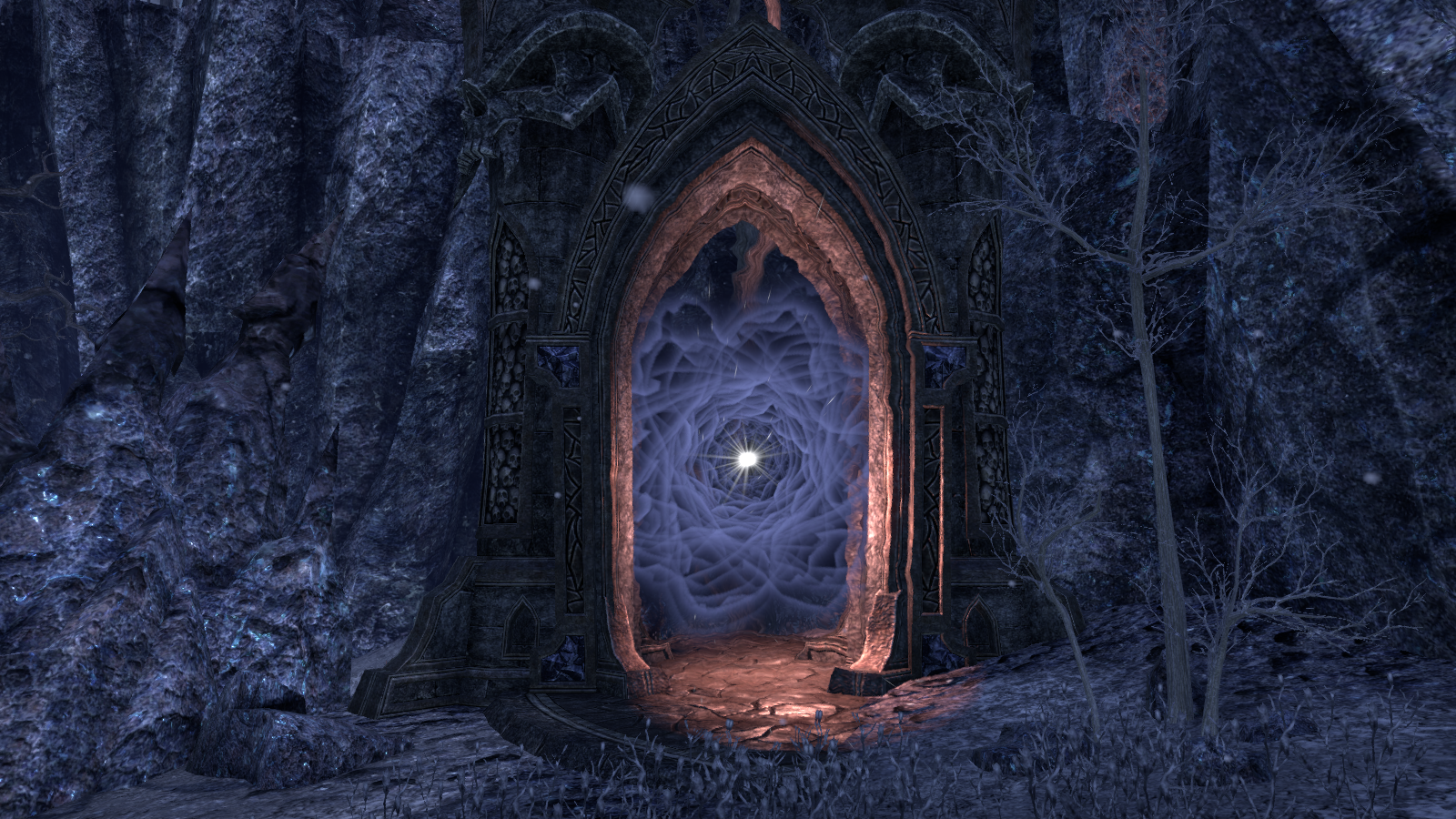
A portal in Elder Scrolls OnlineThe Khajiit have also managed to maintain their position as my second favourite aspect of the setting. I’m coming to the conclusion they’re not quite as shallow as a culture as I initially took them for, though I still wouldn’t describe them as exceptionally deep in the greater scheme of things. But they’re definitely fun and charming and almost always a good source of entertainment.

In general I think this game’s story-telling is at its best when you’re delving into the cultures of the various races and nations. The meta-plot isn’t great, and individual side quests are hit and miss, but there is a great depth to a lot of the societies of Tamriel.

On the other hand there are a few races I’ve decided I definitely don’t like. Chief on this list are Nords and Orcs, who so far seem to be incredibly shallow and archetypal, and not even interesting archetypes at that.

I can’t say I’m a particular fan of the other human cultures, either. Maybe I might like the Bretons; I don’t know much about them yet. I’d like to shove their king down a flight of stairs, but he might not be representative of his people as a whole.

But of course the humans are going to be boring. Hell, humans aren’t even my favourite race in the real world.

An ancient crypt in the main quest in Elder Scrolls OnlineI feel like the Dunmer could be cool, but I still don’t know a lot about them. From what I gather, they used to be Daedra worshipers, but then some of them managed to promote themselves to godhood? That could definitely be interesting.

And Argonians are the biggest question mark. Really all I know is they worship trees, which speaks highly in their favour.

I would like to know what they did to make everyone hate them so much. Even Gnomes in WoW don’t engender this much disdain from the playerbase.

Then there’s the history and mythology of the world itself. That’s still mostly failing to impress, but I’m starting to think the problem is not the content itself, but the presentation.

Much of the lore in ESO is delivered via in-character history books you find while adventuring. These tend to be written in an incredibly dry, scholarly style, and while this is realistic, it sucks a lot of the fun out.

Even the most epic events lose their thrill if you explain them in a sufficiently dull fashion, and I think that’s what’s happening here. I’m beginning to think Tamrielic history actually is quite interesting, but it’s presented in such a hopelessly pedestrian manner that I can’t help but go cross-eyed as I try to read it.

An Argonian town in Shadowfen in Elder Scrolls OnlineIt’s also rather scattered, in the most literal sense possible. When and where you find each book is highly randomized, so you’re learning the history in bits and pieces that often have little or no relation to each other or what’s going on around you. This makes the lore less a coherent narrative and more a jigsaw puzzle where you don’t even know what the final picture is supposed to be.

It’s almost like if TSW’s lore honeycombs were randomized such that you might pick up a piece of lore in Kingsmouth only for it to start telling you about Zeroes Wild. It has no meaning out of context.

Another issue in the presentation is how every culture in Tamriel tends to have its own words for the different deities, supernatural beings, and the like. Again, this is realistic, but it makes the lore incredibly unfriendly for someone who doesn’t already have a strong base of Elder Scrolls knowledge. As a result, I’ve managed to develop a solid understanding of the geopolitics of Tamriel, but remain almost completely baffled when it comes to the greater cosmology of the setting.

Finally, the story can also be inconsistent when it comes to tone. Most of the time I’d say ESO is a pretty tame, sanitized sort of game, but once in a while, with no warning at all, it will go someplace incredibly dark. Examples include the residential school quest in Auridon and that lore book about how vampires in Tamriel are apparently the result of some poor woman being raped to death by a demon lord.

What’s next?

With my main goals for the game complete, I’m not sure where to go now. There’s still an astonishing amount of content I’ve yet to explore in ESO, and I think I would like to see at least some of it.

MY sorcerer goes hunting in Elder Scrolls OnlineI think I may take advantage of the game’s sandbox nature and begin simply picking and choosing the zones and quests that specifically appeal to me, rather than playing through everything completionist style. I finally have enough skillpoints and am nearing the all-important 160 CP gear cap, so I can afford to be more laidback.

However, I am also tempted to take a break and move on to other games, if only temporarily. WoW, in particular, is calling to me…