
I jumped around between games a fair bit this month, but a particular focus has been the Age of Empires franchise, with new DLCs for Age of Mythology and Age of Empires II. Those were starkly different experiences.
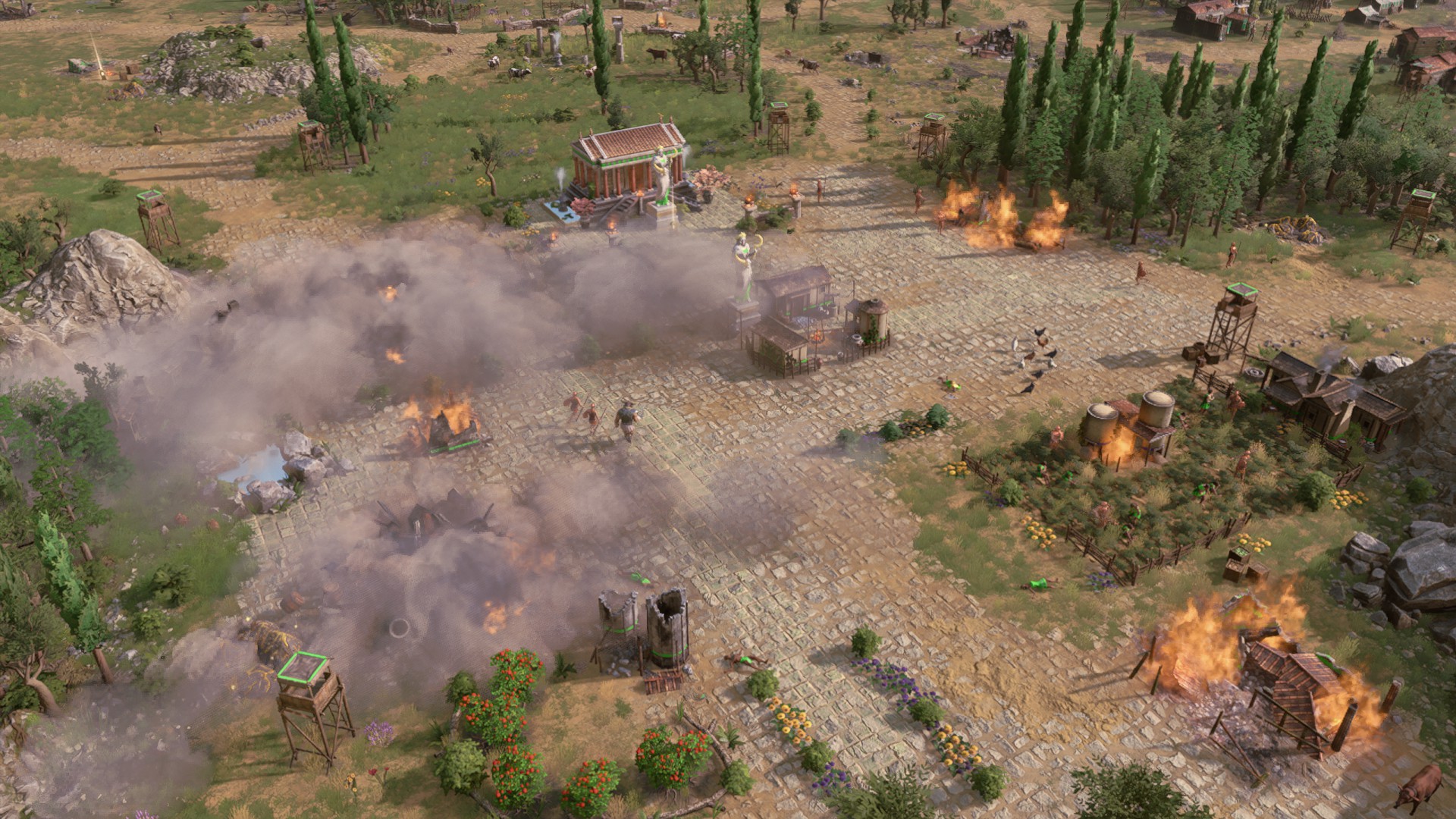 First, we had the new Demeter god pack for Age of Mythology: Retold. I was very excited for this, as I’m a big fan of nature-focused fertility gods from both a mythological and gameplay perspective.
Unfortunately, Demeter is just… terrible. I don’t know how else to put it. I really try not to be the hyperbolic “this is the WORST THING EVER” kind of gamer, but there’s just no silver lining here. Every single one of Demeter’s new units and powers is some variety of clunky, hard to use, underpowered, or all of the above. None of it is fun.
A lot of kit has anti-synergy with itself, too. The hamadryad and Pan’s buffed walls are focused on keeping enemies out of your base, but lykaons and the communal hearth only get value if you let enemies into your base. It’s like they didn’t think this through at all.
Hamadryads are probably my biggest disappointment. Their model is absolutely awesome, but my gods they feel terrible to actually use. Yes, I know, they can be very powerful under the right circumstances, but those circumstances are so awkward to set up I’d rather have pretty much any other myth unit instead. Also, I can’t get over the fact they have these huge arms but only a whimpy ranged attack. Every part of their visual design screams “tanky melee powerhouse,” but their actual stats are the opposite of that.
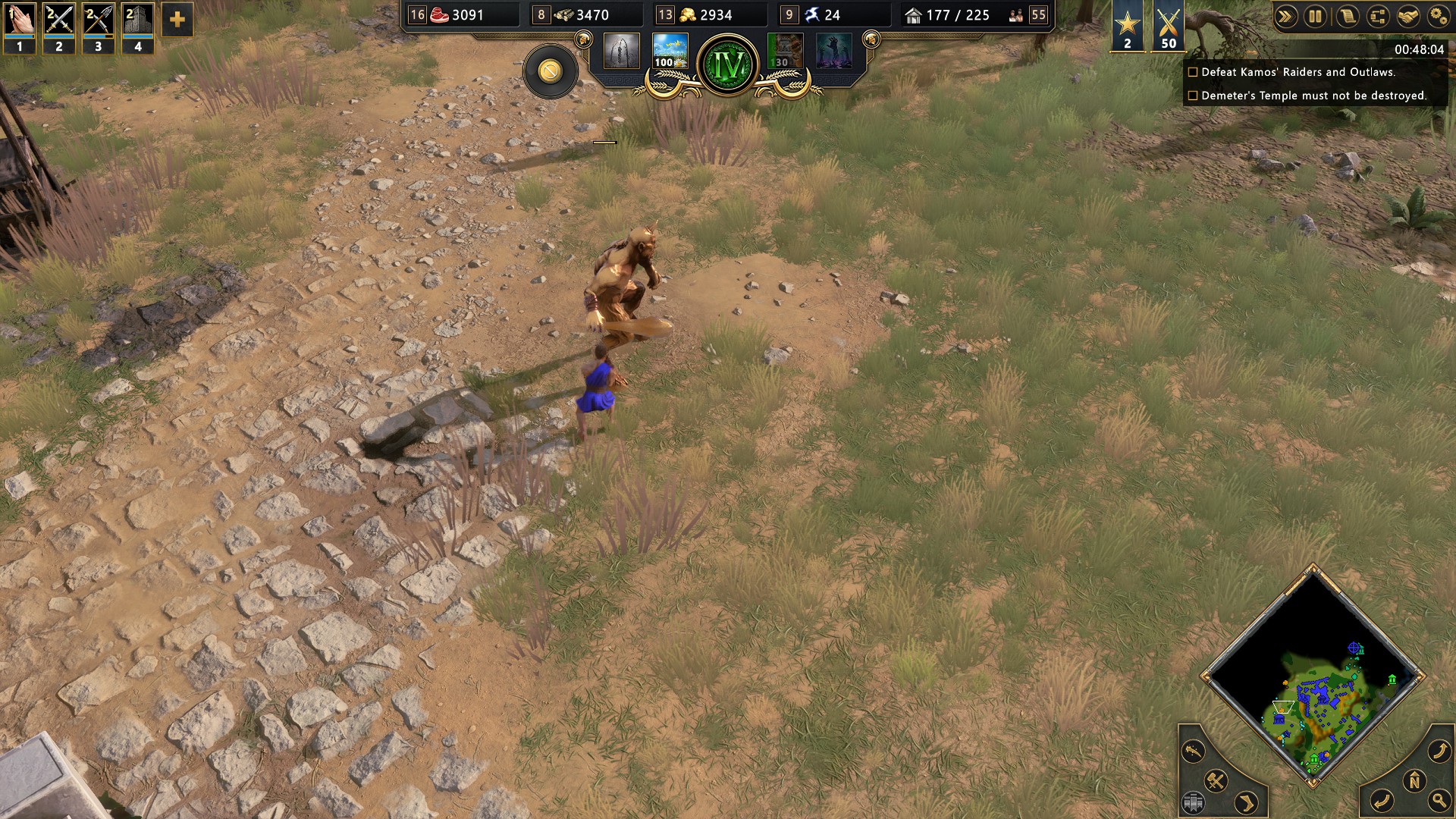 There are some gods in Age of Mythology that I rarely if ever play because I prefer other options within their pantheon, but until now there were none that I would have said were actually badly designed, or unpleasant to play. Demeter is the first. Unless she is massively overhauled, I cannot see myself ever wanting to play her again. Just finishing her (very mediocre) mythological battle felt like a chore.
The only thing I enjoy about Demeter is Midas’ (small) chance to turn enemy units into gold deposits you can actually mine from. It’s far too unreliable to ever actually be useful, but it is very funny.
I feel like someone at Microsoft is consistently pushing the Retold team to launch stuff before it’s ready. Every release from Retold has been disappointing on some level except for Heavenly Spear, which got delayed from its original launch window. Now they’re jumping into the 2026 content much faster than anticipated, but if Demeter is any sign, that haste is anything but a blessing. I can only hope the Aztecs turn out better when they arrive.
Meanwhile, I also had very high hopes for AoE2’s latest DLC, The Last Chieftains, but in that case those hopes were almost entirely met.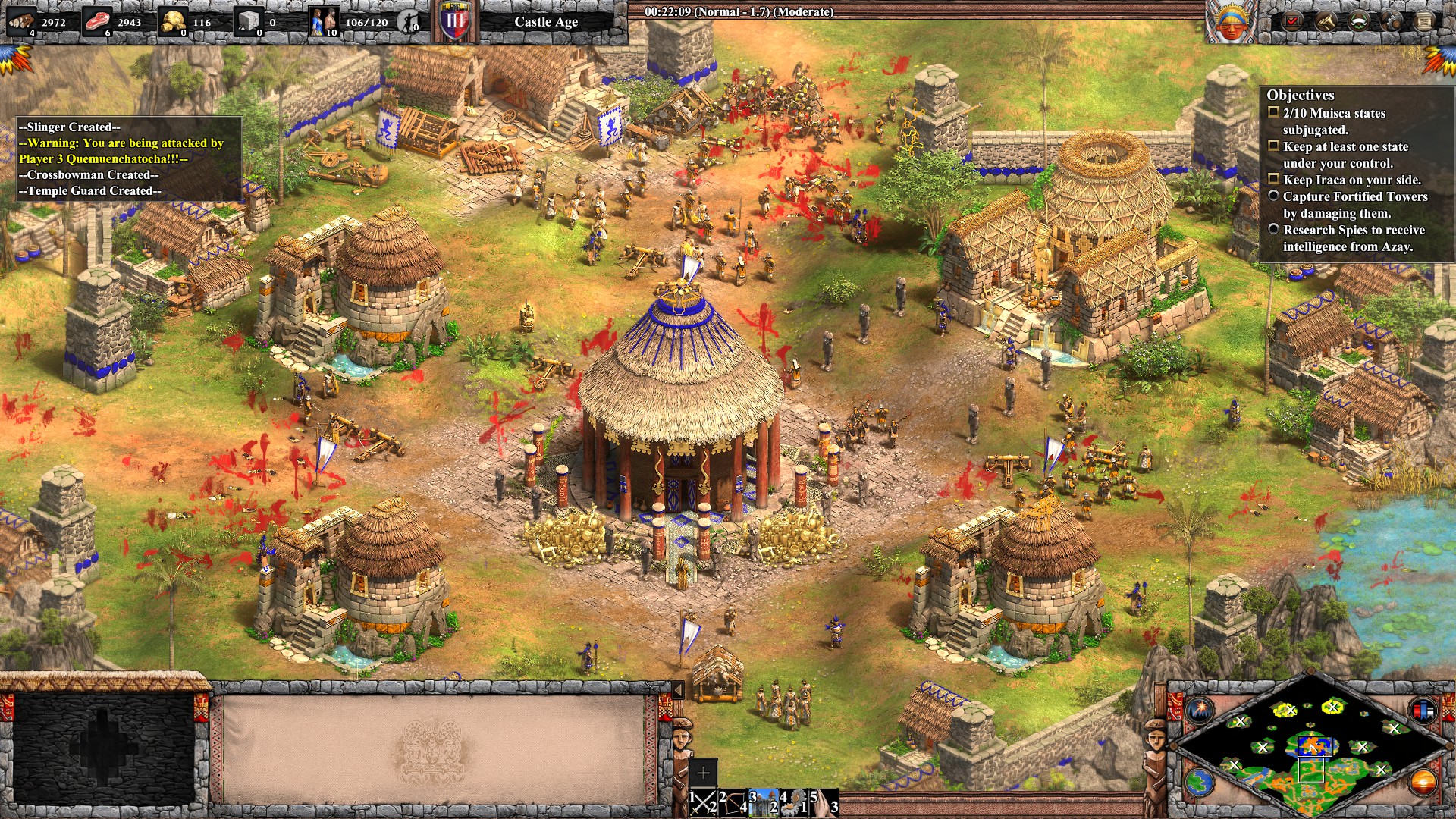
A few months back I was saying I wanted a happy medium between the soaring ambition of Chronicles and the more vanilla design of traditional campaigns, and I think the Last Chieftains campaign hit that mark exactly. They’re clearly drawing some inspiration from Chronicles with improved voice acting, better stories, decisions with consequences, and more intricate level design, but it still feels like the classic Age of Empires II experience. It’s never as overwhelming or strange as Chronicles can sometimes be.
I also mostly enjoyed the new civilizations, though not quite as much as I expected to. The Mapuche cavalry felt a bit too squishy/situational to get much use out of, and the Muisca and the Tupi felt a bit too similar (both featuring fast foot archers and heavy infantry as a second unique unit), but I did really like the settlement mechanic. It’s a great example of what AoE2 does well: It’s a very simple mechanic (a universal resource drop site that also provides population), but it has a surprisingly large impact, smoothing out your economic build up considerably.
I also went back and replayed the Inca campaign to see how the new mechanics impact them. Despite their campaign now feeling pretty dated, I had a great time. Settlements further improve the already strong economic foundation the Inca had, and I think they’ve cemented their place as one of my absolute favourite civilizations (not easy in a game with fifty to choose from). Kamayuks are just so good.
Overall, I found the Tupi the most fun new civilization, but I think the Mapuche had the most compelling new campaign. Hard to believe Galvarino is a person who actually lived. What a legend.
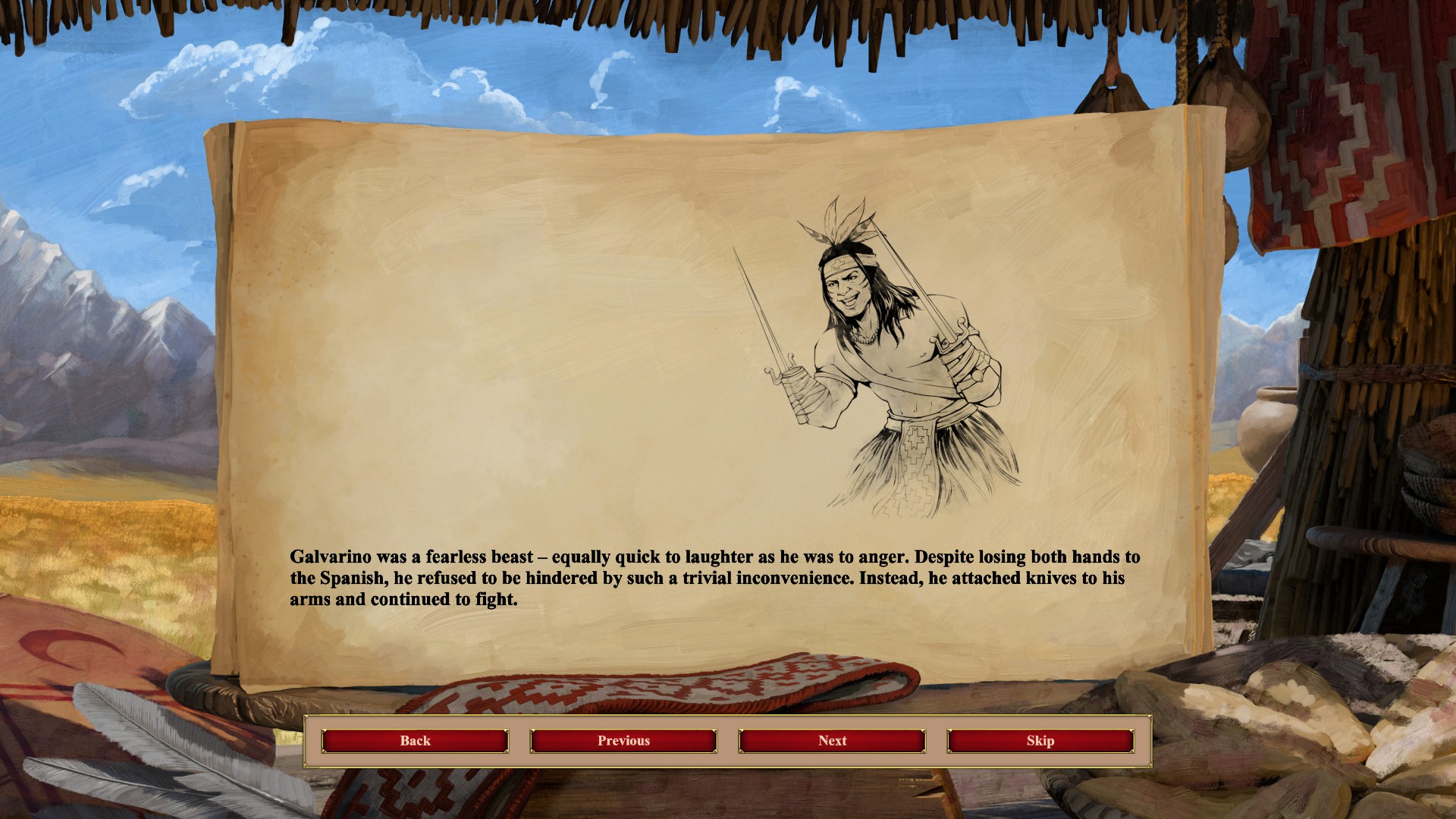 It was also so refreshing to see a spotlight put on a part of the world that we rarely pay any attention to in Western pop culture. All of this history was entirely new to me.
All that combines to make Last Chieftains a great example of what Age of Empires can be at its very best: Illustrating underrepresented parts of world history and culture with tight gameplay that’s easy to understand but with enough nuances to add real depth. This is probably my favourite DLC for AoE2 DE to date.


 Superior Realities