
I have a lot of love for the Dungeon Siege games. The original was the first RPG I well and truly enjoyed, and the third was one of the best games I’ve ever played.
 The second passed me by, though. It came out during the time when Real Life prevented me from gaming. Once I did take up gaming again, I tried the demo but found it oddly underwhelming, so another few years went by without my playing Dungeon Siege II.
But come the most recent Steam sale, I was able to buy it for pocket change, so I decided to finally play through it from beginning to end.
I don’t regret the decision, but this game definitely isn’t on par with the other entries in the franchise.
An unhappy medium:
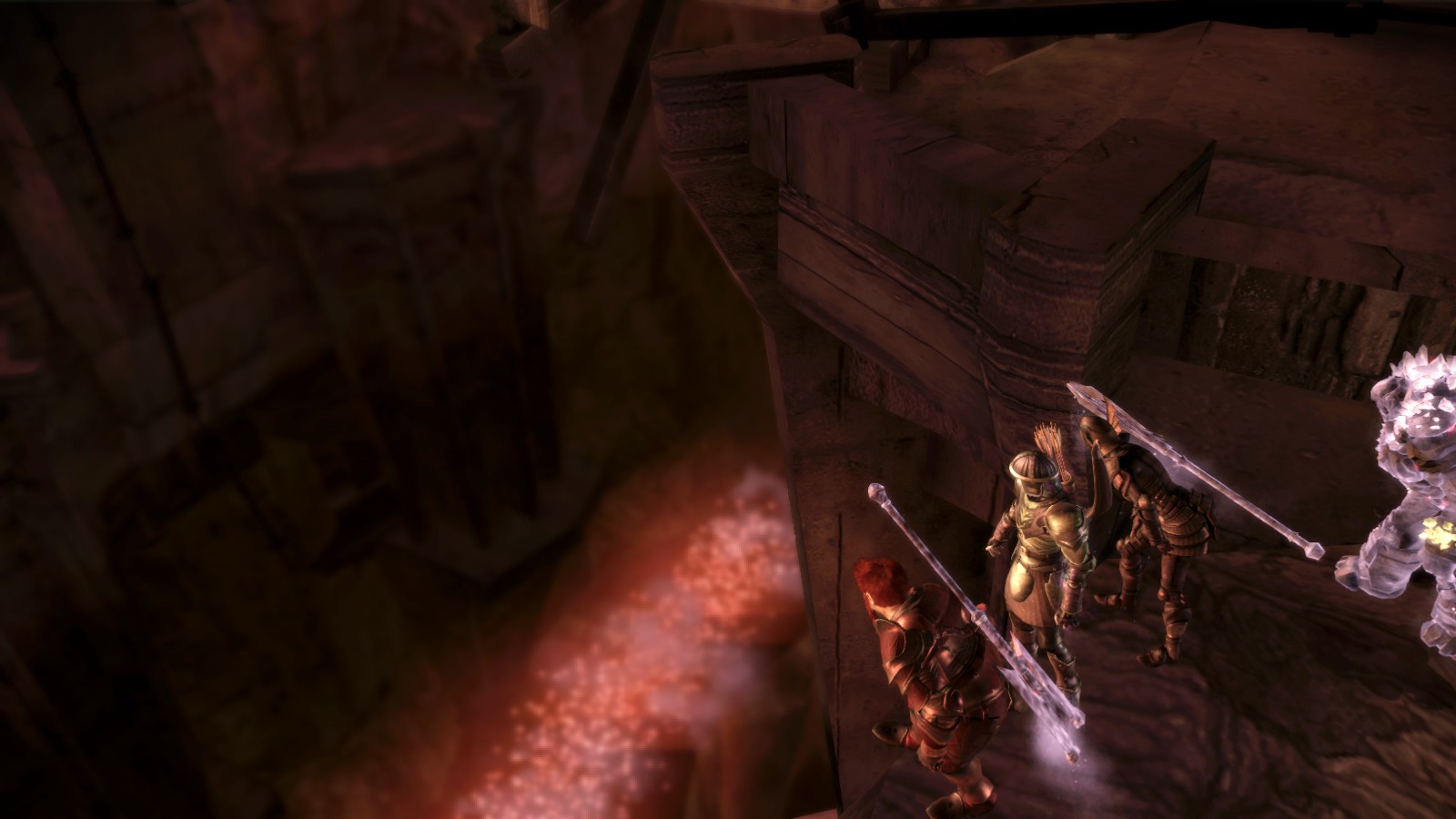
In many ways, Dungeon Siege II plays much the same as the original. It’s an action RPG more or less in the “Diablo clone” mould. It allows you to recruit a large party, and rather than having preset classes, your character levels skills naturally as you play — though you’re still encouraged to pick one style of fighting and stick with it.
As with the original, DS2 spends most of its time treading a fine line between mindless and relaxing, though the puzzles and boss fights are a bit more intense this time.
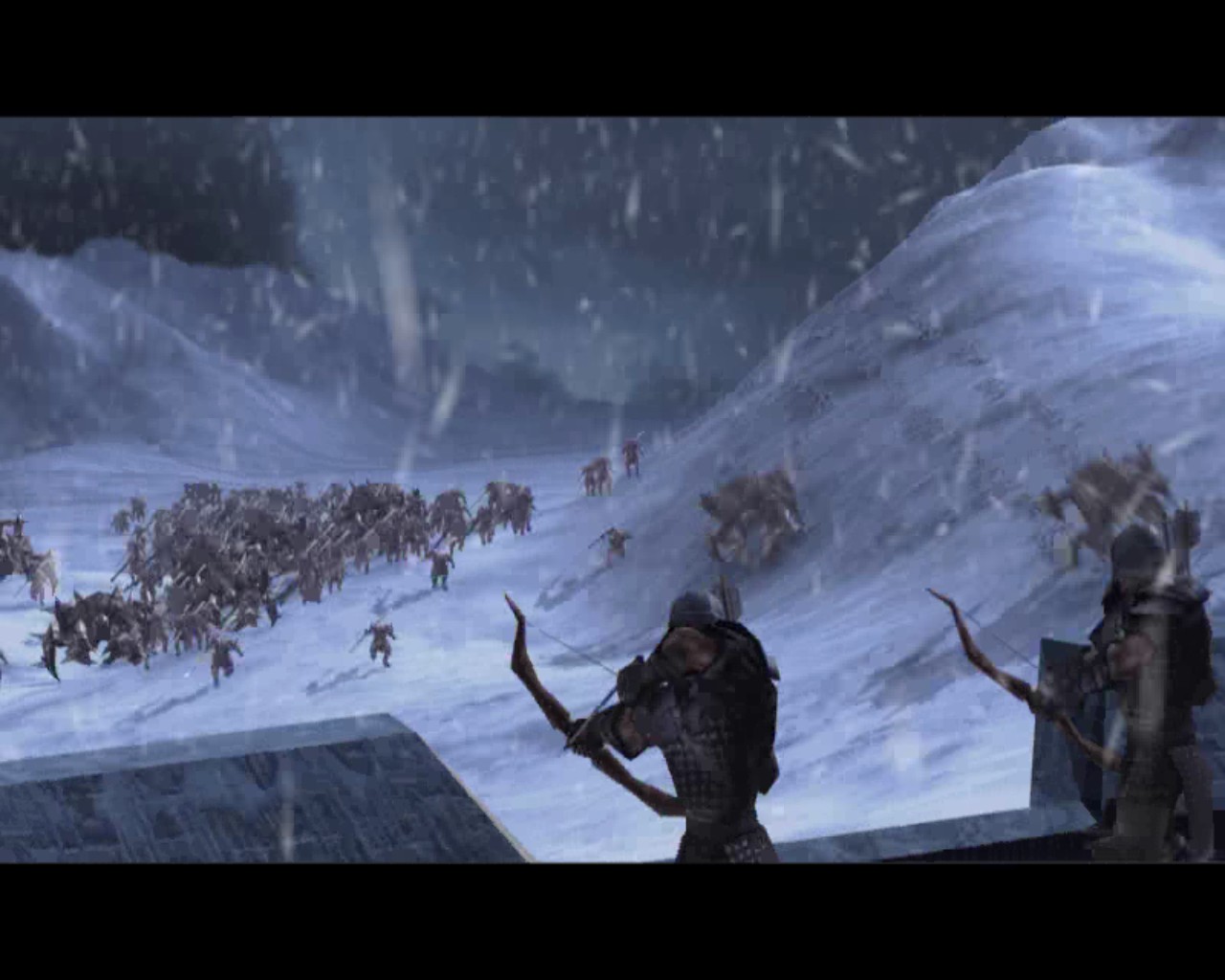 However, there are some ways in which DS2 is a departure from the first game. It attempts to be a bit less mindless and a bit more of a traditional RPG, but not all of these changes are for the better, and those that are crippled by some seriously poor design decisions.
DS2 sees the addition of skill trees for each “class,” as well as activated powers, but both of these fail to enrich the game.
Much of the appeal of the original Dungeon Siege came from the fact that it was an RPG where you built your character by playing the game, rather than playing the game by building your character. The addition of skill trees kills this, and it brings back a lot of the problems of traditional RPGs — having to grind forever to start to feel powerful, and having to force yourself into one incredibly narrow style of play.
For example, in the original, a fighter could swap between a one-hand weapon and shield and a two-hand weapon readily, depending on the needs of the party. In DS2, those are completely different specs.
DS2 has a much greater variety of weapon and spell types than any other game in the series, but it’s a complete waste when the skill trees force you to focus on only one play style.
 Armour is now strictly segregated based on “class” as well, which I find sucks some of the fun out. I enjoyed having mages in chain mail.
And none of this adds any real depth. Dungeon Siege II is still far more basic than most RPGs. It’s a “worst of both worlds” scenario.
The powers aren’t much help, either. They’re very powerful and fun to use, but you can only equip one per character, and they have fairly lengthy cooldowns, so they don’t so much spice up the simplistic gameplay as call attention to it — especially in the early game.
There are some things I like better about DS2 than the original — at least in theory — but other elements of the game sabotage them.
Each party member is a fully fleshed out character now, with dialogue throughout the game and quests unique to them. Some of the characters are pretty interesting, so I enjoyed this.
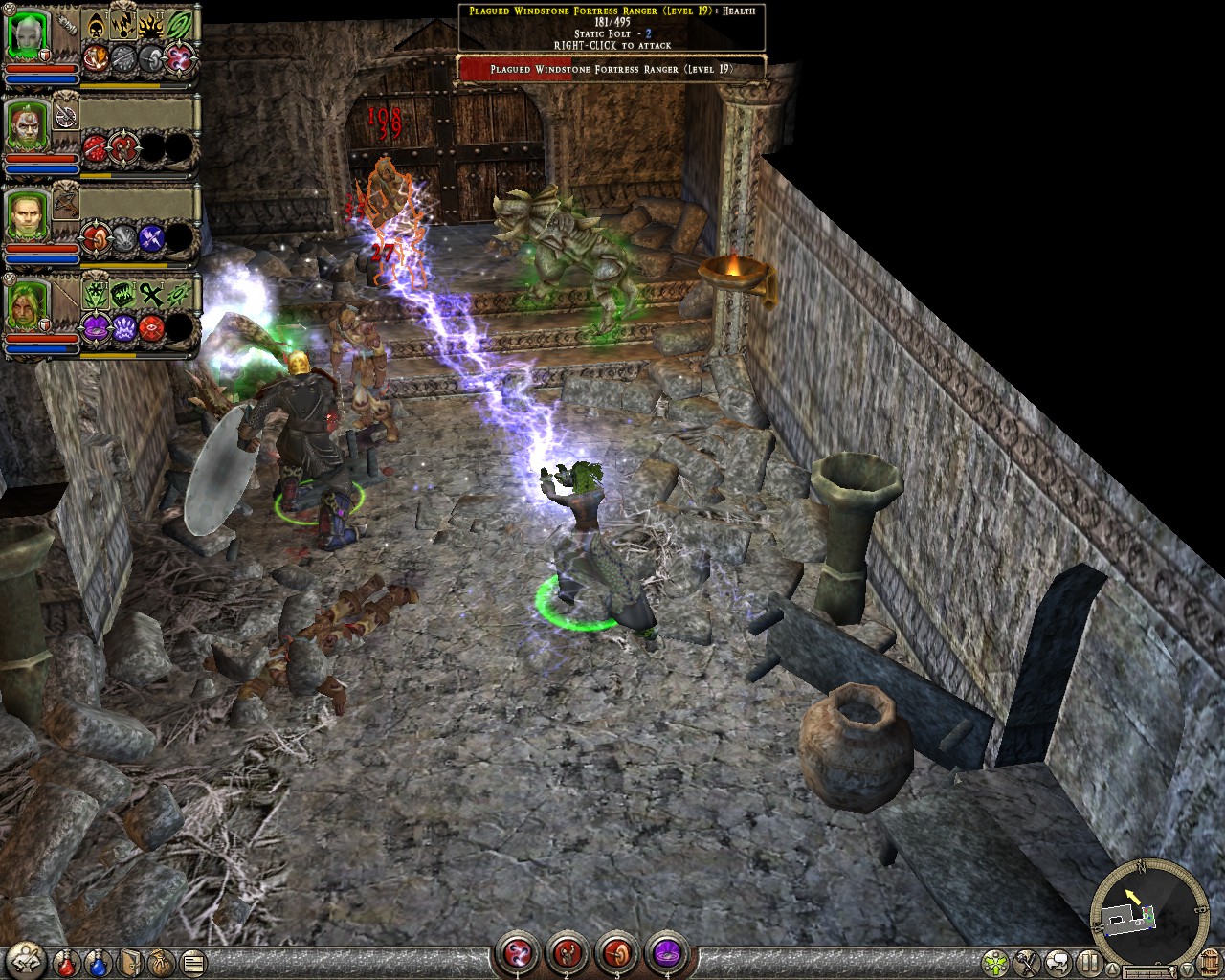 Or at least I tried to. Dialogue is interrupted by combat, and there’s no way I can see to restart a cancelled conversation in the field. This is a game where it’s pretty much impossible to ever not be fighting, so I missed a huge amount of the character dialogue.
DS2 also has much stricter party size limits, based on difficulty setting. On the easiest setting, you can only have a maximum of four party members. Since the game is designed such that you need at least one of all four “classes,” that renders choice of party members largely moot.
Oh, and you can’t play the higher difficulties until you beat the easiest one.
I hate, hate, hate this. It’s everything I loathe about the RPG genre: arbitrary restrictions and grind for grind’s sake. It also goes completely against the effort to make each party member more meaningful, and it strips away more of the Dungeon Siege identity — another core selling feature of the first game was the huge party size you could potentially have.
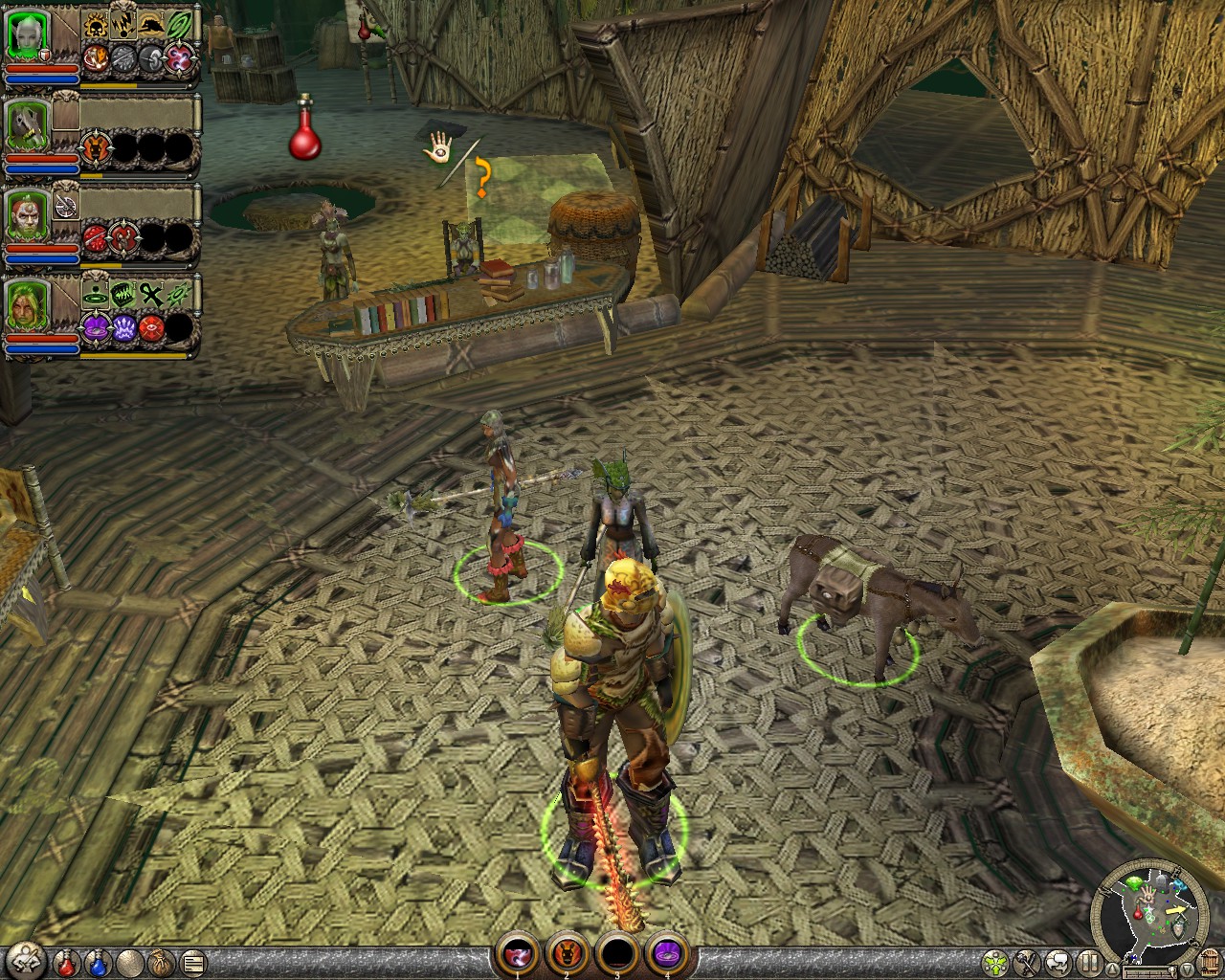
DS2 also features a new pet system that allows you to raise various minions by feeding them gear. I really liked this system — who wouldn’t want a baby mule following them around?
But again, this is sabotaged by the party size limitations. Since you can only have four party members and you need one of each class, the pet system basically doesn’t exist on your first play through of the game. I had to give up my beloved mule, Daisy, in order to have an archer. That’s just criminal.
 We’re not in Ehb anymore:
My other big gripe about Dungeon Siege II is the story.
The story in the original Dungeon Siege was fairly simplistic, but a strong setting in the form of the Kingdom of Ehb and a great sense of history made it compelling. The third game in the franchise capitalized on the rich history of Ehb, further expanding the setting while also revisiting old favourites.
DS2, on the other hand, is set in a completely different part of the world and has almost no connection whatsoever to the stories of the first and third games. In terms of plot and setting, DS2 might as well be from a completely different franchise. Only the presence of Azunai makes it at all recognizable as a Dungeon Siege game.
As for the new story, it somehow manages to be even more generic and cliche than the original’s. There are a few interesting revelations about the history of the world here or there, but mostly it could be any other fantasy game on the market, and there’s not nearly the same sense of place and history that made me care about Ehb so fiercely.
There are some other annoyances here and there, too. Unlike in the original, enemies in DS2 will respawn, and they do so incredibly quickly — even very powerful enemies.
 This makes backtracking a rather tedious process, and boy, does this game require a lot of backtracking.
It’s not all bad news:
For all my griping, I don’t want to give the impression that Dungeon Siege II is terrible. I did finish it, after all, and I wouldn’t have done that if I wasn’t having some fun.
The core gameplay remains enjoyable, if a bit simplistic and repetitive. I did enjoy interacting with my party members on the occasions when we weren’t interrupted by combat.
It’s an incredibly detailed game, too, with enormous potential for exploration and secret areas everywhere.
Probably the best thing about DS2 is how meaty it is. It’s an incredibly long game, and the various secrets and side quests will keep you busy for a few dozen hours at least — though some quests are a little unnecessarily tedious. Considering how cheaply you can pick this game up nowadays, you definitely get your money’s worth.
 I still wouldn’t recommend Dungeon Siege II, though, unless you’re a huge fan of old school RPGs or a rabid completionist who enjoyed one or more of the other Dungeon Siege games.
DS2 isn’t a bad game per se, but it’s totally lacking in identity. It gave up virtually everything that made the original special and failed to establish a compelling identity of its own. By comparison, Dungeon Siege III was even more of a departure from the original, but it managed to be a strong and enjoyable game in its own right, and it was at least a true sequel to the original in terms of story.
Overall rating: 5.8/10 I highly recommend the first and third Dungeon Siege games, but you can safely skip this one.


 Superior Realities