Retro Review: Dragon Age II

By far the least popular Star Trek spin-off was Enterprise, and it happens to be my favourite. Similarly, Stargate: Universe is viewed as having ruined that franchise, but I thought it was brilliant. Nemesis is my favourite Trek movie, and while it isn’t the most hated, it’s pretty close, usually beaten only by The Final Frontier and Insurrection (I also liked Insurrection). Mass Effect 3 was infamously lambasted by the majority of fans, but I thought it was the highlight of the franchise.
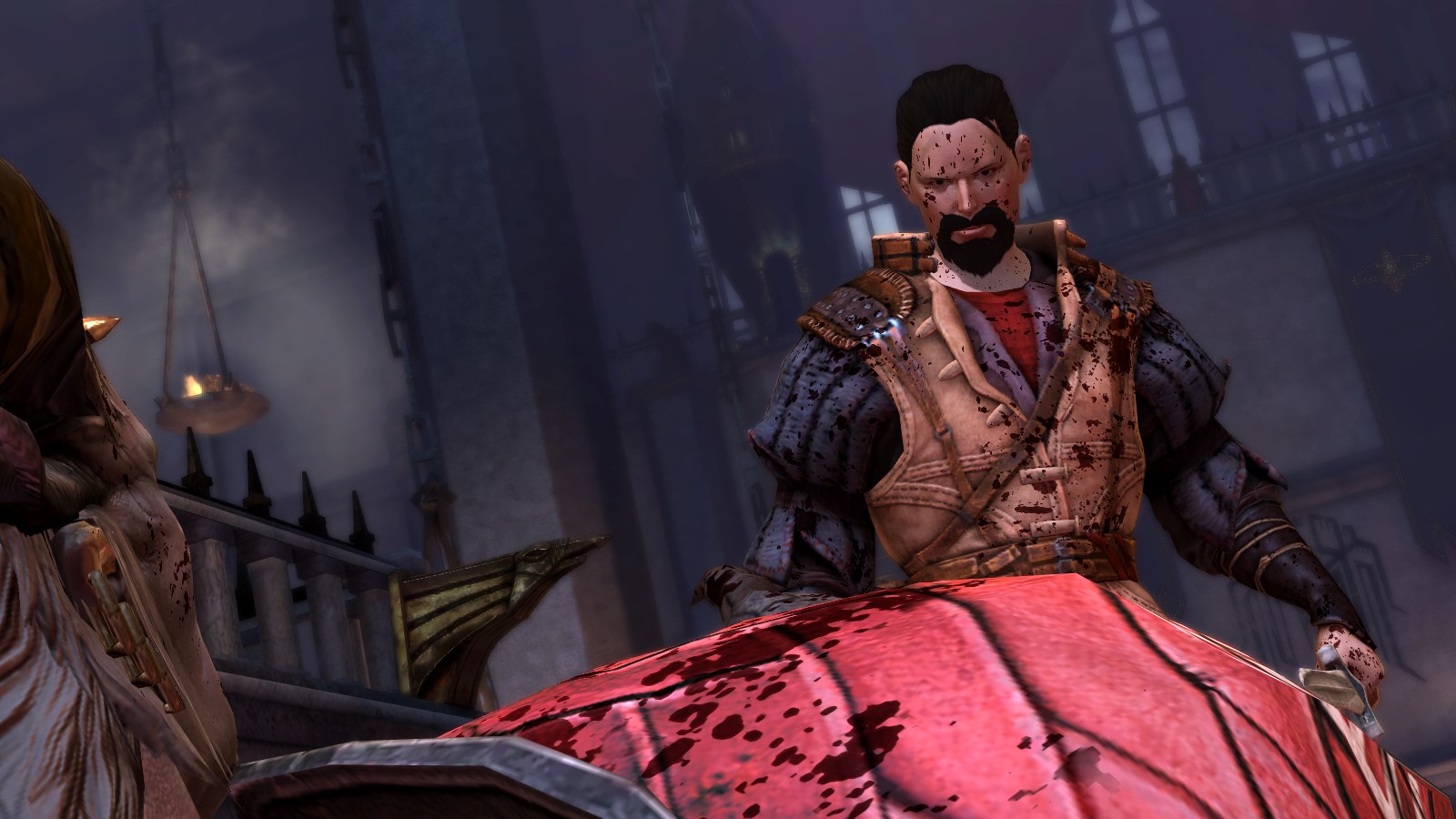
Hawke battles the Arishok in Dragon Age 2What I’m trying to say here is this: I have terrible taste in everything. So maybe it’s not surprising that Dragon Age II, another universally despised game, is one of my favourite Bioware games to date.

A needed overhaul:

The first thing I noticed about Dragon Age II is that its combat was much improved from that of Origins.

Now, that really isn’t saying much. Origins was probably the single worst example of RPG combat I’ve ever had to slog through, and the combat of DA2 suffers from a lot of the same problems. Ability cooldowns are still absurdly long, and mana and stamina are still insanely easy to deplete and slow to regenerate. These combine to make a game that is so much on auto-pilot that it would make the original Dungeon Siege blush.

But on the plus side, attack animations — even auto-attack animations — were greatly improved and now carry a sense of brutal, visceral power to them. I may have still spent too much time watching my party auto-attack, but at least it was a nice show.

Abilities in DA2 are also a lot more creative and powerful, so at least they felt somewhat worth waiting for.

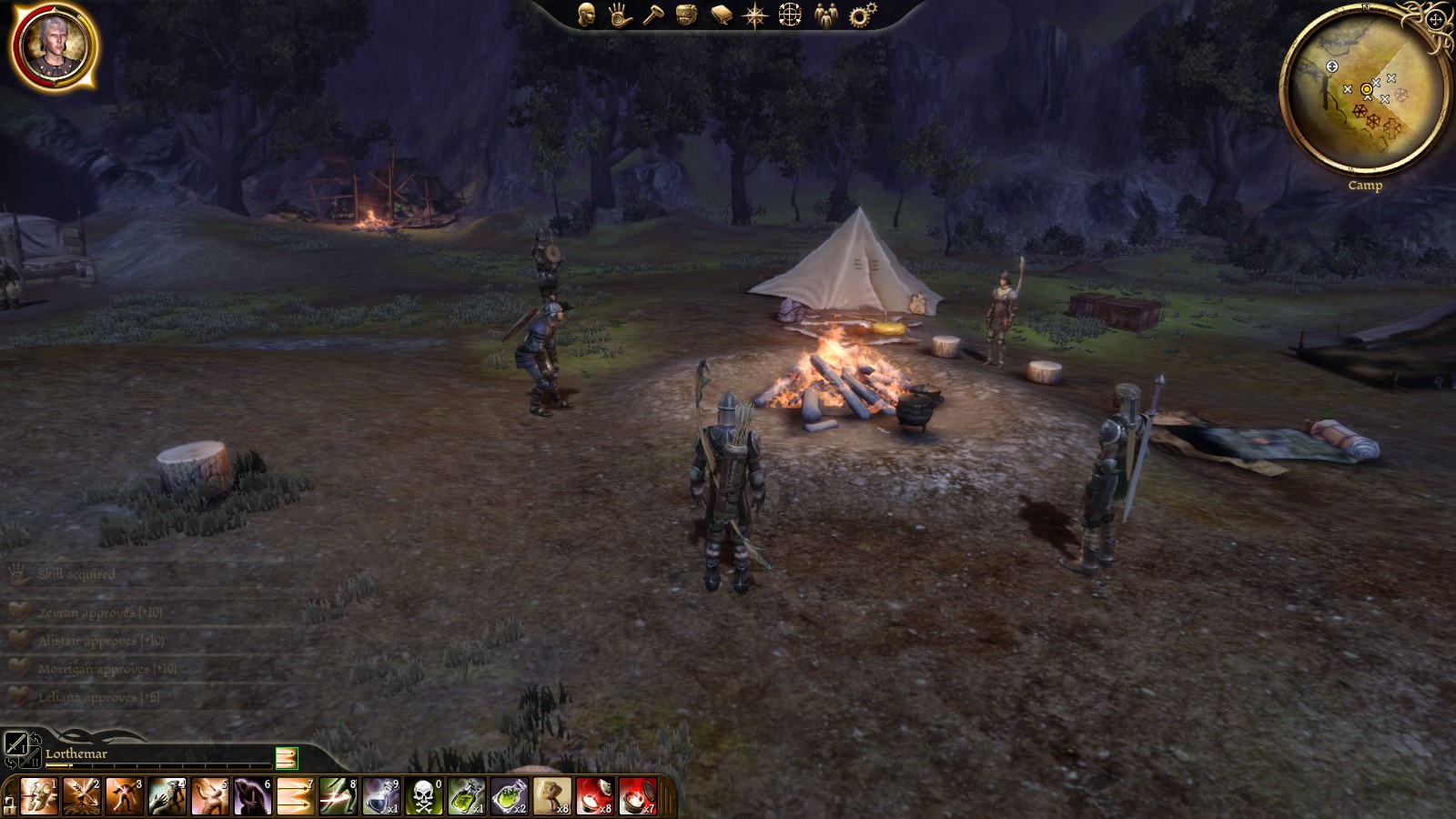
Hawke fights in the moonlight in Dragon Age 2I won’t say that I actually liked the combat in DA2, but at least there were moments of it where I experienced something like fun.

The other thing that caught my eye right away was the graphical improvements. DA2 looks vastly better than Origins.

And I’m not just talking about the technical quality of the graphics, although that did take a big jump forward. Origins had no style, no personality. It’s like everything in its world was just copied directly from a handbook of fantasy cliches.

DA2, by comparison, has some very distinct visuals. Kirkwall is a city that oozes its own unique, albeit grim, personality, and the surrounding areas have a great sense of desolation about them.

I’ve heard many people complain about the reused environments, but I don’t see it as a major issue. The fact that the game only has one cave does get old after a while, but I felt the reuse of the environments of Kirkwall gave the game world a nice sense of permanence and reality.

But enough peripheral issues. Let’s talk about what actually matters.

The Gallows in Dragon Age 2The story:

I think I can sum up why I preferred the story of DA2 to that of Origins with one word: investment.

I never felt all that invested in the story in Origins. Maybe it’s my fault for playing as a Dalish Elf, but I never felt like it was my fight. I was running around the country fighting for people who oppress and abuse my people, and I had little to no chance to address any of the injustices I found all around me. It was very unsatisfying.

DA2 did a much better job of making it feel like my story.

I thought it was a very interesting change of pace that the game doesn’t begin with some world-ending threat. It starts as a much more personal story of a refugee family struggling to survive. It didn’t matter that I don’t much care about the world because I didn’t need to. I wasn’t trying to save the world; I was just trying to protect my family, and that made me feel invested in the story in a way Origins never did.

The lack of an over-arching threat to the world was a very interesting change of pace from the usual RPG storylines. I’m not sure I’d want to see it become the norm — there’s a reason epic storylines are so common — but it was an interesting experiment, and it very much played to Bioware’s strengths. It let them delve deeply into character plots and politics without it feeling like a distraction from the real threats.
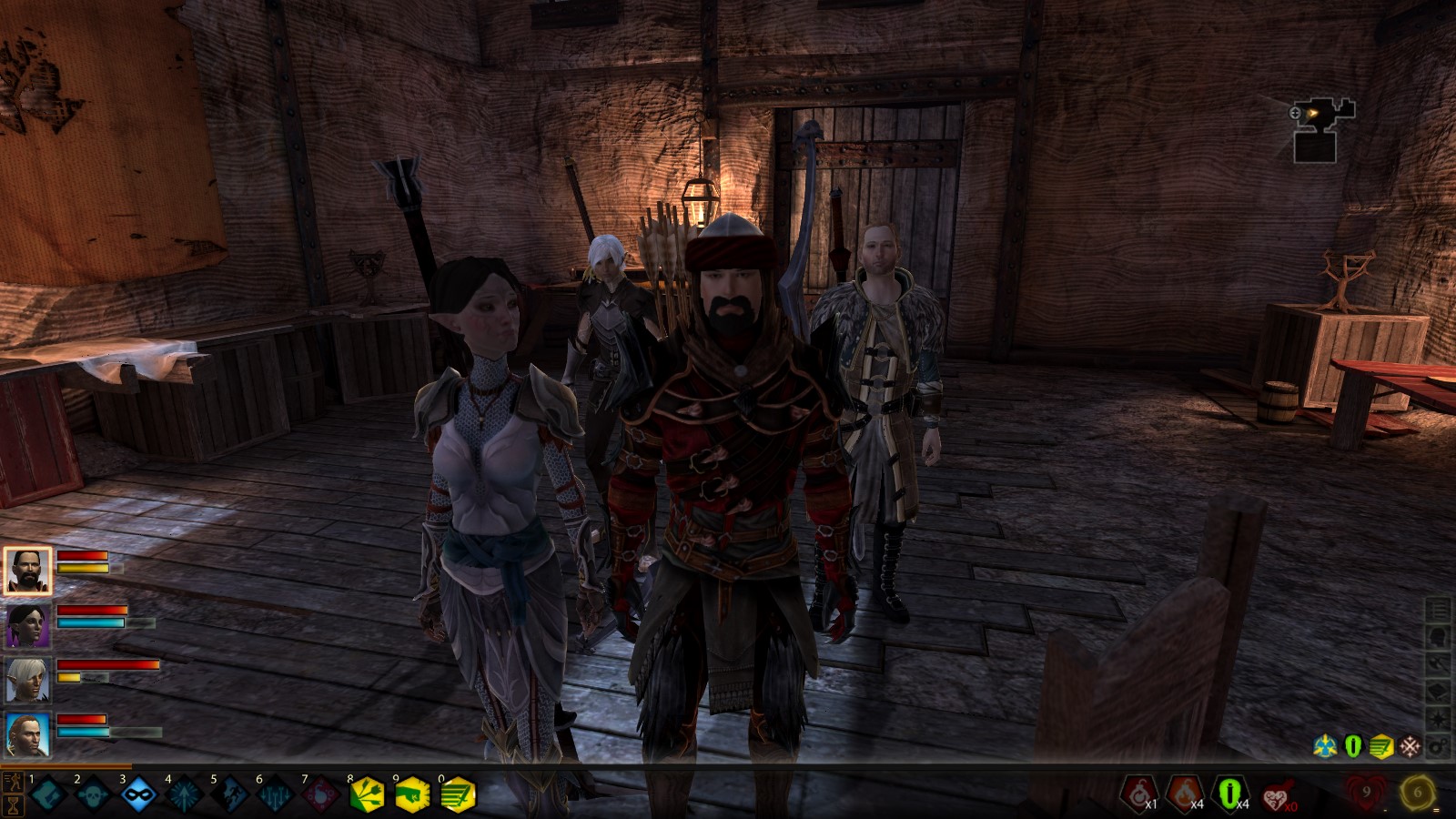
My party in Dragon Age 2Even when the plot did expand to world-changing issues, I felt like I was given much more agency than I was in Origins. I didn’t have to accept the injustices of the world, and I was able to be almost as much of a revolutionary as I wanted to be.

BURN THE CHANTRY. SLAUGHTER THE TEMPLARS. FIGHT THE POWER!

Ahem. Anyway…

Of course, it goes without saying at this point that the characterizations were excellent. I’m particularly going to miss Merrill now that I’ve finished the game. And Anders. And Bethany. And Fenris. But especially Merrill.

I thought the interactions with other characters were much streamlined this time, as well. The icons on the dialogue wheel to give you an idea of the tone of each option were a fantastic addition. Those little blurbs Bioware writes are often very vague, and I can’t count the number of times I said something completely contrary to what I wanted to back in Mass Effect. It was a great assurance to have a better idea of what my dialogue options were.

Initially, I was a bit put off by the disappearance of the great Bioware ritual of talking to all your companions after every quest, but once I got used to it, I realized that having conversations only available when characters actually have something meaningful to say makes much more sense. It was incredibly tedious to have to open up a whole dialogue tree just to check if someone has something new to say.

The Arishok in Dragon Age 2Conclusion:

So yes, I have terrible taste in everything. But hey, at least I’m enjoying myself. Despite its poor gameplay, Dragon Age II was like a book I couldn’t put down. From beginning to end, it kept me engaged and eager to see what happens next.

Overall rating: 8.6/10

Retro Review: Dragon Age: Origins + Heroes of the Storm

EDIT:

A website has just gone up confirming that “Heroes of the Storm” is the new name for Blizzard All-Stars, so it’s definitely not the next expansion for World of Warcraft.

See you in the Dark Below. 😉

Steam sale strikes again:

Bioware games always give me such mixed feelings, and Dragon Age: Origins does so more than most. Not only are there both many aspects of this game that I hated and many aspects that I loved, but often, they’re one and the same.

Speaking to the elder oak in Dragon Age: OriginsOverall, I don’t think this was one of Bioware’s better games. It had a lot of the right elements, but they just didn’t come together as well as they could have. It’s like a dish with all the right ingredients that just wasn’t cooked properly.

In the broad strokes, Origins is about what I’ve come to expect from Bioware. Fantastic character development and interesting moral choices, but incredibly weak gameplay.

In fact, even by Bioware standards, I found the actual gameplay of Origins to be extremely dull. I find it hilarious that the Steam page for the game sings the praises of its “bone-crushing, visceral combat,” because Origins has what just might be the most pathetically dull RPG combat I’ve ever seen.

Stamina is such a limited resource and ability cooldowns are so long that it feels like half the game is just watching your party auto-attack. On top of that, the attack animations are extremely lackluster and have absolutely no sense of force or power behind them, and there’s no creativity put into ability design at all. My archer’s abilities pretty much all boiled down to “shoot an arrow at them.”

The only saving grace of the combat system is the fact that you freely swap between controlling your different party members, which both allows you to coordinate their actions and gives you something to do other than make a sandwich while the game slays the dragon for you.

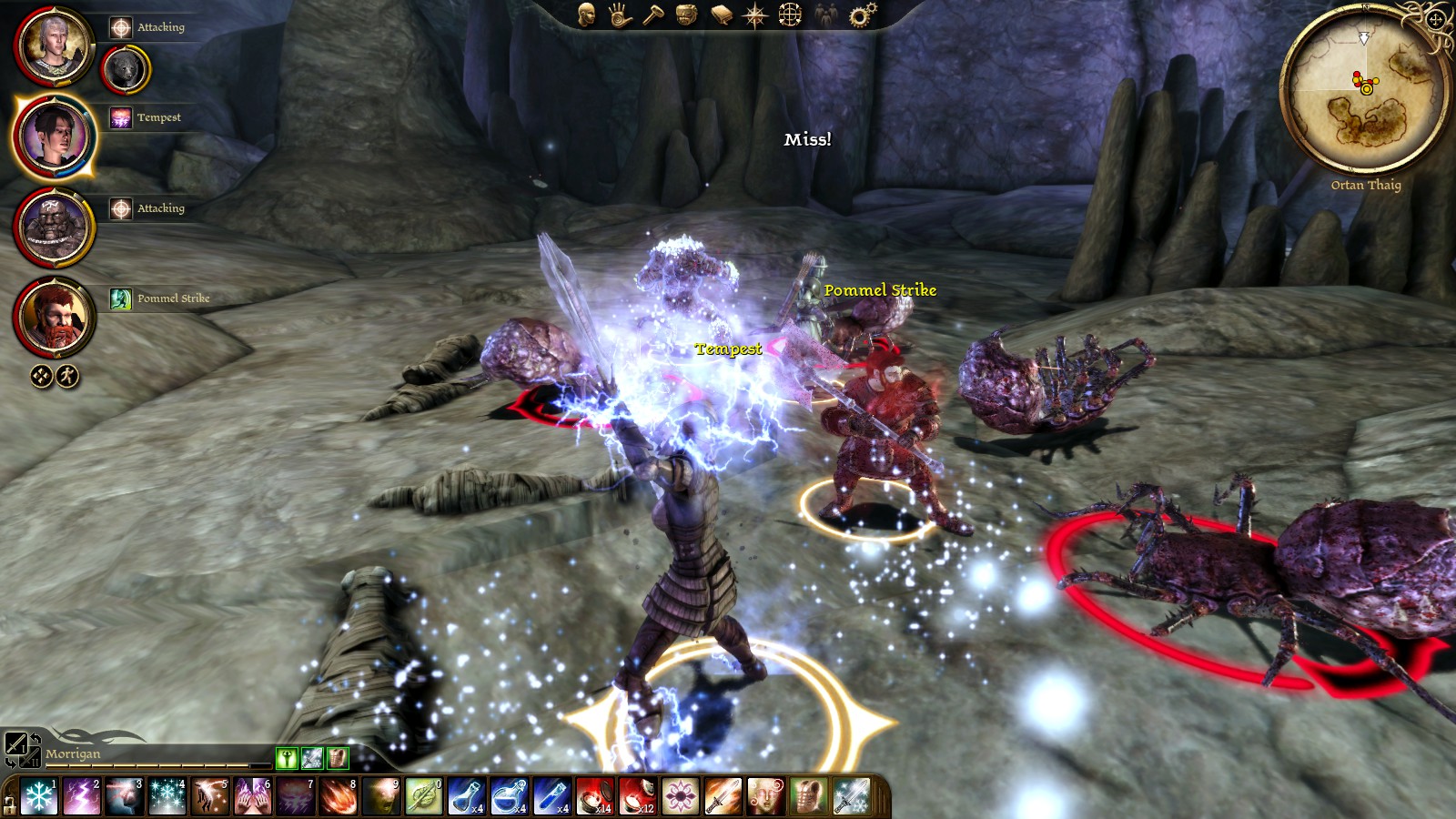
Blasting Darkspawn in Dragon Age: OriginsThe ability to swap between party members is the only reason I was able to get through this game. I quickly found out that I didn’t enjoy playing anything but a mage, so I let the AI control my archer and spent my time controlling Morrigan.

With her varied and powerful spells, I found Morrigan reasonably enjoyable to play, though still nothing to write home about.

The one good thing I can say about the gameplay of Origins is that it reminded me how much I enjoy RPGs where you control a party, not just one or two characters. I really wish we could get more of those. There’s just something to be said for the classic feeling of venturing into the wilderness with your party.

It’s also an incredibly big game, but I’m not sure whether to count that as a positive or not. On the one hand, it’s nice to have a truly meaty game — games tend to be far too short these days. But on the other hand, a good chunk of Origins was meaningless busywork, so it started to feel like a bit of a grind after a while.

But no one in their right mind plays a Bioware game for the gameplay, so let’s talk about what actually matters.

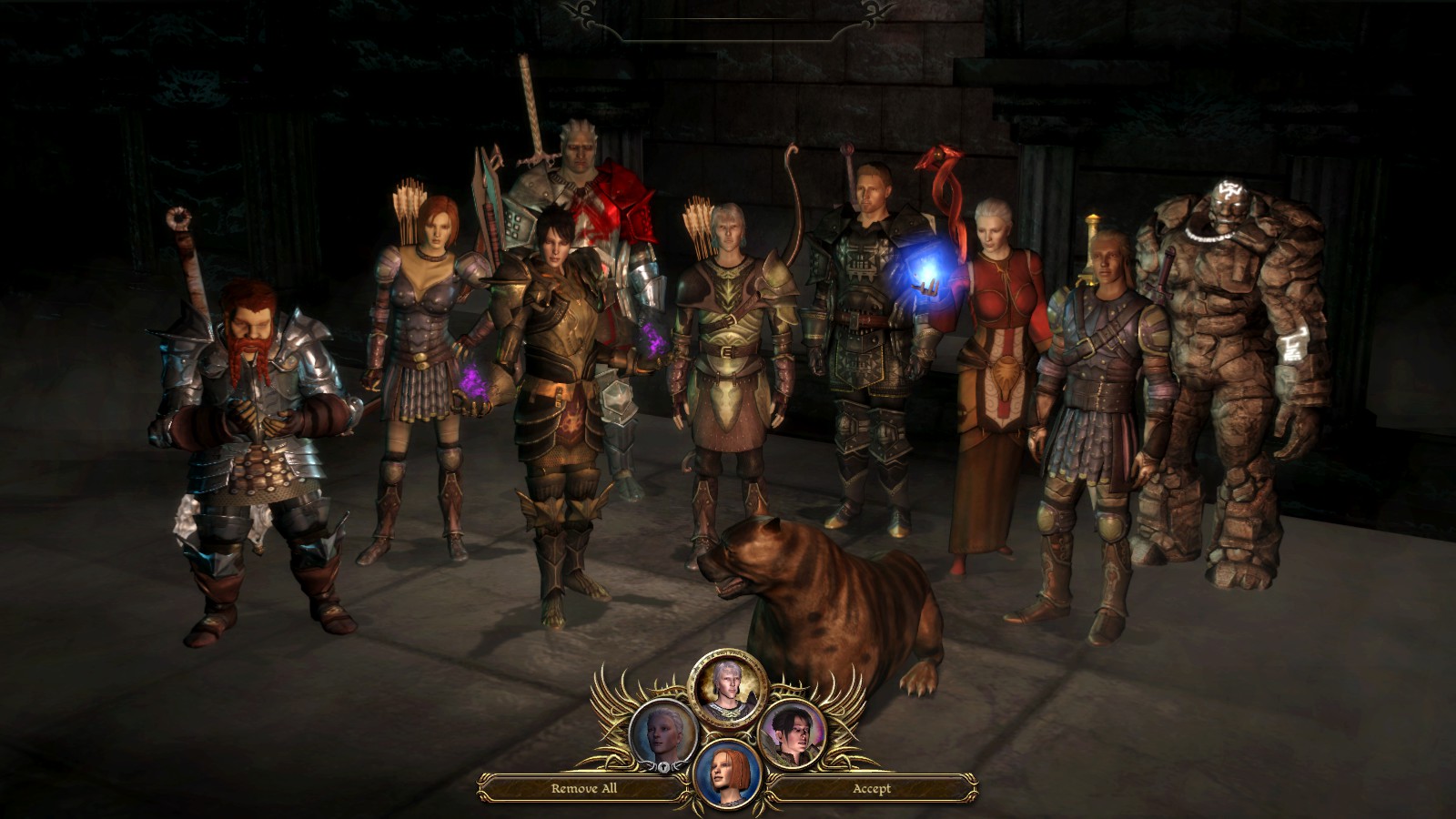
My full party in Dragon Age: OriginsCharacter and story:

If there’s one thing I can never fault Bioware on, it’s their characterizations. I expected Origins to include characters as deep, fascinating, and varied as those of the Mass Effect trilogy, and I was not disappointed.

On some levels, I think the characters in Origins are even a little more interesting than their Mass Effect counterparts. They were more colourful. Much as I enjoyed the Mass Effect cast, they could be a bit stiff at times.

Something else that impressed me is that each character has a very unique and distinctive speech pattern. From Morrigan’s archaic terminology, to Sten’s bluntness, to Zevran’s wry flirtatiousness, they all had a very clear voice — and I’m not talking about their voice-overs, though those were also excellent.

Also, Morrigan is awesome. Can we get a whole game just about her, please?

Outside of the character arcs, though, I found the story a mixed bag, at best.

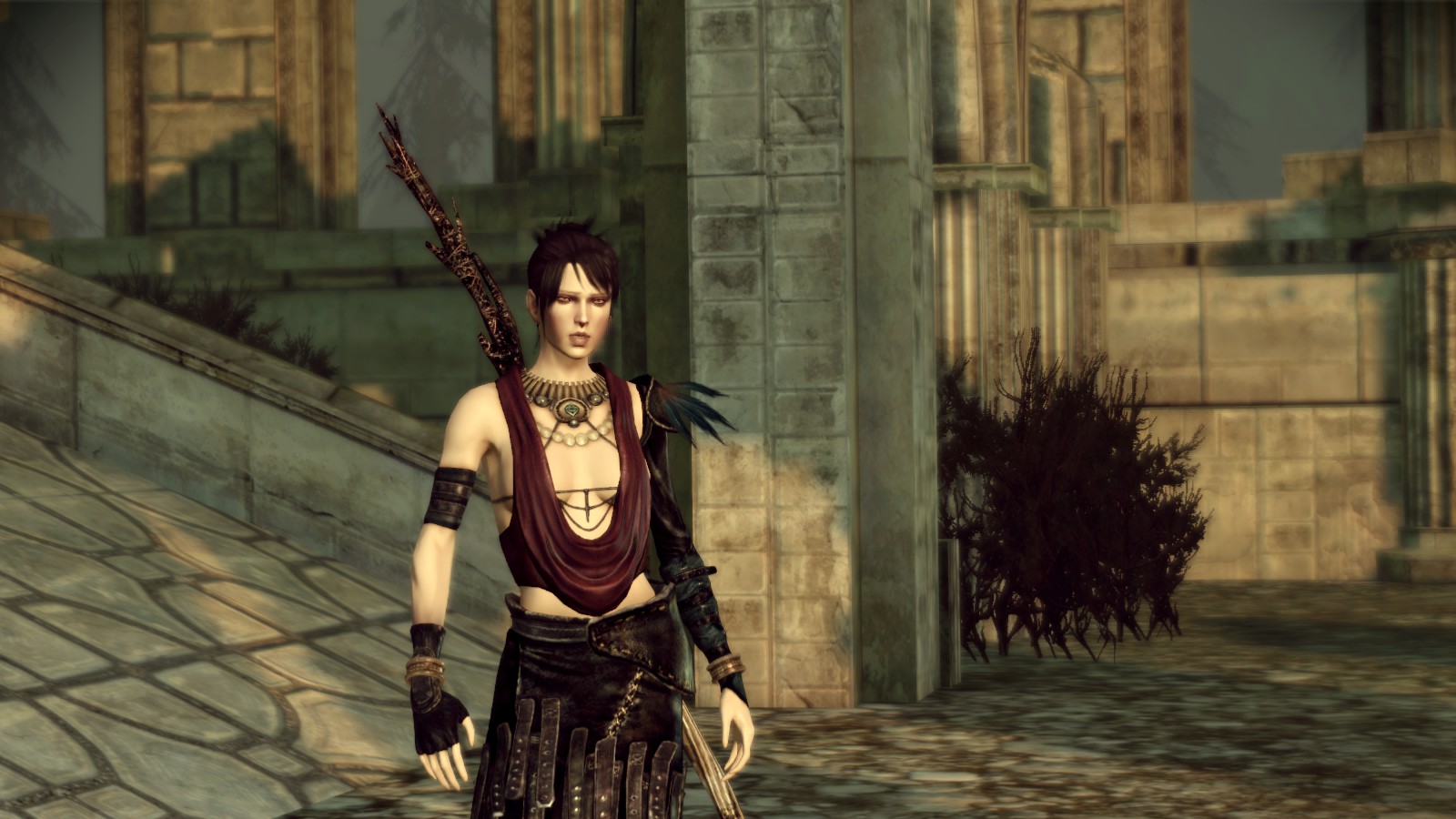
Meeting Morrigan in Dragon Age: OriginsThe overall story of Origins is incredibly cliche, to the point where I think it’s probably intentional. And that’s not always a bad thing; there is something to be said for the classics. I wouldn’t have minded the generic nature of the story if it had been executed well, but it wasn’t.

The main problem with the story in Origins is the same one that plagued Mass Effect 2. It’s Side Quest: The Game. I spent so little time dealing with the Darkspawn that I sometimes forgot they were even a threat. There was no sense of urgency or peril. It was just a lot of running around and solving political disputes.

Origins gives so much attention to the politics of the world that it makes me wonder why they even bothered to include the Darkspawn at all. They don’t really add anything to the game, and a more focused plot dealing with the politics and racial tensions of Ferelden probably would have worked a lot better.

I also found the story oddly unsatisfying. Sure, I beat the Darkspawn, but they’ll just be back in a few hundred years anyway.

And I have to be honest: I loathe Ferelden. It’s a disgusting, oppressive culture, and if it had been up to me, I’d have razed Denerim myself.

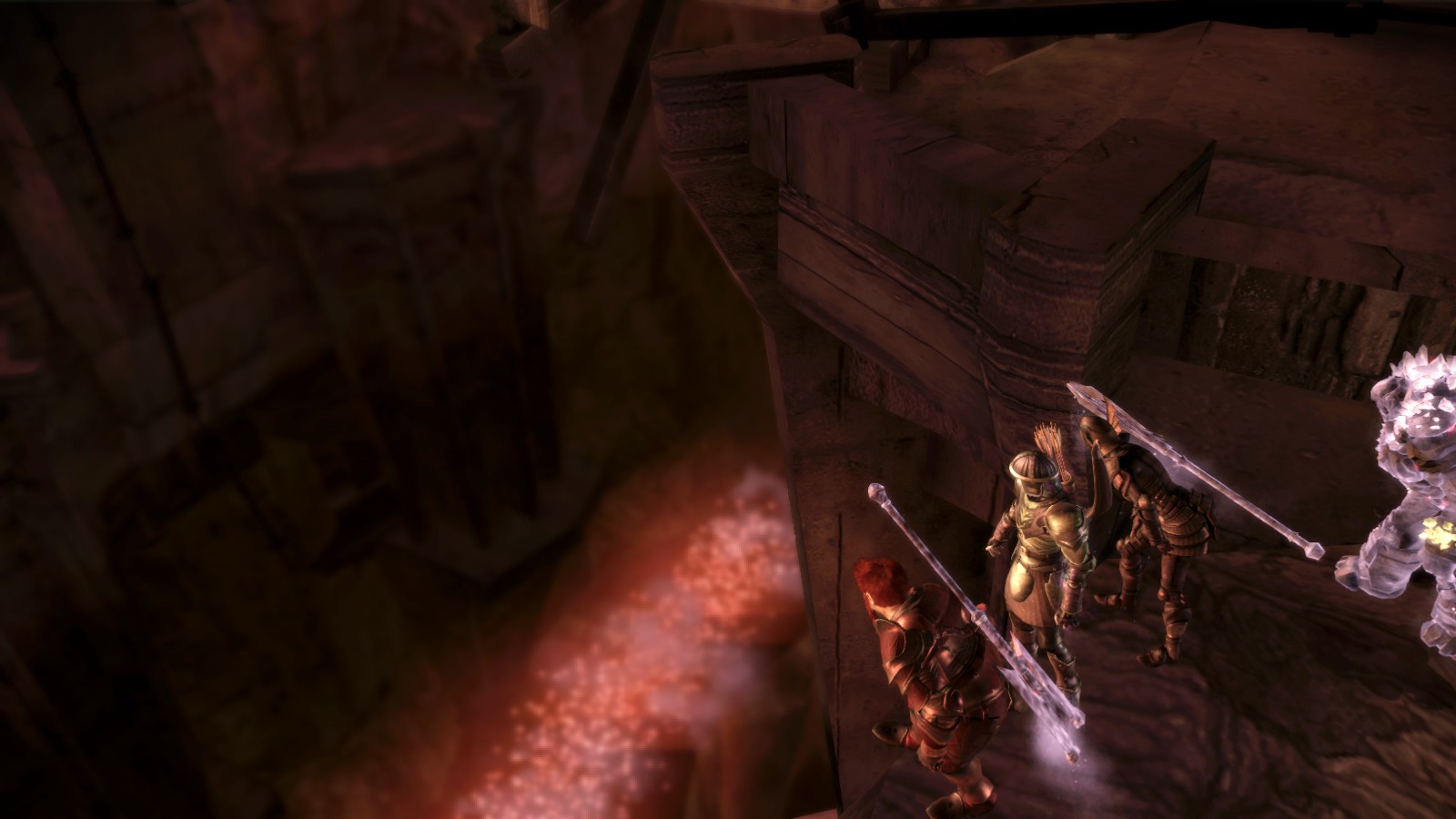
The Darkspawn march through the Dead Trenches in Dragon Age: OriginsPlaying an Elf probably had a lot to do with this. Elves are treated so horrifically by human society that spending the entire game trying to save humans left a very bitter taste in my mouth. My character was a proud son of the Dalish clans. Why should he be trying to save the people who conquer, enslave, rape, and torment his people?

I mean, I understand why. The Darkspawn would have killed everyone, not just humans, and I wasn’t really given a choice about becoming a Grey Warden. But, again, it’s unsatisfying. I wanted to at least be able to address some of the the injustice in the world, but I was powerless to do so.

But on the other hand, this can also be seen as a plus for the story. They made me care about the world. The depth of the hate I have for the kingdom of Ferelden shows that I was truly engaged with the world.

And they did do a very good job of making this a morally challenging game. Not having an alignment system like in Mass Effect is very liberating, and I was able to go with the choice I truly wanted every time.

Not that it was always easy to decide which path I wanted to take. Some of the decisions you have to make are pretty brutal, with no easy answers.

My party's camp in Dragon Age: OriginsFor whatever other flaws Origins’ story has, it is your story, and that makes for a very gripping experience.

Ultimately, I’ve come to the conclusion this is why I like Bioware games. It’s sort of like writing fan fiction — all the hard work of world-building and character development has been done for you, so you get to just enjoy weaving your story. For a writer, it’s like giving a kid a box full of awesome toys and telling them, “Go nuts!”

I’m so conflicted.

Final thoughts:

I’m not sure whether I want to continue with the Dragon Age franchise. Sticking with the Mass Effect games despite early misgivings proved the correct choice, and I see a lot of potential in the Dragon Age universe for some truly great stories, but Origins fell way short of that potential, and it would take some radical changes to make the series truly compelling.

I already have the Awakening expansion, and I’ll probably play through it at some point. And I’ll try the demo for Dragon Age II eventually, but I have my doubts about whether I’ll buy it. With my limited budget, there are probably better games I could spend my money on. Although I heard everyone hated DA2, so maybe I’ll love it. I do have terrible taste in everything.

Overall rating for Dragon Age: Origins: 6.8/10