
Although it hasn’t been out for that long, it’s still surprising it took me this long to get around to reading the first book of The Gates of Good Evil, the newest trilogy in Ian Irvine’s vast Three Worlds Cycle. Ian Irvine is my favourite living writer, and I’ve been eagerly anticipating this book for years.
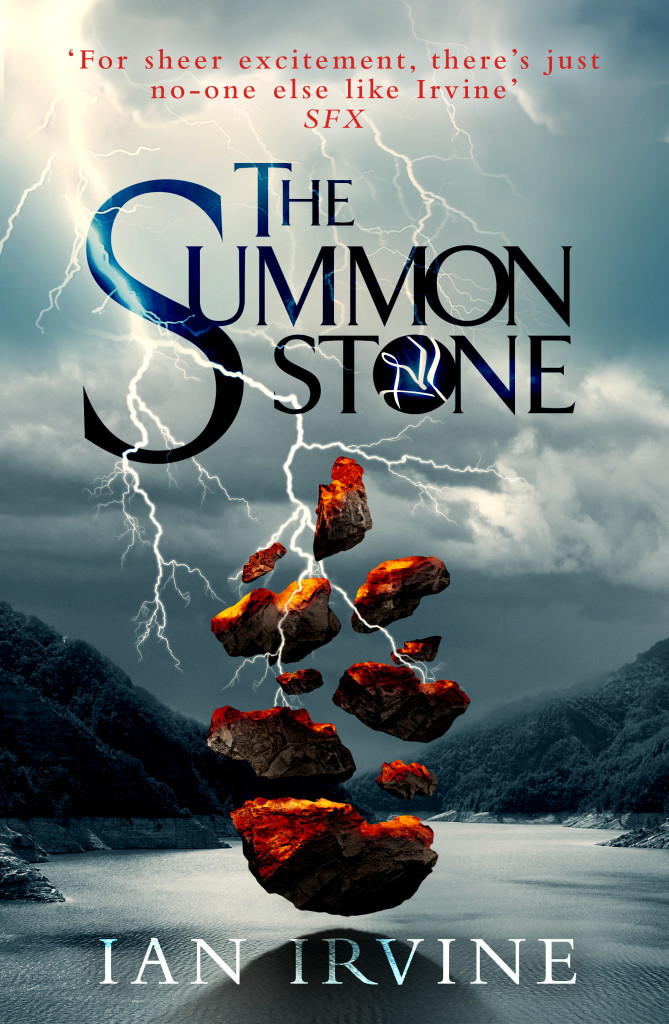 The Summonstone occupies an odd place in the mythology of the Three Worlds. It is a direct sequel to the first part of the saga, The View from the Mirror, taking place about ten years after the events of The Way Between the Worlds and once again putting the focus on the original heroes, the sensitive Karan and Llian the chronicler.
However, this also makes it something of a prequel to the other Three Worlds books, The Well of Echoes quartet and The Song of the Tears trilogy. It’s kind of a weird space for a story to be, and the competing goals make the story a bit scattered at times.
I’m going to try to avoid major spoilers for The Summonstone itself, but by necessity I will be spoiling the other Three Worlds books a bit. You’ve been warned.
In typical Ian Irvine fashion, the story wastes no time in having basically everything go wrong. Karan and Llian’s young daughter, Sulien, awakens from a nightmare, and this is no ordinary dream, but a vision.
She has seen an army gathering within the Void, the Merdrun, and they plan to invade Santhenar and claim it for their own. Sulien is the only threat to their plans, and they plan to use dark magic to snuff out her life and pave the way for the genocide of humanity.
Meanwhile, the Merdrun’s Summonstone is waking, sending out a psychic drumming across Santhenar that twists and corrupts all it touches, driving even the best of people to madness, murder, and betrayal.
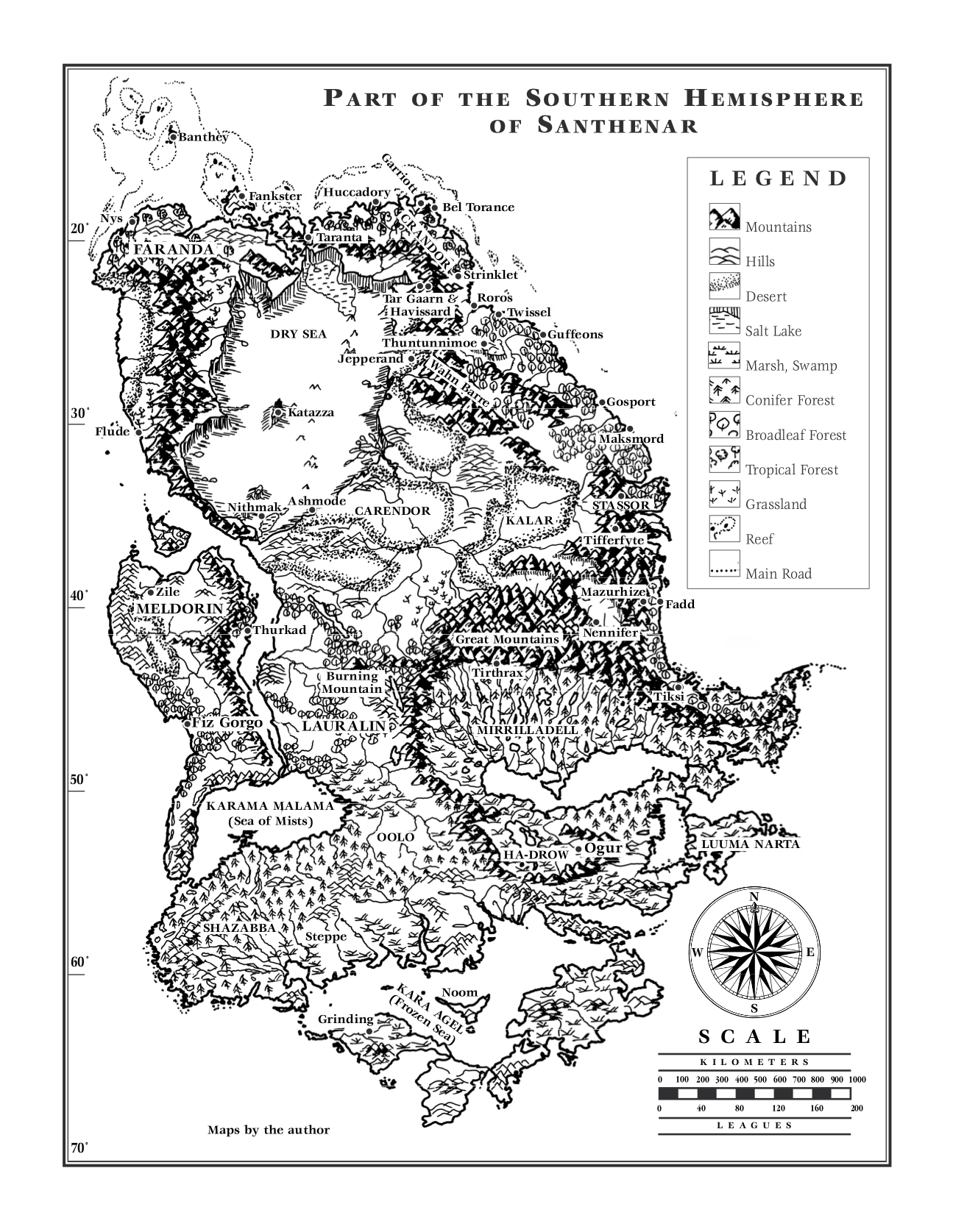
And at a time when Santhenar should be uniting against the threat from the Void, war ravages the island of Meldorin as the deranged warlord Cumulus Snoat attempts to bring the land under his dominion. Soon even the Council of Santhenar is on the run from his forces.
The pacing is breakneck, perhaps a bit too much so. I found the early parts of the book felt a little rushed. I would have enjoyed a slightly slower build-up, maybe some time to see more of Karan and Llian’s family life and how they’ve changed over the years.
I was also reminded that I’ve never been a particular fan of Karan and Llian as characters. Llian is for the most part an imbecile — though for what it’s worth he was a bit more likable this time around, even if he still doesn’t do that much — and Karan can come across as a bit melodramatic at times. Yes, I know she’s a sensitive, and she can’t help it, but whatever the cause, it still gets a bit wearing after a while.
For me, The View from the Mirror was carried by the strength of its secondary characters. The good news is that’s true here, as well. We’re reintroduced to some old favourites — oh, how good it is to see Lilis again — as well as some great new characters.
 Wilm is a simple farmboy possessed of great courage and goodness, and one of the most fiercely likable characters Ian Irvine has yet produced. Aviel is an ill-fated girl with a crippled foot, but the rare ability to create magical scent potions — which is an interesting take on magic if I’ve ever seen one. Then there’s Ussarine, the massive but good-hearted warrior woman, and the troubled twins Esea and Hingis.
I’m impressed that even after all this time Irvine is still managing to create characters and stories that feel fresh and different. Usually when an author has been around for this wrong, especially if they’re mainly writing in the same universe, they inevitably fall into tired formulas.
There are some patterns that keep coming up over and again in Ian Irvine’s books — mainly his determination to adhere to Murphy’s Law at every possible opportunity and the fact that almost all his characters seem to have dead or absent fathers — but it’s far from the rote routines other long-running fantasy series often devolve into.
Ultimately, my main complaint about this book is not my lukewarm feelings toward Karan and Llian, nor even the rushed pacing, but the Merdrun themselves.
Part of this is the weight of expectation. I had envisioned this series as telling the tale of Karan’s conflict with Maigraith, which would lead to all the troubles of Santhenar over the coming centuries. There’s a bit of that, but it takes a backseat to this totally new, and frankly less interesting, threat.
I’ve certainly seen worse villains than the Merdrun, but I can’t say I find them particularly compelling, either. So far they seem to be purely evil monsters, with none of the nuance that originally attracted me to the Three Worlds books.
At the same time, they’re still less interesting than the other purely evil threats of the series. We saw Jal-Nish and Maigraith become corrupted over time, which lent them colour and depth, and their cruelties were on full display. There’s a lot of telling, as opposed to showing, with the Merdrun.
Nor can they equal the alien horror of the creatures of the Void, being still more or less human, just really nasty humans.
Oh, and stop killing dogs, Ian. You can kill all the human characters you want, but leave the puppies out of it.
That said, there’s still plenty to like. If I’m critical of this book, it’s mainly because I hold Ian Irvine to a higher standard than most other writers. The action is still exciting, the new characters (as mentioned above) are mostly very strong, and the world-building remains as excellent as ever. Very few fantasy settings can equal the depth and texture of the Three Worlds.
And the climax of the book is absolutely spectacular. Tense, exciting, and with some fantastic twists.
Also, while The Summonstone didn’t entirely meet my expectations, it’s worth noting this is just book one of the trilogy, and Irvine’s series have had rough starts before. The first book of The Song of the Tears left me a little cold, too, but it turned into one of my all-time favourite series.
I look forward to the next installment.
Overall rating: 8/10


 Superior Realities