
Warning: Rambling lore post ahead.
One of the things that’s been on my mind lately is what the real “souls” of Warcraft’s two iconic factions are. The Horde and the Alliance have gone through many different phases and iterations over the years, but what are the real core traits that define them?
 I think it’s worth discussing because I feel there are a lot of people who don’t really grasp what the factions are supposed to be about. Partly, this is due to their own misunderstandings of the lore, but Blizzard also deserves a fair share of the blame. Some of their decisions have muddled the identities of the factions significantly.
I’ll say upfront that while I firmly believe my interpretations of the factions are correct (obviously), a lot of this is based on opinion and personal interpretations of events, and unlike my epic rant against the concept of “Horde bias,” most of my arguments here cannot be objectively verified within the lore.
I’ll be looking at both the good and bad sides of each faction, as I firmly believe neither is better than the other. They are both admirable and flawed in their own ways.
The Alliance
The good:
At their best, the Alliance embody the virtues of wisdom, justice, honour, and nobility. They are the archetypical knights in shining armor. They will seek out evil wherever it is found and vanquish it, but they will work just as hard to protect the innocent and uplift the righteous.
In D&D terms, the Alliance at its best is lawful good. Their society is founded on law and order. They are the embodiment of discipline. They are the Draenei and Night Elves, who have spent millennia training themselves with the sole purpose of defeating the Burning Legion. They are the humans, Gnomes, and Dwarves, unflinchingly loyal to their allies and ideals. They are the Tushui, who believe an ideal solution can always be found with enough patience, and they are the Gilneans, proud and uncompromising.
 They pursue justice, but never vengeance. Theirs is the measured response, the firm but fair hand. They are determined in battle but merciful in victory.
This is another area where I feel those complaining about the ending to Siege of Orgrimmar may have missed the point. If you want to crush your enemies, see them driven before you, and hear da lamentation of deir women, you picked the wrong faction when you rolled Alliance.
The events of SoO are the best distillation of the Alliance’s nobility I can think of. They saw that Garrosh needed to be stopped, and they fought tooth and nail to bring him down, but they were also fair enough to see that not all in the Horde shared in his madness. Varian saw fit to spare those among the Horde who had proven themselves honourable.
This shows Varian’s growth as a leader. He has become a true paragon of the Alliance’s ideals. He put aside his personal hatred to see that justice was served. Because justice isn’t only about punishing the guilty; it’s about preserving the innocent, and the Alliance are Azeroth’s champions of justice.
The bad:
The downside of the Alliance’s ideals is that it often leads them to become conceited and hidebound. It’s a very short walk from “We are the most righteous” to “We are the only pure ones, and everyone else is beneath us.”
 At its worst, the Alliance is the most narrow-minded, arrogant, and bigoted force on Azeroth. Intolerance is rampant throughout all of the Warcraft universe, but none have made it so core a part of their culture as have the Alliance.
The dark side of the Alliance is the casual racism of the humans and the xenophobia of the Night Elves. It’s the way the Draenei have spent so long looking at the big picture that they’ve all but lost the ability to feel compassion on the individual level. It’s the way the Tushui would rather do nothing at all than act rashly to address an injustice.
When I think of the Alliance at its worst, I think of the events of the Blood Elf campaign in the Frozen Throne.
In their hour of greatest need, the Blood Elves reached out to the Alliance for aid. They pledged themselves to help the Alliance retake Lordaeron and Dalaran. And how did the Alliance repay them?
By betraying them. The Alliance sent the Blood Elves on a suicide mission to drive the last nail into their coffin, and when the Blood Elves sought out help from Illidan Stormrage to avoid extinction, the Alliance branded them traitors and imprisoned them. To this day, the Alliance still calls them betrayers, when their only crime was choosing to live.
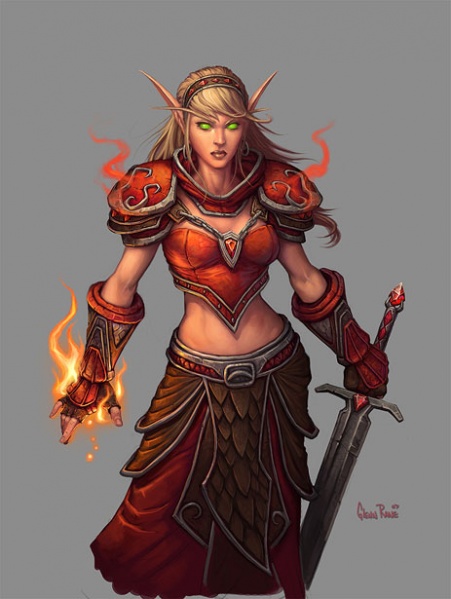 And why did the Alliance do this? Because they were Elves. No other reason. It was an act of blind, petty bigotry with no rational thought behind it.
The Horde
The good:
The Horde are a very diverse faction — to the point where it strains credibility at times — so it’s hard to condense them down to any one set of traits.
But if I had to define one ideal that brings all of the Horde races together, it would be freedom. Freedom from oppression, freedom from assault, freedom to live their lives as they see fit.
Most of the Horde races have been the victims of slavery or persecution in the past, and the majority of them are races that the greater world has deemed unworthy.
Somewhat understandably, much of the world views the Orcs as savage monsters. The Orcs keenly remember what it was like to be slaves to the Alliance, to have their freedom and dignity ripped away from them, and they never want to see that repeated.
 The Darkspear Tribe are the very bottom rung of Troll society, an underclass loathed by all. The Tauren are viewed by the greater world as mindless beasts, few understanding that their culture is simple by choice rather than because of a lack of intellect. The Blood Elves were never very popular on account of their connections to the Highborne and overall arrogant attitude, and the circumstances of their split from the Alliance have given them a false but pervasive reputation as traitors. And as for the Forsaken, well, nobody likes zombies.
The Horde is the big tent faction. They will accept anyone willing to fight with honour and respect the traditions of the other Horde races. They are not judgmental like the Alliance. They are willing to look past the surfaces and judge people based on the true natures of their characters.
The Horde have a reputation for being warlike, but I don’t believe this is true. Not entirely, at least. They are warriors, yes, and they would never back down from a challenge, but the true Horde — not the mockery that Garrosh applied the same term to — is not made up of warmongers.
It’s a shame Blizzard shortened the battle cry to just “lok’tar ogar.” The original was much more descriptive of the Horde’s true persona: “Blood for blood. Life for life. Lok’tar ogar!”
That’s the Horde’s true perspective on war. An eye for an eye, and a tooth for a tooth. They don’t go seeking fights, but they will repay any injury tenfold. They have suffered too much and are too few in number to be able to tolerate abuse; they must crush their enemies utterly. But they will not do so without strong justification.
 The Horde doesn’t start wars. They finish them.
The bad:
Most would say that the negative side of the Horde is that they are too violent and reckless, that they too often let their bloodlust consume them. This is a very reasonable perspective, and there are a lot of good arguments to back it up, but I’m actually going to disagree.
Firstly, I want to clarify something people often overlook. There has been more than one organization in Warcraft lore called “the Horde.” The Horde that initially invaded Azeroth is a separate entity from the one that exists today. That Horde was crushed and disbanded by the Alliance. The modern Horde was founded for entirely different reasons and with an entirely different set of ideals.
The modern continuation of the first Horde was the Dark Horde in Blackrock Spire, which was ultimately little than a gaggle of puppets for Deathwing.
So we have to look at what the mistakes of the modern Horde have been, and I’m inclined to say that dark side of the Horde is the same thing that makes in admirable: they’re the big tent.
 The Horde has become too tolerant, too willing to forgive. They see the good in everyone, even when there’s no good to be seen. They look the other way in regards to the war crimes of the Forsaken. They were blind enough to believe Garrosh could actually be a good leader. They were willing to accept the worst elements of the previous Horde, the Blackrock and Dragonmaw Clans, back into the fold.
This may seem like a back-handed compliment to the Horde — “they’re too nice” — but trust me, it’s not. Being willing to forgive your friends ceases to be admirable trait when those friends are genocidal lunatics.
When the Forsaken showed their hand at the Wrath Gate, Thrall should have come down on Undercity with fire and fury and ended their threat once and for all. Countless innocents have died horribly and will continue to do so because of his willingness to trust. There is no excuse for that.
Gallywix was so ruthless he enslaved his own people, and yet he was allowed to continue on as trade prince. No one batted an eye over the Blood Elves enslaving and torturing a Naaru. The Warsong Clan went rogue before Garrosh even arrived from Outland, and no one’s ever tried to reign them in.
Even the most noble members of the Horde are guilty of aiding war criminals through their willingness to look the other way.
 Some people just aren’t worthy of forgiveness. And the longer it takes the Horde to realize this, the more blood will stain their hands.
Admittedly, this may be more Thrall’s flaw than the flaw of the Horde as a whole, but the modern Horde is so much Thrall’s child that it’s almost impossible to separate the two.
Purple is my favourite colour:
Mostly, I wrote this post just because I enjoy musing about Warcraft lore, but I’d also like to illustrate that each faction has its own merits and flaws. There is no good faction and evil faction. They’re different perspectives, and each needs the other.
Azeroth needs both the Alliance and the Horde if it’s going to survive. They balance each other’s flaws. A world dominated by the Alliance would quickly turn be an oppressive, rigid place ruled by dogma and intolerance. A world ruled by the Horde… probably couldn’t exist. It would just devolve into a Wild West of disparate races and ideals that would be crushed like gnats the next time the Legion shows up. If Sylvanas didn’t murder everyone first.
Azeroth needs the wisdom and order of the Alliance, but it also needs the Horde’s passion and strength of spirit. They are very different ideals, but they compliment each other, and all of the greatest victories of good within Warcraft’s history have come as the result of the two working together.
So don’t hate the opposing faction, and don’t expect your faction to be all things to all people. They both have their purposes in creating a whole story, and we should embrace the balance between red and blue.


 Superior Realities