Off Topic: No One’s Gay for Moleman

In my sixth anniversary post, I lamented the lack of Simpsons content on Superior Realities. I think it’d be too big a change of direction if I started talking about The Simpsons all the time, but I have decided it’s high time I do at least one post on the matter.
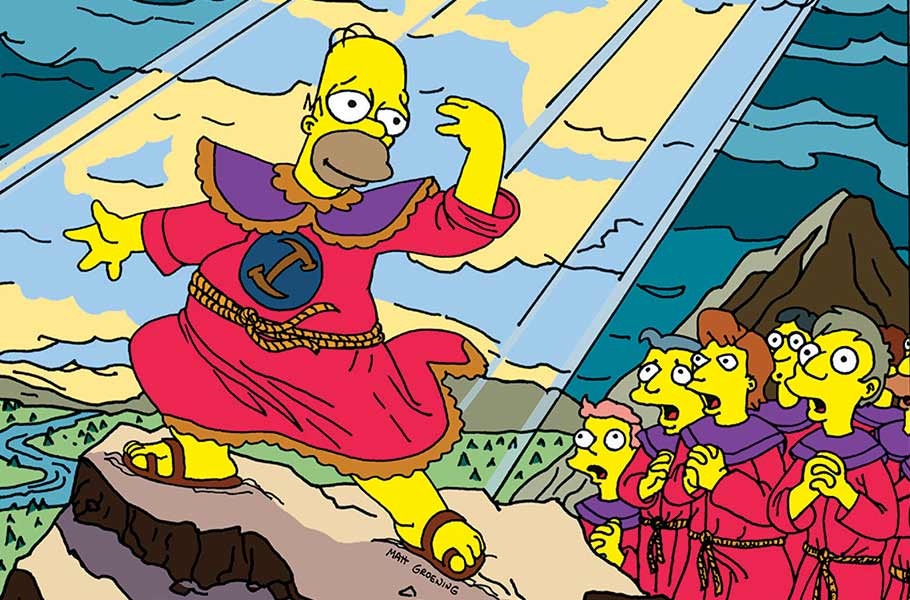
I always wondered if there was a god, and now I know there is. And it's me.It may not often come up on this blog, but I am a massive Simpsons fan. I’m every bit as obsessed with it as I am with Warcraft or Metric. It’s a pillar of my life and always has been. I grew up watching The Simpsons — I literally can’t remember life without it — and I’ve continued to be a fan to this day.

Yes, this does mean I’m one of those people who still thinks The Simpsons is funny after all this time. I’ll definitely grant that it’s a lot more hit and miss than it once was, but there are still good episodes, and even the more mediocre ones still usually have at least one or two excellent lines (“This simulation has been brought to you by Your Brain, a subsidiary of Your Penis”).

Honestly if you ask me the real nadir of the series was probably around seasons eight and nine. That one where it turns out Principal Skinner is an impostor? Ugh, just dreadful.

And I think some of the best episodes have come from relatively recent seasons. I’d say “Mona Leaves-a” from season nineteen is probably the most emotional episode of the series, intensely bittersweet while still managing to bring some humour to the tragedy.

Then there’s season twenty-three’s “The Book Job,” which is easily one of my all-time favourites. I’m totally biased, of course, but I think that episode is absolutely brilliant, and I’d consider it required viewing for anyone who has written or even thought about writing a novel.

The Book JobPlus you get to hear Neil Gaiman doing a terrible American accent. What’s not to love?

Normally Simpsons holiday episodes are pretty bad, but “Holidays of Future Passed,” also from season twenty-three, was a rare exception, being both funny and heartfelt. In general I’m fascinated by the whole alternate continuity that has been developed through the various flash forward episodes.

Interestingly, the one other holiday episode that I enjoy is also from a modern season: season twenty-six’s “I Won’t Be Home for Christmas.” I like it because it has a very simple premise — even if it goes to some pretty weird places along the way — and it puts Homer in an unusually positive light. For once, he’s the wronged party; he did everything right.

I can think of lots of other examples, but the point is, I’m still having fun with the show.

Of course, I also have lots of love for the “classic” days, as well. Never going to stop loving the Stonecutters, hired goons, Evil Homer, sixty-four slices of American cheese, or the cursed frogurt.

There are some fascinating things about a show that’s been around as long as The Simpsons. I’m always amused by its take on continuity.
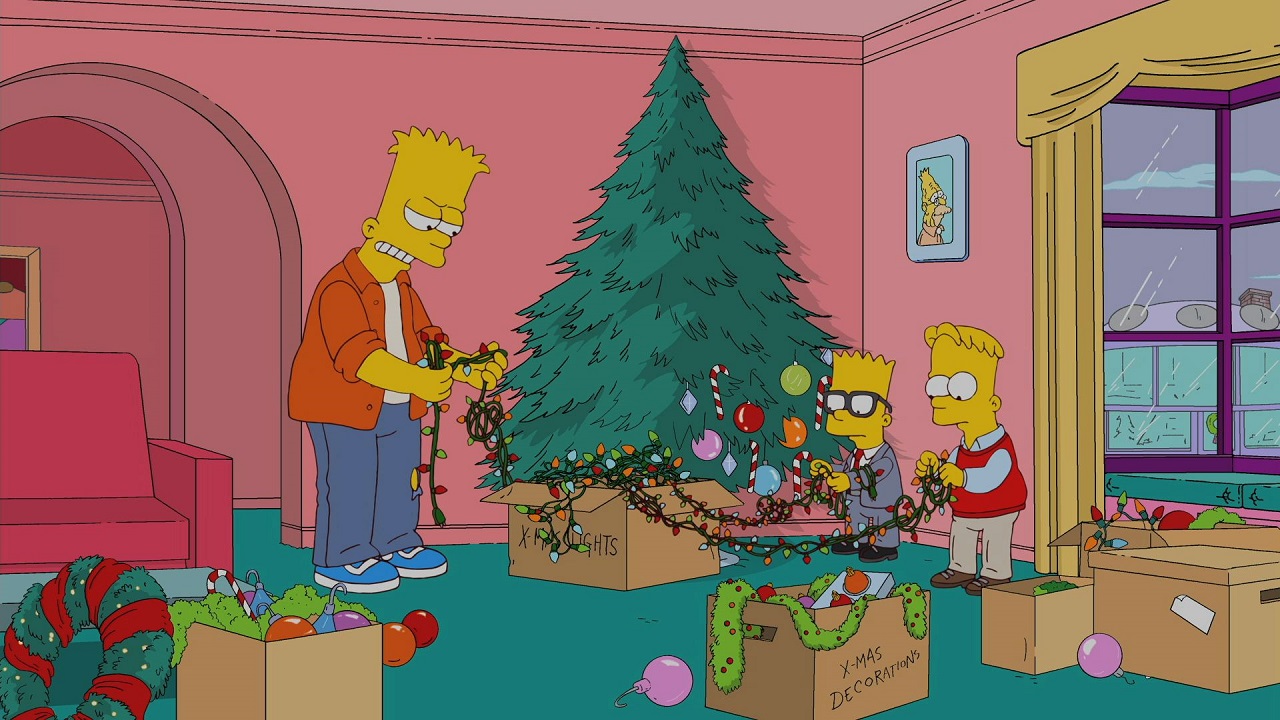
Bart's sons in the futureYou might say The Simpsons has no continuity, and you’d be mostly right, but not entirely. Things rarely change in Springfield, but sometimes they do, and you can never predict which changes will stick. I fully expected Comic Book Guy’s wife to be a one-off character, but she’s still showing up from time to time, as is Selma’s daughter.

The Simpsons kids never age, but oddly, some of the show’s other children do. Both Ling Bouvier and the Nahasapeemapetilon octuplets have visibly aged since they first appeared, though not enough to reflect the actual real world time that has passed.

Bizarrely, though, Jamshed Nahasapeemapetilon has aged in real time and is now an adult.

Under other circumstances, this level of inconsistency might be frustrating, but at this point it’s just part of The Simpsons’ charm. Springfield exists in a surreal nether realm where the logic of our world simply doesn’t apply.

The Simpsons’ long run can also make it a fascinating sort of cultural barometer. Earlier on, computers and the Internet were treated as some novelty the characters rarely interacted with. Now Lisa’s doing research on Google all the time and the rest of the family all have smartphones and tablets.
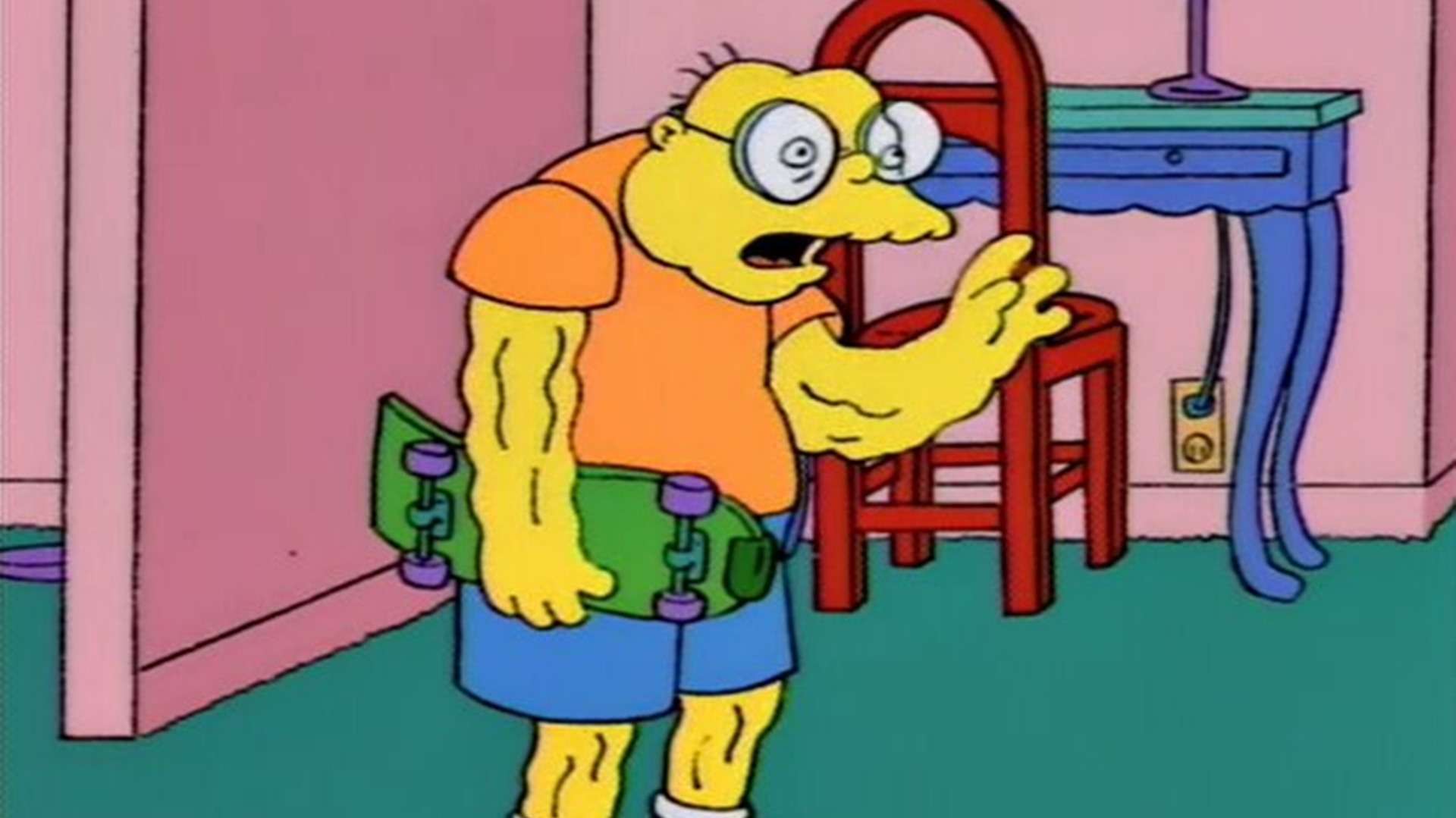
It's like kissing a peanutHomer used to be intensely homophobic, but now he’s evolved beyond all that, and the number of openly gay Springfieldians has increased significantly. Even if no one’s gay for Moleman.

The Simpsons is, if nothing else, unique. Even if it did stop being funny, I’d probably still watch. It’s just a part of who I am at this point. I’ve probably spent at least as much time with them as I have with my real family…

Gaming: The Unblogables

Over the years, I’ve mostly been consistent about blogging on every game I’ve played, but there are exceptions. Usually games that I didn’t play for very long. I don’t have enough to say about each one to fill a whole post, but I thought it might be interesting to collect them together into one quick list. Today, the unblogables will come to light (all right).

The Inn of the Prancing Pony in Lord of the Rings OnlineThis isn’t necessarily an exhaustive list of games I’ve played but not blogged about, but these are the more noteworthy ones.

WildStar

I played WildStar during its open beta, and I actually wrote up a fairly extensive impressions piece for a paying client. Unfortunately, due to circumstances outside my control, the article never saw the light of day.

The fact that I never returned to WildStar after the beta should give you some idea of what I thought of it. I did like the housing, at least. Every MMO on the market should be rushing to steal WildStar’s housing system wholesale.

The combat was also pretty fun solo, though it turned into an incomprehensible rainbow spew in a group setting. And the environment art grew on me — like playing a Dr. Seuss MMO — but I never did learn to like the character models.

Overall, though, I found the glacial pacing, grindy gameplay, and obnoxious forced humour were enough to turn me off the game pretty fast.

I regret that my article never saw the light of day, because I feel like I was one of the few who predicted WildStar’s collapse early on (if anything I underestimated how badly it would crash and burn). But now I can’t prove that, so my opportunity to gloat has been denied.

A space mission in WildStarI could just see that this was a game that didn’t know who its audience was. It has a deep backstory, but Twitter-style word count limits on quest text. Its constant humour and silliness screams casual game, but the actual gameplay is a brutally grindy homage to the days when MMOs were more like second jobs.

Skyrim

I can definitely see how Skyrim could be an amazing experience for a certain kind of gamer.

I’m not that kind of gamer.

Really my gripe is that it’s mislabeled. It gets classified as an action RPG, but it’s not. It strikes me as more of an exploration sandbox/kleptomania simulator. And again, that’s fine, and they do it well enough, but it’s just not what I’m looking for in a game. The phrase “a mile wide and an inch deep” does come to mind.

EVE Online

I thought it’d be the infamously cruel and ruthless community that drove me away from EVE — I did love how the very first thing the tutorial tells you is “don’t trust the other players” — but actually it was the clunky UI and stiff gameplay that I couldn’t get over. After a couple hours, it was just making my brain hurt, and not in a fun TSW kind of way.

Lord of the Rings Online

A screenshot from Lord of the Rings OnlineAs a big fan of both Lord of the Rings and MMOs, LotRO seems like a game I should love. But when I finally got around to trying it, I barely lasted an hour.

It’s the same old story: It’s a WoW clone, through and through. When I want to play WoW, I’ll just play WoW.

And more importantly, if there’s one setting that doesn’t belong in that mould, it’s Lord of the Rings. In a Lord of the Rings game, I do not want to be doing meaningless kill ten rats quests for faceless NPCs. I do not want to be an overpowered god who can one-shot any foe with a dirty look. I want to feel the texture of the world’s history and challenge myself against epic foes.

Give me The Secret World: Middle-Earth Edition, and we’ll talk. I’d also settle for Elder Scrolls Online: Middle-Earth Edition.

I also found it a profoundly unappealing game from a visual perspective. I know Lord of the Rings Online is considered one of the most beautiful MMOs out there, but for the life of me, I’ll never understand why. It’s not just that it hasn’t aged well (although it definitely hasn’t aged well), but the fundamental art style is just unpleasant. Everything is muddy and dull and bland and just… ugh.

Ironically, the character models — the one aspect of the graphics that does usually garner complaints — was one aspect of the graphics I didn’t mind. They’re not great, but they’ll do.

MY Elven hunter in Lord of the Rings OnlineI will grant that getting to visit the Inn of the Prancing Pony was really neat, and I am often tempted to give it another try. Maybe I’d like it better with a different class (I was a hunter), but the only other one that strongly appeals to me on paper is warden, and you have to pay for that.

Pay-gating classes is a really good way to make sure I won’t play your game.

I suppose if any LotRO players out there want to suggest a (free) class they think I might like, I’ll take it under advisement. Despite how my above ranting may come across, it’s a game I want to like.

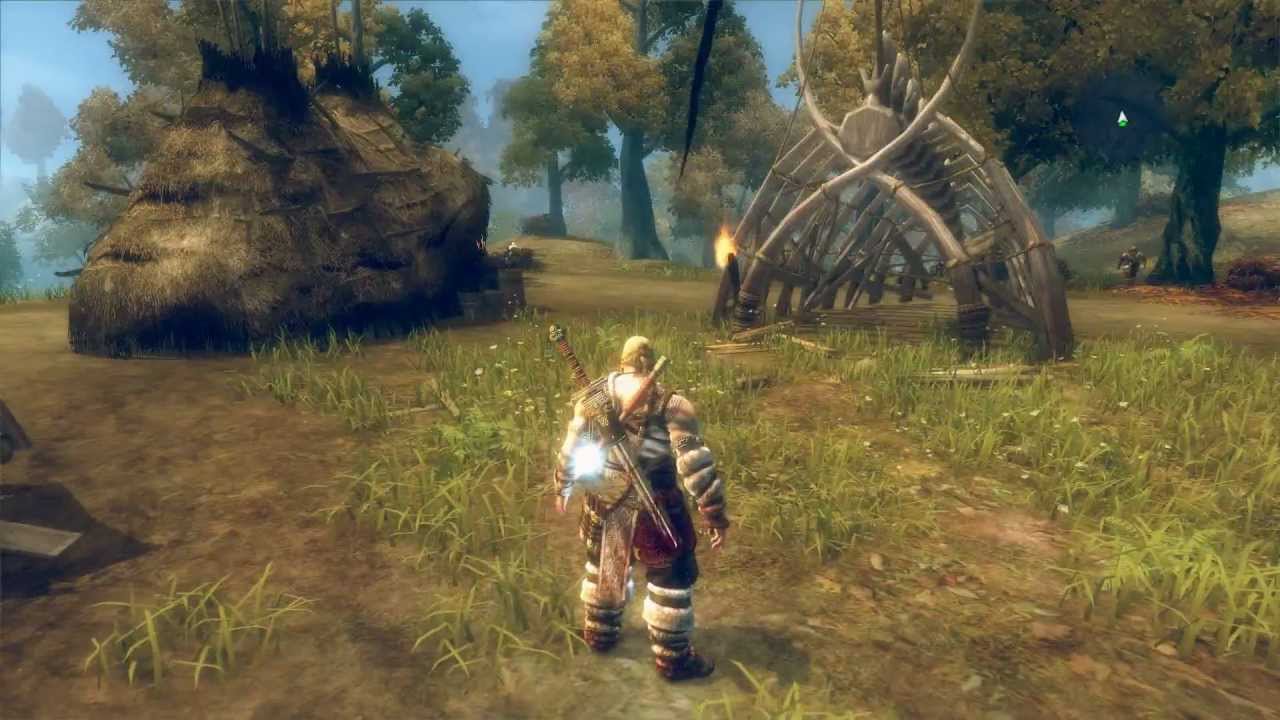
Viking: Battle for Asgard

This was some no-name title I picked up dirt cheap on a Steam sale just because Vikings.

I actually made it pretty far in the game before I called it quits. It’s very mindless and has no real plot, but the combat was delightfully brutal, and it was enjoyable in a simplistic sort of way. I was also impressed by some of the huge battles you can participate in; it’s surprisingly rare to find games where you can participate in large scale battles as one of the boots on the ground.

The main problem was for some reason the developers decided to stick a bunch of mandatory stealth missions throughout the game. They felt totally out of place compared to the rest of the game, they were very frustrating, and after a while I just couldn’t be bothered anymore.

A screenshot from Viking: Battle for AsgardThe Witcher

I didn’t like the combat.

That’s pretty much all there is to say. I gave up after about an hour because the core gameplay was just too unpleasant for me.

I know everyone’s over the moon about Wild Hunt these days, but having seen Moiren stream some of it, I’m not getting what the fuss is about. Seems like a very standard open world fantasy game to me. It certainly doesn’t look bad or anything, but I also feel confident that I’m not missing much.

Transistor

I think the surest sign video games are now being taken seriously as an art form is that, as in all art forms, there are now emperor’s new clothes situations where incomprehensible titles are praised simply for being incomprehensible. Enter Transistor.

They just sort of dump you into the game with little to no explanation of the controls, the game mechanics, the story, the characters, the setting, or much of anything else. You’re just left to fumble blindly and hope for the best. I feel like it might have been an interesting story if I’d had the faintest clue what was going on, but I didn’t.

Art from TransistorAs frustrating as that was, it was losing abilities upon death that soured me on the game permanently. That’s a strong contender for the worst design decision I’ve ever seen in a game. It’s the traditional RPG formula in reverse: Every time you fail, it gets progressively harder. It makes for the most unbelievably miserable experience.

I did like the artwork. I’ll give it that.