
Verisimilitude:
There a couple of reasons why this is my favourite word. Firstly, it’s very fun to say. Try it: ver-i-sim-il-i-tude.
More importantly, though, it’s an interesting concept, and something crucial to understand as a writer.
 Roughly translated from its Latin roots, verisimilitude means “the appearance of truth.” It refers to the concept of seeming true to life without actually being true to life.
This is a crucial thing for a writer to understand, regardless of genre. A lot of people will say they look for realism in a story, for things to ring true, but what they really want is verisimilitude. Realism in a story is not something you ever really want to see, and a truly realistic story is something no one would ever read.
For example:
“Once, there was a man who went to work. He answered phones and sent emails all day. Then, he went home, made dinner, and watched American Idol.
The end.”
This is a very realistic story. It is also utterly uninteresting, and no one would ever pay to read it. The fact is that if we want a realistic story, we’ll just live our lives. As much as people may pine for realism in story-telling, even the most mundane story will need to be unrealistic for anyone to enjoy it. Even so-called reality TV is reliant on dramatic twists and flamboyant, absurd complications to maintain people’s interest.
Simply put, reality sucks. All fiction is based on escaping reality, and those who dispute this are fooling themselves.
However, going to the opposite extreme is equally perilous. If you make a story that is completely unrealistic and bereft of real world logic, people won’t be able to identify with characters, won’t be able to suspend their disbelief, and will throw the story away as nonsense.
So verisimilitude is thus the happy medium. Verisimilitude is the “Goldilocks zone” of fiction where things feel real but aren’t. You want to be close enough to reality that people will be able to believe it, to feel that this is a realistic representation of hypothetical people and events, without falling into the doldrums and random pointlessness associated with true reality. It’s a clever form of trickery designed to lull people into accepting your unrealistic story.
Verisimilitude and dialogue:
I was first introduced to the concept of verisimilitude while reading a book of advise on fiction writing. In particular, it came up while discussing dialogue.
The author pointed out that dialogue is an area where people are especially critical, and where a feeling of realism is most important, but they also drew attention to the fact that truly realistic dialogue is actually terrible.
Listen to yourself during your next conversation with someone, then imagine reading that dialogue in a book. You’d demand your money back. Real dialogue is, like, um, y’know, kind of awful and stuff, right?
 No author worth their salt will ever produce realistic dialogue, and no reader will ever tolerate it. But at the same time, dialogue that feels unrealistic is a very easy pitfall for new writers and a very common complaint leveled at many works of fiction.
Dialogue is thus one of the most difficult tightropes for a writer to walk. You want it to feel as real as possible without it actually being real.
Verisimilitude and the female armour issue:
One of the issues that many people — including yours truly — raise against “platekinis” and other examples of impractical female armour in fantasy is that they’re unrealistic. This is immediately countered with the notion nothing in fantasy in realistic, and of course, that’s true.
 But this argument ignores the concept of verisimilitude. And fantasy is perhaps the genre where verisimilitude is most important.
At the risk of arrogance, let me use my own work as an example. In my main series of novels, my protagonist is a small female fighter who favours light, leather armour.
However, wars in her world are primarily fought with giant machines called Automatons (which is also why there isn’t much metal left for personal armour, but I digress), and any amount of thought will immediately make clear that her armour would not provide any significant protection against a machine that would be on eye-level with my second-floor apartment.
But yet the thought of her going into battle in street clothes is just fundamentally ridiculous. No one would buy that. Not even me, and I wrote the damn thing.
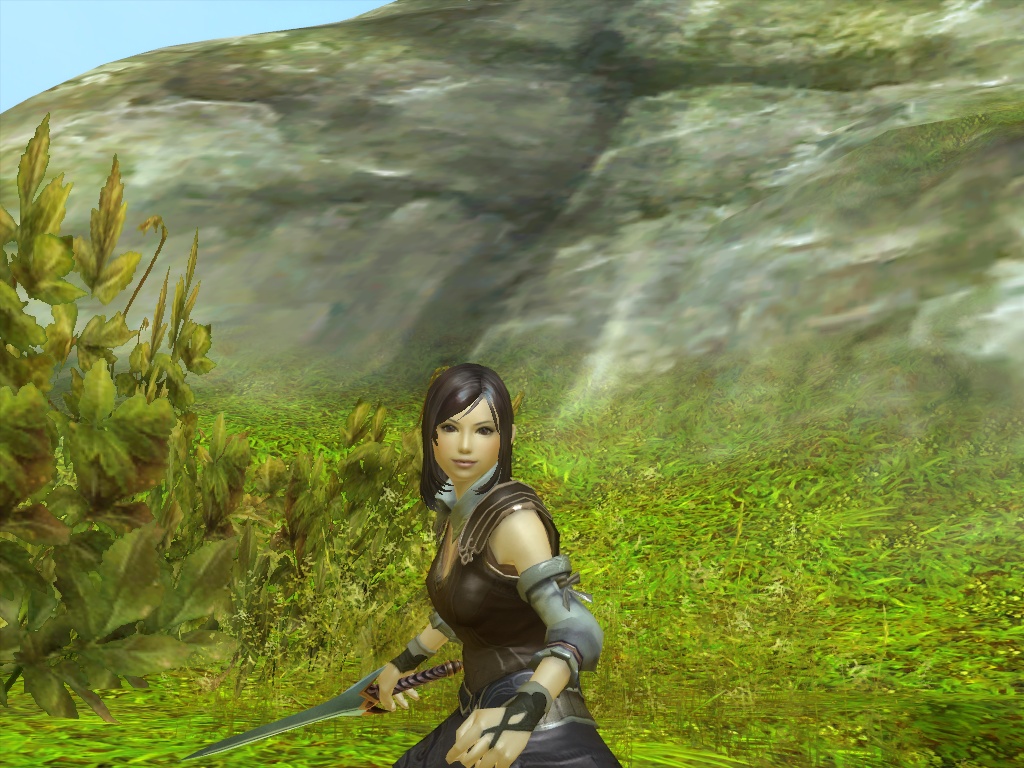 People wear armour in combat. That’s just common sense. Even in a fantasy setting, seeing a woman run into combat with vital organs and major arteries exposed just doesn’t feel right.
The defense of this is usually along the lines of, “because magic,” but that’s logically inconsistent. If armour exists in a fantasy universe, it has a reason to exist. If all you need is some focus for protective magics, then everyone would just wear amulets instead. A platekini is by its very nature an oxymoron.
Fantasy is about creating a logical fictional universe and learning to work within those bounds. Frankly, the idea that you can just throw realism to the wind “because magic” is insulting to fantasy writers everywhere, and it demeans the entire genre and the massive effort that goes into creating a consistent and verisimilar fantasy world.
If any aspiring fantasy authors out there are of the belief that you can wave off logical inconsistencies like this just because your universe contains magic, please divest yourself of this foolish notion now — for your own sake.
Superverisimilarexpialidocious:
So you can see what a crucial concept verisimilitude is to fiction. I would even go so far as to say it is one of the most important things to master as a writer, and it’s an area where there’s always room for improvement. Those that can dance closest to reality while still being unreal are those that will produce the best and most gripping stories.
And it’s a fun word to say.
 I don’t like sports. I don’t like participating in them. I don’t like watching them. I find the entire concept inane and uninteresting. I’ve been known to dabble in archery and watch the occasional UFC fight, and that’s about it.
 The Olympics are one of the few times or places where all the cultures of the world can gather together as one people: as a unified human race. The Olympics are a time when the things that make us different become something to be celebrated, not hated.
 New article:
 Superior Realities