Fantasy Cliches I Could Do Without

I don’t think it’s an exaggeration to say I’m one of the biggest fantasy fans you’re ever going to encounter. I eat, sleep, and breath fantasy. I watch the movies, play the games, and read the books. I also write the books.
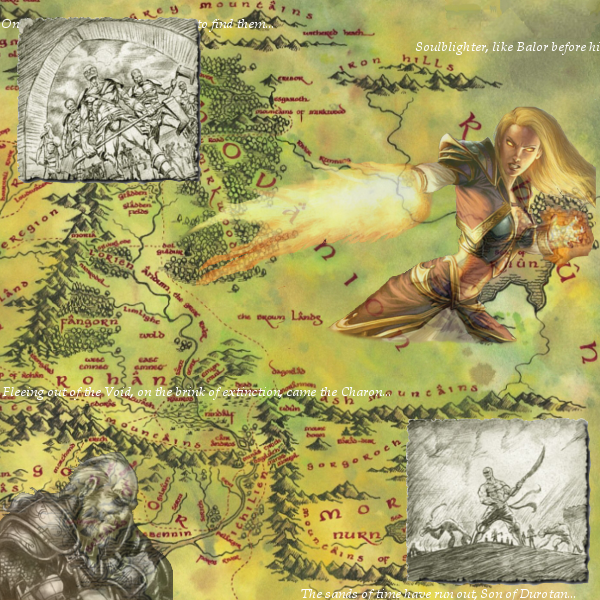
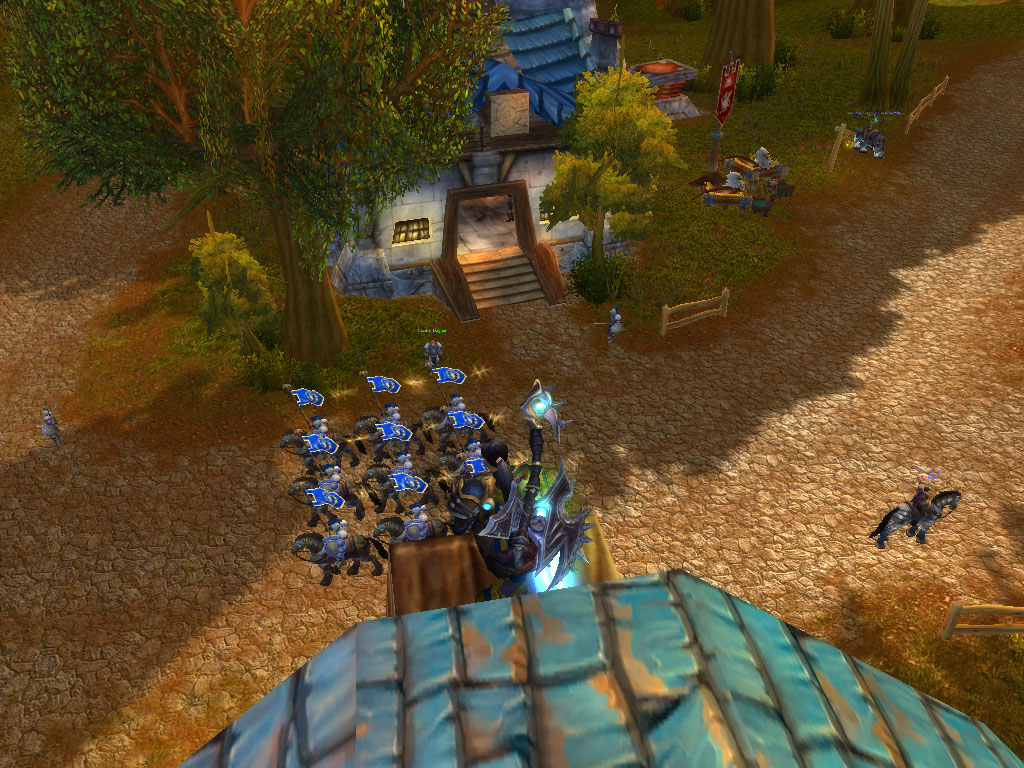
A high fantasy-themed image created for a graphics contest at GalacticaBBS.comBut that doesn’t mean I think the genre is perfect. While I love almost everything about high fantasy, there are still a few common cliches, tropes, and plot elements I really wish would just go away.

Black magic is bad, mkay?

There’s a perception in fantasy that using certain dark types of magic — like necromancy, for example — will instantly and permanently stain your soul, automatically turning you into a bad person.

There seems a certain logic to this, but a lot of stories take it to illogical extremes. If you’re raising the dead to shake down people for cash, well, yeah, that’s bad.

(Hmm, has anyone done a necromantic gangster novel yet?)

But this cliche states that even if you were raising the dead to stop a rampaging band of brigands who are coming to slaughter the women and rape the cattle, that still makes you evil.

Now, I’m not talking about a slippery slope argument. A slippery slope is something I’d happily accept. This cliche paints it as a cliff: if you use any dark magic at any time for any reason, you automatically become a villain.
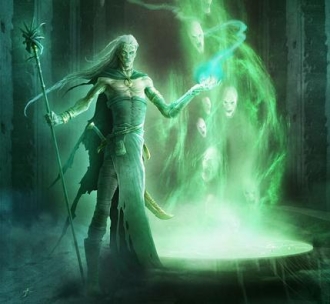
Art of a necromancerI’m sorry, but that makes no sense.

Magic is power, and people have free will. They can use that power for good or for ill. The idea that using even one spell from the bad side of the magical spectrum, even with the best of intentions, will somehow rob you of any moral compass doesn’t make sense logically, and it doesn’t do anything to make a story more interesting. It takes choice away from the characters and makes both them and the plot bland.

I think the Warcraft universe has perhaps the most interesting take on magic in the fantasy genre. In Warcraft, all magic is dark. It is always corrupting and addictive, and it attracts Demons like a candle attracts moths.

Many cultures in Warcraft believe using certain kinds of magic — or any magic at all — will invariably corrupt you and lead you down the path to darkness, but it’s just that: a belief.

Despite the fact that Warcraft’s magic is an innately corrupting force, we still have many protagonists who use magic, even the darkest magic, for good ends — from Jaina Proudmoore to Illidan Stormrage.
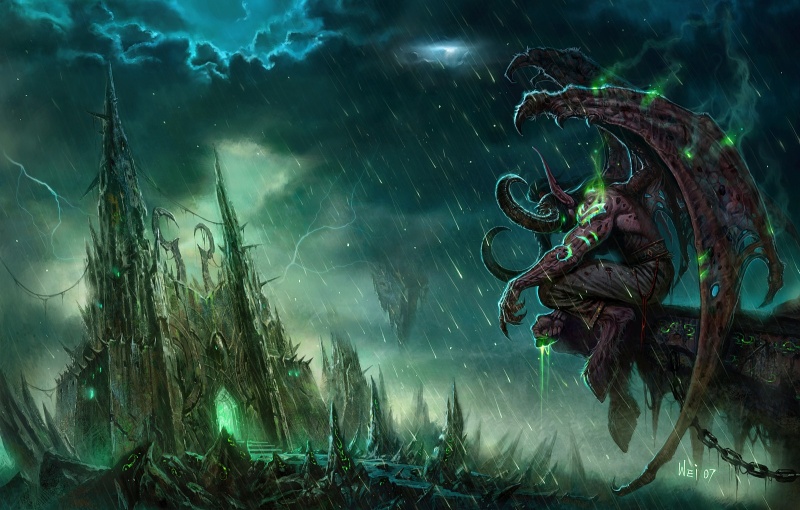
Art of Illidan Stormrage at the Black TempleBecause they have free will, and they can resist the dark temptations of magic.

Bowing to the inevitable:

Fate is an extremely common concept in fantasy. As a plot element, I’m fairly indifferent to it. It’s over-used and rarely adds much to the story, but it can be quite interesting when some creativity is applied.

What bothers me is when fate in a story is not only unalterable, but something characters fatalistically surrender to. They simply gave up in the face of whatever horror is coming their way.

The essence of drama is conflict. So where, pray tell, is the drama in a story where the “heroes” simply lie down and wait for the end?

Particular offenders for this would be “The Ancient Blades” and Frank Herbert’s “Dune” series. I remember coming to despise Paul Atreides because he just stood there and accepted it as terrible things happened to himself and those he loved.
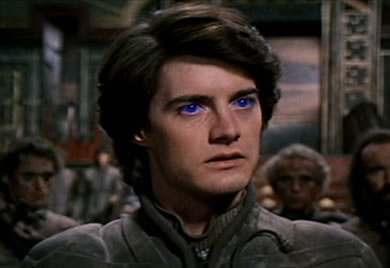
Paul Atreides from the movie DuneThat’s not a hero. That’s a coward.

Now, maybe it’s realistic that people would just give up in the face of a fate that cannot be changed. But as we’ve discussed, true realism isn’t always the best choice in fiction.

Unrealistic or not, I want to see characters fight against fate. Even if they fail, I want the struggle.

To wield power, you must give up your humanity:

There’s a perception in a lot of fantasy and science fiction that to wield power effectively, without being corrupt, you need to divorce yourself from your humanity. You cannot allow yourself to love, to be ruled by compassion, or to feel anger — even righteous anger.

A prominent example of this would be the Jedi in the Star Wars universe. They forbid their members to marry and counsel against all passionate feeling.

This concept is offensively illogical, and frankly a little disturbing. Does anyone out there really believe that the only way to do good in the world is to rip out all that makes you human? Even anger and hate have their place and can do good when directed to righteous ends.
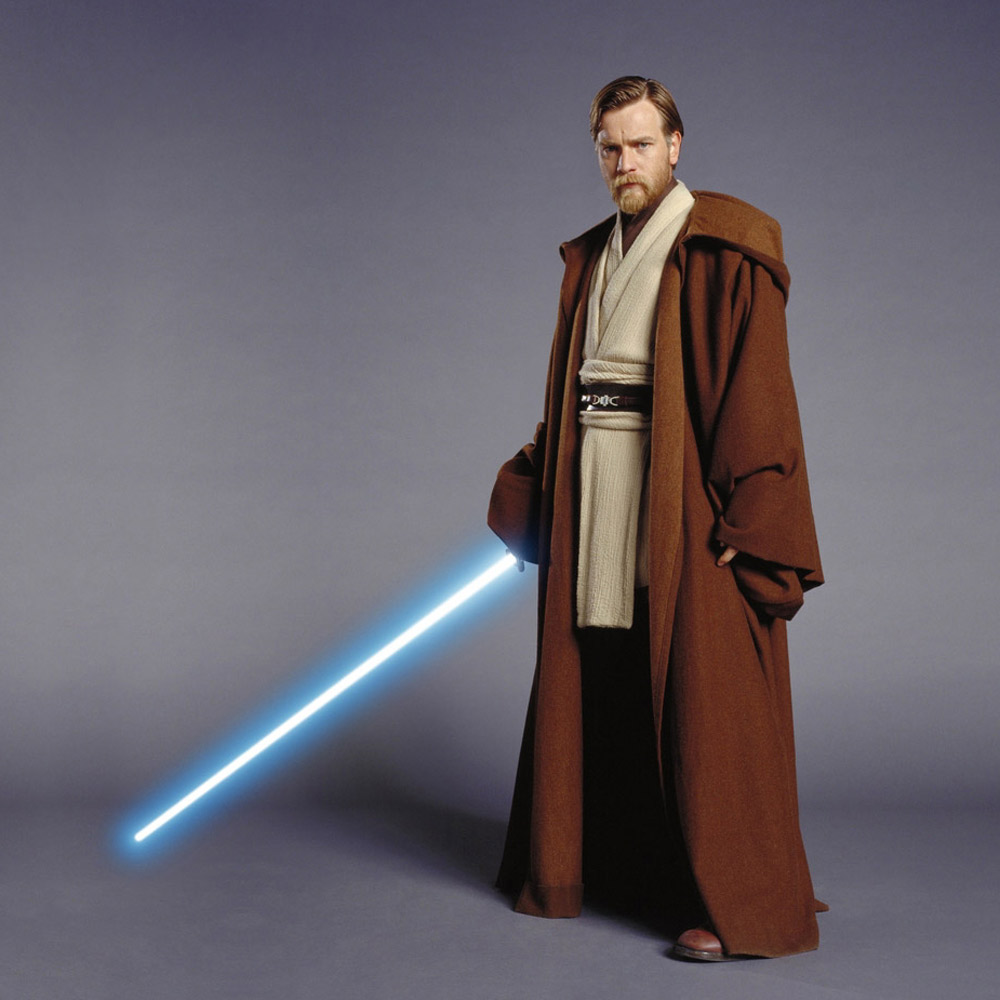
Ewan McGregor as Obi-Wan KenobiThis kind of logic is how holocausts get justified.

Getting back to Star Wars, I always viewed Darth Vader as a creation of the Jedi, not the Sith. Anakin was a man of great passion and furious emotion, and the Jedi tried to extinguish that spark. How could he not turn to the Sith in such circumstances?

By trying to force a square peg into a round hole, the Jedi created the very monster they were trying to prevent. They treated Anakin like someone who was more machine than man, so that’s exactly what he became.

Of course, Star Wars is far too simple-minded to acknowledge such complexities, and I’ve probably just put more thought into the prequels than Lucas did.

Royal protagonists:

Fantasy books about princes and princesses are a dime a dozen. Honestly, I don’t think there’s anything wrong with making your main characters royalty. The problem is that writers rarely apply creativity to the concept.
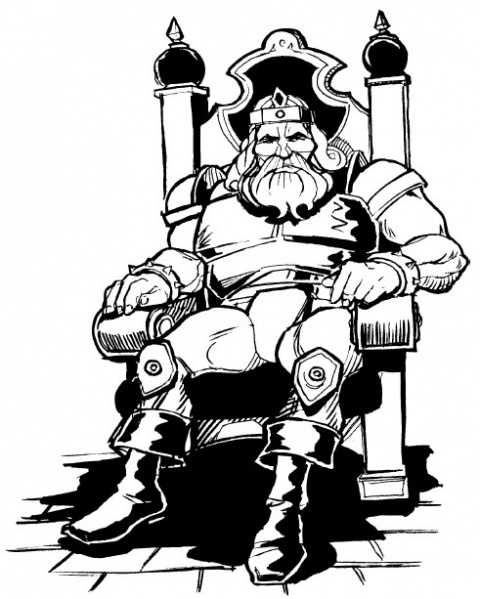
Art of Llane Wrynn, king of StormwindThe ironic thing, and the main thing that irritates me, is that fantasy writers will almost invariably bend over backwards to make their royal characters as un-royal as possible.

They always hate the trappings of court, they always wish they didn’t have such great responsibilities, and they always prefer to spend their days doing unrefined things like hunting and sword-fighting.

There was a probably a time where this idea was daring and original, but that time is long since past.

I would like a fantasy writer to create some royal protagonists who embrace their royal status. They like the fancy clothes, the pompous ceremonies, and everyone kissing their ass. You can be a hero and still be an arrogant jerk. There’s nothing wrong with protagonists being less than perfect.

In fairness, it should be noted I, too, have frequently written about royalty, but at least I didn’t go out of my way to make their royal status as small a part of their personality as possible.
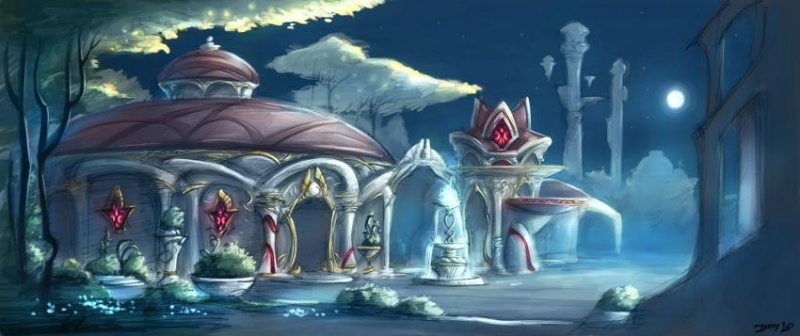
Art of Eversong Woods from World of Warcraft* * *

I could probably think of some more, but those are the most ubiquitous fantasy concepts that get under my skin.

What are some fantasy cliches that you wish would just go away?

New article:

My latest WhatMMO article is 6 MMO Concepts That Should Be Banned.

Seriously, if I have to play one more game about rampaging dragons…

Head Canon, Part One: World of Warcraft

I’m not really a role-player, despite my fondness for Wyrmrest Accord. My role-playing is limited to a few in-character comments during Sunday night story circle.

The weekly story circle in Thunder Bluff on Wyrmrest AccordBut I still have extensive backstories and personalities for the characters I play, both in World of Warcraft and other games. These are so important to me that they can have a major impact in determining which characters I play. Considering that, it’s a bit surprising I haven’t talked about them much on this blog.

The reason is I always thought it was a bit weird of me to do this. But I’ve seen enough of the MMO fanbase to know this isn’t so uncommon a practice as I thought, so I might as well share my “head canon” with the world.

We’ll start with my WoW characters. To save space, I’ll focus on those with the most interesting backstories, not necessarily the ones I play the most. For instance, I haven’t touched my shaman in months, but he’s too cool not to include.

The rogue:

“For king and country.”

My rogue surveys her domainMy rogue is a patriot. She bleeds blue and gold. The child of refugees from Lordaeron and Gilneas, she believes in her country in the way only an immigrant can, and she lives to serve King Varian.

Her dream was to become a member of the Stormwind Guard. However, while training, her superiors noticed she had superior talents in certain… “specialized” areas. This resulted in a transfer to SI7.

I compare her current role to that of a Navy SEAL. She is an elite soldier — relying on cunning and infiltration skills as much as brute force — but she’s still a soldier at heart.

I suspect Amber Kearnen may be her long lost twin. (Since the Internet fails at sarcasm, I’ll clarify this is a joke, not head canon. Amber is very much like how I imagine my rogue, though.)

My rogue bows before King Varian WrynnFar from being the shifty criminal rogues are traditionally seen as, she is, in fact, almost absurdly straight-laced. This is basically the character where I live out all my nostalgia for my childhood, when I was a hardcore fan of the perfectly heroic Alliance that existed in those days.

Even when she’s lurking in shadows, she’s still ultimately a knight in shining armor.

The warlock:

“Shaza kiel!”

My warlock looking out over Icecrown from Orgrim's HammerMy warlock is a Demon hunter. By this, I do not mean she’s a disciple of Illidan. She has not burned out her own eyes, nor does she possess a set of warglaives. I simply mean that she has made it her mission in life to hunt down and destroy Demons — as well as Old Gods, Undead, and any other horrors that stalk the innocent.

Like most Blood Elves, she lost everyone she ever cared about during the Scourge invasion, and that somewhat stripped her gears. She now carries a burning need to slaughter the Demons who caused the destruction of her homeland.

Hopefully in as painful a manner as possible.

There aren’t words to describe her hatred of Demons. She uses them only as expendable minions, and nothing gives her greater joy than watching a Demon bleed and suffer in her service.

She views fel magic as the only power strong enough to bring justice to the evils of the universe. She is terribly cognizant of the toll it takes. She has seen and done things that no sane being should have to endure, and her magic has ravaged her body and soul, leaving her skin corpse-like and pallid.

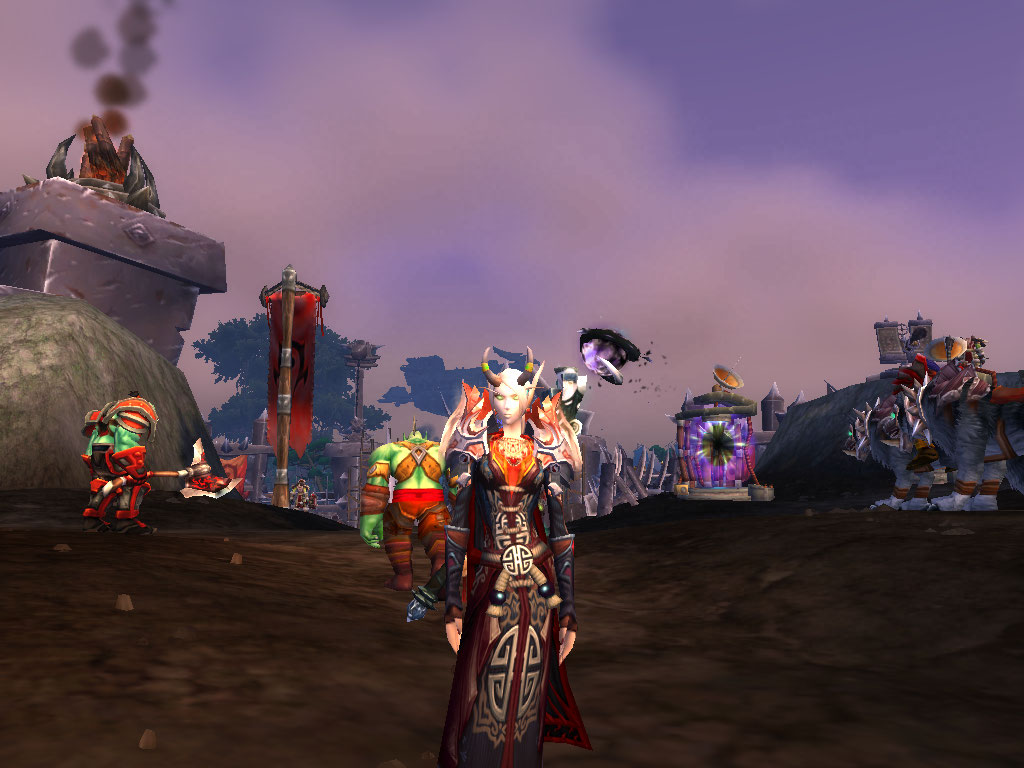
My warlock showing off her new outfit in Dominance PointBut yet, she takes a great deal of pride in her work. She believes she has made a noble sacrifice by perverting herself in this way, and she views those who disdain her profession as weak and closed-minded.

She’s also a chronic thistlehead and a raging alcoholic. But if you’d seen the things she’s seen, you’d self-medicate, too.

I keep stacks of bloodthistle and booze in her bags and frequently play her drunk and stoned.

Early on, I began to see her as a kind of successor to my mage, and I decided to link them in my head canon. I considered virtually every possible relationship for them: lovers, siblings, cousins, colleagues…

Ultimately, I decided my warlock was my mage’s apprentice. When my mage retired from the adventuring life, he saw that she could not sit idle, and while he doesn’t entirely approve of her reckless dive into Demon magic, he gave her his blessing to begin her own quest, bequeathing her his most prized possessions: the blade Quel’delar, and the Nether Drake Voranaku.

I’ve not ruled out the lovers angle for them, though. My mage doesn’t seem the type to worry about the ethical implications of getting a little somethin’ somethin’ on the side from his student, and my warlock is a pathological sensation-seeker. They’re a perfect match!

The paladin:

“May the Light have mercy, for I will not.”

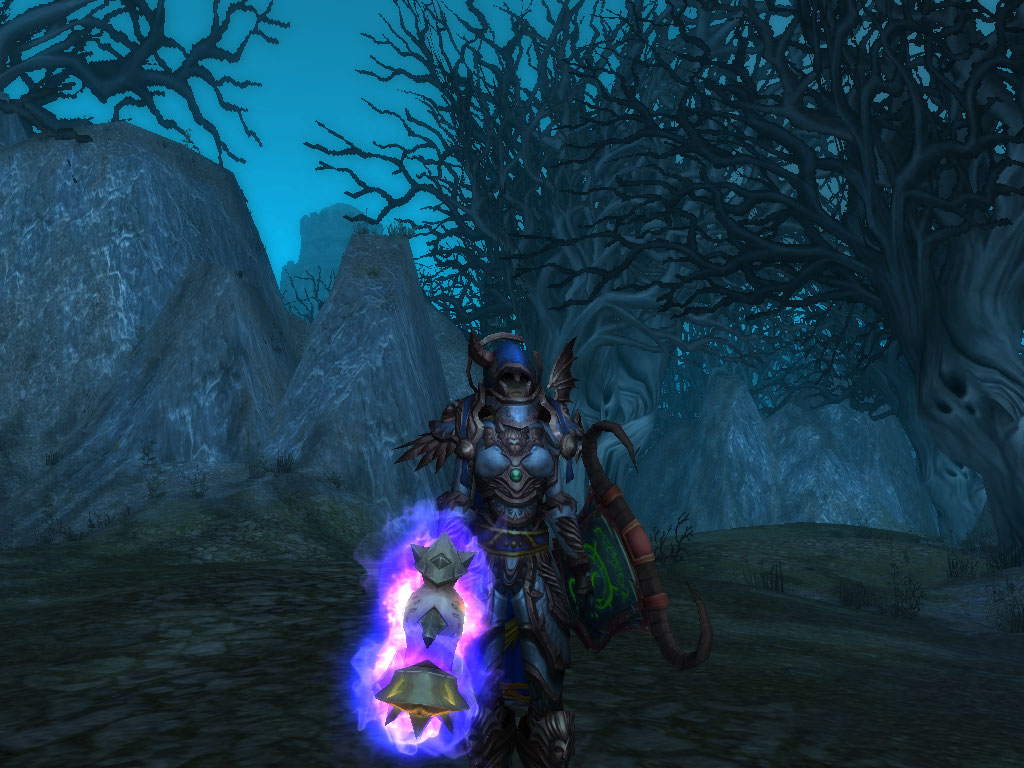
My paladin is not your typical heroI’ve had a lot of trouble with the backstory for my paladin, so everything is subject to change, but this is what I have right now.

My current version of her was inspired by all the Wrath raids I did with her, as well as by the season eleven paladin PvP set.

My thinking is that my paladin was once the cliche knight in shining armor, but the Northrend campaign changed her. Fighting Yogg-Saron and the Lich King took a terrible toll upon her mind, stripping her of her innocence.

Those who see her now would judge her as a woman whose faith has been broken. She has become dour, cold, and even occasionally brutal.

But the truth is that her faith in the Light is stronger than ever. She keenly remembers the horrors of Northrend, but she also remembers that all those horrors were eventually defeated. She may not be pleasant company anymore, but she will still do everything in her power to defend the faithful.

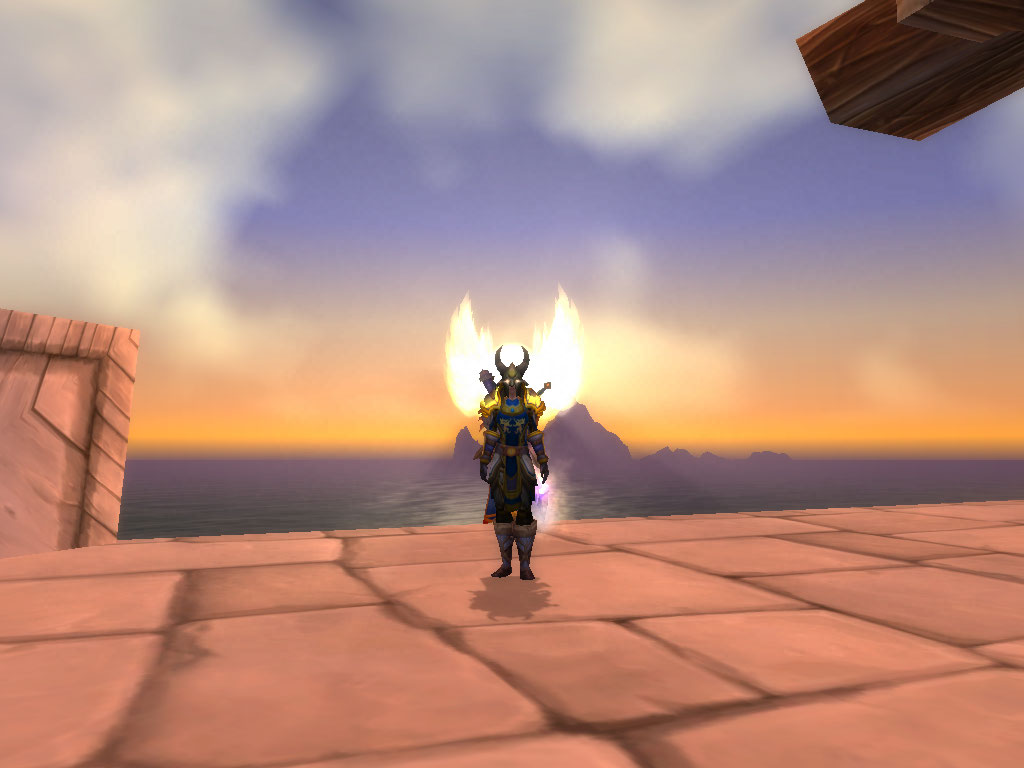
My paladin silhouetted by the sun in Stormwind HarbourHer faith in the world, however, is shattered. She knows the Light will win through eventually, but she also knows that things always get worse before they get better. Her love of the Light is not one of celebration, but of dependency. The Light is all that keeps her from lying down and dying.

The shaman:

“Blood for blood. Life for life. Lok’tar ogar!”

My shaman in Vasj'ir after his arrival on his new realmMy shaman is old. Very, very old. Born on Draenor, he has lived most of his life as a grunt. He served in the First, Second, and Third Wars. He butchered innocents in Stormwind, laid siege to Stratholme, and held the line against the Legion. His entire body is a mass of scars.

Corrupted by the blood of Mannoroth, he spent much of the first half of his life in a haze of bloodlust, little caring for the lives he took.

When the Horde was defeated, though, he was placed in the internment camps and succumbed to lethargy along with the rest of his race. There he had time to reflect on the evils he had done, and the futility of it all.

Then, just as he’d lost all hope, his camp was attacked and liberated by an idealistic young shaman named Thrall. In Thrall, my shaman saw the chance for the Orcish people to return to the peace he remembered from his childhood.

And so he took up arms again, but for the first time in his life, he did so with a cause in mind. He fought for something he believed in, rather than because he worshiped violence for its own sake.

My shaman's resto transmogrification setSome time after the Battle of Mount Hyjal, he noticed something had changed in his life. It was as if the very stones and wind whispered to him.

He had been called to the path of the shaman.

He views this late life change in calling as an incredible privilege, and he works tirelessly to bring the wisdom of the spirits to his people.

While his new powers have enhanced his already considerable powers as a fighter, he prefers to use them to heal. He has lived long enough to know that it takes more strength to create than to destroy.

I think part of the reason I stopped playing him is because I know Garrosh’s Horde would break his old heart.

New articles:

Two more of my articles have appeared at WhatMMO: Top 6 Character Origins and 6 Biggest Boss Mistakes.

Seriously, stop hitting the tank, n00bs.