
Over a decade ago, I read the first book of the Dragon Prophecy trilogy. It was a prequel to the Obsidian trilogy, a series I’d loved when I was a teenager. There was a long wait until the second book, to the point I started to worry the series had been cancelled. This was followed by an even longer wait, and eventually I all but entirely gave up hope of ever seeing the series finished.
 But a few weeks ago, I stepped into Indigo for the first time in ages, and on the very bottom of the final shelf of the fantasy section a book jumped out at me: The Dragon Prophecy, book three: Deliverance of Dragons.
Well I’ll be damned.
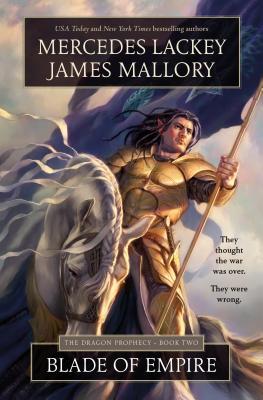
It had been so long I decided to reread the first two books to refresh my memory, but now I’ve finished them and Deliverance of Dragons itself, and my conclusion is that this is a real mixed bag of a series.
For most of its 700+ pages, I thoroughly enjoyed Deliverance. It’s powerful, dramatic, and wildly fantastical — everything I want in an epic fantasy novel. Unfortunately, it completely falls apart in the last few chapters.
I did some digging online to try and see if I could find a reason for this, and I couldn’t find anything definitive, but it seems to be assumed among the fans that some degree of publisher interference was at play — a too harsh limit on length or something of the sort.
That would certainly explain a lot. There’s multiple major plot twists that are either wildly rushed or never even followed up on at all, and the ending itself is an anticlimax of the highest order. It seems to attempt to deliver something like a classical “happily ever after” despite the entire series up to that point constantly, brutally hammering home that there was never going to be a happy ending for Vieliessar Farcarinon. It’s just a mess.
I know this has been labelled as a trilogy from the very start, but my overwhelming impression of the ending of Deliverance of Dragons is that there was meant to be a fourth book that got cancelled, and so another ~700 pages of story had to be condensed down into about thirty pages.
It’s a shame, because it really is a great book up until that ending. It’s an odd thing to praise, but one thing I really love about this book is how absolutely, brutally gorey the action sequences can be.
This is the highest of high fantasy, with no human characters and a pretty good chunk of the cast not even being humanoid. Almost every plot point is about incredible magic, ancient prophecies, and the idiosyncrasies of people who are far removed from familiar human mindsets. The brutality of the combat brings it back down to earth, and makes it feel chillingly real despite the fantastical subject matter.
Overall rating: 7/10
Having blitzed through the entire trilogy in one go, I’ve been mulling over my opinions of it as a whole. My conclusion is that it is a deeply flawed series but one which nevertheless holds my affection.
The Dragon Prophecy suffers badly from the slow start of its first book, its ridiculously over-complicated Elven naming conventions, inconsistent pacing, a bloated cast where only a few characters are meaningfully fleshed out, a failure to fully deliver on all the events and mysteries it promises, and the unfinished seeming ending of the final book.
But it also features epic conflict, gripping drama, changes to its setting far beyond what most books dare to do, and a vibrant fantasy world overflowing with wondrous magic and bizarre and colourful creatures.
Rereading it all, I was struck by how utterly unashamed of its own fantastical nature this series is, and how hungry for that I’ve been.
When I found Deliverance of Dragons, it was after I’d already scanned all the rest of the fantasy section and found absolutely nothing that appealed to me. Everything these days seems to be entirely about humans and their conflicts, about politics and edgy orphans and stories that don’t seem to meaningfully touch on fantasy elements. It feels like the fantasy genre has left me behind.
Of course, there’s nothing wrong with genre trends changing, and I’m not saying the books being made now are objectively worse, but it’s just not what I want. It feels like the kind of fantasy I love just doesn’t exist anymore, at least not in the form of literature. Everyone is writing nothing but Game of Thrones and Hunger Games knock-offs, when I want Lord of the Rings knock-offs.
For that reason, I remain grateful for The Dragon Prophecy. It’s a series that’s probably only worth it for a specific niche of hardcore high fantasy fans, but I am exactly in that niche, and despite its flaws, for me Deliverance of Dragons felt like a sip of cold water in the desert.
I think I’m going to try rereading the Obsidian trilogy next. I suspect it won’t seem quite as impressive as it did when I was a teenager, but that it will still help satisfy my craving for some traditional high fantasy.
 Superior Realities